.png)
Outta Nowhere!: Tiny Little Cartoons Drops Garfield RKO Short For WrestleMania Weekend (EXCLUSIVE)
Stay informed with free updates
Sign up to get our news digest — delivered directly to your inbox twice a week.
There’s a particular kind of cultural whiplash that only makes sense in 2026, despite being entirely grounded in the Attitude Era ‘90s.
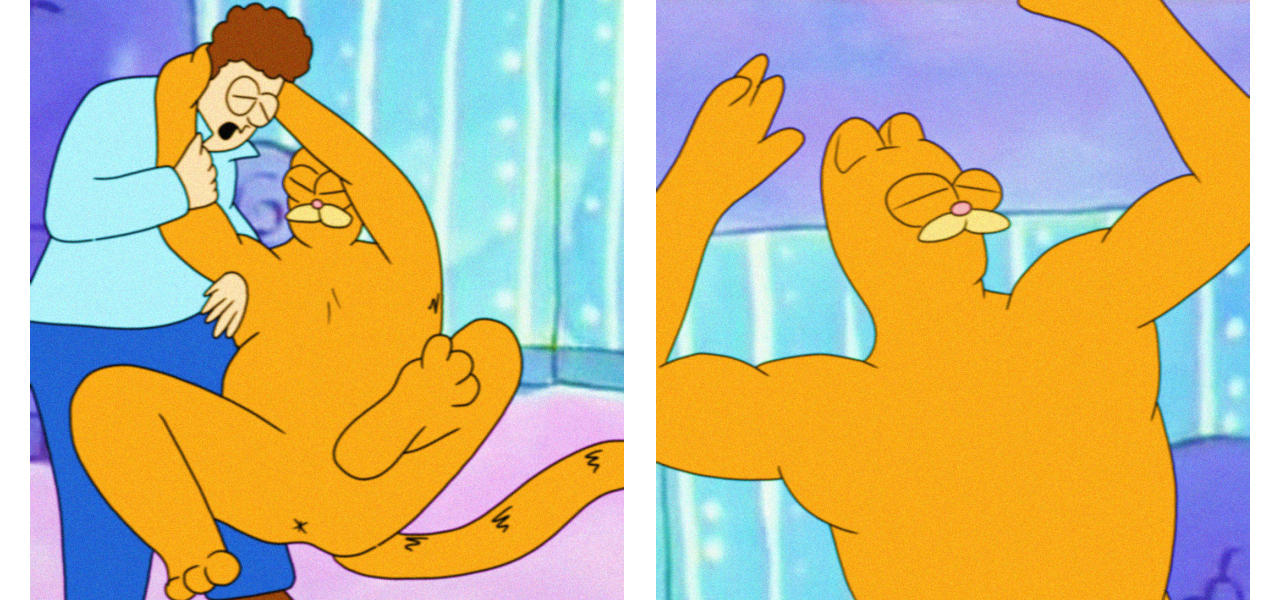
In the latest Tiny Little Cartoons short, a familiar feline voice announces a lasagna shortage before a Randy Orton-shaped Garfield walks through the door and expresses his displeasure physically by hitting John with an RKO outta nowhere. Michael Cole makes the call as “Voices” plays in the background as Garfield strikes Randy Orton’s iconic hands-lifted pose.
View this post on Instagram
That’s the strange, addictive alchemy behind Tiny Little Cartoons, the two-man outfit of Tyler March and Eric Paperth, whose bite-sized animated clips have quietly become one of the most recognizable micro-formats on social media.
This weekend, as the wrestling world converges in Las Vegas for WrestleMania, the duo graciously gave us exclusive access to their latest creation (embedded above), which continues a run that has turned their Instagram feed into a kind of millennial fever dream. Wrestling moves, pop culture characters, and nostalgic IP collide in seconds-long bursts that feel both absurd and oddly precise.
“It’s literally just tracing every frame of these wrestling moves and then turning them into the characters,” March explains. “The cross between pop culture and the wrestling… speaks to our MO of tuning into all the stuff we loved growing up and keeping all of our inspirations alive.”
It’s more than a simple gimmick, though. Behind the viral clips is a broader philosophy about making animation at one of the most turbulent times in the art form’s history, outside traditional systems, at speed, and on their own terms.
A Viral Sketchbook
Tiny Little Cartoons started as a need to keep making things when other career sliding doors were closing and consequential decisions needed to be made.
“At first, it was just like… I was working in sales at the time, deciding to hard pivot out of that, teaching myself to animate on YouTube,” March recalls. “I almost treat our Instagram like a live sketchbook. Watch us grow here with these little versions of what we do.”
That “sketchbook” mentality is key. The clips are short, often just seconds long, but they’re also iterative, immediate, and always strike a chord.
Paperth puts it more bluntly: “The value of what we do is just that we just fucking do it.”
That urgency is partly a reaction to the traditional development pipeline, which both creators know well.
“The [studio animation] process is… it takes forever,” Paperth says. “There are so many people who have to look at it. It takes so long for people to look at it. We can’t sit still that long.”
Instead of waiting years for a single project to materialize, they’ve opted for volume and variety.
According to Paperth, “Projects are going to fall through. But if that happens, you can turn around and be like, look, in the meantime, we made all these really cool little shorts.”
That philosophy has quietly become one of the defining traits of the current independent animation landscape. Tiny Little Cartoons are not alone in working this way, but they are particularly effective at making it visible.
From Punk Band to Production Pipeline
March and Paperth’s creative partnership predates any social media algorithm.
“We became best friends because we were the only two kids into punk music,” Paperth recalls. “We started a punk band in 8th grade. We were terrible for a while. Then we got kind of good.”
That early collaboration laid the groundwork for everything that followed. After drifting apart post-high school, they eventually reunited with a shared impulse to create again.
“We missed working with each other,” Paperth says. “We just had this lifelong creative relationship.”
That history matters, especially given the volatility of the industry they’re navigating now.
“This process… can be so brutal,” March says. “There are so many times we’ll hop off a conference call and just immediately call each other and be like, ‘Oh my God, what do we do here?’”
Having a built-in collaborator isn’t just creatively useful. It’s structurally stabilizing.
“I think of people like Vince Gilligan,” March adds. “How the fuck does he do it out on his own?”
Why Wrestling?
Tiny Little Cartoons’ wrestling shorts are what brought them widespread attention, but they weren’t engineered as a breakout format. They emerged from a mix of nostalgia, accessibility, and sheer repetition.
“Rotoscoping is a very easy way to just turn the brain off and turn the hands on,” March says. “Something to kind of keep my hands busy at like 1 a.m.”
The idea clicked because it sits at the intersection of two deeply ingrained cultural languages: wrestling and late-‘90s/early-2000s pop culture.
“Attitude Era was like… that’s when I picked it up,” March says. “Jeff Hardy was my boy.”
From there, the creative process is surprisingly adaptable. There is no one formula for how the cultural cross-sections are pieced together, and each clip’s origin story is a little bit different.
“It can start from either side,” he explains. “It’ll either start from like, okay, it’s Christmas time, what are some Christmas characters? Or it starts from a move. Like right now, I’m thinking of doing an RKO, since Randy Orton is going to main event Mania.”
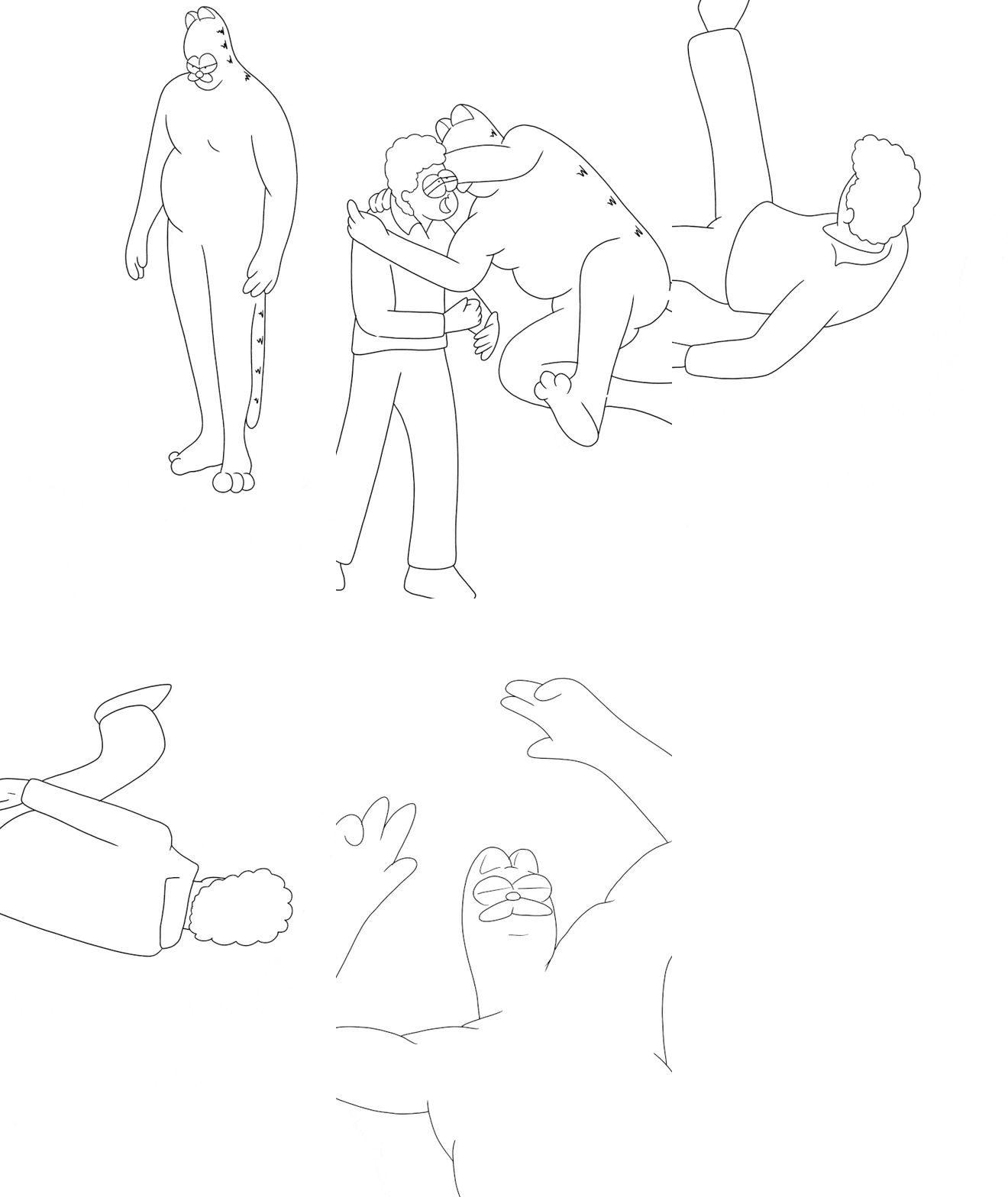
Once the concept is locked, it becomes a matter of matching motion, timing, and audio.
“Typically, if I can, I’ll use the actual commentary of the clip I am rotoscoping,” March says. “Because it syncs up the best. But sometimes it’s more creative.”
The result is something that feels both chaotic and meticulously constructed. An RKO through the announce table becomes a meta Garfield gag.
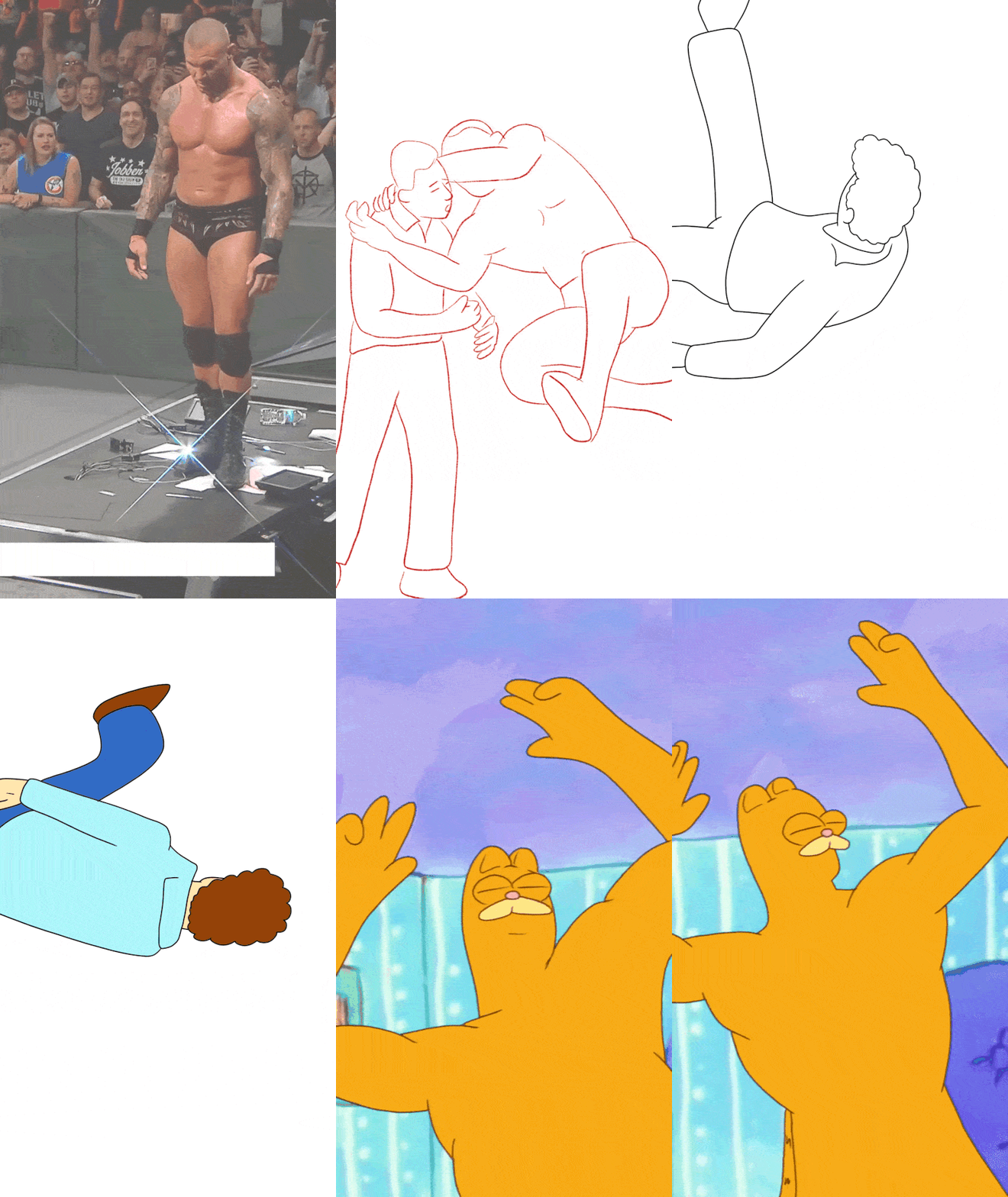
“People being like, ‘I remember seeing that exact match on TV!’ That’s really what you want out of this whole thing,” says Paperth.
The Leverage of Doing It Yourself
Going viral has never been the end goal with these short videos. For Tiny Little Cartoons, it’s a means to create industry leverage.
“The more you are doing on your own, the more value it will hold,” Paperth says. “The more pull you might be able to have in the future.”
That leverage has already shown up in meetings, where their online presence reframes the dynamic.
“Our agent can say, ‘Hey, meet with these guys, also check out their stuff,’” Paperth explains. “We go into the meeting with someone who’s like, oh my God, I love these cartoons.”
It’s a subtle but important shift. Instead of pitching from zero, they’re arriving with proof of concept, even if the idea being pitched has nothing to do with wrestling or rotoscope.
What’s more, “Getting somebody to watch something is a lot easier than getting someone to read something,” March adds of the struggles in selling screenplays. “Especially if it’s like a 15-second clip.”
Still, they’re aware of the limitations. “15 seconds is great,” March says. “But yeah, you still have something to prove. Can you do it for 10 minutes? 23 minutes?”
To better answer that inevitable question, the duo is working across formats simultaneously. Shorts. Pilots. Series development. Social clips. “Having something in every category is really important,” Paperth says. “Not just doing one thing.”
Festivals, Networking, and the Long Game
Despite their online success, both creators emphasize the importance of physical presence and backing up your work with in-person pitching.
“It’s a different thing when you’re in a theater full of people, and they’re losing their minds over something,” Paperth says of accompanying their work offline.
Their Adult Swim short Sucks to Be the Moon played strongly on the festival circuit, which led directly to industry connections.
“The way we got our manager… we almost didn’t go to the after party,” Paperth recalls. “I was like, fuck it. I went. Met someone. That snowballed, and now we have a great manager.”
March is quick to add that their recent successes didn’t come from some overnight breakthrough. “We’ve been going to film festivals for probably five years,” he says. “This was the first time something big came out of it.”
That slow accumulation of relationships mirrors their creative approach. “Just keep doing, keep going, keep making shit,” March says. “Worst case scenario, you’re just going to see yourself get better.”
In one such case, a throwaway Halloween short, Mommy Kisses, has already evolved into something larger.
“It ended up as this series pitch that is so different than the cartoon, you wouldn’t even be able to connect the two,” March says.
That’s the real function of their social output, a means to a more ambitious end.
More Than Memes
For all their success in short-form, both creators are clear that Tiny Little Cartoons is not just a meme factory.
“This isn’t just memes,” the two argue almost simultaneously. Case in point, right now, they’re deep into production on a new 15-minute short.
“The point of this is to just throw everything at the wall,” Paperth says. “Every funniest thing we can think of, free of notes, free of outside perspective, and just really be us.”
At the same time, they’re developing longer-form projects with studios and exploring ways to expand ideas organically. More on that in the near future.
A Voice That AI Can’t Fake
In an industry increasingly shaped by automation, both creators see originality as their most marketable virtue.
“AI is making stuff from stuff that’s been done before,” Paperth says. “But nobody wants to see things that have been done before.”
He points to creators like Tim Robinson of I Think You Should Leave as examples of truly singular voices. “AI can’t do that because he is thinking in a way that hasn’t been thought before.”
Tiny Little Cartoons are developed from the ground up with that mindset at the forefront, pulling from nostalgia without simply regurgitating it.
“We’re not just rehashing the shows we liked,” Paperth says. “We’re thinking in a tone that’s specific to us.”
Ready for the Main Event
As WrestleMania weekend arrives, their latest short lands at the perfect cultural moment. Wrestling is booming again, nostalgia is selling, and audiences are primed for remix culture.
Even as their work circulates widely, even as meetings stack up, the core principle behind the shorts, and all of the studio’s work, remains unchanged.
“Stuff that makes us laugh is at very least good enough for the Instagram channel,” March says with a chuckle. And increasingly, that seems to be good enough for everyone else, too.