.png)
‘We Need To Be Self-Reliant’: AnimaxFYB Founder Francis Y. Brown Reflects On The Ghanaian Studio’s First Decade
Stay informed with free updates
Sign up to get our news digest — delivered directly to your inbox twice a week.
Ten years ago, when AnimaxFYB Studios launched in Ghana, local animation barely existed as an industry. There were no established pipelines, no ecosystem of studios feeding talent into the market, and continentally, only a few examples of African animated storytelling reaching international audiences. None of that was enough to put off founder Francis Y. Brown from launching what has become one of West Africa’s leading animation outlets.
“Ten years ago, we came in with a lot of excitement, energy to see what we could build,” Brown tells Cartoon Brew as the studio prepares to celebrate a decade of existence.
The company has expanded beyond Ghana into collaborations and training initiatives in South Africa and Nigeria, produced a steady stream of shorts that have circulated through major festivals, and built relationships with companies ranging from Coca-Cola and Samsung to Amazon Prime and Sony Group. Along the way, it has also helped train and develop a generation of animators in the region.
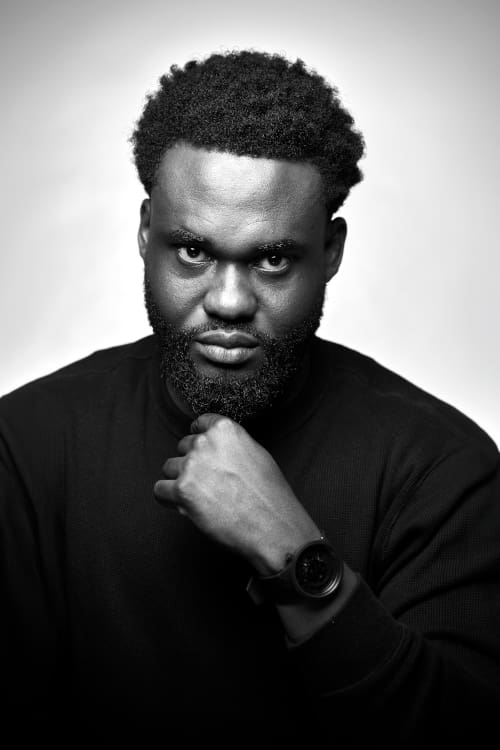
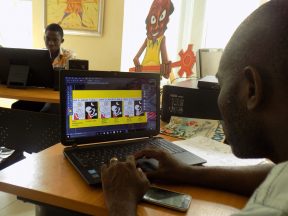
“This studio has been able to uplift other young talent to come as groups to set up their own small shops or studios,” Brown says. “And so, it grew out of Ghana and has now spread its wings to South Africa, Nigeria, doing some training programs, mentorships here and there, and also collaborating, producing works with other growing studios.”
Brown speaks about the studio’s growth with a mix of pride and disbelief. When AnimaxFYB started, there was no roadmap for building a sustainable animation company in West Africa. The studio had to invent its own production methods, create opportunities where few existed, and convince clients and collaborators that high-end animation could be produced locally.
Today, Brown says AnimaxFYB has become “a household name in West Africa,” adding that the company’s reputation is “not just said in words, but backed by the things that we’ve done.”
An Industry From Scratch
AnimaxFYB’s trajectory mirrors the development pattern seen in many emerging animation territories. Commercial and service work pays the bills while original projects slowly grow in the margins as long-term goals.
“Our model is two-fold,” Brown explains. “Of course, there is the commercial side of things, advertisements and all that, where we go to work with Coca-Cola, Samsung, Lebron James, and Nike. We’ve done some great stuff with agencies and also brands. And that is what is keeping the lights on whilst on the other side, we are producing our IPs.”
That balance between survival and authorship has become central to the studio’s identity, even as priorities have flipped over the years. Commercial projects fund the company’s original storytelling ambitions, which now constitute the main focus at AnimaxFYB.
“IP is the top of the chain for us,” Brown says. “Once we make the commercial money, we push it into IP.”
The studio typically splits its year between client work and internally driven productions.
“Within the year, we’ll find ourselves maybe working on a commercial for six months, and the six months we work on the short film,” Brown says. “And this short film is normally a bigger idea that we want to produce as a future feature or pilot, but we package it as a short film, proof of concept, going to the market, test its viability, and all that.”
Building a Catalog
That strategy has resulted in roughly 15 original titles to date, many of which have screened internationally. The studio’s shorts range from folkloric fantasy and sci-fi to socially grounded dramas, including films like Mmofra, the Amazon Prime-licensed fantasy project that helped raise the company’s international profile, and Jabari, a visually ambitious short rooted in African mythology and spirituality. Other projects, including the anime-inspired Taido collaboration with Sony-backed partners in Japan, have allowed the studio to experiment stylistically while building relationships outside the traditional U.S. and European animation pipeline.
According to Brown, the studio now has the highest number of Annecy selections among West African animation companies.
“We’ve been to Oscar qualifying festivals like LA Shorts, Doc Leipzig, Pan-African Film Festival,” he says. “So our pipeline has been proven and has been tested properly.”
The studio’s increasing visibility reflects a broader shift taking place across African animation. International buyers and audiences are paying closer attention to stories originating from the continent, while studios like AnimaxFYB are building pipelines capable of competing on a global level.
Brown points to the growing interest from major entertainment companies as evidence that the market is changing.
“Seeing all these big studios, Disney, Netflix, all of them coming into the space to do projects with African IPs also shows that the interest is big now,” he says.
Beyond Streaming
AnimaxFYB’s rise has happened during a period when global streamers aggressively entered the African animation space before later scaling back many of their international ambitions. Brown sees that volatility as a warning against dependency.
“One of the things that when I get the opportunity to sit on any panel, I talk about the fact that we need to look at being self-reliant and self-sustainable,” he says. “Because if they pull the rug off your feet, you’re dead. There’s no business for you.”
For Brown, the audience strategy must, therefore, start locally before expanding outward.
“It starts with Ghana, it starts with West Africa, Africa, the diaspora, and then the world,” he says. “We need to identify and build our own inroads to the market and also generate revenues for ourselves.”
That philosophy has also shaped how the studio approaches partnerships abroad. Rather than chasing one-off deals, AnimaxFYB has focused on collaborations that can strengthen its long-term infrastructure and talent base.
Training the Next Generation
One of AnimaxFYB’s most significant contributions may ultimately be education and the creation of future generations of better-equipped artists. The studio operates a training facility that collaborates with the French animation school Gobelins, offering a 10-month program designed to develop intermediate-level artists into production-ready talent.
“We have a training facility that trains about 22 people at a time,” Brown says.
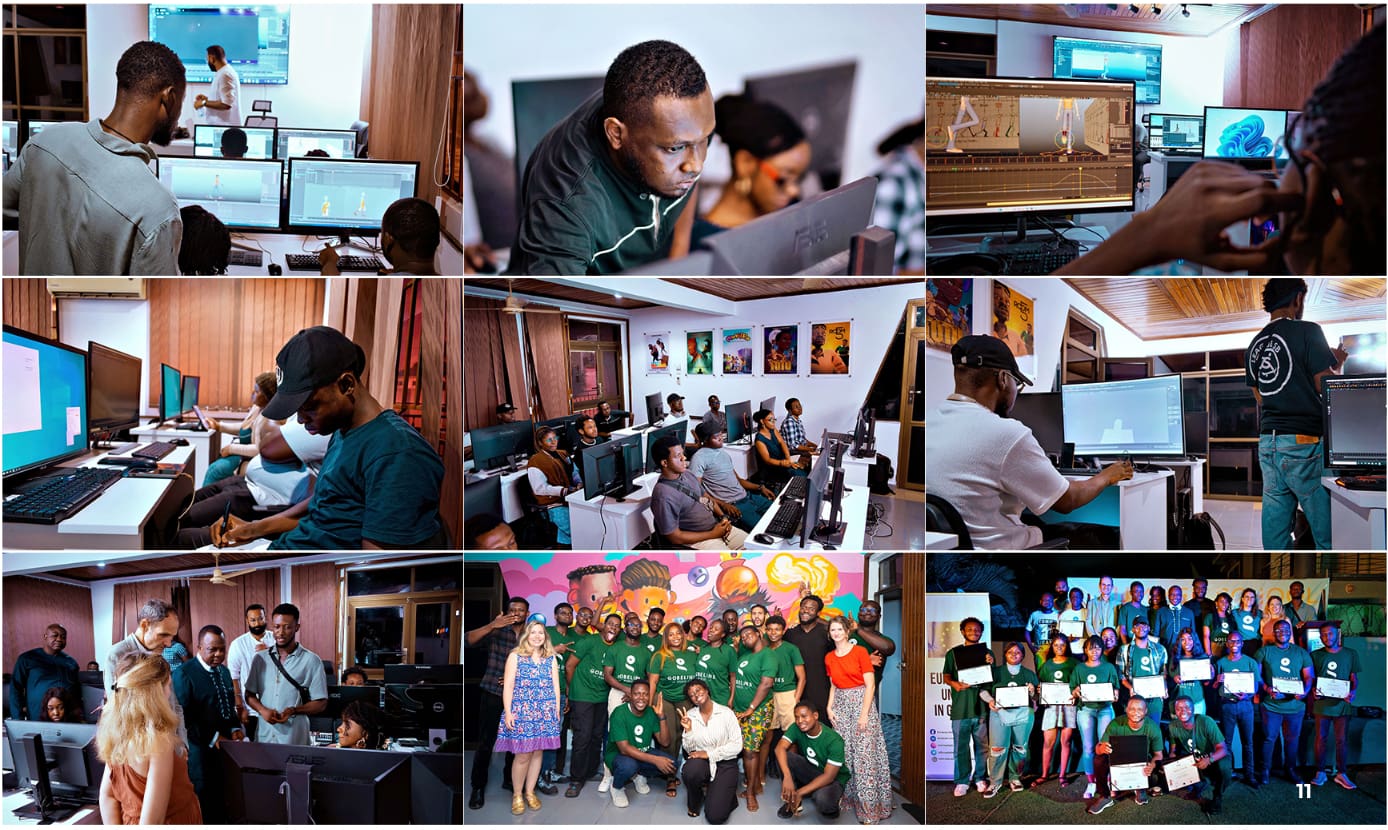
The studio currently employs around 20 full-time employees and can accommodate roughly 50 people on-site overall when demand is high, including trainees. The training structure itself is tightly connected to the company’s production needs.
“We’ve intentionally done something with our training, which is quite strategic,” Brown says. “We’re training intermediate talent to advance for 10 months. Within these 10 months, we are training for five months, and the next five months will be an internship.”
That approach allows students to move directly into a working production environment while helping the studio build a sustainable talent pipeline internally. In a region where experienced animation artists remain in short supply, the strategy has become essential to the company’s growth.
It has also helped create ripple effects outside the studio itself. Many former trainees have gone on to launch smaller companies or freelance operations across West Africa, contributing to the development of a broader regional ecosystem that barely existed a decade ago.
The Leap to Features
Now, as AnimaxFYB enters its second decade, the company is preparing its most ambitious project yet, Oraya, Age of Remembrance.
Brown describes the film as a futuristic story about the tension between technological advancement and ancestral memory.
“As humanity is also advancing, we also believe that we don’t have to lose touch with ourselves and where we come from,” he says. “So how do we maintain that balance where we don’t get ourselves sucked in and so addicted to the technology?”
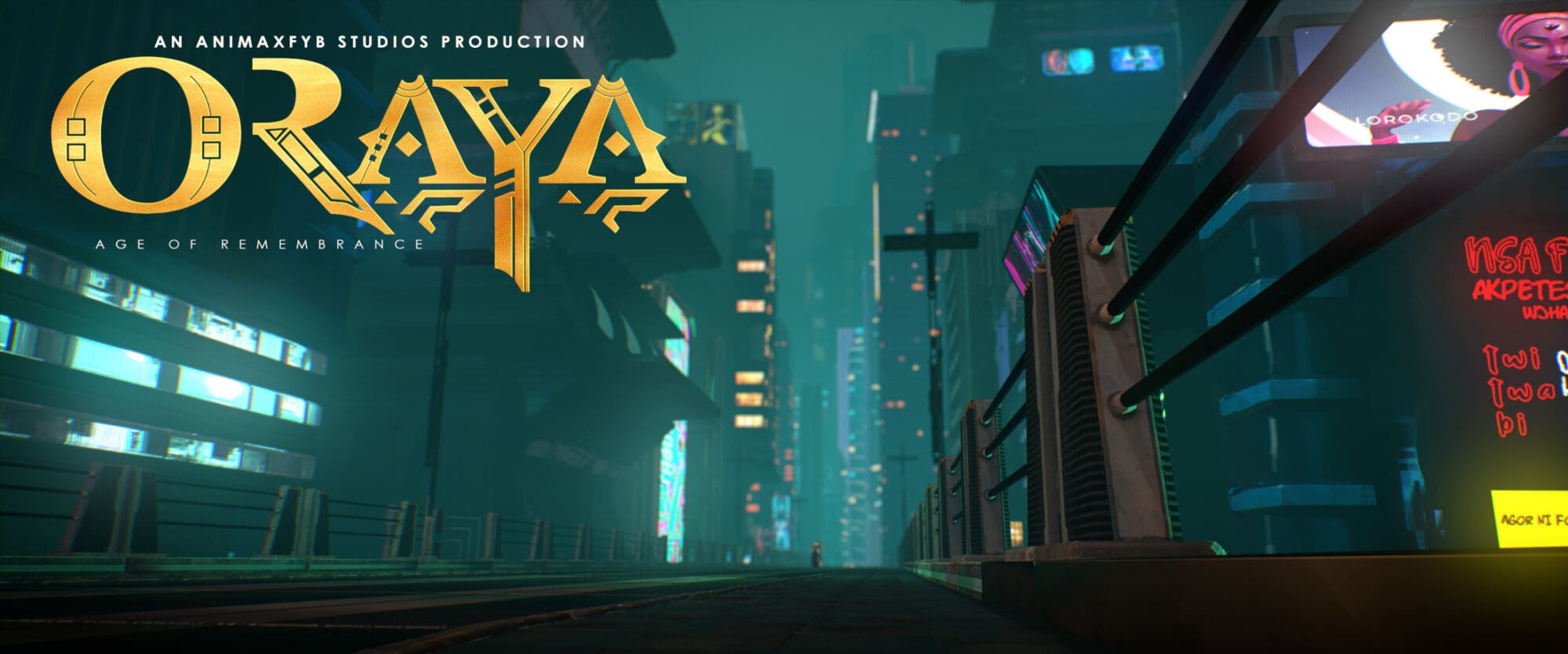
The film is planned for 90-minutes using a stylized 2.5D visual approach inspired in part by projects like Spider-Verse, Arcane, and Entergalactic. Brown is quick to emphasize, however, that while the production methods are inspired by those titles, the studio wants the film to establish its own visual identity.
“What we have done is that we’ve actually made it fresh,” he says. “It’s different. When you see it, you won’t say, ‘Oh, this is like Arcane.’”
We’ve seen a bit of the developmental footage and can confirm that the feature represents a major technical and logistical step for the studio, but Brown argues that the groundwork has been laid over years of experimentation through shorts and commercial work.
“We intentionally made some of our clients gigs in that same style,” he says. “So that it shows us all the loopholes and things that we need to strengthen within the pipeline.”
All or Nothing
Budget remains a challenge, as it does for many independent animation productions worldwide. Brown speaks about the film with the mix of pragmatism and determination that has defined the studio’s first decade.
“We’ve bitten the bullet,” he says. “We’ve told ourselves that no matter what happens, we are producing this film, and we are producing it within record time for a studio like ours.”
For AnimaxFYB, the feature represents the next logical evolution in a process the studio began 10 years ago, building infrastructure, training artists, creating original work, and proving that ambitious animation can emerge from places the global industry has historically overlooked.
Brown understands that the next 10 years will undoubtedly bring new challenges, changing business models, and more instability across the entertainment landscape. But he also sounds confident that the studio has already learned how to survive uncertainty.
“We’ve built our own audience,” he says. “And also tapping into the global one.”
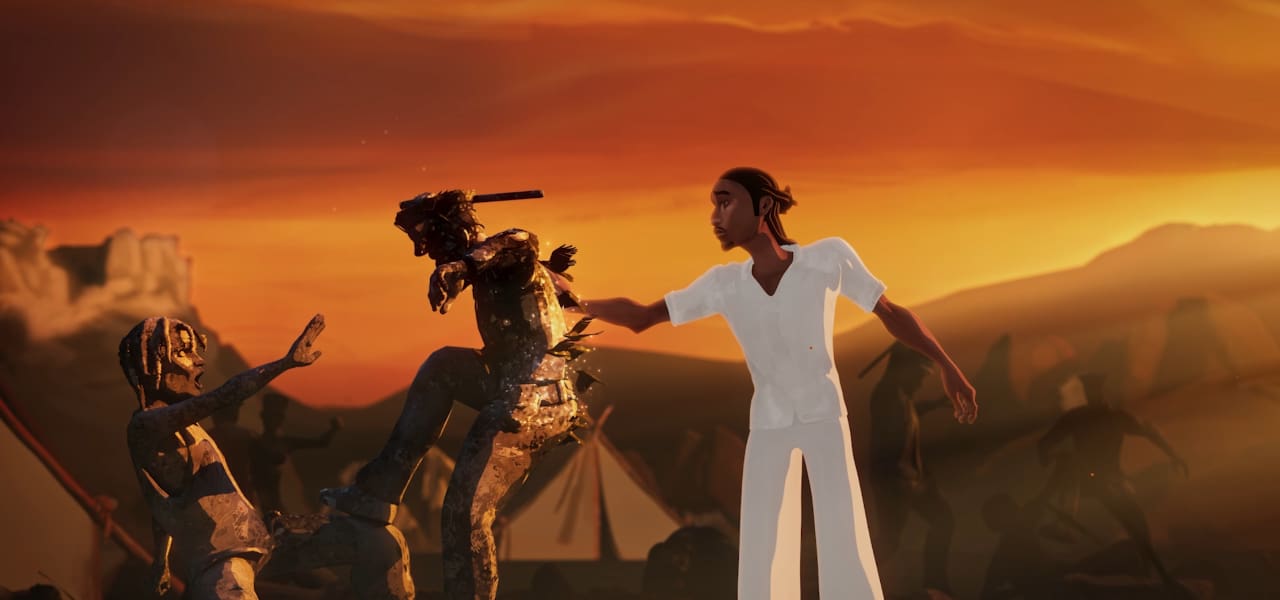
Pictured at top: An upcoming music video for Ky-Mani Marley