.png)
Everything You Need To Know About Apple’s New Animoji
Stay informed with free updates
Sign up to get our news digest — delivered directly to your inbox twice a week.
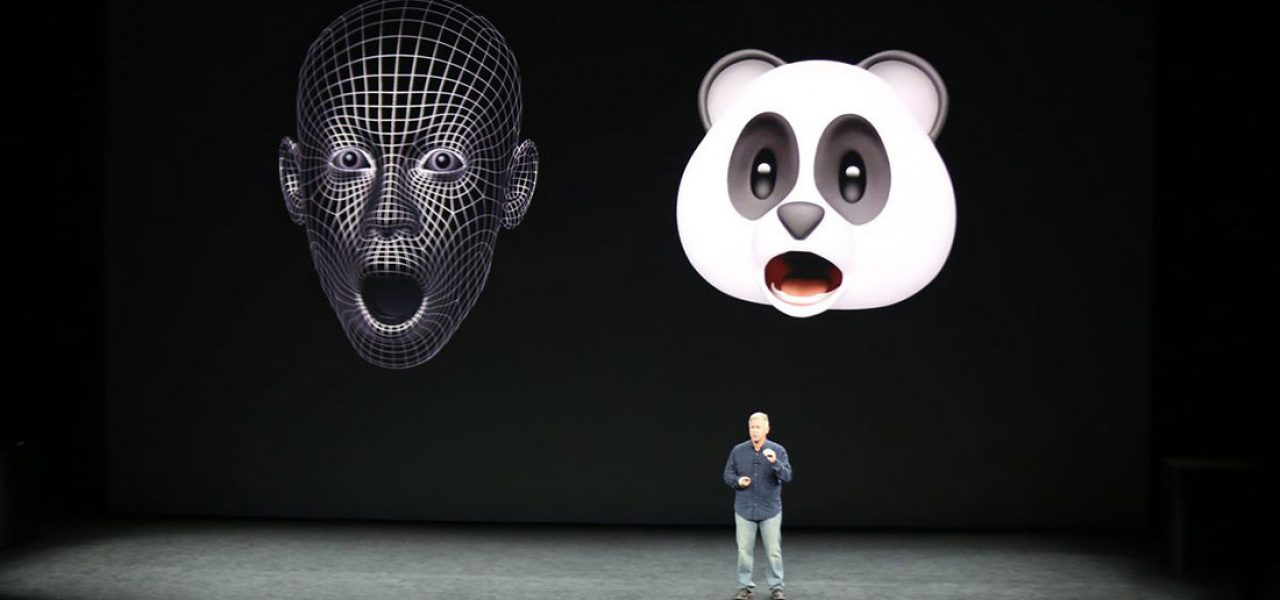
Apple made augmented reality a consumer concept today with its new “animoji” phone feature that allows users to interact with one another as real-time rendered 3D cartoon characters.
Using Apple’s new Face ID hardware, Animoji are animated emoji that use data from the user’s face to create expressions while generating automated lip sync from user voice input.
The looping Animoji can be recorded and sent through Apple’s own text messaging app in iPhone X. The easiest way to understand how it works is to watch the demo:
This will make you LOL! The #Animoji in demo for #iPhoneX. #AppleEvent #SteveJobsTheater #iPhone pic.twitter.com/BRxNkmgYWQ
— Marcus Anthony (@SolespireMarcus) September 12, 2017
The underpinning technology behind Apple’s Face ID is the new True Depth camera system that is made up of a dot projector, infrared camera, and flood illuminator, and powered by the A11 Bionic neural engine, which is a dual-core design that performs up to 600 billion operations per second for real-time processing.
That tech, combined with the iPhone’s improved front-facing camera, will be capable of capturing and analyzing 50 different facial muscle movements, and then animating those expressions in a dozen different Animoji.

Augmented reality (ar) is not a new technology. And unlike its virtual reality counterpart, which is still hampered by overly complicated hardware, ar has already taken off; face transformation apps, Snapchat filters, and Pokémon Go are all wildly successful examples of the tech. Another big booster of the technology is Facebook CEO Mark Zuckerberg who’s pushing ar as a cornerstone of Facebook’s 10-year plan.
Animoji also has a precedent with real-time character animation tools like Adobe Character Animator and Realallusion’s Crazytalk.

Like much else of what Apple does, Animoji is not a revolutionary technology, but Apple’s iteration is a notable moment for augmented reality, as it normalizes communication-as-animated-characters on a mass consumer scale.
With Apple jumping on the train alongside Facebook and Nintendo, it’s safe to say that ar technology isn’t going away anytime soon. As the tech increases in sophistication, it will open up tantalizing possibilities for animators and character designers who may soon be creating animated characters not just for passive viewership, but for people to actively become.