.png)
Adobe Ends Animate, Abandoning Millions Of Artists Amid AI Push
Stay informed with free updates
Sign up to get our news digest — delivered directly to your inbox twice a week.
For more than a quarter century, Adobe Animate, formerly known as Flash, has been a giant of 2D animation production. It facilitated TV series, indie shorts, advertising campaigns, educational media, web animation, and gaming. Countless animators were introduced to, trained on, and made their living using the software. It underpinned pipelines at studios of all sizes around the world.
Now, Adobe is drowning that legacy in gasoline and putting a match to it, abandoning millions of artists in the process by sunsetting the software and going all in on AI. (It looks like there were approximately 3 million animate CC users as recently as October 2023, and over 30 million Creative Cloud users in 2025)
The company announced on Monday, February 2, that Adobe Animate will be discontinued effective March 1, with limited support extending only until 2027 for individual users and 2029 for enterprise customers. After that, access to the software and, critically, to project data in its native environment will come to an ignominious end.
This is not a routine product sunset. It is an industry-shaking event with immediate consequences for ongoing productions and long-term implications for the future of 2D animation, especially as Adobe and other software giants increasingly pivot toward AI-driven tools and services.
Overnight, Cartoon Brew was flooded with emails and DMs from artists, techs, directors, and producers reacting with anger, disbelief, and anxiety. The message was consistent and concisely summed up by one email that put it bluntly: “Fuck Adobe, and fuck AI.”
From FutureSplash to Flash to Animate
Adobe Animate has been around for a long time, even if the name hasn’t. The software started life as FutureSplash Animator in 1996, built by a small company called FutureWave to create lightweight animation and interactive content for the web. A year later, FutureWave was bought by Macromedia, the software was renamed Flash, and animation on the internet changed almost overnight.
Flash took off because it was fast, small, and easy to share, at a time when internet access could still be cut off if your sister picked up the phone. Macromedia also made Flash Player free. That decision helped turn Flash into one of the most omnipresent tools for both production and distribution of early internet animation. For many animators, it was the first software they ever used.
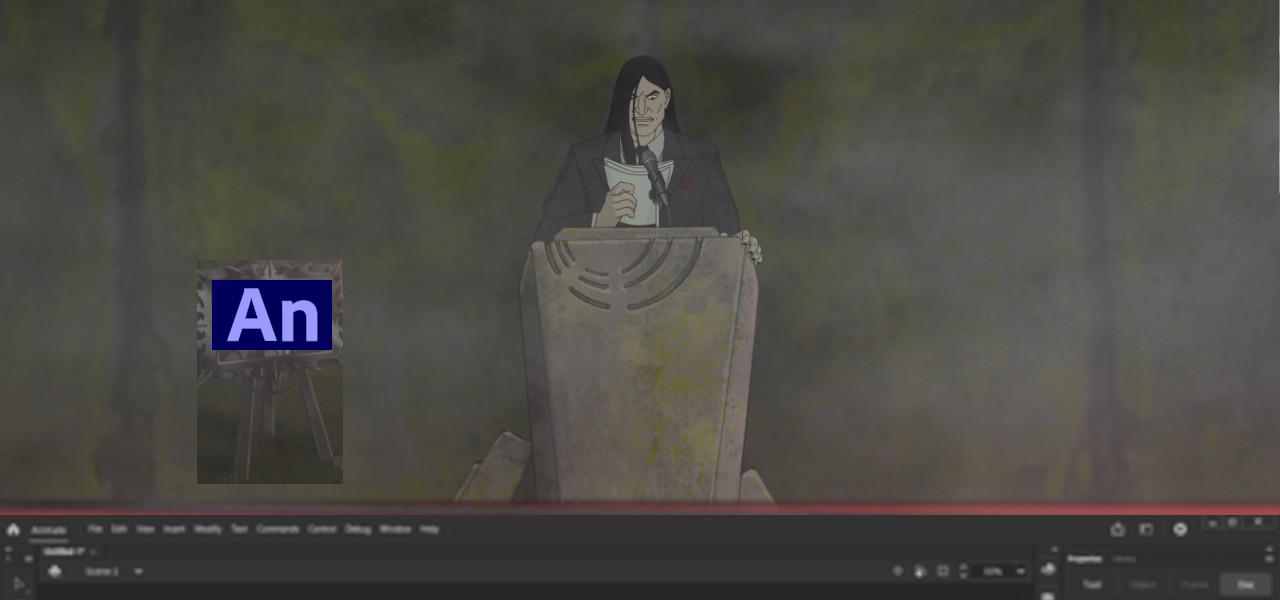
As Flash evolved, it also legitimized itself. Studios began using it for television production, including shows like My Little Pony: Friendship Is Magic, Total Drama, Metalocalypse, and El Tigre. It proved that a tool born online could scale up to real-world production demands. The Wikipedia page listing Flash/Animate productions is a testament to the software’s incredible legacy.
After Adobe acquired Macromedia in 2005, Flash eventually became Adobe Animate. Even after the Flash Player disappeared, the software itself remained a workhorse, powering productions long after the early internet crowd had moved on.
Not a Routine Product Sunset
Adobe’s Animate shutdown is not a product update, retirement, or consolidation. The company is pulling the plug on a widely used, production-critical tool without offering a suitable professional replacement, a credible migration path, or any apparent concern for the projects or people still dependent on it.
According to Adobe’s release, Animate will stop being sold and supported on March 1. Support will linger briefly after that, presumably handled largely by automated processes, but these details feel more like a countdown than a safety net. Once support ends, access to Animate project files in their native environment also ends. Adobe explicitly urges users to export their work before that happens.
That detail has set off alarm bells across the industry and has many artists on edge.
Animate projects are not static assets. They are complex environments that integrate timelines, bespoke symbols, reusable libraries, scripts, export presets, and countless other factors, often built and refined over years or decades. Exporting files does not preserve that larger environment. This is more than just a case of going out and buying another wrench. The entire toolshed is being demolished.
Unconvincing Alternatives
In its end-of-life notice, Adobe points users toward other products in its ecosystem, most notably After Effects and Adobe Express, as potential alternatives. Among our readers, at least those who have reached out, that guidance has been met with widespread skepticism.
After Effects is primarily a compositing and motion graphics tool, and while it includes features such as Puppet tools and procedural animation, many argue it was never designed for sustained frame-by-frame character animation, asset-heavy production, or long-running workflows. Tasks that are relatively lightweight in Animate can quickly become cumbersome in After Effects.
Adobe Express, meanwhile, is a minimalist design platform aimed at quick turnaround social media and marketing use cases. Artists and studio leads have told us plainly that it cannot meaningfully replace the professional 2D animation environment Animate provides.
The recurring concern voiced by professionals is not simply that Animate is being discontinued, but that there is no clear, like-for-like replacement within Adobe’s portfolio that can do what Animate does.
Perhaps more important than which tools can replace Animate is why artists should trust Adobe going forward. The company already sent waves of artists packing when it shifted to a subscription-based model, while many others have stuck with now-outdated perpetual-license versions rather than migrate to Creative Cloud. For many, the Animate shutdown reinforces a sense that Adobe’s business priorities no longer jive with the community that has long depended on its tools.
All of this is before even getting into the baseline issues many artists have with AI-heavy toolsets, which appear to be the direction Adobe is heading.
Uncertainty For Ongoing Productions
For studios of all shapes and sizes, the implications of this shutdown are immediate and profound. Animation takes a long time to produce, and Adobe is not offering a particularly generous runway to adapt ongoing productions.
Anything currently in development or mid-season must now factor Animate’s end-of-support timeline into their planning. Even with Adobe’s tiered shutdown schedule, our readers are feeling like the rug has been pulled out from beneath them. Pipelines that were expected to remain viable for a show’s lifespan now have an expiration date.
Migrating away from Animate is far from straightforward. Studio leads are now having to plan to retrain artists, adapt or rebuild rigs, convert large asset libraries, and rethink export and delivery workflows. Several artists told us they expect to lose the ability to revise older material without significant additional work.
The challenges are particularly brutal for small-scale studios and independent productions. Budgets and schedules are typically built around existing tools with very little margin for disruption. Being forced to move away from Animate creates a logistical nightmare for work already being created on razor-thin margins.
AI Looms Large
Many artists view Animate’s discontinuation as part of Adobe’s growing emphasis on AI-driven tools. Dozens of articles have been published in the last 12 hours, and social media is being flooded with posts from artists mourning another casualty of artificial intelligence.
Over the past several years, Adobe has invested heavily in generative and assistive AI technologies designed to automate or accelerate production processes. For many artists, Animate represents a more traditional and preferred approach, built around human-led, frame-by-frame craft and direct artistic control.
The concern voiced by artists is not simply that one piece of software is disappearing, but that its removal signals which creative workflows will be prioritized going forward.
Calls For Preservation
In response to Adobe’s announcement, petitions have been launched in hopes that Adobe will make Animate open-source, release specifications, or provide tools that would allow long-term access to existing projects.
The suggestion is that if Adobe no longer intends to develop Animate, the broader community could maintain Animate, or something comparable to and compatible with it. Blender is open-source and has become one of the most widely used and best-supported animation tools in the world. Many artists see no reason why a similar community effort could not keep Animate viable for years to come.
So far, Adobe has given no indication that it plans to pursue this option. And from a business standpoint, it is not hard to see why. There is no obvious financial incentive to allow another open-source competitor to its future tool sets, and the company’s leadership, its current leadership anyway, is not exactly known for prioritizing goodwill over growth.
Human Impact
Beyond software logistics, artists online and those speaking directly to us have emphasized the human impact of Animate’s shutdown.
Careers have been built around the tool. Studios have hired and trained staff with Animate-specific expertise. Schools and educators have relied on it to teach animation fundamentals. Entire generations entered the industry from their family PC through Flash and continued working in Animate long after the web moved on.
For many of those artists, Animate’s shutdown feels like a collapse of viable professional pathways, particularly at a time when the animation industry is already under economic pressure and facing widespread job insecurity.
A Turning Point
Whether Adobe intended it or not, the end of Animate marks a significant turning point for animation production of nearly all sizes and scales.
Studios are now being forced to reassess long-term pipelines. Artists must weigh whether to retrain, switch tools, or leave certain kinds of work altogether. The industry as a whole is being reminded how fragile creative infrastructure can be when it is owned and controlled by large software companies with shifting priorities.