.png)
‘We Wanted To Keep Him Familiar’: Rob LaDuca On Adapting Mickey For A New Generation Of Clubhousers
Stay informed with free updates
Sign up to get our news digest — delivered directly to your inbox twice a week.
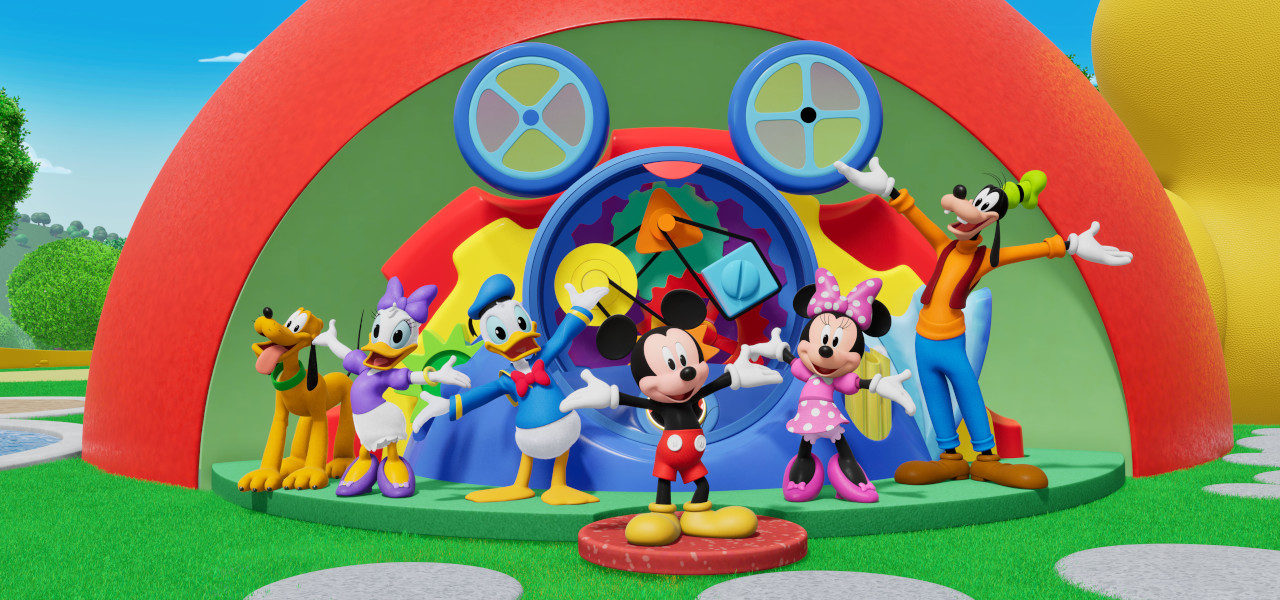
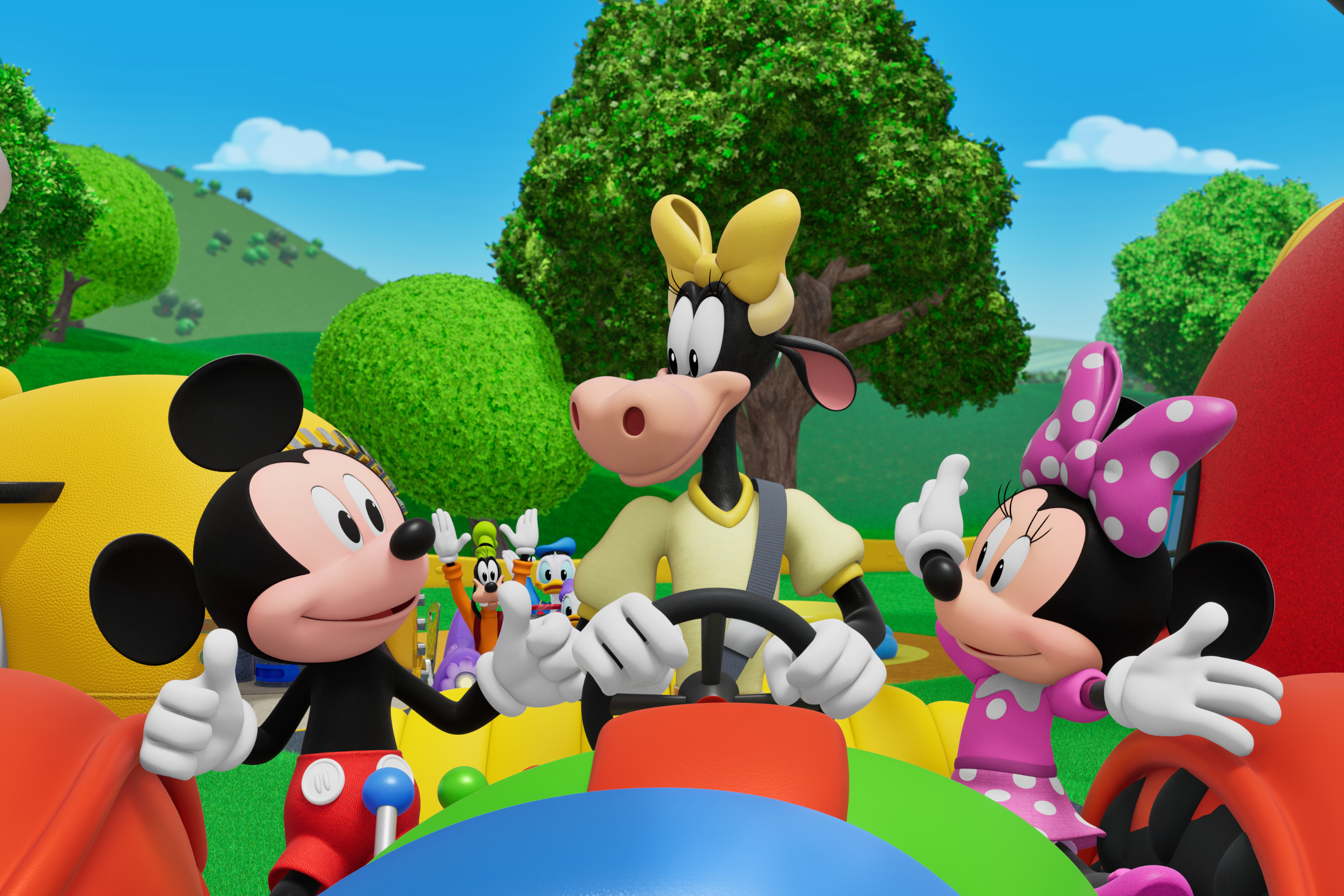
The much-loved Mickey Mouse Clubhouse returns today in its new incarnation, Mickey Mouse Clubhouse+, airing on Disney Jr. today and streaming on Disney+ starting July 22. Building on the Emmy Award-winning original series, the new show continues Mickey, Minnie, and friends’ problem-solving adventures while adding new characters to the mix, such as Little Helper and Duffy the Disney Bear.
We spoke with Rob LaDuca, executive producer of “Mickey Mouse Clubhouse+,” about what it’s like to return to the world of Mickey Mouse, the challenges of CG animation, and why the show’s interactive, narrative-driven format still matters for kids today.
LaDuca is an Emmy Award-winning executive producer and director who has had a tremendous impact on generations of kids going back more than three decades. His recent work includes Mickey Mouse Clubhouse, Mickey and the Roadster Racers, and Jake and the Never Land Pirates, while his ‘90s credits also include The Lion King II: Simba’s Pride, Aladdin, and Timon & Pumbaa. He has received Emmy recognition for his storyboarding on Winnie the Pooh and Muppet Babies, and directed projects like Lilo & Stitch: The Series and Tutenstein.

Cartoon Brew: How does it feel returning to Mickey Mouse after all these years?
Rob LaDuca: At Disney, they thought there was still room for the show, so they called me back to do more. I had been asking for years. I’d done a couple of aged-up Mickey shows, like Roadster Racers and Mixed-Up Adventures, but I kept saying, “[Clubhouse] is still so popular.” There’s always a new generation of kids.
The original series was one of the first times Mickey was done entirely in CG. What’s changed in animation since then?
When we did the first round of Mickey Mouse Clubhouse, they wanted it in CG, and we were like, “Are you sure? It’s not really ready yet.” The animators in India at the time were primarily technicians; they weren’t true animators. We had to go over there and teach them the basics of animation, such as eye direction and ensuring there’s a soul in their eyes. This time around, it’s been great. Many of the same individuals are now supervising and teaching, and there are also real animation enthusiasts who aspire to be animators there. They already know the principles.
The show has a traditional half-hour narrative structure. Why stick with that in an era where short-form content seems to be the norm?
Now, the thinking is that kids are watching everything on phones, and you should only make it two minutes. And that’s not true with smaller kids. They want to feel involved. It’s a group of friends—Mickey, Minnie, Donald, Daisy, Goofy—that welcome you into their circle. I was so glad when they said they still wanted it to be 24 minutes. That gives us a better arc to the story, more emotion, and the parents thank us, too, because we give them half an hour where they know their kids will be very involved, dancing and solving problems in front of the TV.
How important is the interactivity of the show for young viewers who are accustomed to more interactive content on phones and tablets?
It’s huge. Even if they don’t say the answer out loud, they’re thinking it, and when Mickey says, “You’re right,” they feel accomplished. They’re solving basic problems—should we go this way or that way? Is that a diamond shape? Is that a castle sign? Shape recognition, basic math—they love it.
 How did you approach updating the Clubhouse itself?
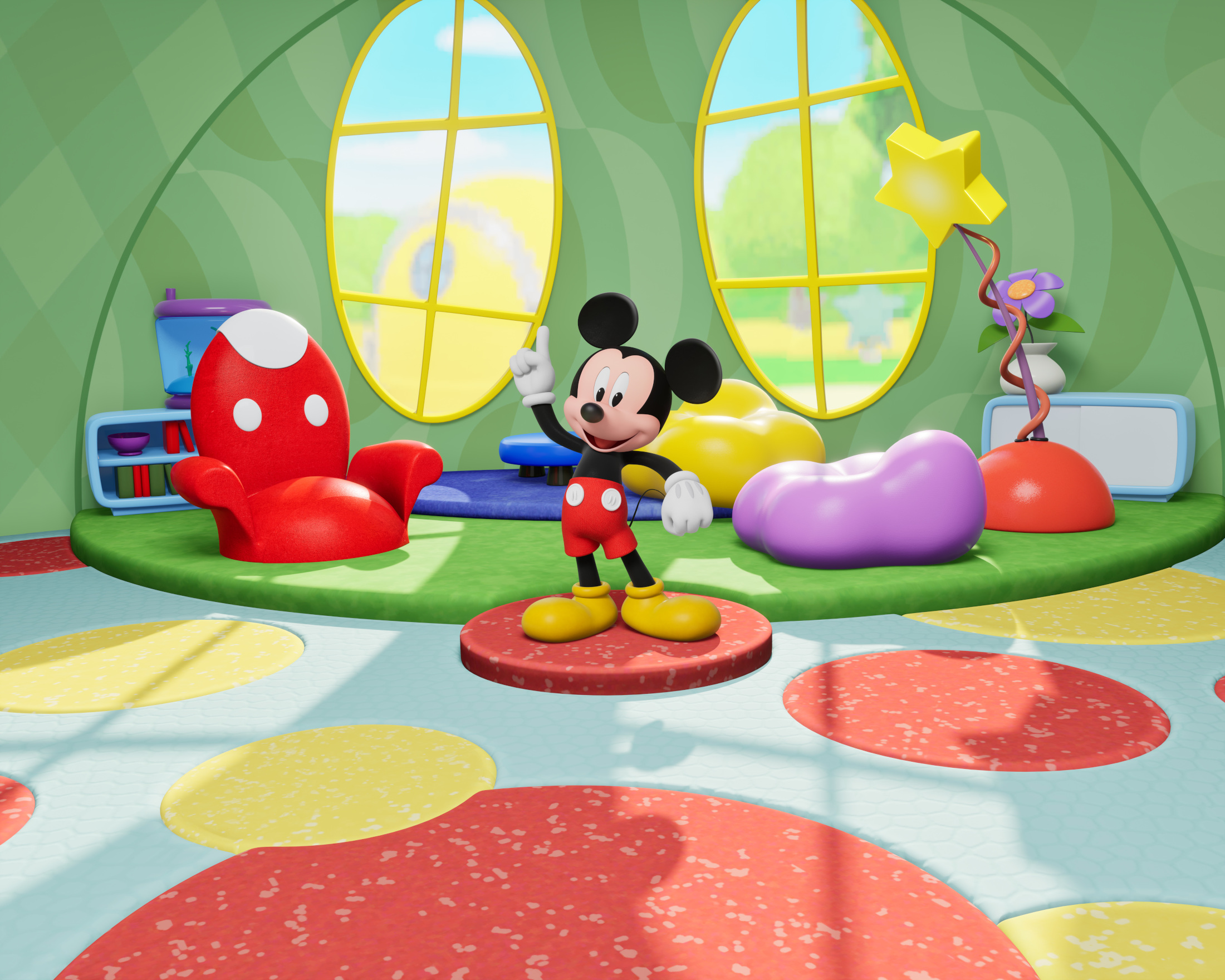
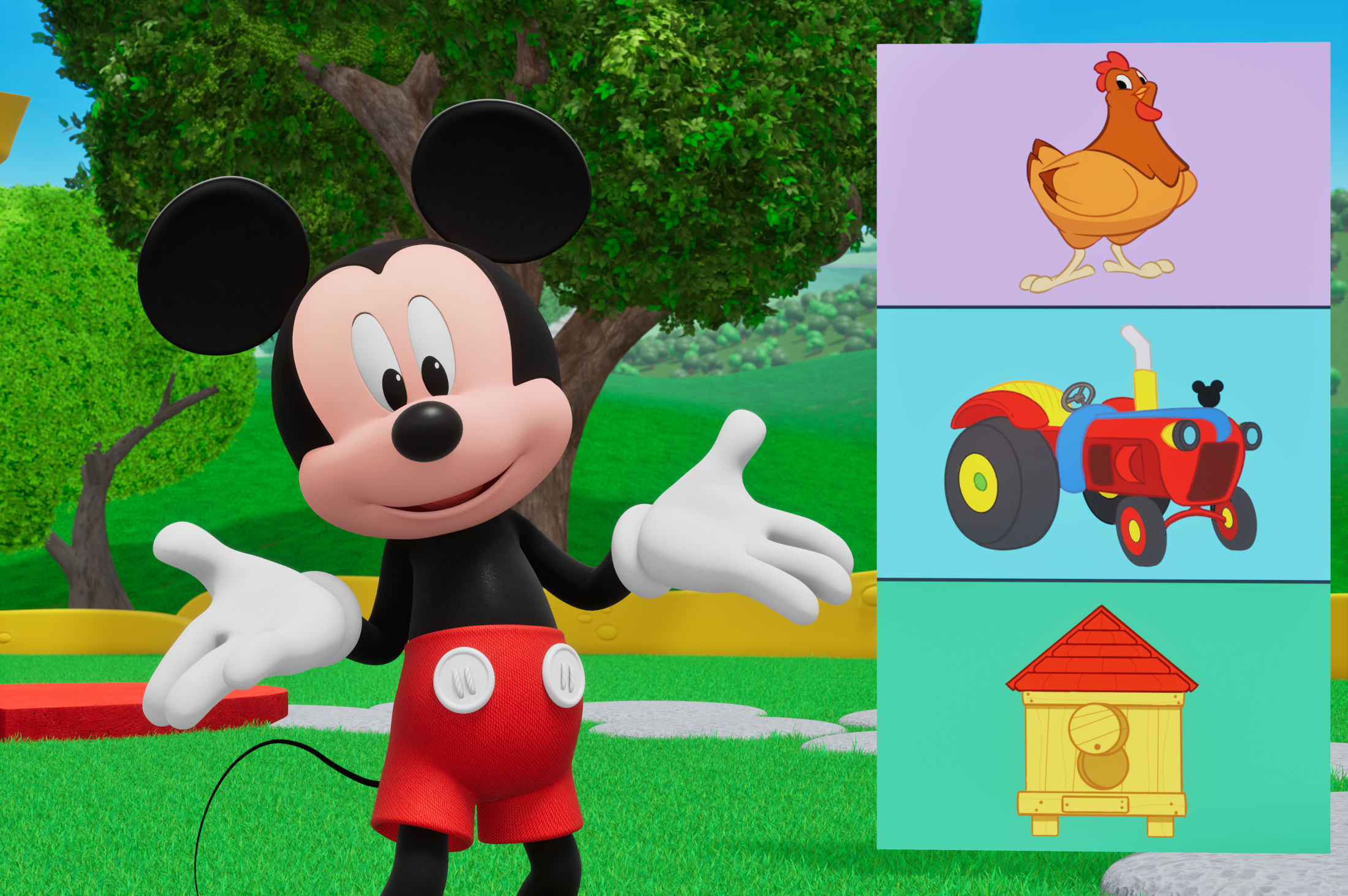
We view the show as a continuation of the previous one. We didn’t want it to be all new and shiny. It was already a comfortable world for kids. But we did add some new things. We’ve got the Laughing Loft now, more fun and games, and the Wacky Tube to get characters around. It doesn’t like Donald too much, though—just to give him trouble.
Technology has advanced a lot since the last show, and the characters look better than ever today, while still familiar. How do you decide when changes are acceptable working with legacy content like this?
Twenty years ago, when we started developing the first show, Mickey wasn’t in your daily life. They said, “We need to get Mickey out there to the kids.” All we knew was that this was a character we loved growing up. So, we had to keep him familiar. We looked at the old cartoons from the ‘30s and ‘40s. Mickey’s ears, for example, always stay flat no matter how he turns. In CG, that was hard; they end up looking like two satellite dishes. You can’t do down shots or up shots with Mickey. There are certain things you just can’t do in CG. But we wanted to keep the humor and relationships true to who these characters are, so we figured out what we could get away with, given the limitations.
What’s it like creating this show for streaming now versus traditional TV 15 years ago?
It affects production behind the scenes more than anything else. We have to deliver 10 episodes at a certain point, so we have to start writing sooner and back-time the schedule. But it’s satisfying. Now we have multiple shows we can reference before it even airs. Before, we were delivering a reel physically to be satellited around the world. Now, it’s digital. It’s just a button on a computer.
Do you think the weekly release model or binge release works better for this kind of show?
I think there’s value in spacing episodes out. Kids will watch the same episode over and over again. We saw that with the original show. There was a character called Baby Redbird, and so many moms told us their kids just wanted to watch Baby Redbird over and over. That’s why we brought in Little Helper this time around. He’s a preschool handy helper—literally a helping hand. But he’s also learning and makes mistakes, and the characters help him problem-solve.