About Amid Amidi

test

Three Music Videos

Music videos are such a great place for experimentation with visual techniques and ideas. Here’s three that have caught my attention recently. One is cross-stitched stop motion, one is puppets, and one is digital collage and live-action.

“Like It or Not”
for Architecture in Helsinki
directed by Josh Logue at Mathematics

“Champion”
for Kanye West
directed by Neon

“Sophisticated Side Ponytail”
for Natalie Portman’s Shaved Head
directed by That Go

New United Airlines Animated Spots

Sea Orchestra

United Airlines has unveiled five new animated spots for the Beijing Olympics. The commercial are elegant, visually-driven and beautiful to watch, just like the rest of the animated spots that the airline has produced in recent years. Pretentious to be sure, particularly for a carrier like United, but I still appreciate their attempts at fostering a more positive image by utilizing artistic animation. The ad agency responsible for these spots is the newly formed BDM, though two of its principals, Bob Barrie and Stuart D’Rozari, have been instrumental in United’s animation campaigns from the very beginning.

The real standout piece in this latest batch is “Sea Orchestra” (view hi-res version here) by Shy the Sun, the South African collective who also operates under the name The Blackheart Gang and who produced the short Tale of How. In this commercial, they combined hand-drawn textures and photographs into a brilliant and ornate CG package that is bursting at the seams with creativity. The commercial was produced in cinema resolution and I’m sure the visual effect of this on the bigscreen is overwhelming.

There are four other commericals in the series, including one by Ishu Patel. Click on each title below to watch a hi-res version:

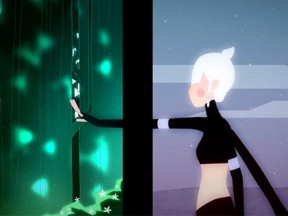
“Two Worlds” – From the United press release: The commercial combines two different and distinctive animation styles created by directors SSSR, a Norwegian and Japanese team, who was responsible for the monochromatic world that was mostly computer-generated with a hand-crafted feel, and Gaelle Denis, a French director, who was responsible for the colorful fantasy world that uses using live action, computer generation and matte paintings, including textures such as Japanese rice paper.

“Heart” – From the press release: Using stop-motion animation and paper puppetry, California-based director Jamie Caliri and his team, place dimensional cardboard puppets in miniature sets that were shot frame by frame. The musical score for “Heart” is a piano duet of Rhapsody in Blue performed by Herbie Hancock and Lang Lang, who recently performed “Rhapsody in Blue” together at the 2007 Grammy Awards.

“Moon Dust” – From the press release: Ishu Patel, an Indian-born and Canadian-based animator, used his world-renowned back-lit technique in which a thin layer of plastic modeling clay is applied to a glass plate that has a 1000-watt light positioned beneath it and an animation camera above it.

“Butterfly” – From the press release: Polish director Aleksandra Korejwo manipulated colored salt using shed condor bird feathers on a black canvas positioned under a downward-facing camera.

Animated Chicago by Joe Fournier

Animated Chicago

One of the newest, and most unexpected, outlets for original animation nowadays appears be newspaper websites. For the past year or so, the NY Times has been commissioning beautiful animated pieces by animators like Jeff Scher and Gary Leib, and now the Chicago Tribune is getting into the act with a new politically-oriented series Animated Chicago by illustrator and animator Joe Fournier. I’m not sure if they’re planning to do more of these, but the first episode can be viewed on the Tribune’s website.

Animated Features for Grown-Ups

Persepolis

FilmInFocus.com has a series of articles entitled “Adult Animation: A Look at How Cartoons Grew Up.” I wrote a piece for them about the upsurge of adult animated features in the US and abroad. The article covers a lot of ground but one of my goals was to show how animated features are on the verge of entering a renaissance period. From the indie features being made in the US by the likes of Nina Paley, Paul Fierlinger and Bill Plympton, to the mature and intelligent features being produced in all corners of the globe, the animated feature scene today is more vibrant than it’s ever been.

There’s also a piece by Sundance Film Festival programmer Mike Plante about how to create animation on a tight budget and Nick Dawson’s essay on the history of X-rated cartoons. It’s worth pointing out that FilmInFocus is run by Focus Features, the specialty film arm of Universal, that will be releasing two animated features of its own shortly: Coraline by Henry Selick and 9 by Shane Acker.

Who Needs to Pitch?

Making Fiends

LA Weekly has two articles this week profiling Amy Winfrey and her animated webseries Making Fiends and Stefan Bucher’s Daily Monster video podcast. What do both of these creators have in common? Their ideas started out as independent self-financed Internet projects that gained a popular fan following and were ultimately given TV deals by major companies. Making Fiends is about to debut as an animated series on Nickelodeon, while Daily Monster was collected into book form this year and will also appear as a segment on PBS’s new Electric Company in 2009.

The paths that both of these properties have taken offer a view into how new TV animation ideas will be discovered in the future. The dysfunctional system of pitching and development in TV animation still exists, but it is on the wane and being dismantled by the Internet. As Winfrey and Bucher have demonstrated, creators are no longer beholden to clueless and sheltered development execs who don’t have the foggiest about what their audiences want to watch. Today an artist can create an uncompromised piece of animation independently, post it online, and attract a significant audience without any assistance from broadcasters. The cherry on top is that if your idea is successful, major companies will be knocking at your door to pay you money to produce more episodes.

Eric Goldberg Speaks

Eric Goldberg

The cuddliest man in animation, Eric Goldberg, is interviewed on the latest edition of the Animation Podcast. The chat is an hour long, and it’s only part one of the discussion. Haven’t listened to it yet, but surely a lot of wisdom is being dispensed. On a related note, Goldberg will be signing his new book Character Animation Crash Course! tomorrow night in LA. It can also be ordered on Amazon.

Another Piece of Animal Kung Fu

Chop Socky Chooks

Chop Socky Chooks is a CG television series produced by Aardman for Cartoon Network UK. The show, starring kung fu chickens, was created in-house by one of its animators, Sergio Delfino. I’m not exactly sure why I’m linking to it other than it’s amusing to keep track of all the kung fu-related productions we’re going to be seeing over the next few years. Just in case you’re keeping score, first there was the TV series Skunk Fu! which was produced by Ireland’s Cartoon Saloon and premiered in September 2007, then there’s Chop Socky Chooks which has apparently been airing since March ’08, and finally DreamWorks’ Kung Fu Panda, released theatrically in June ’08.

“Muffin Man” by Tom & Mark

Muffin spot by Nexus
“Muffin Man” is a new spot for Royal Bank of Canada directed by Tom and Mark Perrett (repped by Nexus Productions). The commercial uses CG to recreate a stop motion aesthetic complete with choppy timing, puppet-like designs and muted Seventies color palette. It’s a well done spot, no question about it, but I have mixed feelings about it. Frankly I’m getting tired of CG directors evoking charm in their work by cashing in on the audience’s fondness for older animation techniques. If you’re using CG, why not explore the inherent appeal in your chosen technique instead of using it to mimic a look from decades ago?

(via Motionographer)

Bob Godfrey Documentary

A short but delightful BBC special (in two parts) about British animation legend Bob Godfrey. It’s from the early-1970s.

The film contains the following bit of wisdom from Godfrey: “There’s no point in doing something in animation that could be done very much quicker or much easier in live-action. Animation should deal with surreal things, with fantastic things, impossible things, because there are no limitations in animation. The only limitations there are are within the animators themselves. There’s nothing you can’t do. This is the terrifying thing about it, this is the exciting thing about it. You name it, it can be done in animation.”

For a taste of his work, here is a delightful episode of the 1970s children’s series Roobarb, directed and animated by Godfrey.

Betty Boop: Latino Icon

Up

Apparently lots of Latino people think they look like Betty Boop. This article in Swindle Magazine discusses the popularity of the character in East LA, from wall murals to look-alike contests:

During the competition each age group is given a different challenge, other than the babies, who just look cute. The 2-year-olds must blow a kiss. Three-year-olds say “boop-oop-be-doop.” Girls aged 4 and 5 must sing a song. Every child gets a trophy for participating. The contestants have ranged from 20-days old to the cut off age of 5. She’s had over 1,000 children in the contest over the years, 90 percent of whom are Latino. And for 15 years Denise has been able to place the winners in the annual Montebello parade, for the crowds to marvel at tiny Betty Boops on procession through town in sparkles and strollers.

Color in 101 Dalmatians

101 Dalmatians

To this day, Walt Peregoy’s color styling in 101 Dalmatians remains a fine example of how color can be used creatively in animation while serving more than a merely decorative function. On his blog Colorful Animation Expressions, artist Oswald Iten is exploring the use of color as a storytelling device in that film. So far he has written two thoughtful and in-depth posts about the topic with more to come–Color in 101 Dalmatians: An Introduction and Color in 101 Dalmatians: 1. Home Sweet Home.

Teaser Trailer for Pixar’s Up

Up

This weekend at Comic-Con, Pixar previewed footage from their next film, Up, directed by Pete Docter. They’ve also just released the first teaser trailer for the film:

FirstShowing.net offers this description of the plot:

Our hero is the 78-year-old Carl Fredricksen (voiced by Edward Asner), a short and square little man who walks with a cane. When he was young he met a girl and fell in love with her. Her dream was always to explore Paradise Falls in Venezuela, but unfortunately life got in the way and it never came true. Now Carl is an old widower and he sets off on his own to head down to South America to live out that dream before his life ends. Most of the movie takes place in the wonderfully envisioned mountains of Venezuela, where Carl eventually lands after his house sails south…Along the way, Carl meets numerous other characters and creatures. One of them that Docter showed us was a young, chubby 9-year-old boy named Russell. He’s collected all the merit badges (for the Wilderness Club) except one – assisting the elderly. So he stows away in Carl’s house and floats with him down to Venezuela as well.

Footage from the film was premiered in San Diego alongside clips from Disney’s Bolt. While Bolt went over well, Up made “fanboys run for the exits,” according to this report on the Spout blog. Some people enjoyed it however. Entertainment Weekly says that there was no contest between which of the two films looked better: “Bolt proved suitably entertaining…then immediately lackluster, once director Pete Docter (Monsters Inc.) came out and debuted a few scenes from Pixar’s Up.”

Personally, all I can say is that I’m excited. In fact, I’m looking more forward to this film than any Pixar effort since The Incredibles. As much as the risk-taking and experimentation in Wall-E were commendable, the film taxed my patience with what I found to be unrelatable and largely uninvolving metallic leads. Up, on the other hand, is already in the plus column by having introduced a main character with a compelling and human story that I want to learn more about. My interest is piqued.

UPDATE: Harry McCracken gives in-depth and interesting perspectives of the Comic-Con footage he saw from Bolt and Up.