About Amid Amidi

test

Uli Meyer Will Direct A Short Based On Ronald Searle’s St. Trinian’s Girls

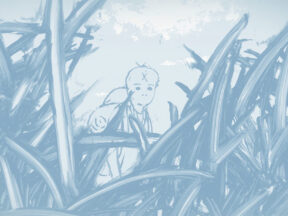
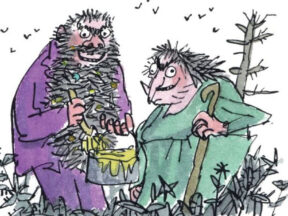
Animation veteran Uli Meyer is on a mission: capturing the vivid graphic style of illustration legend Ronald Searle in animation. Recreating Searle’s style in movement is the animator’s equivalent of climbing Mount Everest. Many have tried, but few have reached the summit.

Meyer succeeded admirably a couple years back when he produced a brief animation test of Searle’s St. Trinian’s girls. The piece, posted above, earned him the personal blessing of Searle who allowed Meyer “‘carte blanche’ to develop a story based on his cartoons, as long as it would stay true to his original vision and. . .his vivid graphic style.”

Meyer announced today that he plans to produce a half-hour St. Trinian’s featurette. Further, it will be in his words, “a fully animated film in the classical sense, hand-drawn, with pen and ink, and not a single Wacom pen in sight.” In other words, he’s doing everything right already.

Follow the making of the film by reading Uli’s production diary.

“God Is Kidding” By Boaz Balachsan And Dima Tretyakov

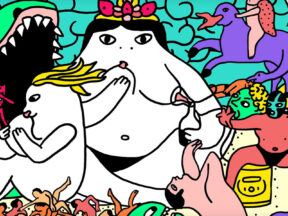
Bezalel Academy of Arts and Design students Boaz Balachsan and Dima Tretyakov recorded Israeli children giving their opinions about God and faith and interpreted their thoughts through animation. The idea recalls the Irish animated series Give Up Yer Aul Sins, which was based on 1960s recordings of children telling Bible stories, but Balachsan and Tretyakov add a quirky mixed media style and clever visual/audio transitions. See development art from God is Kidding on the film’s blog.

(Thanks, Elran Ettinger)

“Brave” Creator Brenda Chapman Quits Pixar For Lucasfilm

Brenda Chapman

From the No-Big-Surprise Department: Brenda Chapman, who developed Pixar’s Brave and was its original director before being replaced by Mark Andrews, officially ended her Pixar employment at the end of July. Pixar Portal reported on Monday that, “She is now working as a consultant for Lucasfilm animation, but wasn’t able to share any details about the project.” Chapman had been with Pixar since 2003. Prior to that, she co-directed the first DreamWorks animated feature The Prince of Egypt and served as story supervisor on Disney’s The Lion King.

The Average Workday At Disney Was A Lot Different Seventy Years Ago

No matter how many books one reads about classic Disney animation, it’s difficult to imagine the day-to-day life of artists during the studio’s Golden Age. Obviously, we know the artists worked on films like Snow White and the Seven Dwarfs, Pinocchio, Dumbo, Fantasia and Bambi. And by most accounts, they had a pretty good time doing it. But what was the work environment like on any given day?

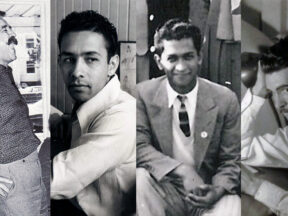
While I was writing my upcoming biography of Disney animator and director Ward Kimball (pictured up top), I was granted access to the personal journals that Ward kept during the 1940s. His writings provided a unique and unprecedented look into the day-to-day life at the Disney studio through the eyes of one of the studio’s most creative and gifted artists.

The journal entry reprinted below is from exactly seventy years ago today–August 7, 1942. There was a World War raging at the time and the studio’s regular output had been interrupted by the urgent demand for military training films and other war-themed shorts, like Education for Death, which Kimball was animating at the time. Here is Ward’s record of that warm August day in Burbank, California:

Friday, August 7, 1942
At the studio a kid — Kenny Walker– brought in 2 quarts of whiskey to celebrate his joining the Navy. We said, “Let’s wait til this afternoon.” “No,” says Fred [Moore], “now!” I mixed a big one with Coke at 11am. Got nice and glowy for our noon hour jam session. Tom [Oreb] really beat it out.

I hit every note made for the trombone–My! My! We knocked the pants off of “Jingle Bells,” etc. At 1:00 the boys were really hitting it up–no work–at 2:00 we played records with everyone in the unit beating on something! I blew my trombone–[Jack] Whitaker his bass! People came from the far corners of the studio to hear us. What a din.

The 2 qts were gone–I counted 6 empties in the hallway. Bill Berg–separated from his wife 6 mo. was going out on his 1st date tonight–”Going to get some” he said–but, alas! He had too much–passed out cold–the nurse had to give him shots–then carried him to his car. Wow! Just like old times–wine, song, no women.

The moral of the story: if you run an animation studio, always have a nurse on staff.

“6 Days to Air” Reveals “South Park”‘s Insane Production Schedule

I’ve always known that South Park is produced on an uncommonly fast production schedule, but I never realized how brutal that schedule is until I watched The Making of South Park: 6 Days to Air. The 42-minute documentary, which debuted last fall on Comedy Central, is currently available to view on Netflix streaming, which is where I saw it.

The bulk of the behind-the-scenes footage was filmed over the course of a week in April 2011 as Trey Parker and Matt Stone worked on the season 15 premiere episode “HumancentiPad.” Directed by Arthur Bradford, the film is filtered through the experiences of Parker and Stone, who lead the writing and production team through the show’s insane six-day production schedule, in which an entire half-hour episode is written, recorded, and animated entirely in Los Angeles. To put that into perpsective, most other animated TV shows have production cycles that last anywhere between 3 to 10 months, and are animated in far-flung studios halfway around the world. It’s understandable why South Park seasons are broken down into seven-week cycles because it’s hard to imagine them maintaining that pressure cooker environment for fourteen weeks in a row.

The production schedule, however, also plays a role in the show’s ability to remain timely and relevant in a way that few other animated shows could ever hope to be. In many ways, the pace of production–and resulting comedy–resembles live-action productions like Saturday Night Live, The Daily Show, and other late-night talkshows. Parker, who is the show’s primary writer, discussed how the discipline of a tight schedule prevented him from overthinking ideas:

“I always feel like, ‘Wow I wish I had another day with this show.’ That’s the reason that there’s so many episodes of South Park we’re able to get done because there just is a deadline and you can’t keep going. Because there’d be so many shows that I’m like, ‘No no it’s not ready yet, not ready,’ and I would have spent four weeks on one show. All you do is start second guessing yourself and rewriting stuff and it’s get overthought and it would have been 5 percent better.”

Also surprising was how creatively involved Parker and Stone remain in their creation. After sixteen seasons, they are still calling the shots, and they don’t appear to have surrendered their creativity to the big Hollywood machine. Compare that to a show like The Simpsons, which is run by a gaggle of writers and producers, and would probably roll along fine even if its creator Matt Groening ceased his involvement.

The documentary left me with some questions, too. For example, I had always considered Trey Parker and Matt Stone to be equal creative partners, but Bradford’s film portrays Parker as the captain of the ship. In fact, it’s never made implicity clear what Stone does while Parker is working on the script. Clearly, their collaboration works, but I would have liked to see their unique partnership explored further.

“Disasterland” Depicts Disney Characters In Adult Situations

Disney characters transposed into real-world adult situations have existed as long as Disney animation has existed. Take, for example, Disney-themed Tijuana Bibles and Wally Wood’s “Disneyland Memorial Orgy” drawing. Fast forward forty years later and these types of images are a dime a dozen, drawn by thousands of amateur artists and posted all over the Internet.

It takes a certain bravado to turn these silly drawings into oil paintings and then sell them for thousands of dollars a pop to trust fund hipsters who have more money than taste. That’s exactly the gameplan of Mexican artist José Rodolfo Loaiza Ontiveros whose new art show “Disasterland” opens tomorrow night at La Luz de Jesus (4633 Hollywood Blvd., Los Angeles ,CA 90027). The show description includes some standard art world mumbo-jumbo explaining his artistic intent, but the complete lack of irony and wit in his work can’t elevate this beyond a puerile attempt to shock. The entire series is viewable on the gallery’s website.

Patton Oswalt’s Important Message To Creators And Executives

Comedian Patton Oswalt delivered an inspiring keynote at last week’s Just For Laughs Comedy Conference in Montreal. He presented it in the form of two open letters–one addressed to “all the comedians in the room”, the second to “all of the gatekeepers” of the comedy business. Read both of them on TheComicsComic.com.

In the past, I’ve pointed out that artists in different fields often deal with similar sets of issues, especially on the business side. Oswalt’s advice drives that point home; his perspective is applicable not just to comedians, but to almost anyone working in a creative field, including animation creators.

In his letter to comedians, Oswalt implores artists to stop waiting for executives to give them opportunities because the dynamics of today’s entertainment industry favor those who create their own opportunities. Some choice excerpts:

I was lucky enough to get hired onto King of Queens in 1998. I had nine years on that show. Money, great cast, even better writers, a lot of fun. I bought a house. Then I was lucky enough to get cast as a lead voice in a Pixar movie in 2007. Acclaim, money, I got to meet a lot of my heroes. Then I was lucky enough to get cast on The United States of Tara on Showtime. I got to watch Toni Collette work. I got to perform Diablo Cody’s writing. After which, I was lucky enough to get cast in Young Adult, which is where I got to make out with Charlize Theron. I will use that as an icebreaker if I ever meet Christina Ricci.

I’ve been lucky enough to be given specials on HBO, Comedy Central, and Showtime. As well as I’ve been lucky enough to release records on major labels, and I was lucky they approached me to do it. And that led to me being lucky enough to get Grammy nominations.

I know that sounds like a huge ego-stroking credit dump. But if you listened very carefully, you would have heard two words over and over again: “lucky” and “given.” Those are two very very dangerous words for a comedian. Those two words can put you to sleep, especially once you get a taste of both being “lucky” and being “given.” The days about luck and being given are about to end. They’re about to go away.

What I mean is: Not being lucky and not being given are no longer going to define your career as a comedian and as an artist.

In the middle of the TV shows and the albums and the specials, I took a big chunk of my money and invested it in a little tour called The Comedians of Comedy. I put it together with my friends, we did small clubs, stayed in shitty hotel rooms, packed ourselves in a tiny van and drove it around the country. The tour was filmed for a very low-budget documentary that I convinced Netflix to release. That became a low-budget show on Comedy Central that we all still own a part of, me and the comedians. That led to a low budget concert film that we put on DVD.

At the end of it, I was exhausted, I was in debt, and I wound up with a wider fanbase of the kind of people I always dreamed of having as fans. And I built that from the ground up, friends and people I respected and was a fan of.

I need to decide more career stuff for myself and make it happen for myself, and I need to stop waiting to luck out and be given. I need to unlearn those muscles.

To the “gatekeepers”, he offers another message: Your job is to discover, patronize, support, nurture and broadcast material. It’s not to create. Leave that up to the artists or they’re not going to stick around because there are other options out there. Says Oswalt:

Our careers don’t hinge on somebody in a plush office deciding to aim a little luck in our direction. There are no gates. They’re gone. The model for success as a comedian in the ’70s and ’80s? That was middle school. Remember, they’d hand you a worksheet, fill in the blanks on the worksheet, hand it in, you’ll get your little points.

And that doesn’t prepare you for college. College is the 21st century. Show up if you want to, there’s an essay, there’s a paper, and there’s a final. And you decide how well you do on them, and that’s it. And then after you’re done with that, you get even more autonomy whether you want it or not because you’re an adult now.

Comedians are getting more and more comfortable with the idea that if we’re not successful, it’s not because we haven’t gotten our foot in the door, or nobody’s given us a hand up. We can do that ourselves now. Every single day we can do more and more without you and depend on you less and less.

If we work with you in the future, it’s going to be because we like your product and your choices and your commitment to pushing boundaries and ability to protect the new and difficult.

It’s perhaps telling that artists who have achieved some level of success like Oswalt are no longer afraid to publicly call out executives and “gatekeepers” even as they continue to work in the mainstream. The Internet has revolutionized and transformed almost every creative industry in the past decade, and these industries will continue to experience even more dramatic change in the coming years. Those who can best grasp this shifting entertainment landscape and understand that the old rules are meaningless stand to benefit the most.

(Photo of Patton Oswalt via Featureflash/Shutterstock)

“Animaniacs” Made Entertaining With Addition Of Burlesque

Attractive scantily-clad women who like Animaniacs sounds like every ’90s TV animation fanboy’s wet dream, but New York City residents no longer have to fantasize about Wakko, Yakko and Dot as buxom babes. This month, the experimental burlesque troupe Rhinestone Gorilla Burlesque, whose previous shows including the Disney-themed “Bibbity Bobbity Boobs” and the PBS-themed “Public Bracasting System,” will perform “Good Idea/Bad Idea: : A Fully-Scripted Burlesque Tribute to Animaniacs. Billed as “self-indulgent ’90s nostalgia”, here’s the program description:

Starring Jo Boobs Weldon, with Angelique A’LaMode (Yakko), Gemma Stone (Wakko/The Brain), Kinky Demure (Dot), Lucida Sans (Pinky/Runt), Avian Rush (Hello Nurse), Spartacus Rising (Chicken Boo), Debra Delorean (Randy Beaman Kid), Miss Cherry Delight (Mime Time), Charlotte Pines (Rita), Billie Shakes (Slappy the Squirrel), Joseph Raik (Deuce Velvet III), Fancy Feast (Monica Lewinsky), and Phil Wisocki (Live Foley). In this original burlesque musical, the Warner brothers, Yakko and Wakko, and the Warner sister, Dot, fell upon hard times as The Gay Nineties led way to the devastation of the Y2K. The target audience for the WB afternoon line-up put away their pogs and finished studying for their bar mitzvahs and turned their JNCO-clad backsides on their once-beloved Animaniacs. When Dr. Scratch’n'Sniff was finally arrested for sniffing too much scratch, Wakko, Yakko, and Dot lost their sole protectors on the Warner Studio Lot. After years being locked into their water tower, the Warners were finally locked out. After more than a decade in exile, the Warners’ fortunes sunk so low that they turned to hosting cheap burlesque at a seedy club on the Upper West Side, where they now share the stage with neo-burlesque luminaries like Rhinestone Gorilla Burlesque and Jo Boobs Weldon, headmistress of the New York School of Burleque and head mistress of half the world’s leaders.

There will be three performances at the Triad Theatre (158 W. 72nd Street, NY, NY): Sat, August 11 @ 10pm; Sun, August 19 @ 9pm; and Sat, August 25 @ 10pm. Tickets are $15 in advance via Brown Paper Tickets, or $20 at the door.

Here’s a brief taste of what you can expect to see:

Meet Bahi JD, Iranian GIF Animator Turned Japanese Pro Animator

How does a 21-year-old Iranian-born kid living in Vienna, Austria become a key animator on a Japanese anime series directed by Shinichirō Watanabe (Cowboy Bebop, Samurai Champloo)? That’s the unlikely tale of Bahi JD, one of the fast-rising stars of the animation world.

Bahi first started receiving attention a few years ago as an eighteen-year-old when he created an epic animated GIF called Shithead Action. The piece (formatted as a YouTube video above) displayed exceptional command of drawing and layout, and became a calling card for the young artist.

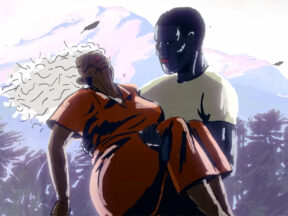
Since then, he has gone on to animate on the Konami game Skullgirls, various Japanese animated music videos, and most recently on Watanabe’s new series Kids on the Slope. His story is documented in this fascinating interview on AniPages.

The thing that struck me most while reading the interview was how Bahi JD’s development as an artist and subsequent career in the field are inseperable from the Internet: he was initially inspired by the “sakuga” anime style that he discovered on-line; he created critical networking links by participating in on-line forums and interacting with other aspiring artists and Japanese industry pros; he became known by posting his work online; and today he telecommutes to Tokyo-based animation studios through an Internet connection from his home in Austria.

The remarkable part of the story isn’t that Bahi found a job in the animation industry, but that he found a job in a highly competitive sector of the industry that’s 5,000 miles away from his home. As the animation community grows online and animation software becomes as accessible as the Internet itself, Bahi JD’s path to the industry will be one that we may see repeated ever more frequently in the coming years.

(Thanks, Tim Drage)

“Brats” By Ian Cheng

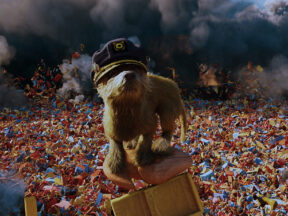
Ian Cheng‘s expressive use of motion capture was featured on Cartoon Brew last year. His new music video for Liars’ “Brats” is a hunter versus rabbit scenario with an untamed kinetic energy that threatens to burst out of every side of the frame. Cheng says of his first commissioned piece:

For “Brats”, I used a familiar animated narrative– hapless hunter vs. terroristic rabbit– as a format to grow a garden of signature motions. This collection of motions becomes material to recompose a new non-narrative choreography that animates the bodies of Liars. The Brats video documents this entropic haunting– from the ingredients of familiar meaning arises the terror of reckless non-meaning. A dog wanders indifferently through the animation, true to its nature.

CREDITS
Director: Ian Cheng
Choreographer: Madeline Hollander
Producer: Christian de Vietri
Performers: David Yijae, Max van der Sterre, Ade Chike Torbert
Assistant animation: mike liu
Motion capture services: Motion Capture NYC, Steve Day, Henry Brito
Thanks: Patrick Daughters, Micaela Durand, Zelda Roland, Rachel Rose