.png)
How Grief And Experimentation Reinvented Canadian Oscar-Nominated Animator Christopher Hinton
Stay informed with free updates
Sign up to get our news digest — delivered directly to your inbox twice a week.
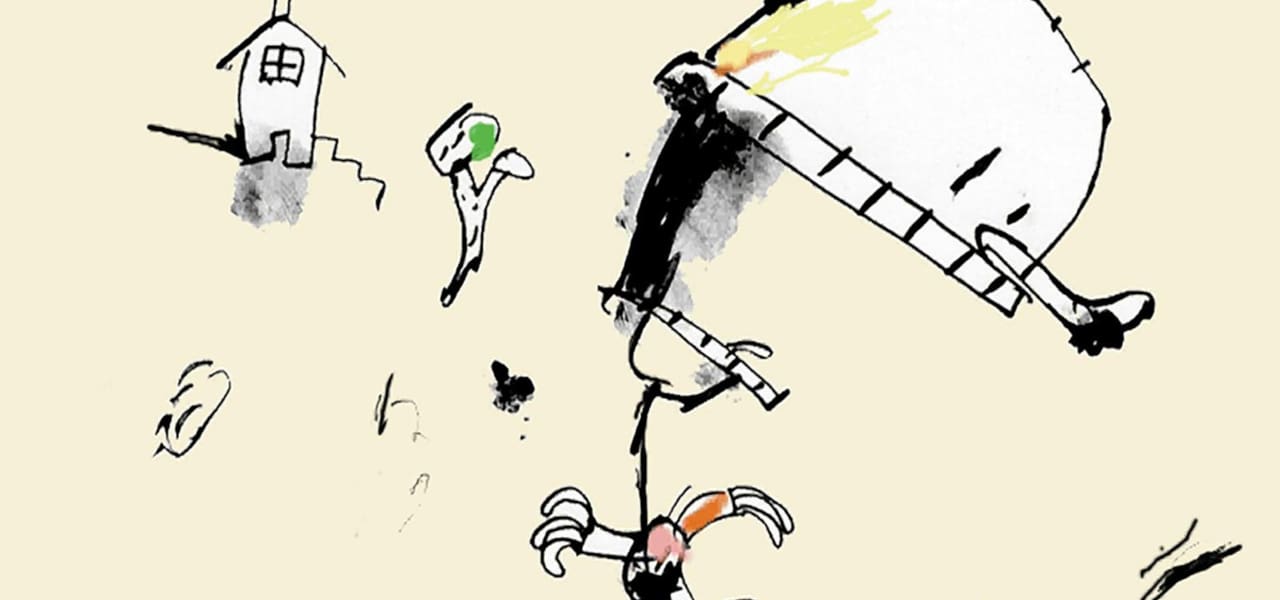
It seems fitting that Flux would become the great turning point in Christopher Hinton’s career. For many of us, it remains his masterpiece: a film about motion, memory, family, time, and the hopeless business of trying to hold anything still. It also feels, in hindsight, like a map of Hinton’s own restless career.
How did a widely loved, two-time Oscar-nominated animator known for Lady Frances Simpson (1978), A Nice Day in the Country (1988), Blackfly (1991), and Watching TV (1994), all anxious bodies, shaky eyes, fleshy noses, and gag-driven satirical timing, suddenly make something as rough, raw, personal, and unstable as Flux (2002)?

“I really hated Watching TV,” Hinton says. “I jumped into the production without adequate preparation, without a clear idea of how it needed to be structured. It just became a self-important rant with no space for the audience. When I finished it, I realized I never wanted to use that technique anymore. I did not want to work that way again.”
Then two very different things shook him: digital technology arrived, and his father died.
“I can remember that moment, just seeing my father dead, and it just did something to me,” he says. “I started doing the math on how many years I had left to make films, and what was I doing here? I just decided that I was going to do things my way and tell my stories.”
Hinton began with a personal family story and started messing around with paint under the camera. When he realized he could not go back and change the frames, he abandoned that approach and tried inking on cels.
“It was a godawful mess, but I really loved the mess,” he says. “Then I’d just take my paint and put it on with my thumb. What I did was put a pegbar on a piece of plywood, and under the Oxberry I pushed the plywood around to give me that floating feeling. Once you take the background out, once you have that floating feeling, you’ve got space kind of redefined there. It’s an interesting effect, but it just didn’t work.”
After a couple of other experiments involving hundreds of drawings, Hinton was introduced to Silicon Graphics software that was supposed to solve his problems. It didn’t. So he went to a dollar store and bought a pad of copy paper.
“With an X-Acto knife I cut it into four,” he says. “I got a piece of cardboard with an L-shape in it, and I just put the corner of the paper on that L. Then I started flipping and drawing with pen and ink, and I loved it because I was in total control. I didn’t need a technician, I didn’t need a light bulb, I could do it anywhere. I really liked that quality because when you take about 30 seconds on a drawing, it has a different quality than a two-minute drawing. I just found complete freedom having my own setup.”
From that point, films poured out of Hinton. Each one seemed to test a new door: X-Man, Twang, Nibbles (nominated for a 2004 Academy Award), and cNote.
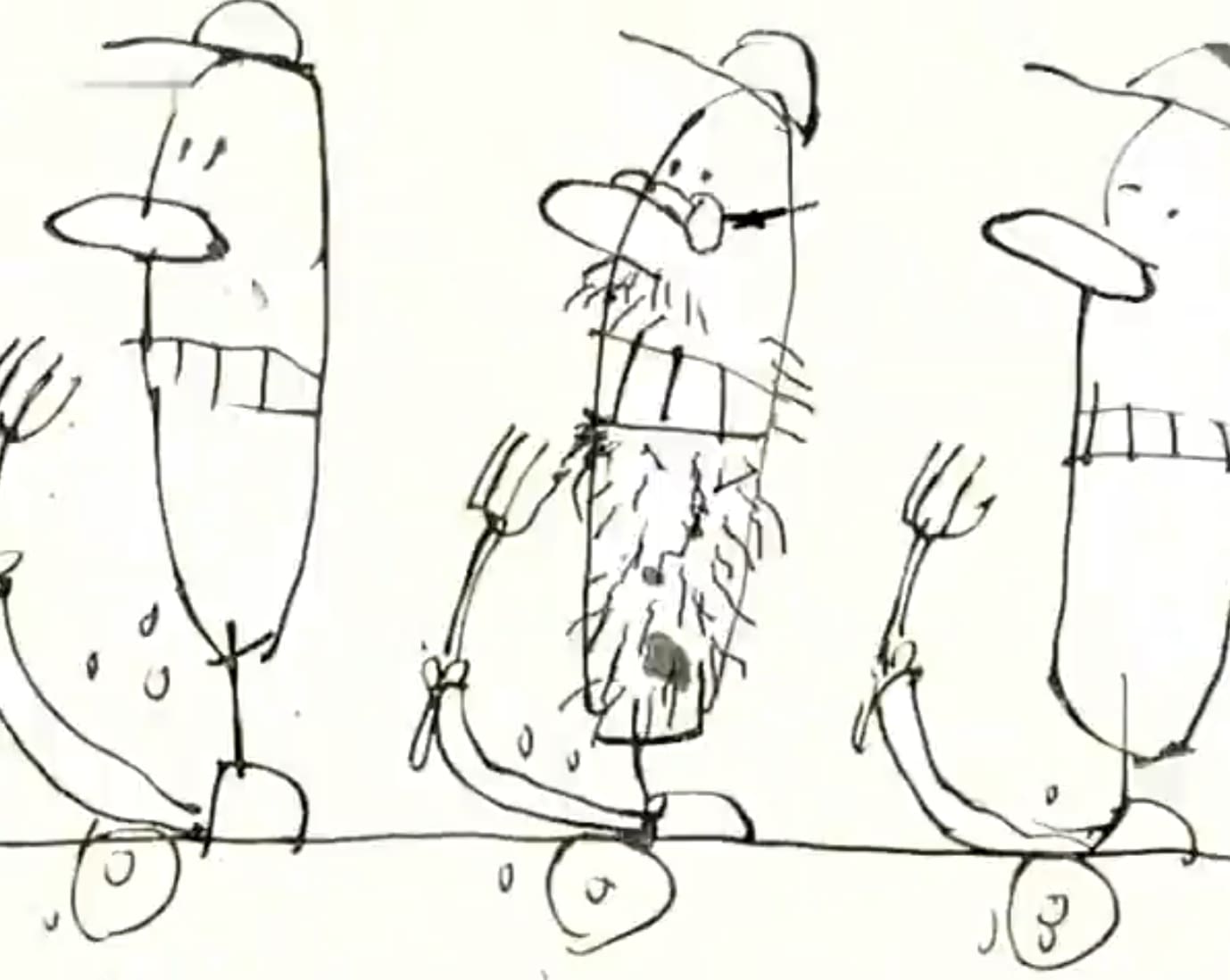
Not a bad road for someone who had no interest in animation before somehow landing in Sheridan College’s animation program in the late 1960s.
“I applied to photography, and somehow I ended up in animation. Serendipity.”
“I loved it,” he says. “Introducing the audience to invented, alternative spaces. Directing the eye of the viewer. I immediately felt the power of the art form.”
Unfortunately, Hinton wasn’t very good at animation, at least according to his teachers.
“I can remember the first exercise. I put some lines on the ball. I got beaten down for that big time. No inventiveness required. Just, this is what we want, this is what you give us. Don’t play.”
By the end of his second year, he was called before the administrators and told he should give up animation and find a new career.
“I wouldn’t have any of it,” he says. “I really, really enjoyed it and just loved the idea of frame-by-frame manipulation.”
Undeterred, he continued his studies, but that was soon interrupted by a job offer directing commercials at Ken Perkins Animation in Winnipeg, Manitoba.
“I immediately dropped out of college and went west to work for Ken Perkins. It was the most radical and best decision I ever made in my life.”
In Winnipeg, other doors opened when the National Film Board of Canada moved in.
“Mike Scott was a real driving force behind the Film Board in Winnipeg,” Hinton says. “Rather than hire Montreal animators, he hired local talent to animate historical vignettes for TV broadcast. It was a great opportunity.”
The Canadian Vignettes series consisted of minute-long films focusing on aspects of Canadian history. Hinton’s Lady Frances Simpson told the arduous story of a pioneering woman traveling from England to Canada. It’s a fast-paced cartoon showing just how grueling, absurd, and exhausting the journey could be for early settlers, especially when hauling a pianoforte in a canoe across rough terrain.
After two commissioned works, Blowhard (co-directed by Brad Caslor, 1978) and Giordano (1985), Hinton made his first true short, A Nice Day in the Country (1988), a colored-pencil film built on jumpy lines and a very black sense of humor.
Hinton remembers making the film in his attic. Rather than work with traditional techniques, he chose colored pencil and paper with one cel overlay. This allowed for rapid drawing and maximum exaggeration, again testing the limits of how far an image could be abstracted while remaining understandable.
“I was amazed at how loopy you could stretch things and still have them understood.”
Still, he used each film to his advantage.
“After I finished A Nice Day in the Country, I used the pencil to draw the camera movements and edits in Blackfly. This allowed me to keep the lively pace of the dancing, in sync with the images. I learned how I could manipulate space, characters, and time,” shifting perspective with the pencil.
Blackfly, a musical comedy about a man battling blackflies in Northern Ontario set to Wade Hemsworth’s folk song, was nominated for the Academy Award for Best Animated Short in 1992.
Then came the aforementioned Watching TV, which is not quite the horror Hinton thinks it is. It’s basically a manic four-minute bullet dance: nonstop shooting at every conceivable object, person, and animal. It is unrelenting, and Hinton could not have known how accurate that frenzy would become.
It was a shock when Flux (2002) hit the animation festival circuit. The humor was still there, but the style was as different as Disney and McLaren. Tinged with elements of Joan Miró, Flux was messy, wounded, and free-floating. The characters were barely distinguishable from the black-stained backgrounds. Scribbled figures bounced manically around the screen. Everything was moving. Nothing was stable.
The film follows a young girl on a swing and the passing of one generation into the next, a life moving forward in a chaotic, fleeting visual style where everything shifts and nothing holds. The girl grows up, has her own family, buries her parents, has a baby, and the final image returns us to her daughter on the swing. The end is the beginning is the end.
“Flux came about as a result of a family dinnertime conversation,” he says. “We were trying to recall a family event and everyone at the table had a different story to tell. One event, five different memories, five different stories. It gave me some insight into the nature of memory. I thought animation was the perfect medium to tackle this subject.”
“I didn’t want there to be any up, down, east, west, or any horizon line. Nothing to stabilize, nothing to hold on to. Everything was to be free-floating, in motion, in flux,” he says. “I wanted the audio to be simple, childlike, crude. Playful. I wanted to draw the life, as I remembered it, of my daughter Emma.”
In fact, it was Emma’s drawings that also inspired Hinton.
“I have always loved the quality of children’s drawings and was particularly taken with two of my daughter’s drawings, one of an apple tree and one of her vision of the house she lived in. What was important to her was large in the drawing. Less important features were shuffled off to the margins of the paper and rendered smaller.”
After Flux, Hinton kept pushing. Twang reduced black comedy to a brutal visual joke. Nibbles came out of annual fishing trips with his sons, Max and Paul, to Quebec’s Abitibi-Témiscamingue region. X-Man became a test “to see if I could keep you interested in a two-minute film that was abstract or nearly abstract,” he says.
“Why couldn’t I apply the same character animation principles, the same storytelling principles, the same editing principles, to a blob of paint? I should be able to do that.”
In the outstanding cNote (2005), image and sound clash, drift, come together, and break apart.
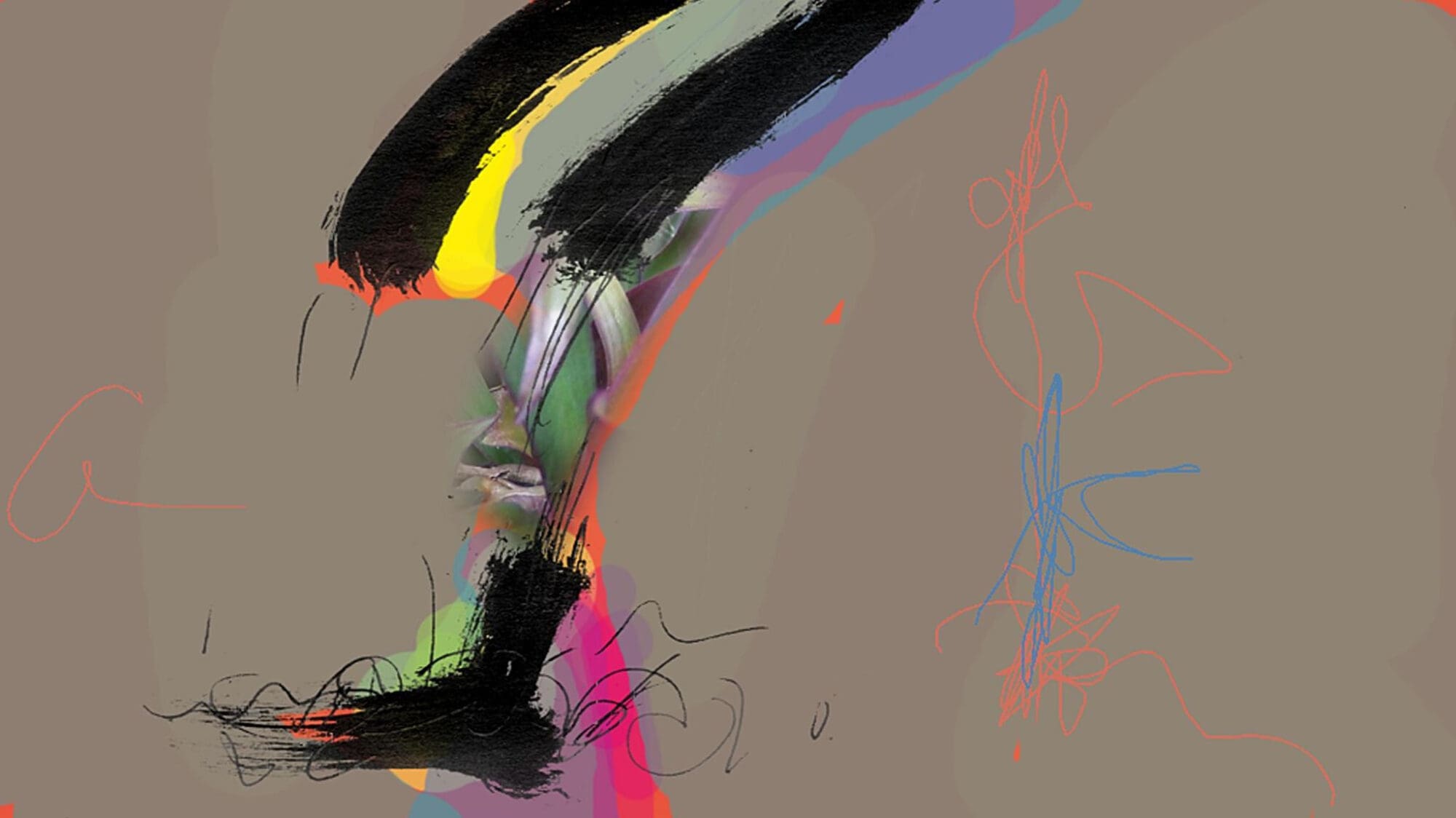
Then, in 2012, everything changed. His daughter Emma died in a car accident on October 20. Hinton vanished from the animation circuit.
In 2016, he sold his Quebec farm and moved across Canada to British Columbia. Then his wife, Kathy, died on February 1, 2019.
“I never really walked away from animation,” he says. “I was just incapacitated for eight or so years after the death of my daughter. Then my wife died in 2019.”
During those years, Hinton kept working, mostly out of sight.
“This was a difficult time, and I found myself working alone through it, messing with imagery and the scores of Canadian composers,” he says. “I did a lot of work and experimentation during those years, but I didn’t distribute any of it. Some of it I threw out.”
In 2024, Hinton reappeared with three unusual collaborations with Canadian pianist Eve Egoyan: Where Light Matters, Ballet, and Videogame. The films used technology that connected Egoyan’s piano playing to Hinton’s images.
“Eve had a technology that could record the depression of the keys on her piano,” Hinton says. “A computer recorded the mechanical action of the piano keys and triggered a film. The films could be layered, and the keyboard remapped.”
Most of the private work remains unseen.
“Most of it I did to amuse myself,” he says. “Most of it, I think, is in the archive of the Cinémathèque Québécoise. The rest is on my hard drive, and there it will perish.”
These days, Hinton says, “I no longer want to think about animated films.” He is taking a writing course at the University of Victoria and has taken up clawhammer banjo.
Part of it is age. Part of it is the changing role of festivals. When CLIK (2025) and some of his recent experimental work were not accepted, it forced him to take stock.
“If films aren’t screened at festivals, they’re probably not going to see the light of day,” he says. “I don’t think I have any right to acceptance, but it made me sit up and take stock. How much time do I have left? How much time do I want to invest in a film that no one might ever see? In other words, I did the math.”
The old festival excitement has faded too.
“I remember going to festivals in the old days, arriving home thrilled to have seen so many gems, all different, from different nationalities, using a wide array of techniques,” he says. “It was really exciting and inspirational. I no longer feel this.”
What drew him to animation in the first place was its ability to reveal ideas that could not be revealed in any other medium.
“Otherwise, why not use a more user-friendly medium to explore an idea?”
That, in part, is why writing now appeals to him.
“I feel I’ll get more out of reinventing myself through writing,” he says. “It’s a new challenge, and I am easily bored without one.”
Maybe that is why Flux still feels like the Hinton film that gets closest to him. Not because it explains him exactly, but because it moves the way he moves: by accident, instinct, irritation, curiosity, and sudden turns. It is cel giving way to paper, gags mutating into abstraction, family memory changing shape, life refusing to stay where anyone puts it. That has always been the refreshing thing about Hinton’s work and attitude. He never treated a style as gospel. If something stopped working, he tried something else. If that didn’t work, fuck it, try again. Flux keeps moving because Hinton keeps moving, toward the next form, the next mess, the next uncertain thing worth testing.