.png)
Waffles, Wanking, And Other Worlds: The Films Of Ivan Li
Stay informed with free updates
Sign up to get our news digest — delivered directly to your inbox twice a week.
The animated shorts of Hong Kong-born Canadian animator Ivan Li faintly recall the work of Phil Mulloy, though certainly not in their visual style. Mulloy is known for stark, minimalist drawings and almost stick-like figures moving through stripped-down spaces. Li creates fully fleshed-out 3D worlds in which nearly every part of the frame is occupied or moving. His images are restless, excessive, and often difficult to take in all at once.
The connection lies instead in their taste for violence, vulgarity, and confrontation, and in the way both filmmakers divide audiences. Mulloy’s miniature blood-spattered narratives frequently attacked political, religious, and economic systems. Li’s films are less outwardly political and more bodily and internal, circling loneliness, sex, shame, failed communication, and physical discomfort.
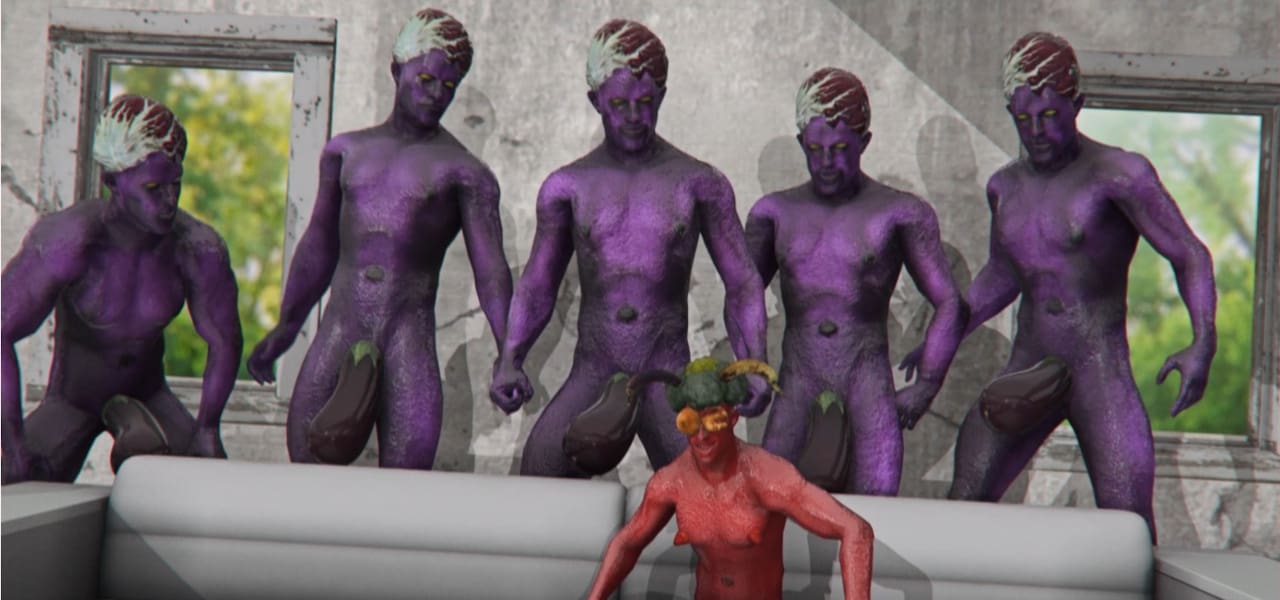
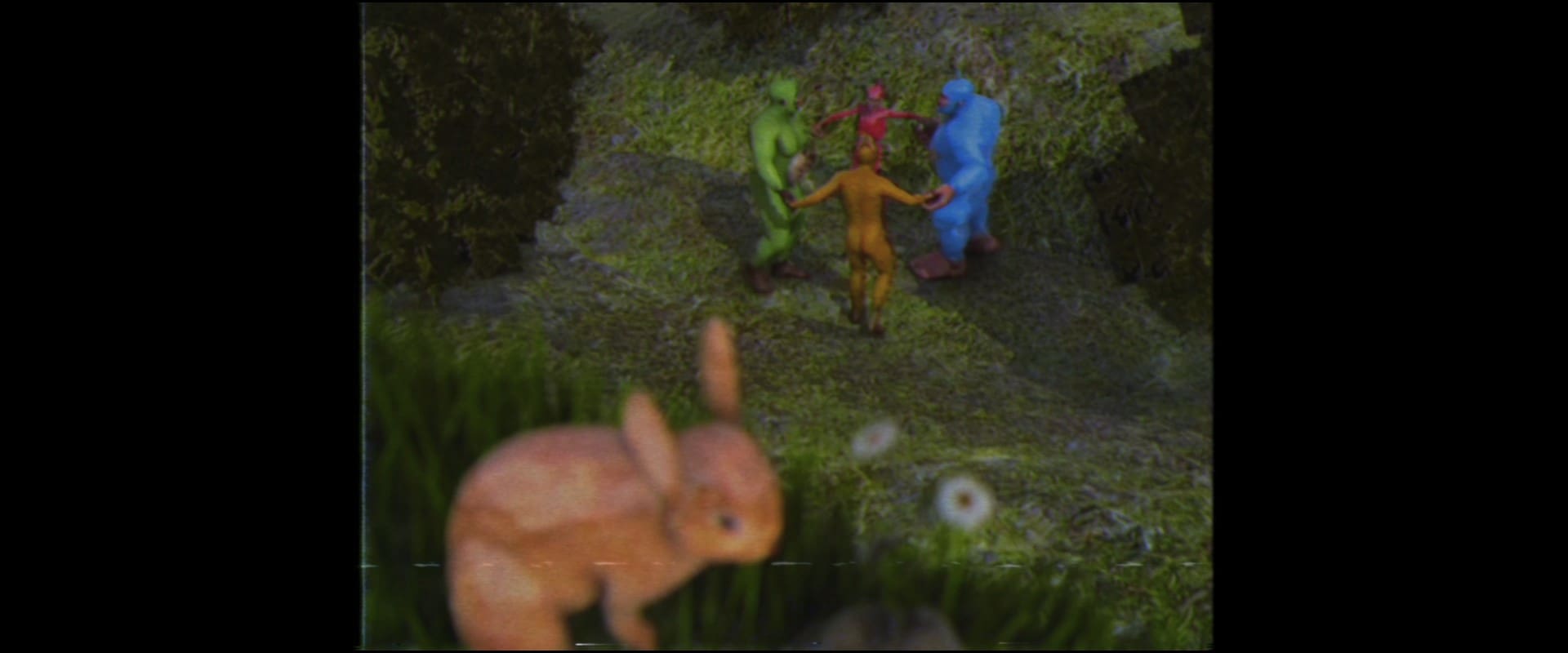
His films include the tragic journey of a wanked sperm, a pansexual fruit-and-vegetable orgy, school violence carried out with a 3D printer, and, in Jelly Baddies (2026), corrupted Teletubbies-like creatures at war.
In a distorted way, Li remains attached to one of animation’s oldest habits: anthropomorphism. An assortment of half-human, half-who-knows-what figures parade through his films: sperm men, fruit and vegetable creatures, malformed bodies, and synthetic organisms. We seem to occupy some unstable territory between humanity, nature, animal life, and technology. You are rarely certain where you are in an Ivan Li film, but you can be sure it is not somewhere comfortable.
Li was born and raised in Hong Kong, where he spent the first 18 years of his life.

“My household is fairly ordinary; both my parents are standard office workers,” he says. “I pursued sport and visual art as a child. I spent a couple of years training as a windsurfer but realized that wasn’t my path.
“I am really sorry. I wanted to throw in some twist in this part, but my childhood was so ordinary, and there isn’t much to add.”
His early visual imagination was shaped by morning cartoons, live-action effects shows, and an eclectic assortment of international films.
“In hindsight, I think Y2K and early-2000s CG animation inspire my current visual aesthetic,” he says. Japanese tokusatsu series such as Giant Robo and Kamen Rider Agito fed his interest in science fiction, while seeing Spy Kids 3-D with red-and-blue glasses was “the most groundbreaking cinematic experience of my childhood.” Stephen Chow’s Shaolin Soccer and Kung Fu Hustle shaped his interest in visual comedy.
Li moved to Vancouver to study at Emily Carr University, attracted by the city’s reputation as “Hollywood North” and the school’s animation program.
“My initial goal was to pursue a career in post-production and VFX,” he says. “For a while, I had a stable role in the visual-effects industry after graduation. Sadly, that career has not been a tangible option since 2023.”
His early films did not immediately resemble the work for which he is now known. Li initially pursued what he thought of as cinematic beauty, attempting to create imagery and narratives that were consciously artistic. His student film Cathedral (2018), which screened in the Canadian Student Competition at the Ottawa International Animation Festival, emerged from that approach.
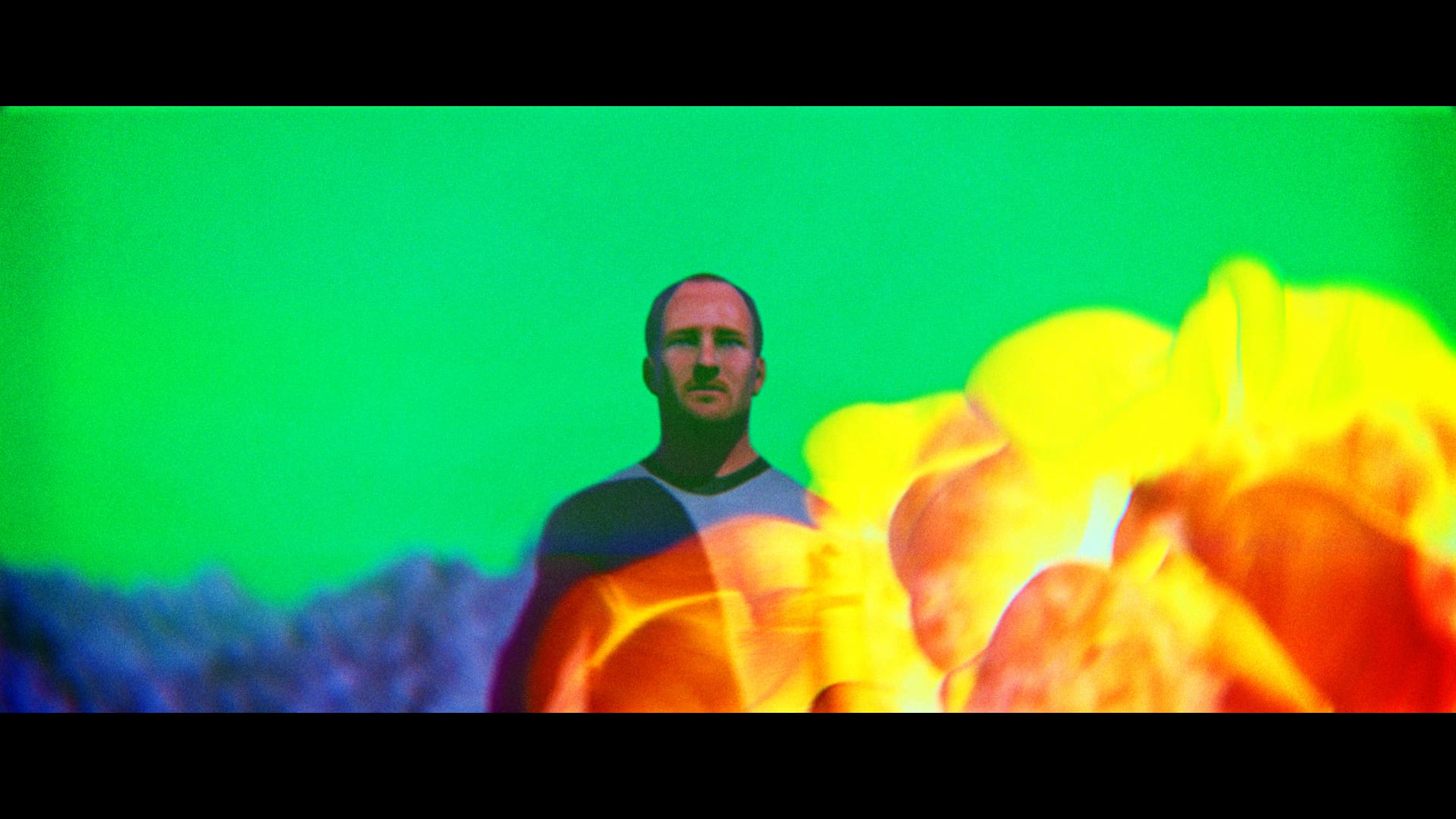
His perspective changed when he saw Cecilia Corzo’s The Missing Pig in the same program.
“It was minimalistic, yet genuine, witty, and effective,” he recalls. “I realized my idea of ‘cinematic beauty’ at the time was inauthentic and flat-out pretentious. I decided to abandon all my pre-established ideology and fully embrace whatever raw, intrusive thoughts came to mind, which led to the creation of Finding Uranus and the rest of my works.”
Many of Li’s ideas or proposals had initially been dismissed by classmates and instructors.
“At an earlier stage, I would get frustrated and question, ‘What makes you think this idea wouldn’t work?’” he says. “However, I chose to move past their rejections and continue working on my films. I realized that the only way to find out if an idea is right or wrong and whether it works is to finish the film and watch it.”
Several of these films originated as possible final-year projects. Li ultimately chose Finding Uranus because it was “contextually and technically more suitable for the school’s grad-film format,” but the other ideas continued to resurface in later work.
His process leaves considerable room for improvisation.
“I have a general outline of how the story starts and ends,” he says. “And then I just proceed by freewheeling it.”
He was reacting against a culture in which 3D student films were expected to serve as professional calling cards, producing what he calls a surge of “short and sweet” works mimicking Pixar and Disney.
“I wanted to make a film highlighting non-photogenic people doing ugly things, ugly by societal standards, and be candid about it,” he says. “That led to the creation of this film or, in hindsight, pretty much all my films.”
The result is an epic, almost operatic ode to wanking, following the tragic journey of a sperm through a world of longing, rejection, and self-loathing. For all its crudity, its solemnity and visual scale contain nods to Bergman and Kubrick, while Radiohead’s “Creep” provides the musical spine.
“The original intention was to start the movie with ‘Creep’ and end with ‘Making Love Out of Nothing at All,’” Li says. “A friend suggested that I should make it into a musical with different iterations of the same song, which is why I went with different covers of ‘Creep’ throughout the film.”
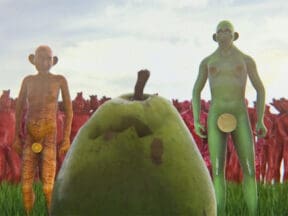
Fruit (2020), strangely enough, began with a more conventional professional objective. Li planned it as a speculative advertisement for the Naked smoothie brand, hoping it might attract attention from advertising and creative agencies.
“I wanted to personify fruits and simulate how smoothies are made inside a blender, where everything is slashed and mashed together,” he says. “I might as well throw in a few extra things throughout the process.”
The resulting pansexual orgy, movie-set bloodbath, and masturbating cinema audience never entirely obscure the original idea: fruits and vegetables being violently blended into a drink. It also plays like a parody of action cinema and advertising.
Li never heard back from any agencies, but Fruit became his most commercially successful film.
“Despite the Vimeo saga (the film remains deleted, with no updates), this is ironically my only film sold for national television broadcast,” he says.
Drizzle in Johnson (2023) began from a very different source. Originally conceived as a course assignment, it was intended to visualize Jacques Lacan’s psychoanalytic essay on the mirror stage.
“I wanted to make a longer animated film, something more poetic,” Li says. “Structurally opposite to Fruit, I wanted it to start in a more subtle, slow-burn way before heading toward its intended trajectory.”
The Lacan- or Beckett-like academic is drawn into a world of apelike assistants, doubles, slithering creatures, murder, waffles, and penises falling from the sky. The mystifying science-fiction horror noir feels like the messy love child of David Lynch and William S. Burroughs.
Build (2024) is visually closer to the kind of polished, studio-friendly student film Li had previously resisted. That similarity is intentional.
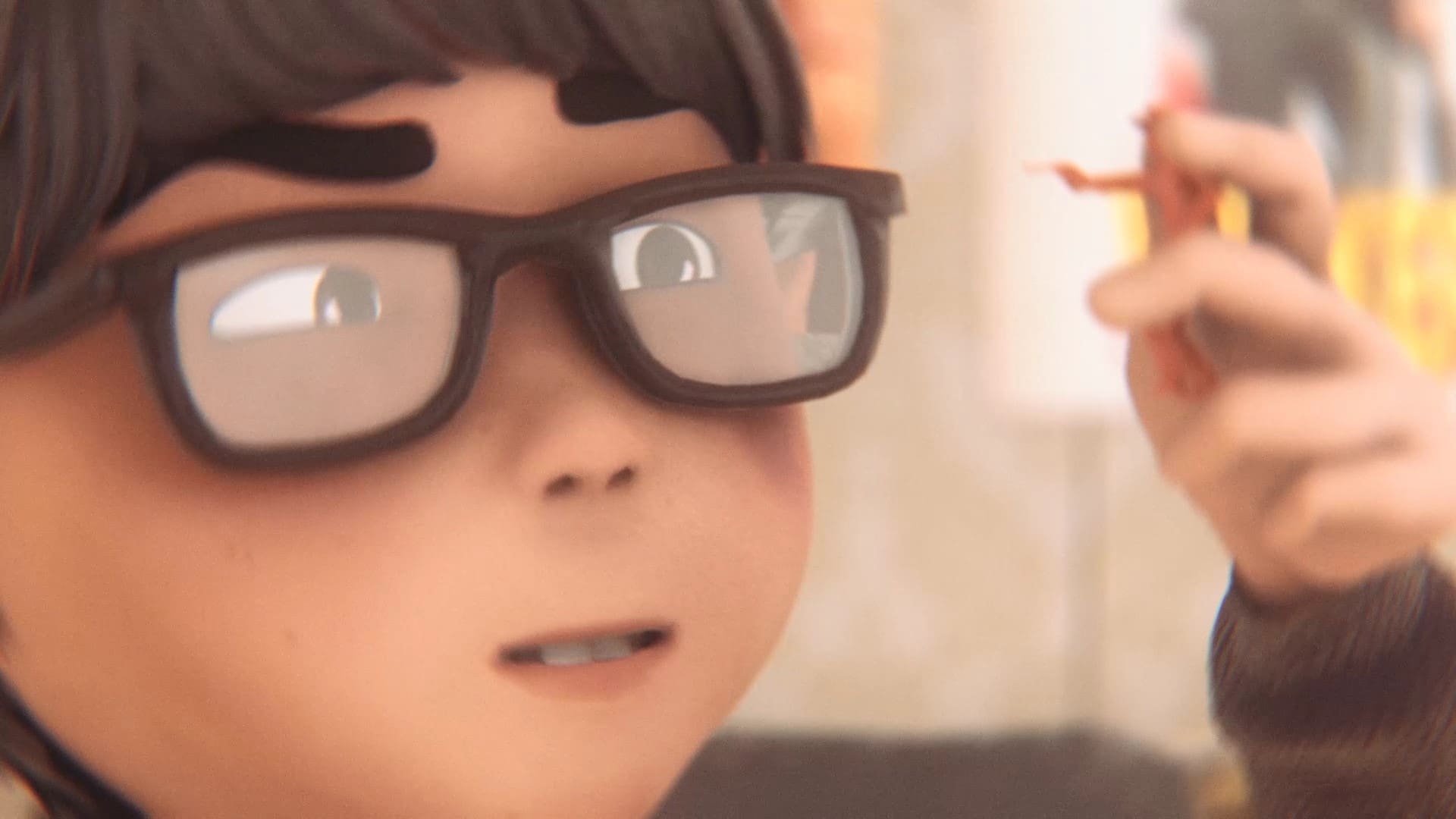
“Visually, most parts of the film use ‘studio-friendly design and animation’ that may benefit a postgraduate job search,” he says. The film poses the question: “Look, I have this cute-looking grad film. Now what?”
The film follows a nerdy child who spends his time creating 3D cowboys while enduring daily bullying at school. He eventually uses his printer to bring the abuse to a violent end. Li developed the film after discovering Canadian filmmaker Matt Johnson’s The Dirties (2013).
“I wanted to adapt a similar concept within the framework of the animation medium,” he says. “I wanted to deconstruct the dynamics of victim and bully, and the audience’s collective interpretation of conventional visual aesthetics.”
For some reason, Build was the film where I felt Li pushed things too far, even though, in many ways, it is his most straightforward work. Its cute, accessible surface makes the conclusion even more disturbing. A viewer could easily walk away believing that the film supports violence as payback.
Li does not deny the horror of what happens.
“What happened at the end of the film is undeniably evil and tragic,” he says. Quoting Stanisław Jerzy Lec, “No snowflake in an avalanche ever feels responsible,” he asks instead: “What could have been done to prevent this outcome?”
Li handles much of the writing, animation, editing, and sound himself, an approach he jokingly calls “the Neil Breen Method.”
“It began as a practical reality during my school days, out of budgetary concerns,” he says. “I also took everything upon myself so that, in the worst-case scenario, if the film fails or faces backlash, I can take full responsibility without burdening anyone else.
“I also felt bad when asking people to help me animate crowd scenes with falling dongs, a space uterus, and a suitcase getting wanked.”
Despite larger budgets, Li says his approach has barely changed. “I treat every film like it is a fun final-year school project in 2019.” He has also stopped chasing new technology: “I’ve decided to return to the basics and keep everything exactly as it was in 2019.”
Jelly Baddies represents a significant change in budget rather than attitude. It is Li’s first project supported by the Canada Council for the Arts and the British Columbia Arts Council.
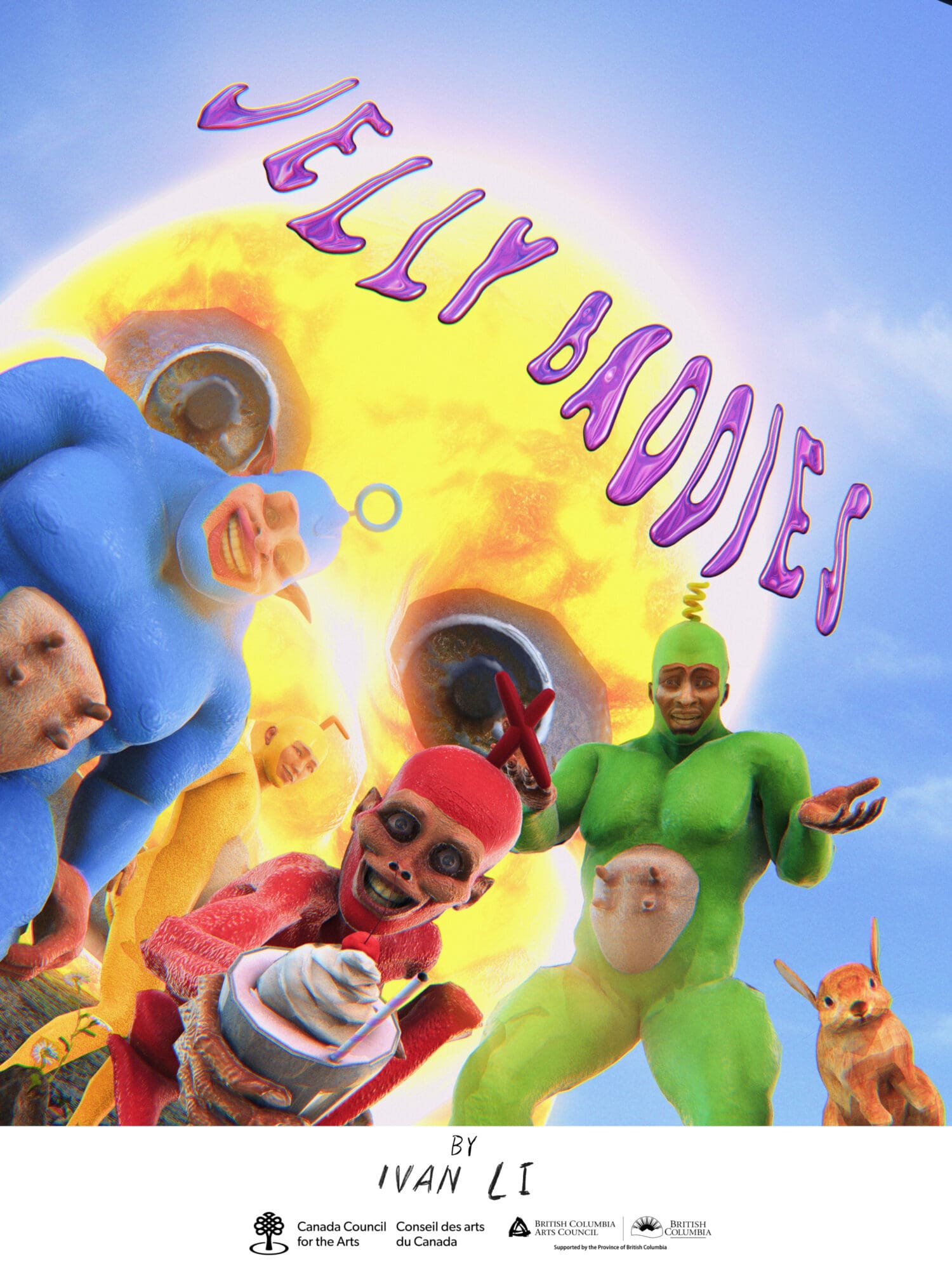
I was mildly surprised when I noticed that the film had received public funding. Jelly Baddies is not merely unconventional or mildly provocative. It is a bizarre, aggressive, and extreme work whose demented creatures maim, corrupt, and wage war upon one another inside Li’s relentlessly crowded 3D universe. It is precisely the sort of film one might assume government funders would be reluctant to touch.
“Jelly Baddies is my first project with a proper budget and grant funding; it is also my first project as a Canadian,” Li says. He had been unable to apply before becoming a citizen in 2023, just as the labor crisis and restructuring within the visual-effects industry were pushing him toward independent animation full-time.
“Around the same time Drizzle in Johnson was selected for the Annecy Festival, I began receiving unexpected career inquiries from reputable organizations,” he says. “This professional validation cemented my decision to pursue a full-time career in independent animation.”
A longtime admirer of the National Film Board of Canada, Li initially pitched Jelly Baddies to the NFB.
“Their producer declined, as it didn’t align with the board’s direction, but they kindly suggested I look into the Canada Council for the Arts and my provincial arts council,” he says. “They noted that these organizations are often more receptive to my direction of experimental storytelling.”
His application to the arts councils included a detailed treatment of the first act, an outline of the remainder, and the first three minutes of the proposed film. He also submitted Drizzle in Johnson, Fruit, and Finding Uranus to demonstrate its creative direction and visual style.
The councils could hardly claim they did not know what they were getting. Li remains unsure why the application succeeded, although he suspects the festival recognition for Drizzle in Johnson helped.
“Historically, the Canadian live-action feature-film sector has embraced works that the public deemed provocative and polarizing,” he says. “Notably, Telefilm funded most of David Cronenberg’s filmography, including Crash. I am grateful that both councils were supportive and open-minded toward the film.”
The animation world has drifted toward safety, with too many artists “knitting” films and avoiding risks in their stories and images. Against that timidity, Li’s work is refreshingly unruly. His films shake, infuriate, confuse, and occasionally amuse, immersing us in cesspools of violence, desire, greed, and hatred that sometimes feel closer to the conflicting reality of the present world than more carefully composed statements about it. Li takes the sewer side of existence and throws it onto the screen.
Naturally, we do not want to swim in it. Sometimes, though, it is useful to momentarily dip into the shittiness of existence.