.png)

Four Decades Of Animation History Is Up For Sale This Weekend As Phil Tippett Closes His Berkeley Studio
Stay informed with free updates
Sign up to get our news digest — delivered directly to your inbox twice a week.
A major piece of animation and VFX history is on the block this weekend in Berkeley, California, as Oscar-winning animator and effects pioneer Phil Tippett closes his longtime studio and sells off decades of props, models, artwork, equipment, and memorabilia.
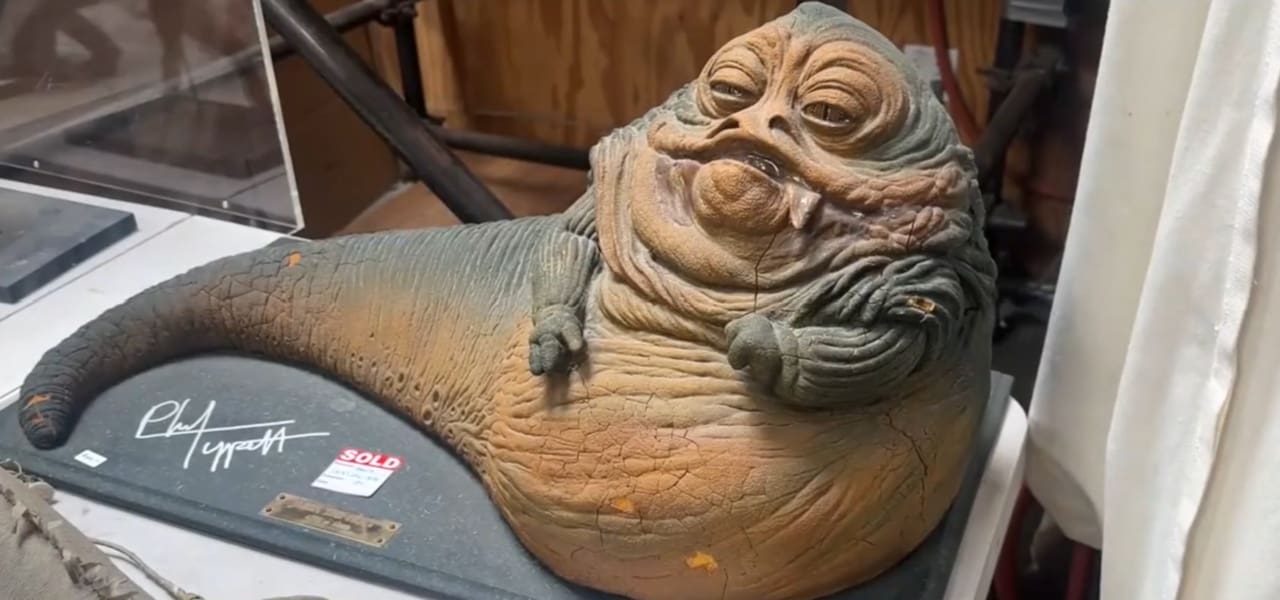
The 6,200-square-foot Tippett Studio facility is being emptied in a three-day liquidation sale running through Sunday. According to the sale listing, Tippett has occupied the Berkeley location for 35 years, and “everything goes,” from stop-motion and motion-capture equipment to cameras, model-making tools, production documents, and hundreds, possibly thousands, of objects from the studio’s productions.
Items include models and sketches from Mad God, an artist-proof AT-AT model from The Empire Strikes Back, Starship Troopers miniatures, signed posters, storyboards, costumes, prototypes, and three models connected to the Dejarik chess sequence in the original Star Wars. The sale also includes working effects studio infrastructure, including computers, 3D printers, lighting equipment, welding gear, drill presses, mold-making equipment, and entire toolboxes.
Two things that Tippett won’t be letting go of in the sale are his Oscars.
“They’re the big-ticket items, and they were the most significant moments in my journey,” the 74-year-old filmmaker told CBS San Francisco of the Academy Awards he received for Return of the Jedi and Jurassic Park. Of parting with the rest, he admitted, “I’d get a little twinge of regrets sometimes.”
The closure caps a difficult period for one of the most storied names in American visual effects. Tippett Studio entered an agreement in 2024 to sell a majority stake to Indian VFX company PhantomFX, then filed for Chapter 11 bankruptcy protection that May. A reorganization plan was confirmed in April 2025, and PhantomFX announced that it had completed its acquisition of Tippett Studio in July of that year.
Tippett and his wife, producer Jules Roman, founded the studio in 1984. After working on the original Star Wars, Tippett helped develop go-motion, a stop-motion evolution that integrated motion blur.
Perhaps the defining moment of Tippett’s career and the work he’ll be best remembered for came with Jurassic Park. Originally hired to develop stop-motion dinosaur puppets for the film, Tippett and his team adapted as production embraced CG for animating the prehistoric creatures. Tippett Studio and his know-how became key in translating stop-motion knowledge and physical instincts into the emerging art form of CG animation, establishing techniques that would shape character animation and visual effects for decades.
The studio later worked on films including Starship Troopers, The Matrix films, Hellboy, and the Twilight franchise, while Tippett spent decades intermittently developing and producing his stop-motion feature Mad God, which finally debuted at Locarno in 2021.
The Berkeley closure does not mean the Tippett Studio name is disappearing. PhantomFX completed its acquisition last year, and new ownership is still using the Tippett Studio name. What is definitively ending is the historic Berkeley workshop where decades of cinema history were made.
“We had almost a 40-year run. It was a good run,” he said in the CBS interview.
As for retirement, Tippett doesn’t sound ready to call it quits just yet: “I will die with my sword in my hand.”