.png)
Oscar Shortlist Interviews: Directors Chris Lavis And Maciek Szczerbowski’s Favorite Shot From ‘The Girl Who Cried Pearls’ (EXCLUSIVE)
Stay informed with free updates
Sign up to get our news digest — delivered directly to your inbox twice a week.
We invited the filmmakers behind each of this year’s 15 Oscar-shortlisted animated shorts to share their favorite shot from their film and explain why it’s special to them.
Nomination voting starts on January 12 and runs through January 16.
Today’s short is the stop-motion short The Girl Who Cried Pearls from directors Chris Lavis and Maciek Szczerbowski. Set in early 20th-century Montreal, it tells the story of a poor boy who falls for a girl whose tears transform into seemingly valuable pearls. The boy sells the girl’s tears to escape poverty, but an act born from admiration quickly turns to exploitation in a tale of greed, innocence, and moral decay. Crafted with exquisite handcrafted puppets and miniature sets, the film’s aesthetic blends gothic realism with lyrical surrealism.
Here’s the directors’ favorite shot, and why it means so much to them:
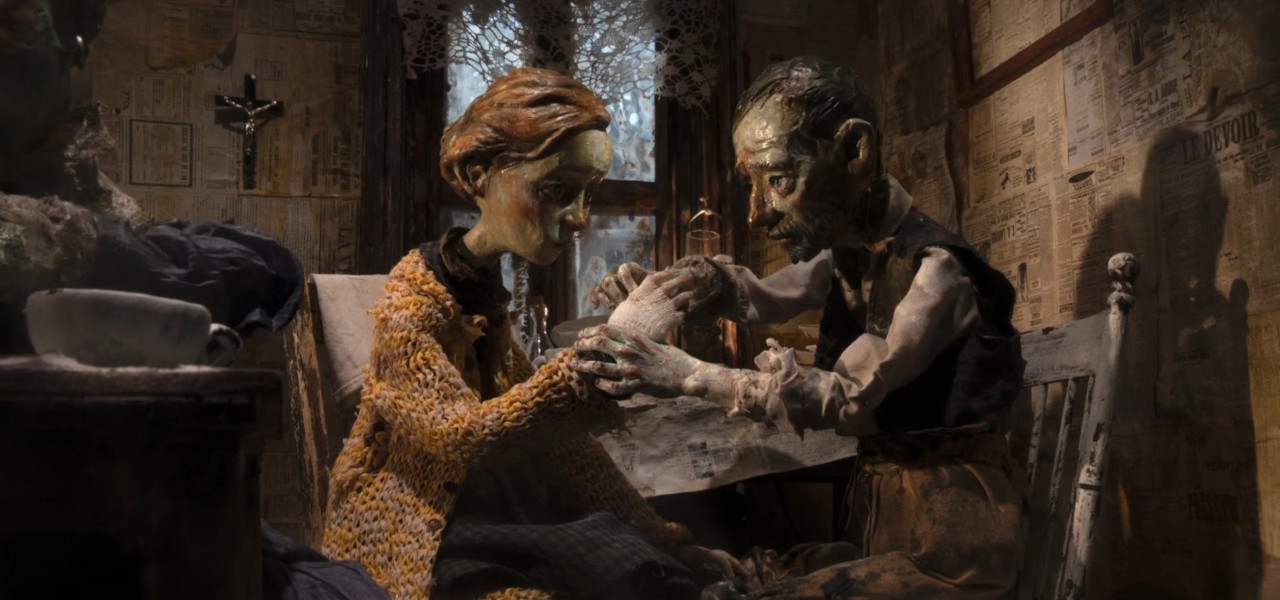
Animators live their lives one frame at a time, and also on loops. There are shots you watch over and over because, even though you know how the magic is made, you’re sometimes still amazed that you’ve created something living out of dead, inert material. This shot is, for us, one of those magical moments.
Story-wise, the shot is doing a lot of heavy lifting. It is our one chance to illuminate the relationship between the girl and her father — an island of sympathy and kindness in a sea of hardship. For the shot to succeed, every element has to come together: Lighting, animation, score, narration — if any one fails, then the tragedy that follows has no meaning.
The animation is by Laura Stewart. Up until this film, we had animated our own puppets, but with a tight schedule and budget, we needed help. We hired Laura, imagining we would still handle the key character animation and give her the supporting shots and inserts. But Laura did an astounding job here, imbuing this scene with such poetic weight and subtlety that from that day forward, we switched roles — Laura shouldered the most challenging shots, and we did our best to keep up.
The film’s composer, Patrick Watson, says this scene has the “saddest melody in the film”: Long, swelling chords brought to life by cello and bass, played, respectively, by Rebecca Foon and Richard Reed Perry. The music flows under and around the narration, written by us but elevated by Canadian actor Colm Feore: “Her father did what he could to comfort her. We must endure, he’d say, our reward is in the next life…”
This line highlights a theme that threads throughout the story and many other fables: the belief that poverty should be endured because heaven awaits those who, like Hans Christian Anderson’s Little Matchstick Girl, suffer the most. By the end of the film we subvert that theme, but at this stage it’s crucial that everyone, including the characters, buy into it.
A moment doesn’t make a movie, but there’s something really special when all the talents and elements you’ve assembled harmonize in a single shot. No single artist can claim credit; it’s pure sorcery. From dust, life.