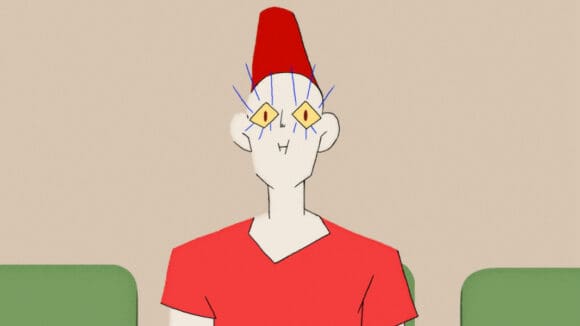
2027 Oscars Short Film Contenders: ‘With Tapes And Toasts In The Car’ Director Kiana Naghshineh
Stay informed with free updates
Sign up to get our news digest — delivered directly to your inbox twice a week.
Welcome to Cartoon Brew’s series of spotlights focusing on the animated shorts that have qualified for the 2027 Oscars. The films in this series have qualified through one of multiple routes: by winning an Oscar-qualifying award at a film festival, by exhibiting theatrically, or by winning a Student Academy Award.
Today’s short is With Tapes and Toasts in the Car (Im Auto Tapes und Butterbrot), a German-French 2D co-production directed by Kiana Naghshineh and produced by ManicMonday, Laïdak Films, and Naghshineh. Among its Oscar-qualifying wins was Best Animation at the 2026 HollyShorts Film Festival.
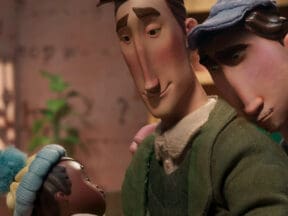
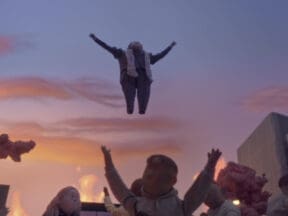
As Shari faces a terminal illness and her body begins to turn to stardust, she finds an unlikely companion in Laika, the Soviet dog sent into space with no way home. Naghshineh drew on her aunt’s final months and the stories she shared about her youth. Even the passersby are based on people the director knows, with accents and slang that ground the film’s cosmic imagery in the world she grew up in.
Cartoon Brew: What was it about this story or concept that connected with you and compelled you to direct the film?
Kiana Naghshineh: Terminal illness hit my family, and even as my aunt’s body grew weaker, we kept hoping she would recover. During one of our last visits, she started telling me funny stories about her youth and my mother’s. They were stories only the two of them knew, and it was as if she wanted to make sure those memories wouldn’t be lost. She passed something of herself on to me that I still carry, even though she died seven years ago. This gave me a new perspective on what to prioritize in my own life. I wanted to share that feeling in my film because I think many people can connect with it.
What did you learn through the experience of making this film, either production-wise, filmmaking-wise, creatively, or about the subject matter?
This was my first film after film school. It was my first time working with producers, securing funding, and even working with a broadcaster, and I had to learn how to make compromises while staying true to my vision. I knew how I wanted the film to feel, so I kept tweaking the animatic until it felt right.
I tend to disappear while making a film, which is ironic given what this film is about, so I tried to step outside more often. I’m grateful to my family and friends for helping me with that. It wasn’t always easy, but I learned a lot and feel better prepared for future projects.
Can you describe how you developed your visual approach to the film? Why did you settle on this style and technique?
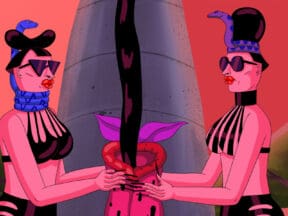
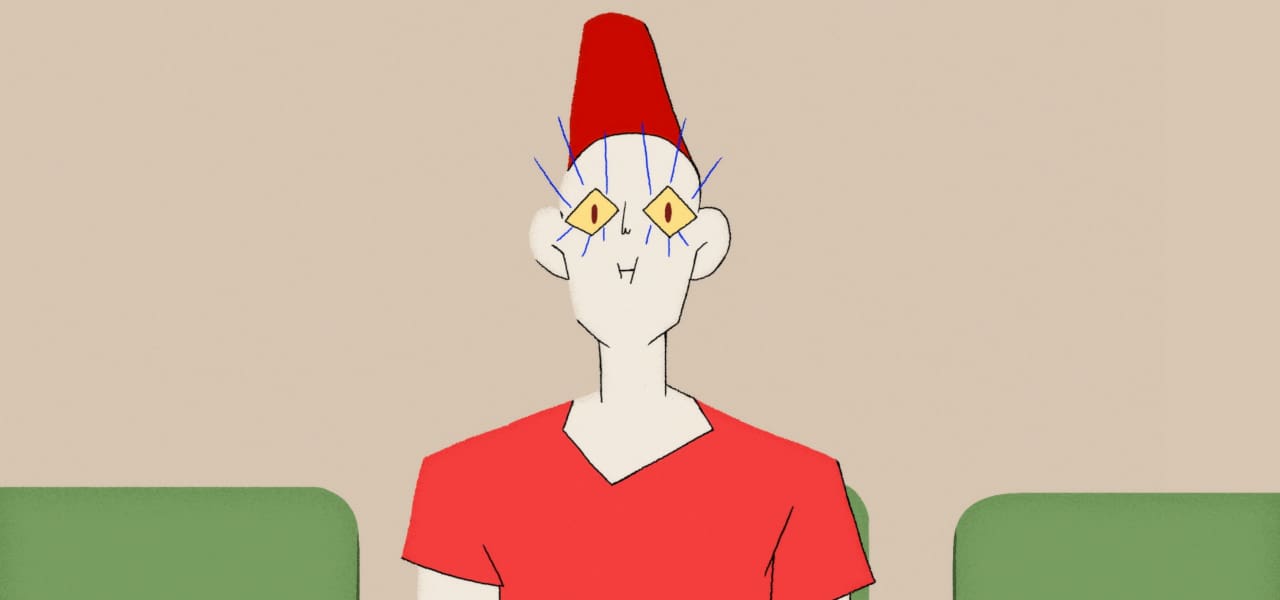
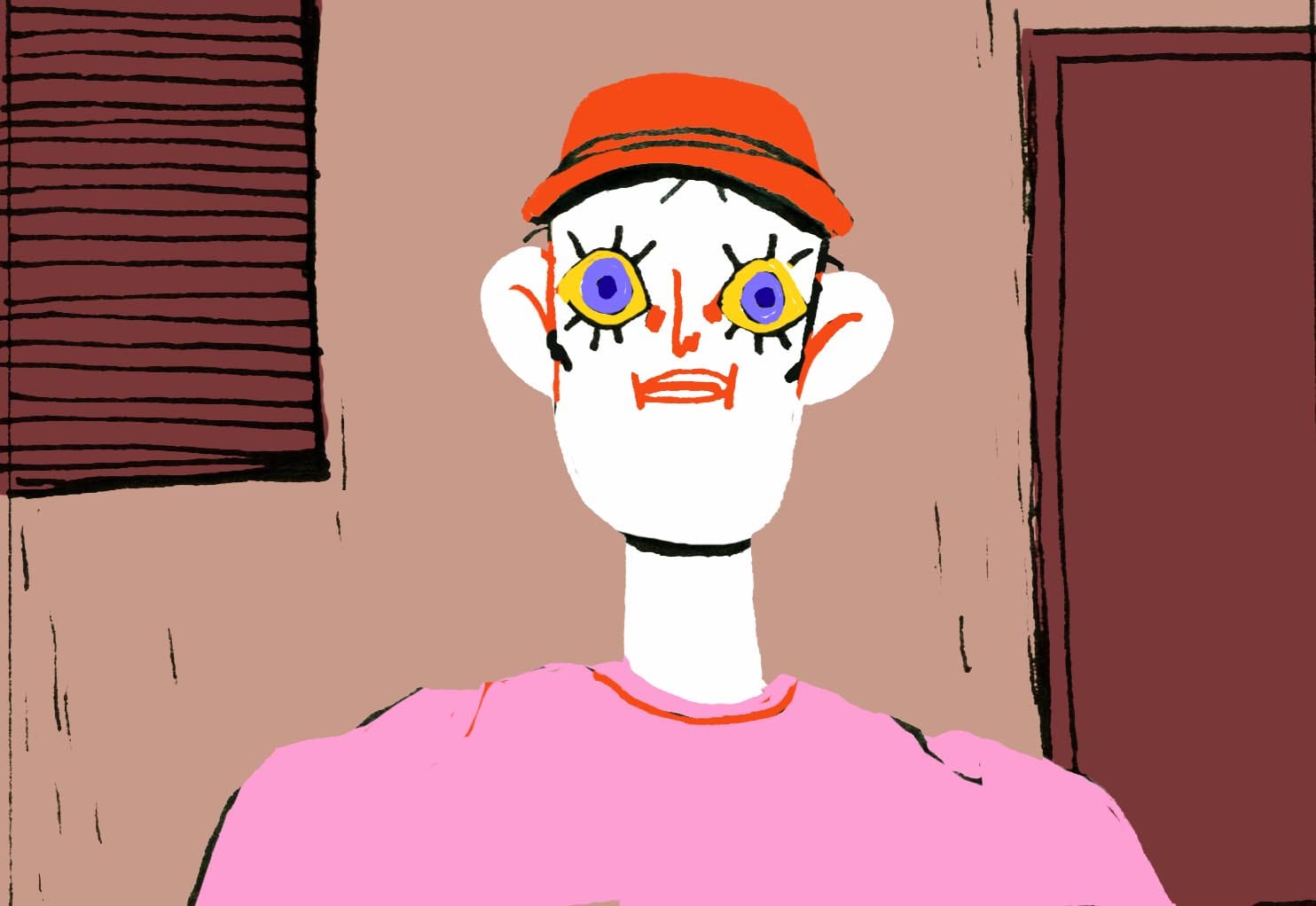
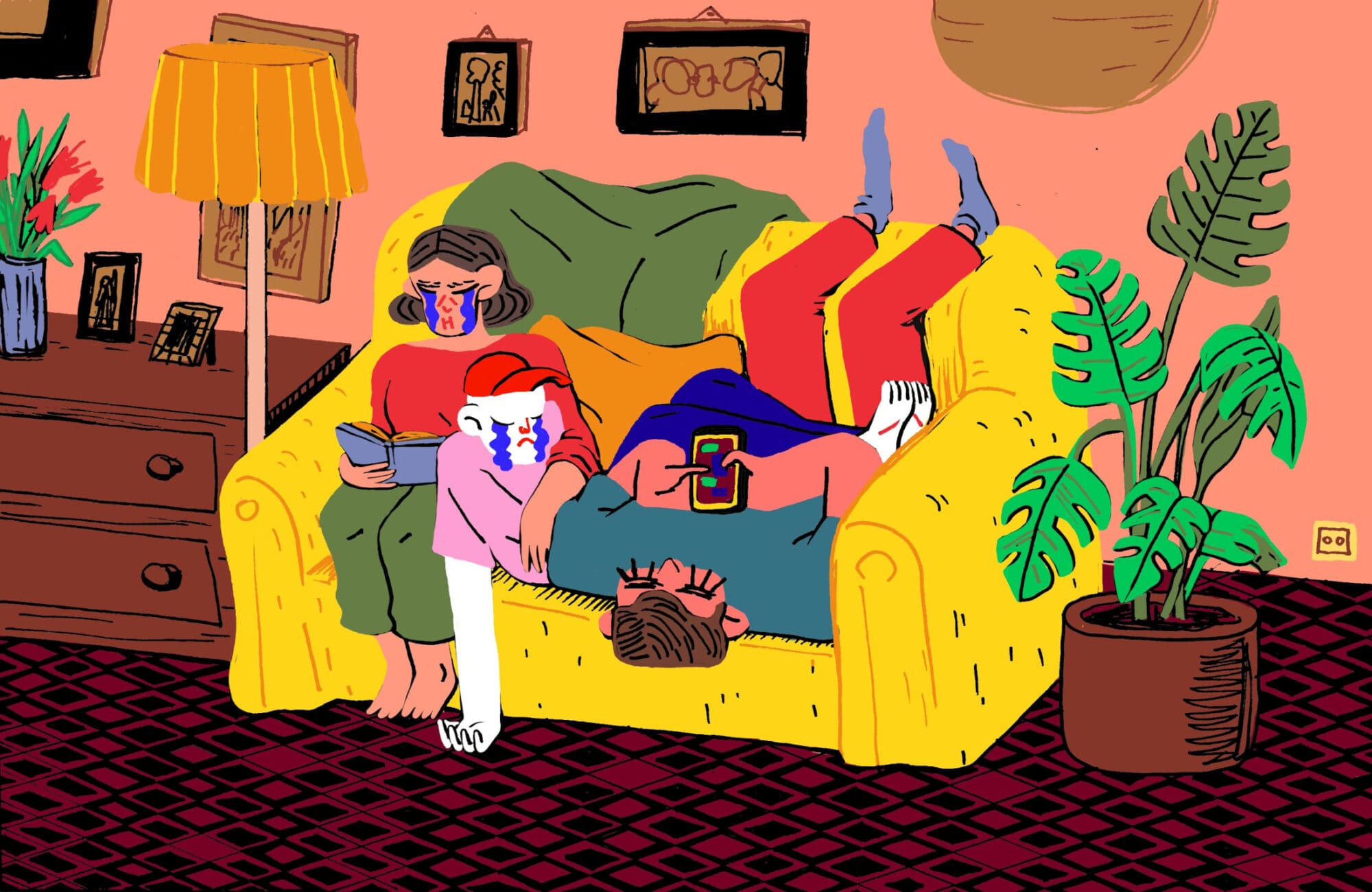
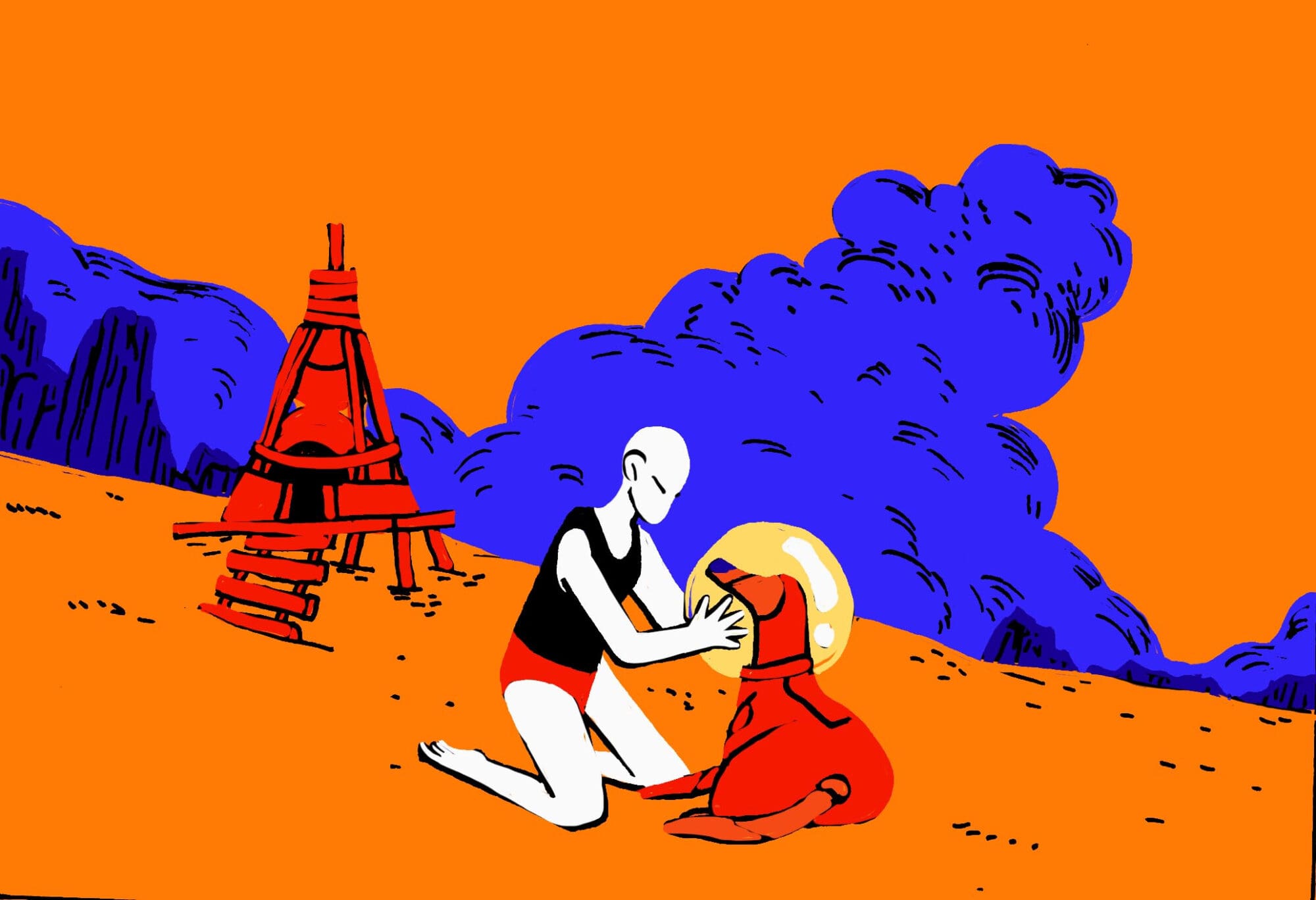
Early in preproduction, I drew a lot in my sketchbook. Many of those early sketches ended up in the finished film five years later. I wanted to create a sense of nostalgia, the feeling of having lost something you can’t recreate. As a kid from the ’90s, I wanted to borrow some elements from that decade. I was also inspired by Soviet propaganda posters and stamps from the ’50s, with their high contrast, saturated colors, and clear graphic shapes. I felt those elements fit naturally with my own style.
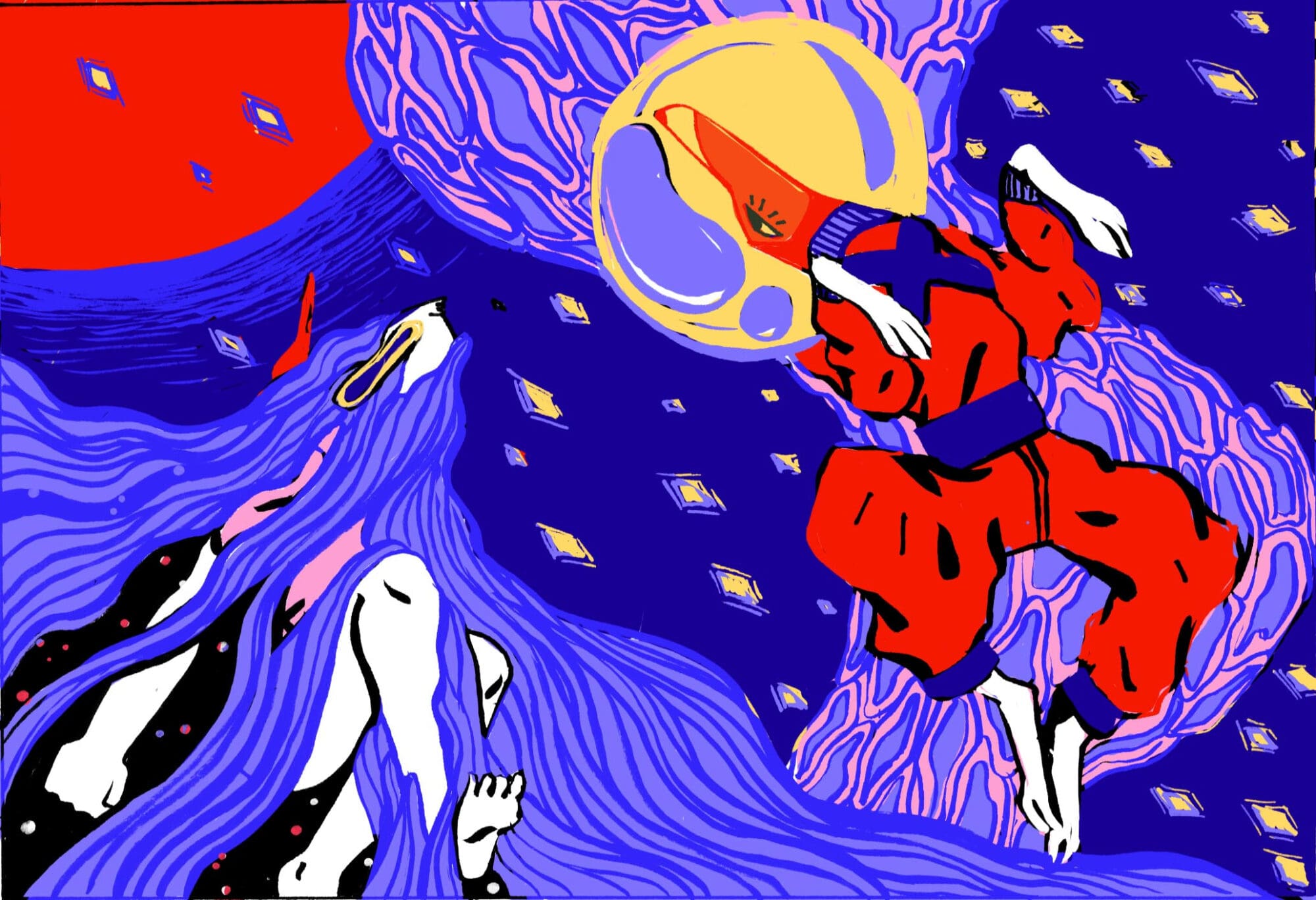
What made Laika, the Soviet space dog, the right companion for Shari as she faces her terminal illness?
I’ve always been interested in astrophysics and Laika’s story. I wanted Shari to have a companion who could share her experience. I guess I didn’t have the heart to let her be completely alone in this. In a way, Laika was in the same situation as Shari. When she was launched into space, it was clear she wouldn’t come back. She was facing her own death, too. She knows what Shari is going through and can help her cope with it.