.png)
YouTube Claims Independent Animators Are Reshaping The Industry, And Has The Receipts To Prove It
Stay informed with free updates
Sign up to get our news digest — delivered directly to your inbox twice a week.
When YouTube releases a trends report, it inevitably makes an argument about itself, and it will feel like PR. The company’s 2026 Animation Trends report is no exception, although it touches on trends that anyone near the industry will have recognized over the past two decades.
Titled Animation’s New Wave, the report makes a clear argument: independent, online animators are not just participating in the entertainment industry, but actively reshaping it.
Unlike past industry shifts driven by technology or distribution, this one centers on something more organic. Creators are building original animation directly for audiences, with free distribution in mind from the outset, often without traditional studio involvement.
What distinguishes this report is that it doesn’t rely on broad claims alone. It builds its case through specific data points, global case studies, and a recurring emphasis on how audience behavior is influencing the form itself.
A Generational Shift in What Counts as “Real” Animation
One of the report’s first key points is that 61% of animation fans aged 14–24 say they like watching series created by independent YouTube animators as much as or more than those made by major studios.
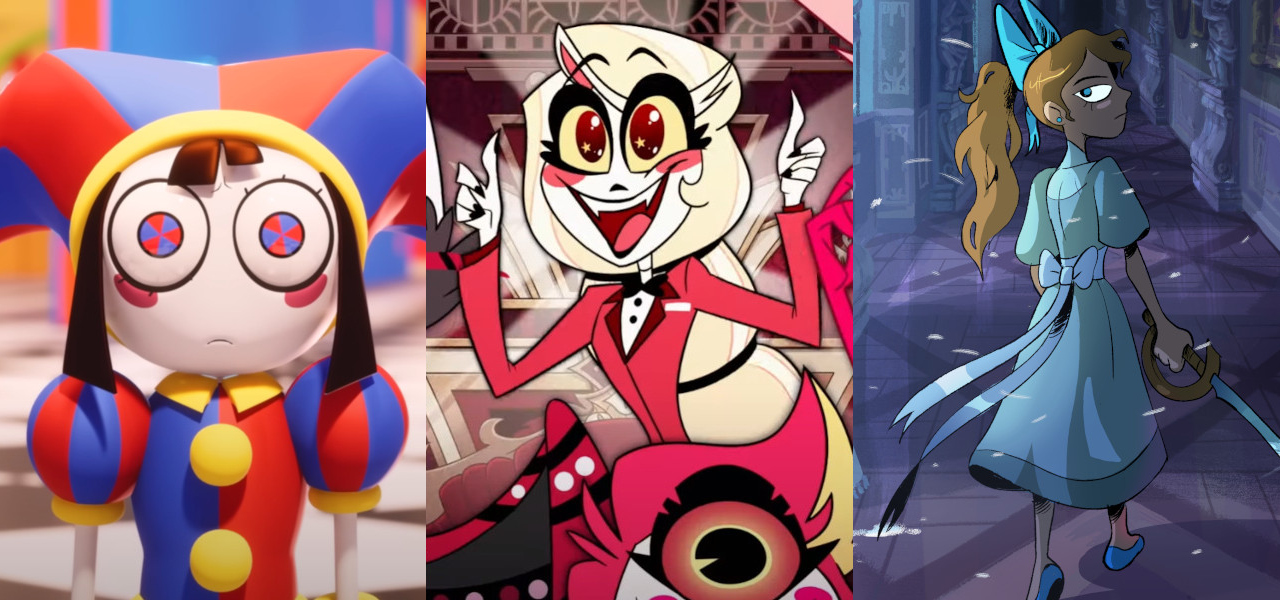
That staggering statistic immediately reframes the industry conversation. This is not simply about access or availability. It suggests a shift in perceived legitimacy. For younger viewers, the distinction between studio and independent animation is not a hierarchy. For modern viewers, there is no inherent qualitative difference between The Amazing Digital Circus and Family Guy based on where they’re distributed. Each is judged on its own merits.
The report positions this as a defining condition of the current landscape. Independent creators are not filling gaps left by studios; they are competing directly with them on equal footing in the eyes of audiences.
Global Reach Is No Longer Exceptional, It’s Expected
The report repeatedly returns to global performance as a core indicator of this shift. A key example is the Korean YouTube-first series Alien Stage, whose videos accumulated over 330 million views in 2025, with more than 90% of those views coming from outside its home territory. YouTube suggests the show’s international success is as emblematic rather than anomalous.
Similarly, Glitch’s The Amazing Digital Circus is cited as appearing on YouTube’s trending lists in eight out of twelve countries tracked in its study by the end of 2024, despite having released only four episodes.
The implication is clear. Global success is no longer contingent on scale at launch. It can emerge rapidly, from relatively small bodies of work, if audience engagement is strong enough. That seems obvious, but it’s good to have the data to prove it.
Format Is Fluid
The report provides a statistical breakdown of how animation is actually being made and consumed on YouTube. Rather than treating animation as a single category, it identifies three dominant formats: memes, animatics, and full episodes.
The associated audience data is perhaps surprising:
- 66% of young animation fans watch animation memes weekly or more
- 57% watch animatics weekly or more
- 63% watch YouTube-native animated series weekly or more
These formats exist at very different levels of production polish, and traditional logic might suggest that animatics would be of interest only in a B2B context or for particularly industry-savvy fans. Yet the data show that broad audiences are engaging with all three categories at comparable rates.
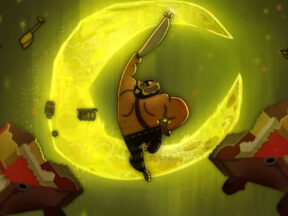
The report explicitly notes that younger viewers “do not make the same kinds of distinctions” between rough and finished work. In practice, that means animatics are now being treated as more than just a step in the production pipeline, but stand as their own worthwhile pieces of content that audiences will show up for in droves. Recent examples covered here include Jorge Guttierez’s El Guapo vs. the Narco Vampires project and Breana Navickas’s The Three Tomes.
This is a fundamental shift in production logic. It allows creators to test ideas publicly, adapt quickly, and build audiences before committing to higher-cost production while crowdfunding or courting potential production partners and investors.
Fragmentation, Not Uniformity
The report’s “Around the World” section reinforces the idea that no single dominant style or format is driving this growth. Instead, it highlights a fragmented ecosystem of content emerging from different regions, genres, and production approaches.
Examples range from:
- Vivienne Medrano’s Helluva Boss, which uses animatics as part of its production pipeline and reaches millions of subscribers
- Argentina’s Wasted, which built an audience of over 625,000 subscribers within a year of launching
- France’s Le Poisson Steve, which generated over 95 million views in eight months through meme-based animation
These examples are deliberately varied. The report argues that no single type of animation is succeeding, but that multiple incompatible formats are doing so simultaneously.
That diversity complicates any attempt to define a single “YouTube style” of animation. These titles aren’t unified by form, but by distribution and audience engagement.
Language Is No Longer a Barrier
The report also highlights how technological shifts, particularly in dubbing and translation, are reshaping accessibility.
For instance, The Amazing Digital Circus pilot includes subtitles in 18 languages and audio tracks in 21 languages, while other series deploy similar multilingual strategies.
At the same time, 50% of animation fans say they watch animated series in languages other than their own.
Together, these statistics indicate that as tools make content more accessible globally, audiences become more willing to engage with international material, which in turn encourages creators to design for global reach from the outset.
Fan Participation Is Structural
One of the report’s more distinctive claims is that audiences are no longer just consumers of animation, but active participants in its development and dissemination.
The example of The Amazing Digital Circus is once again a standout. A scene from the first episode was intentionally released with a green screen element, anticipating that fans would remix it into memes. They did exactly that, effectively turning an unfinished frame into a viral hype mechanism.
The report frames this kind of audience participation as a design strategy rather than an accident. Artists are creating content with the expectation that fans will rework, share, and expand it. This has worked in anime’s favor for years, with OVAs powering entire fandoms, and translates easily to the independent scene.
Shifting Financing Models
Crowdfunding has become an undeniable driver of modern animation production. YouTube’s report highlights projects like Dungeon Flippers and Far-Fetched, which exceeded their Kickstarter goals, as well as ongoing monetization through channel memberships and merchandise. Amphibia creator Matt Braly recently launched a Kickstarter for his Clara & the Below project and has already received nearly $330,000 in pledges.
Using this model, a single episode can serve as both a proof of concept and a fundraising tool, as Braly explained to us here. As the YT report notes, creators no longer need to wait for studio decisions or try to sum up a life’s work into a logline; instead, they can engage with audiences to drive further production.
The Case Study That Ties It Together
One of the report’s most comprehensive examples is EPIC: The Musical, which demonstrates how these dynamics converge.
The project generated over 1.3 billion views across related videos and more than 4,000 uploads in just the first half of 2025.
What’s notable is not just the scale, but the process. From early on, fans contributed animatics, the creator then amplified and curated those contributions, and that community output became part of the official production pipeline.
This goes far beyond simple fan engagement. It’s a new form of distribution-based production.
A Long-Term Blueprint
The report closes by framing these developments as a blueprint for the broader industry, not just indie creators. It suggests that traditional players are already responding, seeking to license shows and collaborating with creators emerging from this ecosystem.
Whether that blueprint is scalable and repeatable remains a key question. The report focuses exclusively on successful examples, choosing not to address how many creators operate in relative obscurity, below the threshold required to scale to production.
Still, the underlying shift it describes is undeniable. Animation on YouTube is no longer defined solely by what is produced, but by how it is built. Distribution is no longer the final step in a property’s lifespan but an early strategic launch point that remains vital to its evolution.
YouTube may not change the way that all animation is produced, but its impact is certainly driving a new, parallel model of production that exists entirely outside of the traditional industry ecosystem.