.png)
Hollywood Directors On The Good (Films), The Bad (Distribution), And The Ugly (AI) Of The Industry Today
Stay informed with free updates
Sign up to get our news digest — delivered directly to your inbox twice a week.
TURIN, Italy – With all the talk of animation enjoying a creative renaissance, and there is little doubt that 2026 has been one of the strongest years for feature animation in recent memory, filmmakers face a less encouraging reality: Making great animated movies doesn’t necessarily mean audiences will show up in theaters.
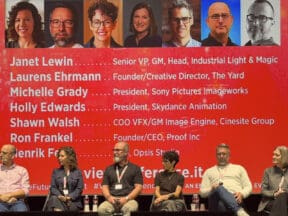
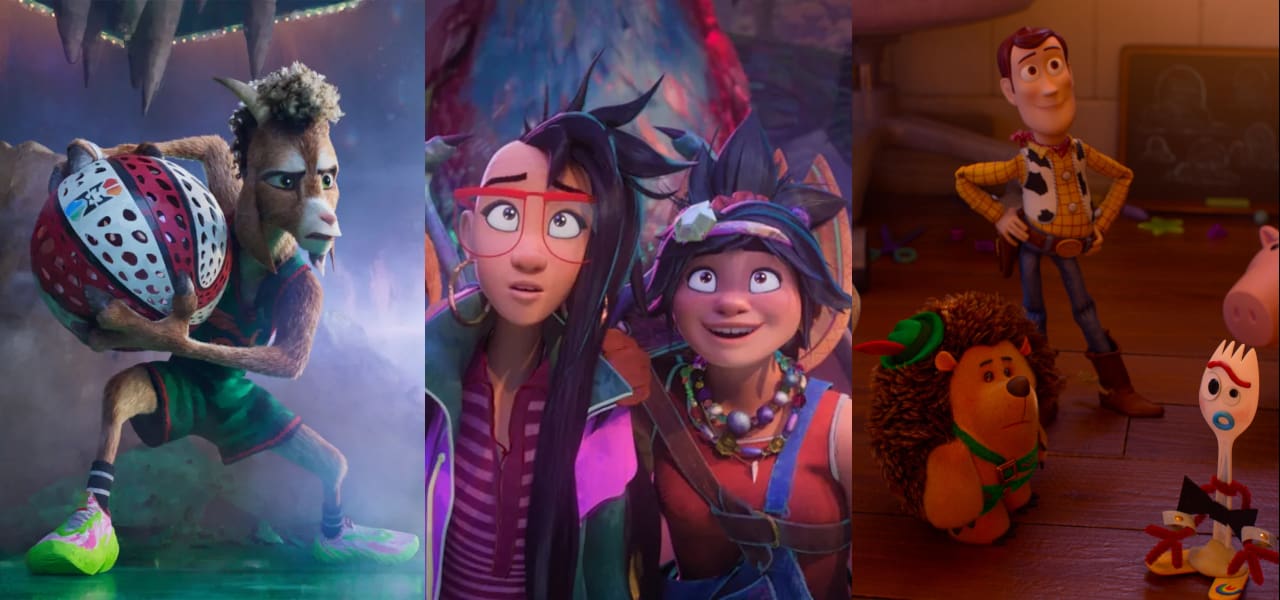
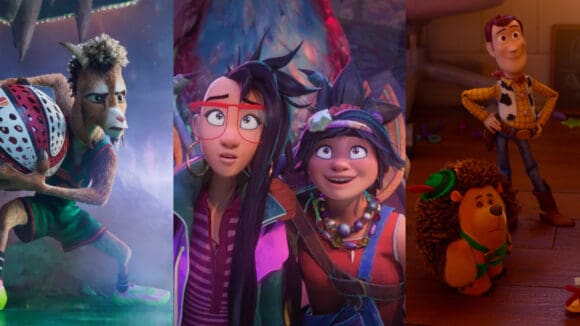
That contradiction was one of the key talking points in a candid discussion at View Conference on Wednesday, where Forgotten Island directors Joel Crawford and Januel Mercado, Toy Story 5 co-director McKenna Harris, and GOAT director Tyree Dillihay discussed the future of animated filmmaking.
The conversation ranged from financial pressures shaping studio decisions to the Western industry’s reluctance to embrace animation for older audiences. There were also some leading questions about AI that seemed to interest the filmmakers considerably less than the human side of their work.
Studio Self-Sabotage
One of the most revealing exchanges came when the filmmakers were asked about theatrical animation and streaming.
“It feels like the studios accidentally trained audiences to devalue animation theatrically,” Crawford said, suggesting that animated features are no longer perceived as major theatrical events.
He pointed to Forgotten Island, one of the year’s most critically acclaimed animated features, which has nevertheless been a box office disaster for DreamWorks and Universal.
“I look at this year in animation, it’s been amazing, just with the quality of stories and the variety of stories and original stories,” he said. “I mean, I can’t remember a year that was this stacked with fantastic animated movies.”
But critical enthusiasm hasn’t translated into commercial success.
“Forgotten Island, we struggled opening weekend in the U.S. to bring audiences in,” Crawford acknowledged. “So it’s still, no matter with great reviews from audience and critics, the general audience is still for some reason a little hesitant to show up to the theater.”
The film’s exceptional reviews and strong exit polls make its disappointing box office particularly frustrating. The disconnect raises uncomfortable questions about whether years of streaming-first strategies and shortened theatrical windows have undermined moviegoing habits.
Harris, whose Toy Story 5 grossed $1.15 billion globally, suggested that the problem extends beyond changing habits. Families increasingly weigh the expense of theatrical outings against watching at home, particularly since the pandemic.
“Everyone’s telling us that they want original stories,” she lamented, adding that audiences are “missing out on this greater experience you can have in the theater.”
Dillihay offered a more forward-looking perspective, emphasizing that theatrical exhibition is only one part of a film’s commercial life. “When a major studio releases a major project, they expect major returns,” he acknowledged, but argued that theatrical is ultimately “just one venue out of many,” pointing to streaming, video on demand, and other distribution outlets.
Sequels Finance Originals
Harris was equally frank about the commercial pressures facing Pixar, where original storytelling increasingly depends on the financial security of established franchises. She co-directed the studio’s fifth Toy Story film, but Pixar also released Daniel Chong’s entirely original Hoppers in March.
“Everyone at Pixar, on the outside, Disney is announcing, hey, there’s Coco 2, there’s Incredibles 3. It’s sequel mania,” she said. “And we need those films in order for originals to get made.”
She emphasized that Pixar remains full of artists passionate about original filmmaking, even as those projects become increasingly difficult to justify financially.
“Trying to make original stories profitable, it’s still just the toughest nut to crack,” Harris said. Nevertheless, “We can’t sacrifice ever telling original stories because that’s the DNA of the company.”
Animation’s Evolution Is Outpacing The Studios
The directors were more optimistic about animation’s artistic future, especially the growing influence of anime and the increasing variety of stories the medium can tell.
Crawford argued that younger audiences are already ahead of major American studios in recognizing animation’s possibilities.
“I think the studios are a little late to that, to be honest,” he said, acknowledging the financial risks of expanding beyond established family audiences with the enormous budgets typical of Hollywood animation.
Harris suggested that the industry’s reluctance to embrace older audiences is inseparable from its financial anxieties.
“If big studios are afraid of losing money, the belief is money comes with kids, money comes with universality,” she explained.
She argued that this thinking shapes creative decisions through studio notes, reinforcing the belief that animation must appeal to the broadest possible family audience.
Dillihay pointed to theatrical anime successes as evidence that other approaches are viable. Films associated with Demon Slayer, Jujutsu Kaisen, and Chainsaw Man have demonstrated demand for storytelling far removed from the traditional American studio model.
“They broke through with storytelling that is totally different than the things that we see from DreamWorks, from Pixar, from Sony,” he said.
Recalling conversations with Guillermo del Toro about changing perceptions of animation, Crawford said the filmmaker argued that progress wouldn’t come from a single breakout success.
“One thing Guillermo did say is like, it’s not going to come from just one movie. It’s going to come from a wave,” Crawford recalled. “I feel like it’s safe to say this year’s a wave.”
AI Questions Meet A Cool Reception
The discussion of generative AI was perhaps the panel’s most awkward detour. Despite the directors’ enthusiasm for new production tools, none appeared particularly eager to champion the technology.
The moderator introduced the emerging tech as something already touching virtually every aspect of filmmaking: “It’s here, it’s being used across, it’s touching every facet of the films you guys make, let alone anything on a smaller scale. It’s touching everything,” he insisted.
“How has AI been used in your productions?” the group was asked, apparently under the assumption that they all used AI on their films. “And as a filmmaker, as a storyteller, have you had any experience with any of these tools in a way that has helped you ideate better, ideate faster, visualize things sooner, which can only help?”
“We didn’t use any AI,” Mercado said immediately and unequivocally, met by supportive shouts and applause from the View crowd. Instead of discussing hypothetical efficiencies, he pointed to Forgotten Island‘s ending, which features photographs of the cast and crew with their best friends.
“It’s just an amazing way to end the movie by reminding people, look at all the humans that made this art that you enjoyed,” he explained.
Harris was similarly direct. “We didn’t use generative AI on Toy Story 5,” she said, acknowledging that Pixar’s history as a technological innovator complicates the conversation.
“Right now we’re at a crossroads; the studio is at a crossroads of, like, what does that mean for the identity of Pixar?” she said. She hopes any new tools will “benefit those artists and not take away their jobs.”
Crawford used a behind-the-scenes anecdote from a Forgotten Island animator to highlight AI’s foundational shortcomings. The artist requested a scene involving a father figure because his own father had died when he was young. After seeing the storyboards, the artist told the directors, “I need to bring something to this moment.”
“The movies aren’t just a paint-by-numbers, make it pretty. It’s human expression,” Crawford said.
Later, he offered the session’s sharpest criticism of generative AI.
“AI copies the hell out of what we’ve done and is always looking back,” he said. “It’s frustrating that these big corporations don’t understand the art that they’re stealing.”
Rather than competing with machines on their terms, Crawford urged artists to keep pushing the medium forward.
“We just have to keep being artists and bringing that human spirit to everything we do,” he concluded.
And that optimism was perhaps the biggest takeaway from the day’s talk. A conversation that could have been mired in struggling box office numbers, industry uncertainty, technological terrors, or any of the other concerns that so often dominate the headlines (our bad) was instead animated, energetic, and inspiring, thanks to the speakers’ refusal to let the industry’s problems diminish their enthusiasm for the art form or their belief in its future.