.png)
Director And Icon Creative CEO Shea Wageman On ‘Charlie The Wonderdog,’ A Hero For The Mid-Budget Indie Landscape
Stay informed with free updates
Sign up to get our news digest — delivered directly to your inbox twice a week.
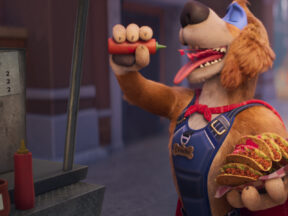
Viva Kids and Cineplex will release Charlie the Wonderdog in cinemas this Friday, January 16, as a rarity in today’s animation landscape: a big studio-quality, independent North American CG feature receiving a wide theatrical release.
Directed by Shea Wageman and produced at Vancouver-based Icon Creative Studio, where he serves as president and CEO, the film is rolling out day-and-date across Canada and the U.S., with another 35 to 40 international territories set to screen the film in the coming months. One early foreign-language release in Poland has already performed strongly, becoming the country’s fourth-highest-grossing film during its 2025 run.
Icon occupies a somewhat unusual position in the animation industry. The studio does roughly 60 percent of its business as work-for-hire for companies like Disney, Sony, and Warner Bros., while using the same high-end CG pipeline to develop its own original feature films. That hybrid model allows the company to produce what Wageman calls “$20–30 million movies that look like $100 million movies.”

“Our film looks pretty indistinguishable from a big $100 million movie because of our high-end pipeline with those movies,” he says. “We’re talking the $20–30 million range, but making it look and feel like $100 million in all ways, but most importantly, the story.”
That positioning places Charlie the Wonderdog in an underrepresented middle tier of family animation, films that are not Disney- or Pixar-scale blockbusters but are far more polished and ambitious than the direct-to-video or streaming or bargain-basement indie features of the past. Wageman sees real opportunity in that space. “There needs to be more than just $200 million movies out there,” he says. “There’s a real opportunity for studios like ours to build a business out of that level of film, to monetize it, and to make one every year.”
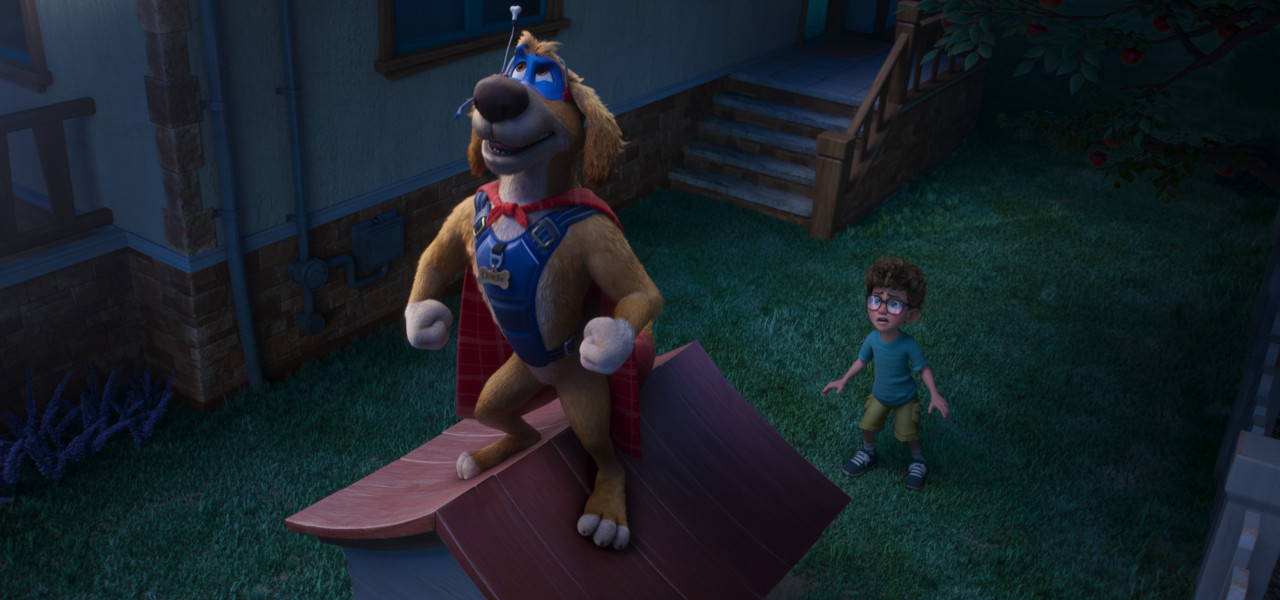
Although the film’s premise of a boy’s dog being abducted by aliens, gaining superpowers, and becoming the world’s greatest superhero sounds like classic high-concept animation, Wageman was determined to inject more emotion into the project than its logline could __. “The aliens were more of a motif just to get Charlie into hero mode,” he explains. “We really wanted it to have depth. Sometimes the most powerful stories are really simple ones, like a little boy and his dog.”
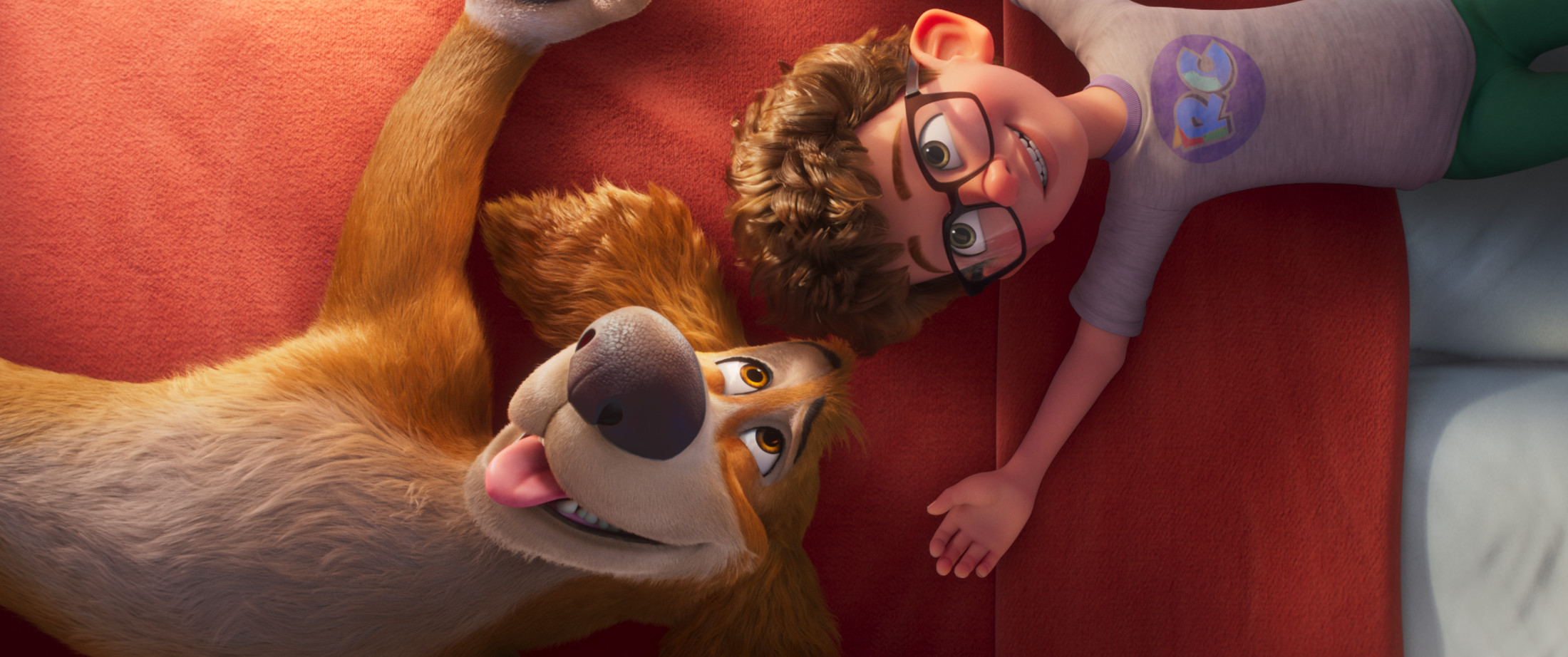
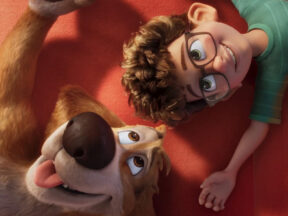
That emotional core is what drives the film. As Charlie becomes Wonderdog and is swept up by fame, Danny is left behind, watching his best friend drift away. “Our little may lose his dog because he’s elderly, but what if something amazing happened?” Wageman asks. “Your dog becomes a hero, and you get to go along for the ride. But then let’s start to deal with what that really means. He’s not actually a hero. He’s a dog trying to be a hero.”
The film uses that premise to build toward a broader message. “It symbolizes something greater, which is believing in yourself,” he says. “Anybody can be a hero, even somebody who makes someone else believe in themselves.”

That depth was born of a long, highly collaborative writing process. Wageman wrote the first version of the script in 2015, not long after founding Icon. Over the next several years, the story went through multiple rewrites, including a complete draft by writer Morello Inglis and a “punch-up” by co-writer Steve Ball. “A lot of people have fingerprints on it who’ve added something great to the story to get us to where we are,” Wageman says.
Once the film entered storyboarding, the process became even more collaborative. Icon assembled its board artists, editors, and directors in a screening room to review animatics together. “The storyboard artists are really critical. They’re directors,” Wageman says. “All the gags and all the ideas and how it executes from the script are really due to their talents and their ideas. We all give notes and comments; it’s really just best idea wins.”
That approach also allowed the studio to manage its budget carefully. Unlike major studios, Icon could not afford to fully animate scenes and then discard them. “We cut very little,” Wageman says. “We never cut anything that we fully animated. Anything we weren’t happy with, we quarantined it during storyboarding and kept it out of animation until we were confident we’d got it right.”
The film’s visual development followed a similar philosophy, aiming for broad appeal rather than stylized experimentation. “We wanted it to feel mainstream, a lovable character you can’t help but associate with,” Wageman says. Production designer Jeff Taylor spent years refining the designs of Charlie, Puddy, and Danny until they felt right. “We went through many iterations, but this is where we landed. It felt right.”
One of the trickiest technical challenges was that the animals exist in both natural and superhero forms, requiring multiple rigs and models. “We had quadruped Charlie and biped Charlie, old Charlie and young Charlie,” Wageman explains. “Same with Puddy. There were a lot of models, but each one had its time in the movie, so there wasn’t any waste.”
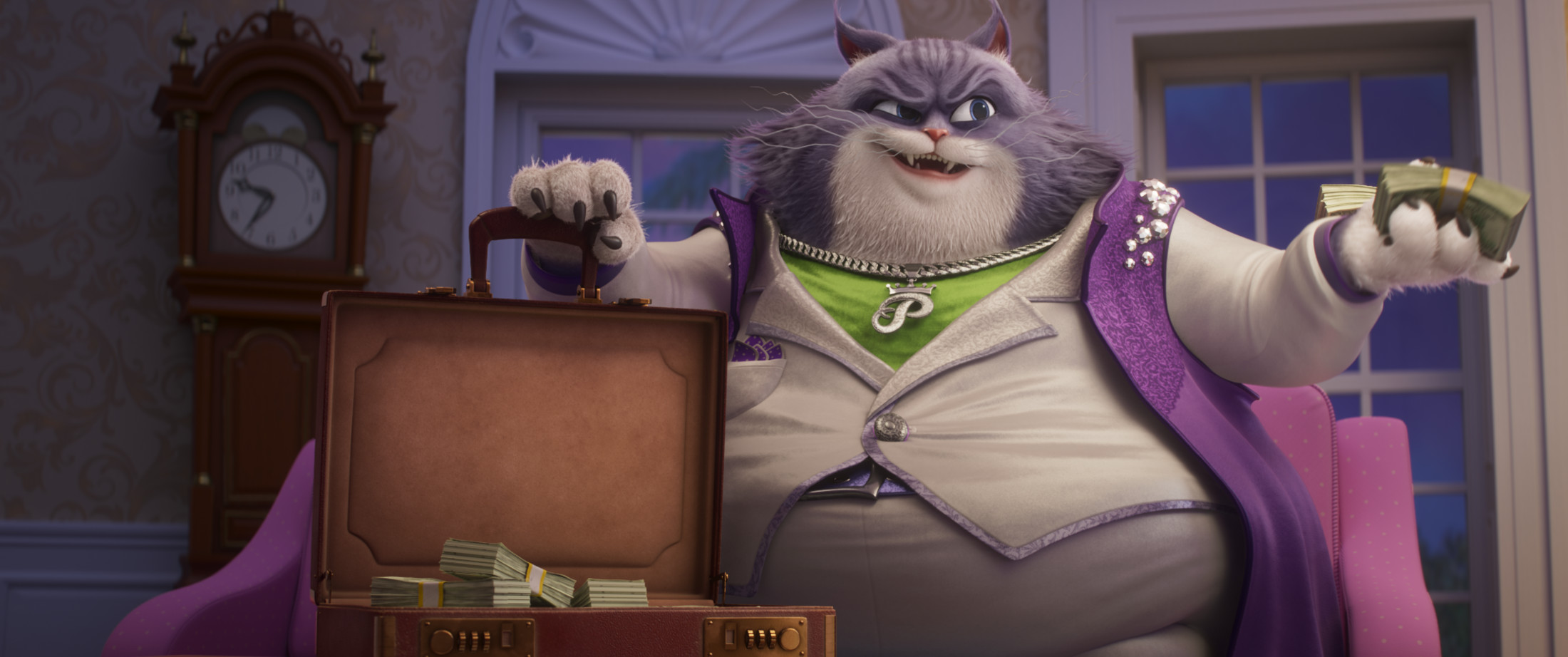
Puddy, the villainous super-cat, is a deliberate throwback to the animated antagonists of the 1980s. “We wanted the bad guy that you love to hate,” Wageman says. “We’re all close to 50, and we grew up in the ‘80s.” The character became a favorite during story development. “There were many laughing moments in the storyboard process watching him beat up on his owner and everything.”
Charlie the Wonderdog is intended to be the foundation of a larger slate at Icon; the first of many ambitious projects made in the company’s well-tuned pipeline. The studio has two more features in various stages of development. “Typically, the movies take one to two years of pre-production and then one year of solid CG,” Wageman says. “We always have two films in pre-production so that we can finish one a year.”
For Wageman, the long-term goal is not just to release a single hit but to build a sustainable studio brand that can exist alongside the industry giants. “We need our films to be global in order to pay for them and afford them,” he says. “They have to be indistinguishable from a big U.S. film.”
If Charlie the Wonderdog connects with families the way Icon hopes, it could mark an important step toward that future, not just for Icon, but for other mid-sized indies.