Disney’s ‘Hexed’ Filmmakers Talk Hand-Drawn Animation, Original Stories, And Pushing CG Boundaries
Stay informed with free updates
Sign up to get our news digest — delivered directly to your inbox twice a week.
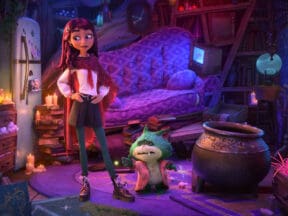
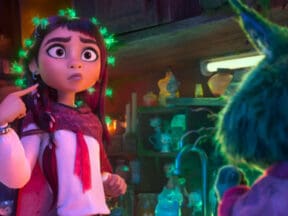
For all the criticism that Walt Disney Animation Studios (WDAS) has become too reliant on familiar formulas, its fall release, Hexed, is the studio’s fifth animated feature since 2020 built around an original story. The film follows teenage witch Billie Doe (Hailee Steinfeld), who has grown up with suppressed powers and a controlling mother, Alice (Rashida Jones)—not exactly typical Disney fare.
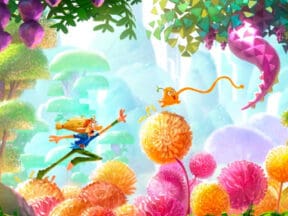
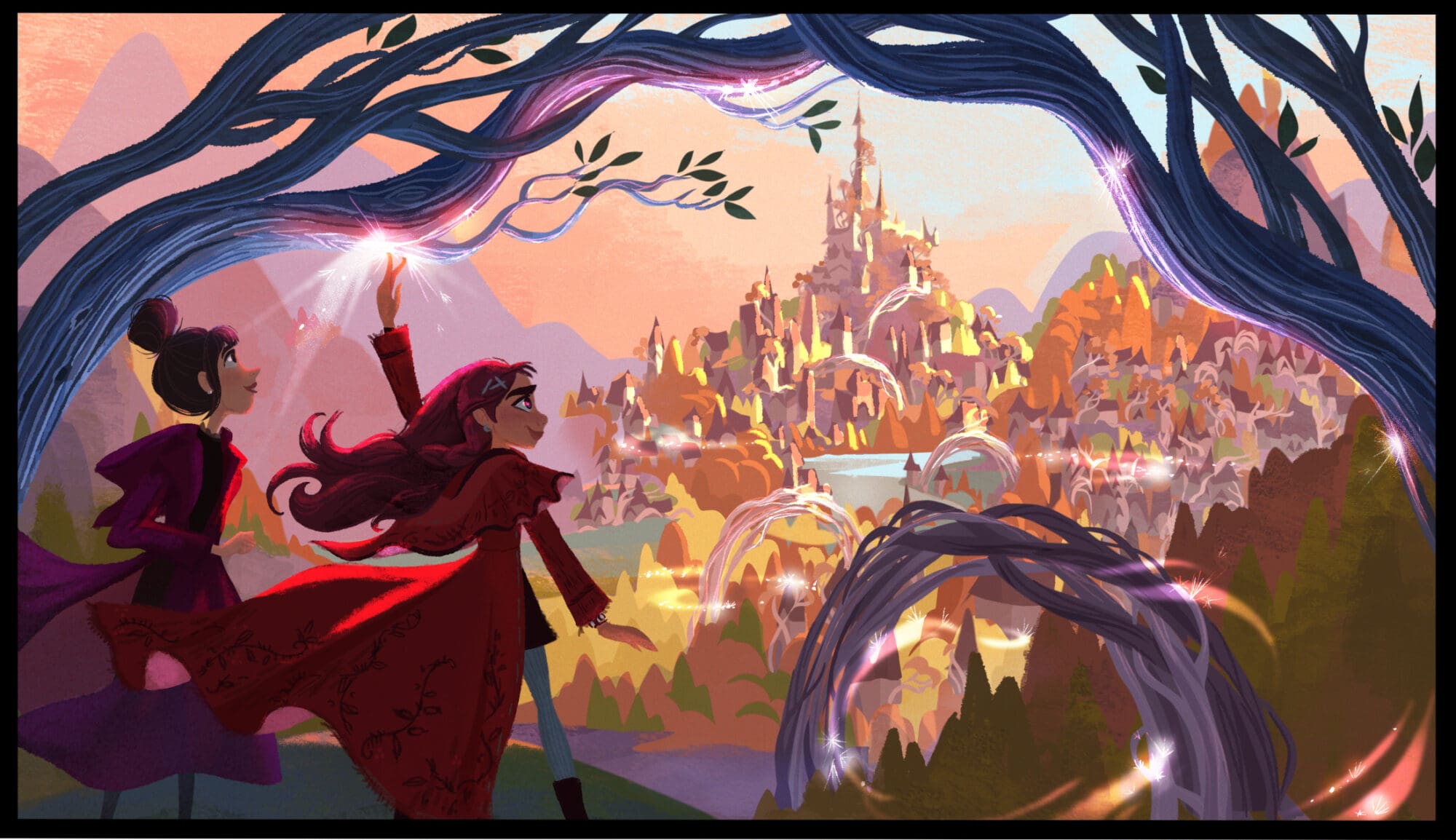
Co-written by studio chief creative officer Jared Bush (Zootopia 2) and Dana Ledoux Miller (Moana 2), and directed by Fawn Veerasunthorn and Jason Hand, Hexed is primarily computer-animated, with sequences that are hand-drawn or combine the two techniques. As Billie pushes back against her mother’s rules, she unlocks powers that have lain dormant since birth and is transported to Hexe, a witchy realm where she may truly belong.
“We haven’t had the chance to tell a modern, coming-of-age story, and so that’s really exciting,” Ledoux Miller told Cartoon Brew at a press day in Burbank. “There’s always something that feels so honest and raw about meeting a girl on the cusp of becoming the fullest version of herself. And so, we get to meet this 16-year-old girl who other teenagers can relate to because she’s dealing with the same things in the world as it exists today. But at the same time, there’s this aspirational element of, what if a teenager dealing with a mom who doesn’t understand her woke up one day and found out she had magical powers? What would she do with them? What mistakes would she make? How would she grow as a person? That’s the kind of stuff that we got really excited about, and it hasn’t really been done.”
Cartoon Brew also spoke with the Hexed creative team about the film’s return to hand-drawn animation for its prologue, pushing the limits of CG character animation, and the studio’s ambitions for original animated features.
A Mini Return to Hand-Drawn
Cartoon Brew: WDAS has an established CG animation style, but films like Wish and now Hexed have pushed its boundaries. As directors, where did you want to innovate, and where did you want to draw on the studio’s past?
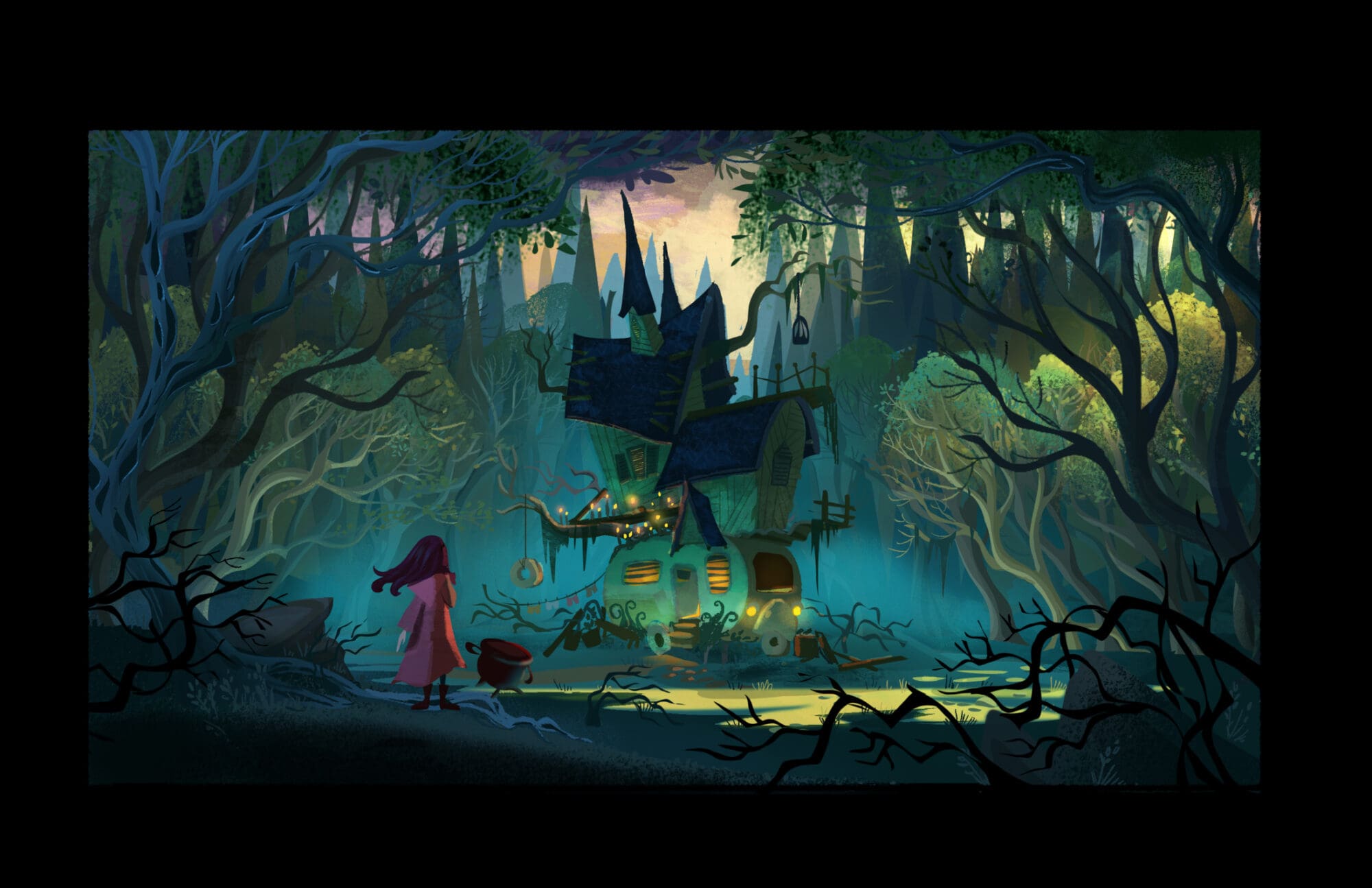
Fawn Veerasunthorn: The idea of the prologue came upon us wanting to talk about, “Once upon a time in Ohio….” We always let the story lead the discovery, right? The prologue was hand-drawn, combined with the techniques of lighting, so it’s not just straight-up line drawing. What the team had to come up with was quite unique. There’s a bit of glamor. There’s a bit of comedy. There’s a larger-than-life feeling. And as the [Hexed] story progressed, there’s another section of the film that we didn’t show fully today that’s evoking, if you think about the past, what would that sensorial feeling feel like?
Jason Hand: The [prologue’s] shadow idea of light and the moonlight being such a prominent feature in the movie almost has a magic in our movie, as the story will tell you. We liked that idea that you were able to get the story through things being projected with the light, and that felt really interesting to us. Wherever we can push the visual style or the visual storytelling of the movie, we were always looking to do so. There are some other elements in the film where we tried some different stuff that allows everybody in the building to get super excited about trying something different and trying something new. Sometimes that means going back to our roots, which were hand-drawn animation, which we all love so much. At Disney, we’re going backward and forward at the same time. We love to use anything that helps us tell our story in an interesting and really unique way. I love the opening. Once we saw the hand-drawn animation, it’s funny, and it’s really quirky looking. But then the textures of the puppets and the paper were added, and it was really cool. We were excited about how that all feels.
Did you bring back any Disney hand-drawn animation veterans to help on Hexed?
Hand: Ron Clements and John Musker, the legendary film directors, they’re part of our story trust. Ron came in and gave us a lot of really great thoughts on the story specifically. But we have animators from all over, and we have incredible hand-drawn animators. Alex Kupershmidt came on and helped with how the clothing can move. Randy Haycock, who actually animated the magic carpet in Aladdin, helped with the animation and draw-overs. And then Byron Howard, who’s not a throwback because he’s still working, is such an incredible resource for us in entertainment and animation. He is a genuine genius at that, so we use everybody, and we ask for everybody’s help because that’s how we do it here.
Bucket and Beef Rogger
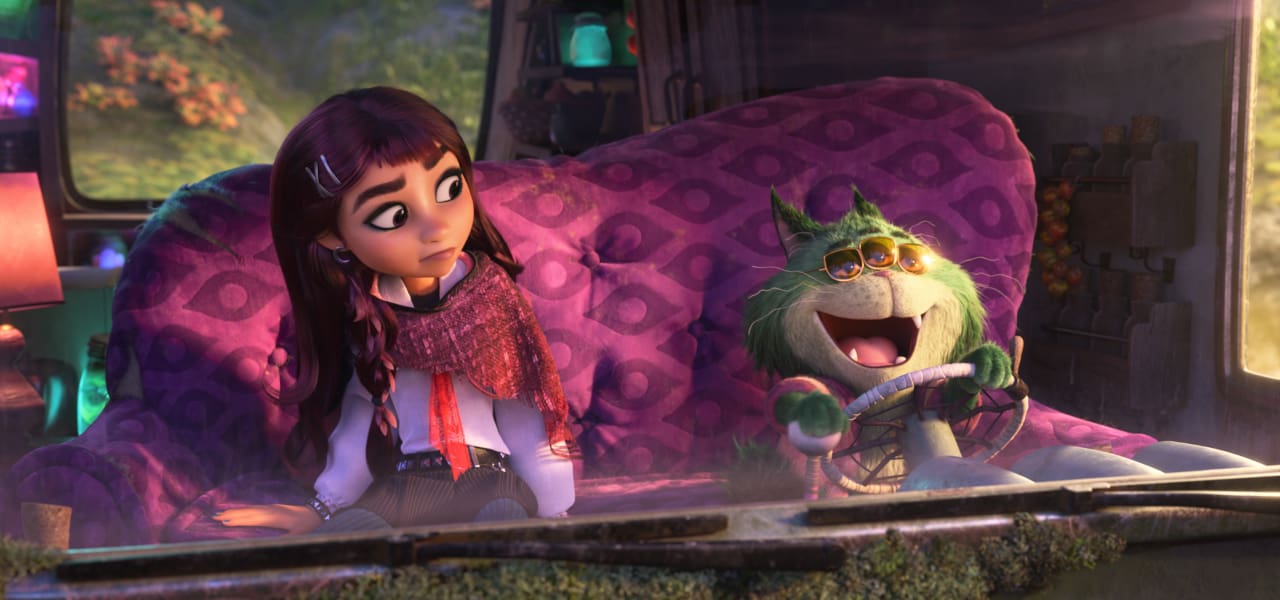
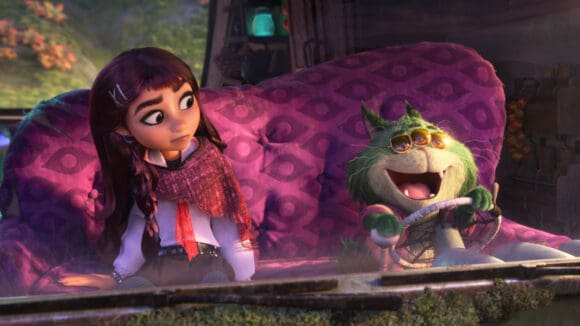
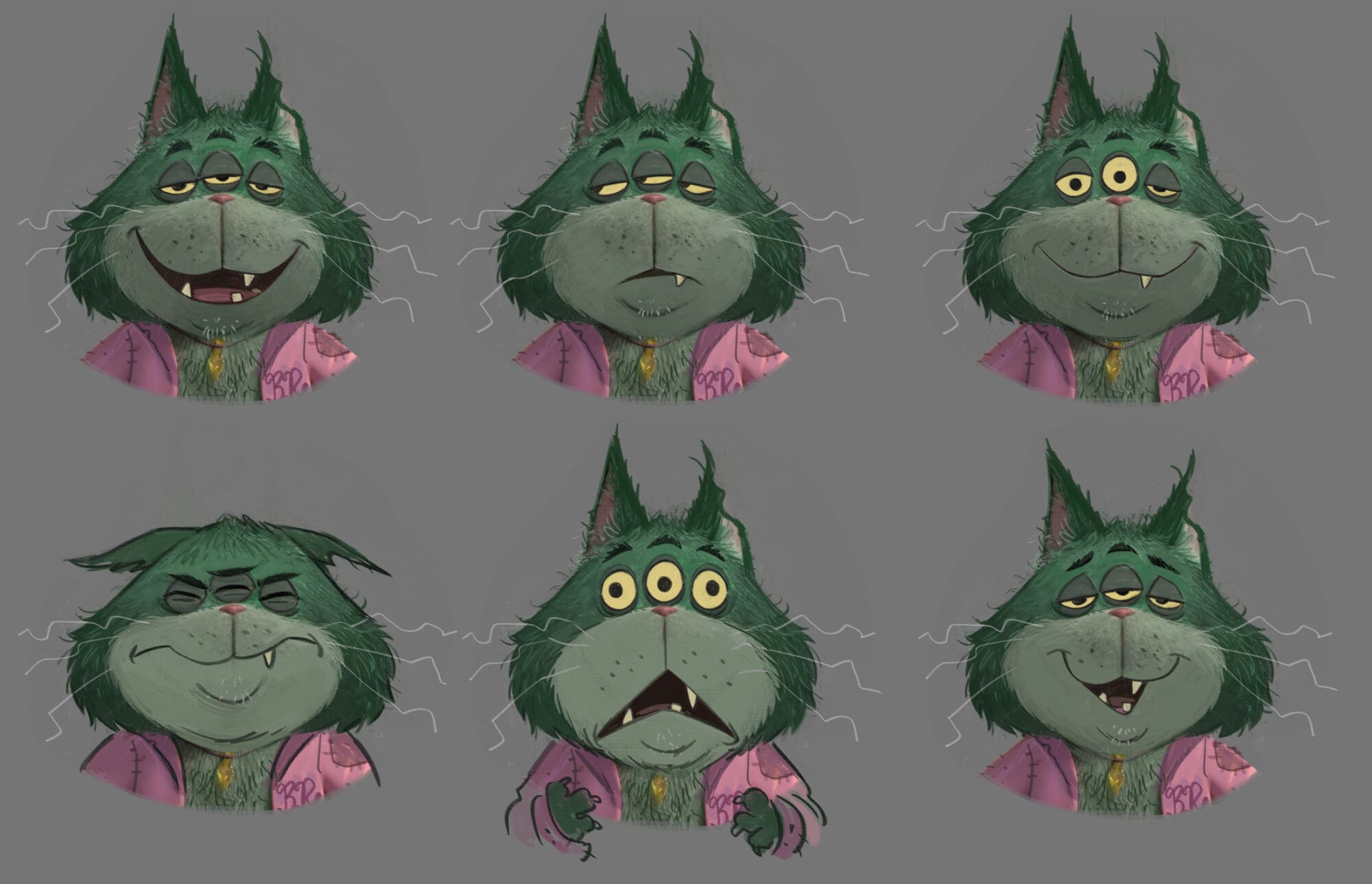
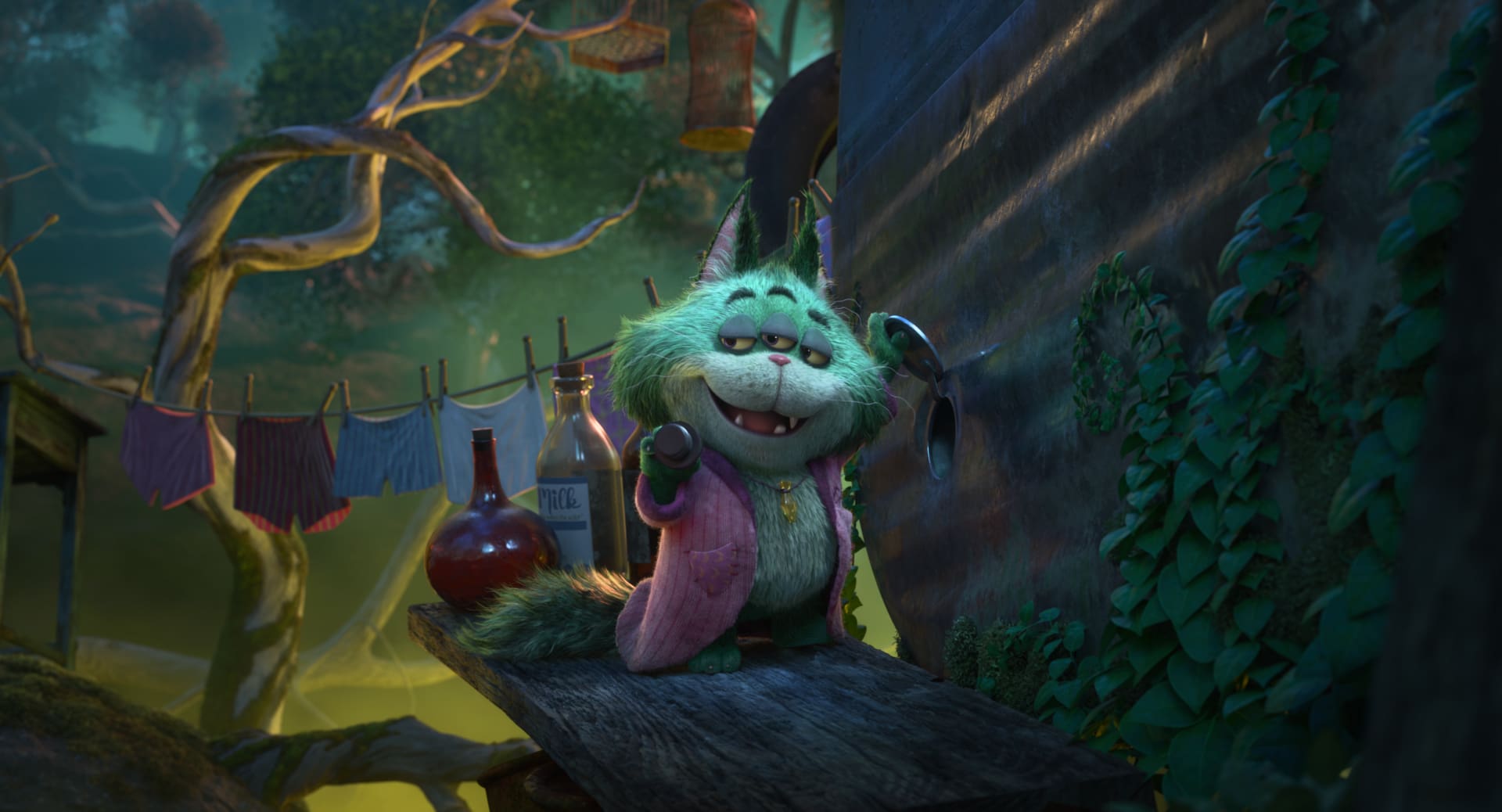
Two of the standout characters in Hexed are Bucket, an anthropomorphic cauldron, and Beef Roger Crummchuk (Walton Goggins), a three-eyed, cat-like witch’s familiar.

Beef Roger has multiple arms and extendable appendages, which present challenges for the rigging team. What makes a character worth the additional work and R&D?
Veerasunthorn: I give the credit to the production team and the whole pipeline who was like, “This seems like a fun character!” Tyler [Mahn] did exploration through hand-drawn just to see where you can push it to the max, and then the team saw it and was like, “Oh, we can do that.” And I’m like, “Really?”
Hand: That’s what we do in animation and this is part of why we get into animation. I remember directly challenging the animators to say, “We want to make Beef Roger a character like we’ve never done in our studio before.” And they’re like, “Sign me up!” They don’t shy away from that. And oftentimes, they actually did more than we ever thought we were ever going to be able to do, and do it in more shots than we ever thought we were going to be able to do. It’s all because of his personality. I think that’s why it goes back to the storyline and why it’s worth it, and that’s why we chose to do it. It was just so much fun.
I think the other aspect is just from a caricature standpoint in general. We really push the proportions of our characters. You can see most obviously in a character like Beef Roger, where we are actually stretching and pushing and pulling him, popping out his eyes. But also it’s in a character like the mother, Alice. We really found this by pushing the caricatured nature of how her limbs work, like maybe would have done back in the past. What it allowed us to do was to have a sense of caricature in the way that they act, the way that they move, but also still gives you the believability that we have for the story that we’re telling, which is this mother-daughter story. So it’s a balance between the two, but we are definitely wanting to push and enjoy doing that for sure.
How did Bucket come about as Billie’s dog-like cauldron companion?
Hand: One of the story artists drew it, and we laughed so hard. Alan Ostergardner pitched that idea, and we were like, “Oh, this is Bucket.” Honestly, that process kind of happens across all of our characters because we are constantly workshopping them. I’m not in theater, but I liken it a little bit to the rehearsal. It’s where you keep working on it and keep workshopping the characters until we all find the things that really connect, and that includes Dana and Jared in the room with us. That’s where that collective story brain really works and can create something super rich. We do get a chance to take a couple of passes at these characters and oftentimes, we can really find some of the magic, or the secret sauce of each character.
Originals, or not?
Original films face pressure to connect with audiences without the benefit of an established franchise. How do you handle that pressure when so much is riding on Hexed?
Veerasunthorn: Jared likes to push things to see where the limit is. He was like, “Don’t be afraid. Just push the comedy really far, push the drama really far, and see where we land.” He never really stopped.
Hand: He was the biggest advocate for this movie, honestly, for all the aspects of it. It is challenging to make an original. We want them to be as good as they possibly can be, and so we will try our hardest to make them the best, the funniest, the most emotional, visually interesting, and different and unique. I think that comes from the top, which is so nice and a luxury for us. And then we just work really hard, and the whole entire team then wants to do the same thing, and that’s exciting.
Jared, how do you give original films the best chance of succeeding in an industry that increasingly favors sequels?
Jared Bush: I’d say the special thing about an original is that no one knows what’s going to happen yet. You’re taking people on this journey. They don’t know the character’s secrets yet. They don’t know whether flaws are flaws or a superpower. They don’t know the worlds that you step into. I watch [movies] with my kids right now, and they want to be surprised by things. They want a new story that takes them to places that they didn’t expect to go. They know all the tropes because they can go online and see every movie ever made, and they know them really, really well. I think for us, it is knowing all those things, and then how do you surprise and delight people? And that’s a really hard thing as we’re moving through the story. But more than anything, people want to go on an emotional roller coaster.
Given animation’s long production timelines, you have to anticipate what audiences will respond to years in advance. How confident do you feel making those decisions two years into your role as CCO?
Bush: I love a learning curve, and it’s constantly that. Regardless of what my role is or what Dana’s role is, the world is continuing to change around us all the time. So, more often than not, we always start with a character. Character is always the thing. But I think beyond that, as you’re moving from movie to movie, it’s how do you tell stories that people will relate to? It always comes down to universal human truths that we hope are timeless. A lot of the stories that we try to tell aren’t stories that will feel topical to this moment right here. Like, [Hexed] is a story about a parent trying to protect their child, and this child wanting to push beyond those protections and those limitations to find her potential. That story exists right now the same way it did 50 years ago. Parents and children will always have that debate, and that’s what this movie is — a debate.
For me personally, as I’m looking at the slate moving forward, 100% we have to tell new original stories. I came to Disney and I had the luxury of working on three originals back to back. It was amazing. But I will also say, I actually do love stepping back into worlds that I help to build with characters that I love. A lot of times people think that there’s a mandate of sequels. Actually, people are excited to jump back into those worlds and spend time with characters that we fell in love with. To me, it is just this balance. And I think a really good balance is a sequel to an original. If we can keep a cadence like that, to me, it makes a lot of sense as we’re moving forward.
And we have the other really fun legacy of musicals, and that’s also another part of this. We have musicals as part of the original continuation story — musical, non-musical — and that’s just a really fun thing. As any creative person, it’s kind of this embarrassment of riches, and every story that we get to tell, we get to jump in and take a vacation in these places. It’s incredibly fulfilling, and it’s really, really fun. Even when the work’s difficult, it’s this really fun puzzle that you’re trying to solve and make the best version that could possibly be.
When it comes to the visual innovation of WDAS features, how do you balance developments at other studios with the capabilities of your own pipeline?
Bush: Sometimes, certainly, as you’re looking at something, you question, “What should this look like?” But usually, the answer to that is, “Why does the story need that?” Anytime you’re pushing style over what the story is, then it’s just different for the sake of being different. A movie we announced called Clay that Fawn is also directing has a very, very different style that makes sense with what that movie is. There’s a reason to really push beyond anything we’ve done before. But there’s so much exciting animation happening around the world beyond the walls of the studio. We are fans of all of it. We are all excited by it. We’re inspired by everything that we see. I think more than anything, as a director in the studio, if you want to push to try something new — fantastic. But make sure that there’s a why, and make sure that style change is going to elevate the film. I think people will see that over the next five to 10 years there’s going to be a lot of that.