.png)
‘Forgotten Island’ Directors Break Down Two Sequences That Bring Jo And Raissa’s Friendship To Life (EXCLUSIVE)
Stay informed with free updates
Sign up to get our news digest — delivered directly to your inbox twice a week.
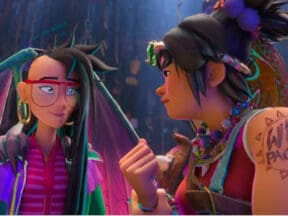
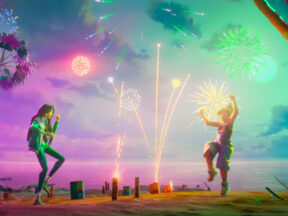
In Forgotten Island, directors Joel Crawford and Januel Mercado take best friends Jo (H.E.R.) and Raissa (Liza Soberano) from 1990s Manila to Nakali, a mythical island inspired by Filipino folklore. It’s the pair’s third collaboration at DreamWorks Animation, following The Croods: A New Age and Puss in Boots: The Last Wish.
Cartoon Brew spoke with the directors about the film’s visual approach and two sequences they’re particularly proud of: an opening montage that charts Jo and Raissa’s friendship, and a third-act scene that takes Raissa through Jo’s memories.
Mercado said the setting gave him an opportunity to show his home country on screen. Working with production designer Ryan Carlson and art director Chris Grun, the filmmakers brought a range of visual styles into the CG production.

“We’re big fans of anime and Studio Ghibli, especially the OG Hayao Miyazaki,” Mercado told us. “We were always so blown away by his portrait of Japan. Every time you see it, you want to go to Japan. You can see this is his home, and this studio loves their country; it’s just so romanticized. There’s such passion and authenticity for the way they design Japan, and we wanted to do the same thing for the Philippines.”
When Jo and Raissa arrive on Nakali, the lighting changes along with the setting.
“We felt it wouldn’t make sense if the lighting reacted the same way as our lighting does because the sun is this stylized light source; the Filipino sun,” Crawford explained. “In the mythology, there’s seven moons that are in the sky at one moment, so what does that do to light sources? It’s chasing the authentic, and not being limited by expectations or what’s been done before. I think just being truthful of what inspires us and what feels impressionistically right for the story.”
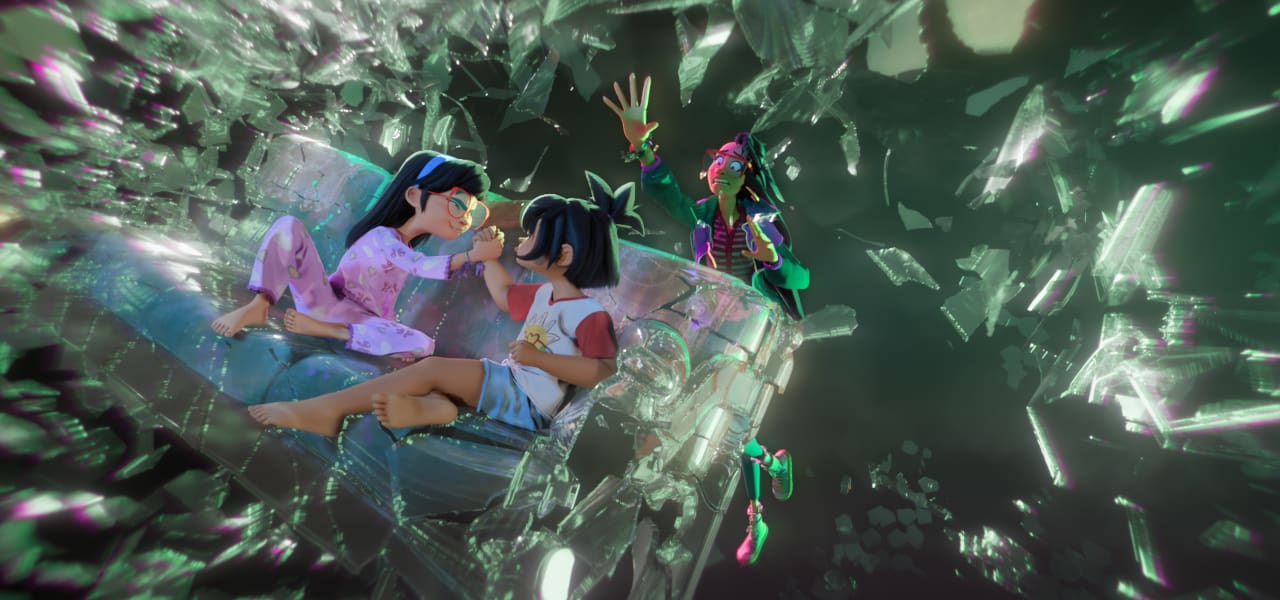
The directors also worked with head of cinematography Scott Cullen to explore how lens choices could serve the story. One result is a third-act sequence in which Raissa sees Jo’s memories for the first time. It includes a 40-second shot that follows Raissa as she runs across a rooftop.
“Throughout the years, we’ve been pushing the visual storytelling,” Mercado said. “Joel and I were always like, ‘What can we do to utilize every facet of filmmaking to push the emotion of the story?’ When Raissa is running through [Jo’s] memories, there’s that shot of her on the rooftop. It’s the longest shot in our movie. It’s 40 seconds, and it’s just following Raissa running across the roof. It’s probably one of the most intense, dynamic action set pieces. But then it ends with one of the most quiet, dramatic moments of her reliving a memory, and that’s one shot. … You’re running on that rooftop with Raissa, and you’re reliving that childhood memory with her.”
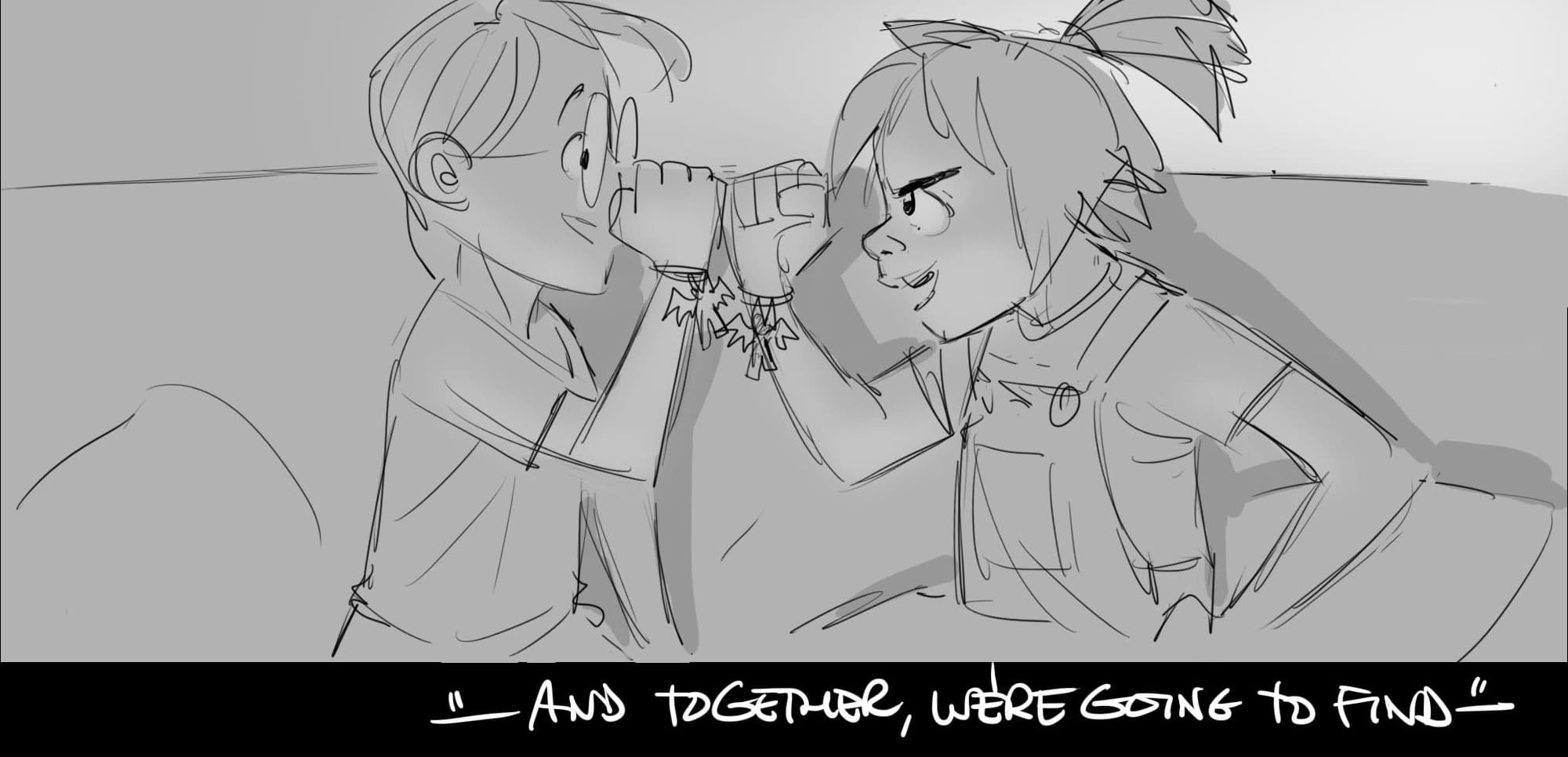
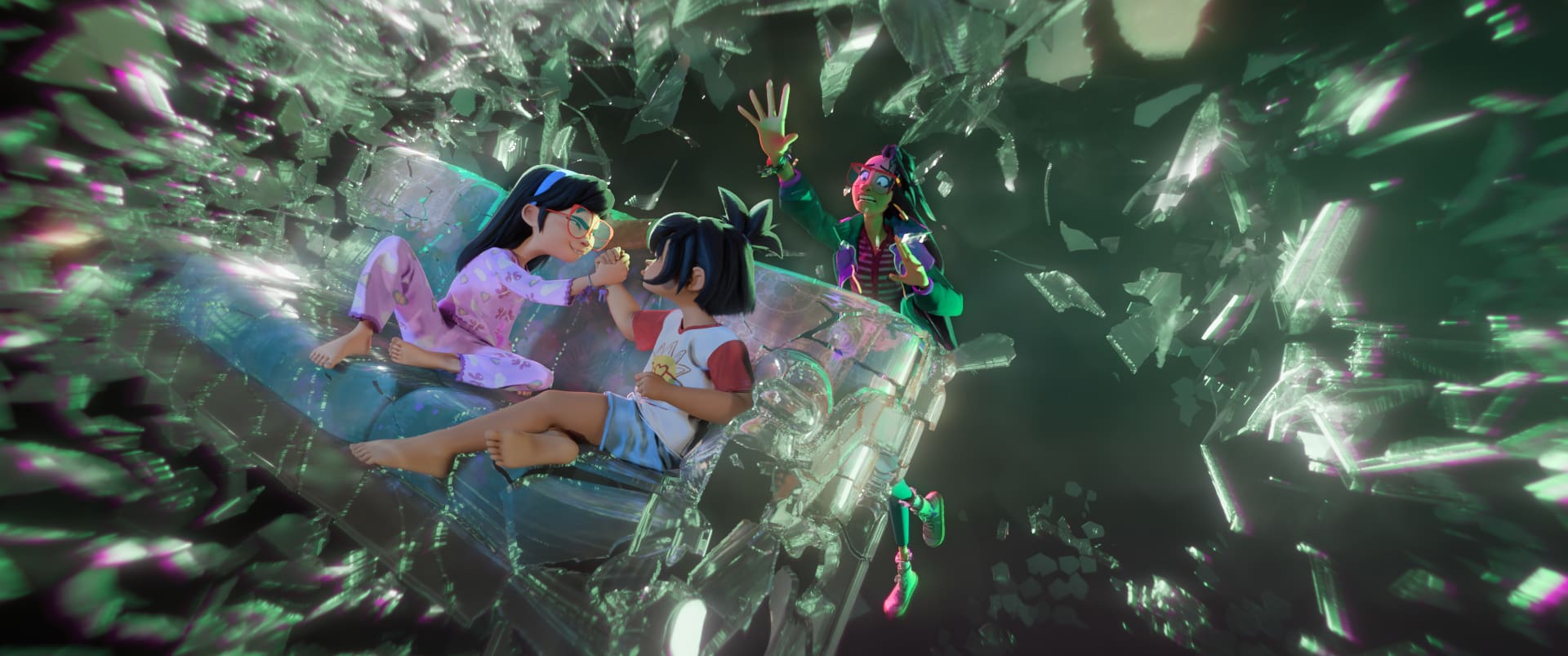
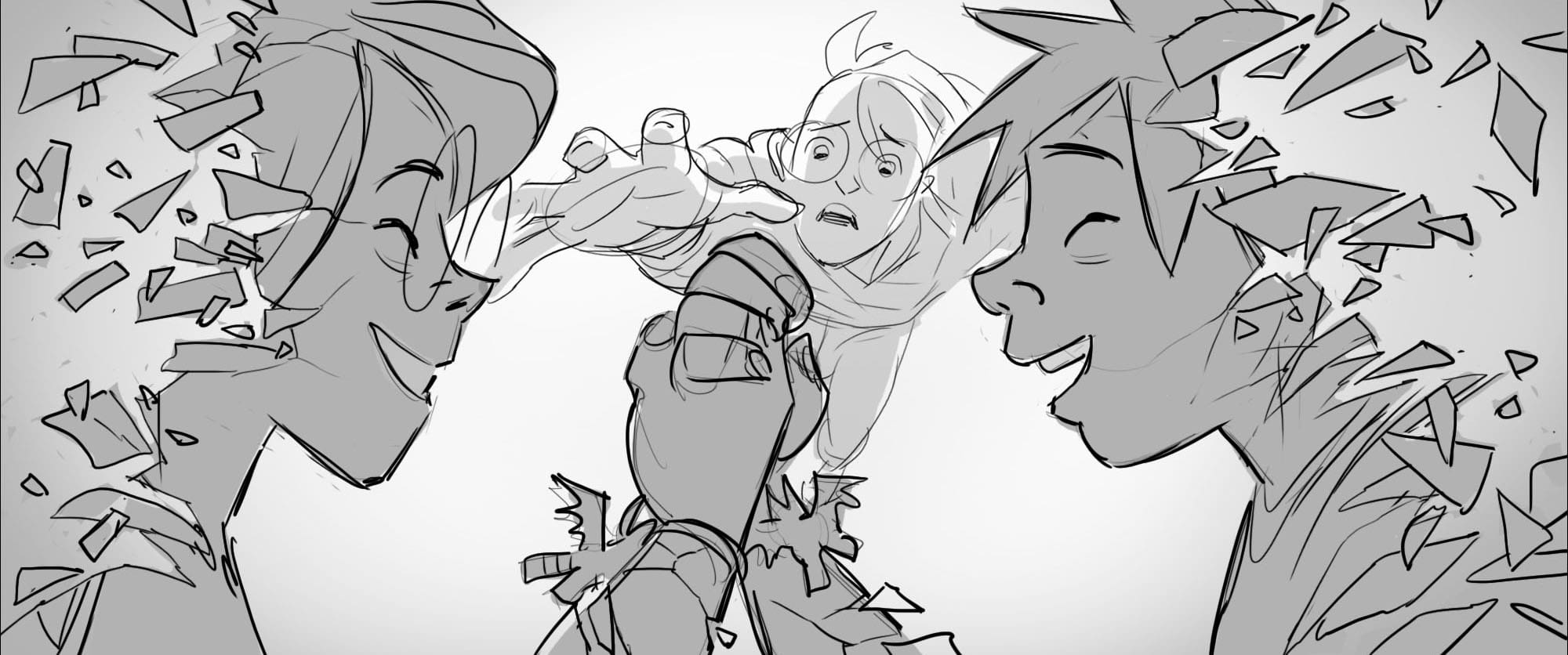
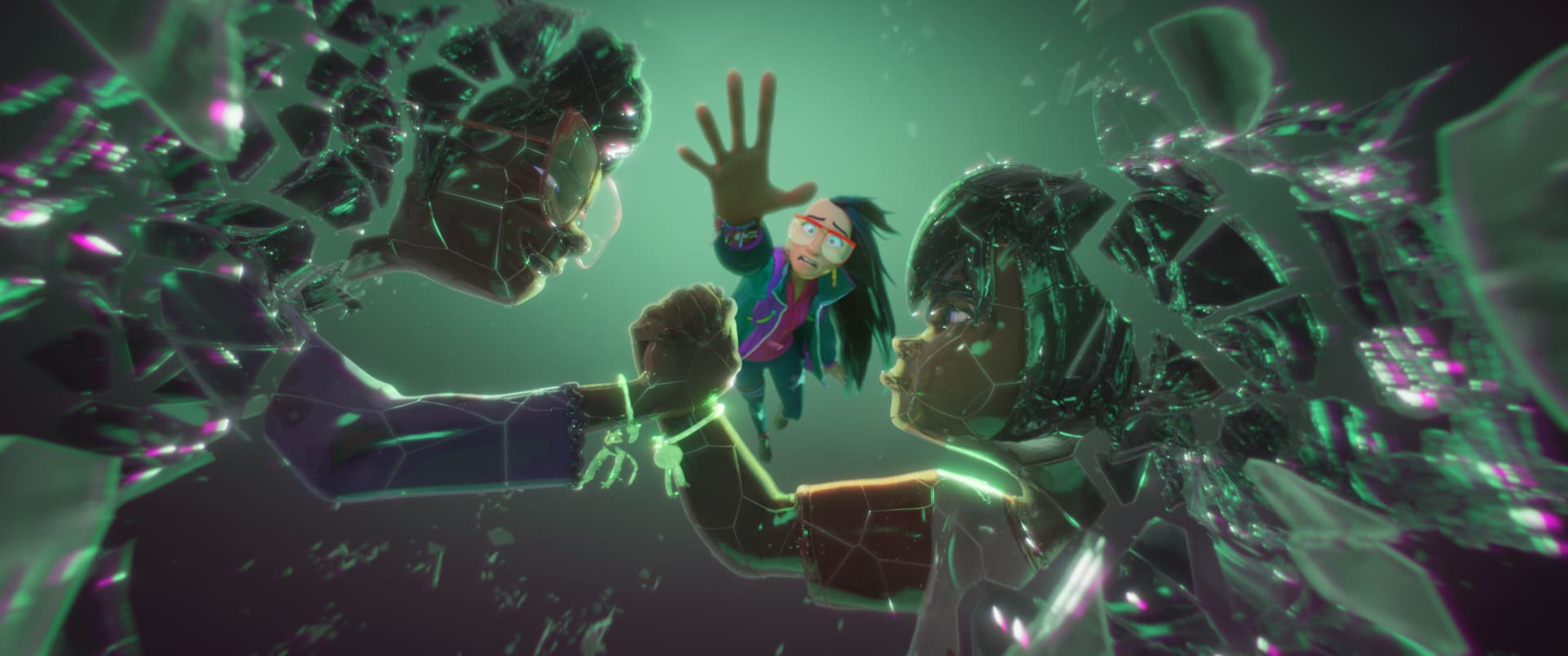
The film’s opening montage presents another challenge: showing Jo and Raissa grow from children into young adults, with their friendship unfolding over a decade to INXS’s “Never Tear Us Apart.”

“In terms of filmmaking montages, musical montages are really hard to lock in the timing,” Crawford said. “We have this amazing editor, Jim Ryan, who we’ve worked with on every film. The artistry of Jim and his team really tells that story musically and sets up so much. We definitely iterated and redid moments to find the quick storytelling that tells you why Jo and Raissa need each other.”
“There’s something pretty powerful about that,” Mercado added. “I haven’t seen much of that, especially in animated movies. Usually, you start here with kids, and you’re kind of with the kids. But here, you see them grow up before your eyes. There’s growing pains and the nostalgia of life going by really fast. In a snap, they’re young adults. You feel the loss and the longing from the memories you just lived through.”
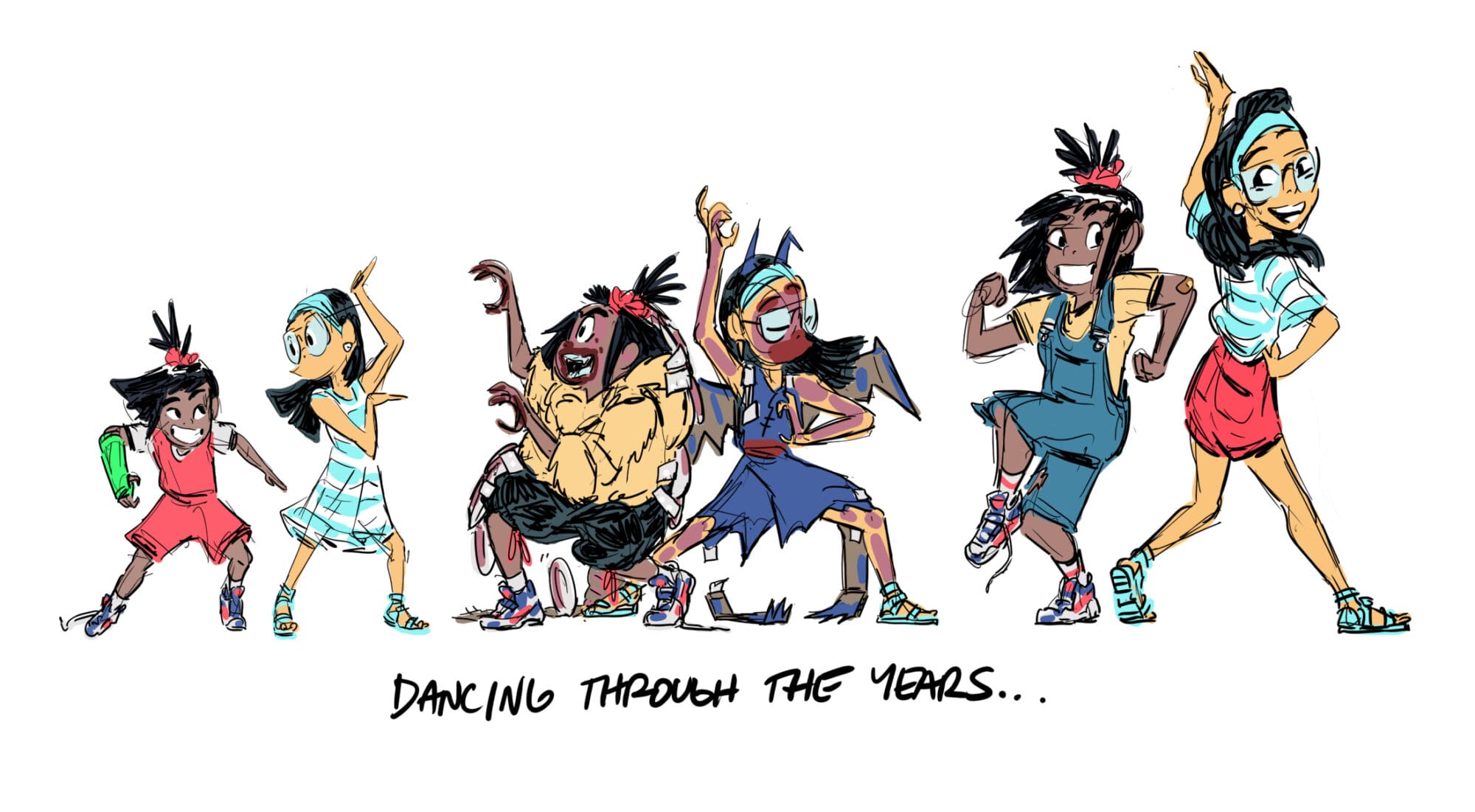
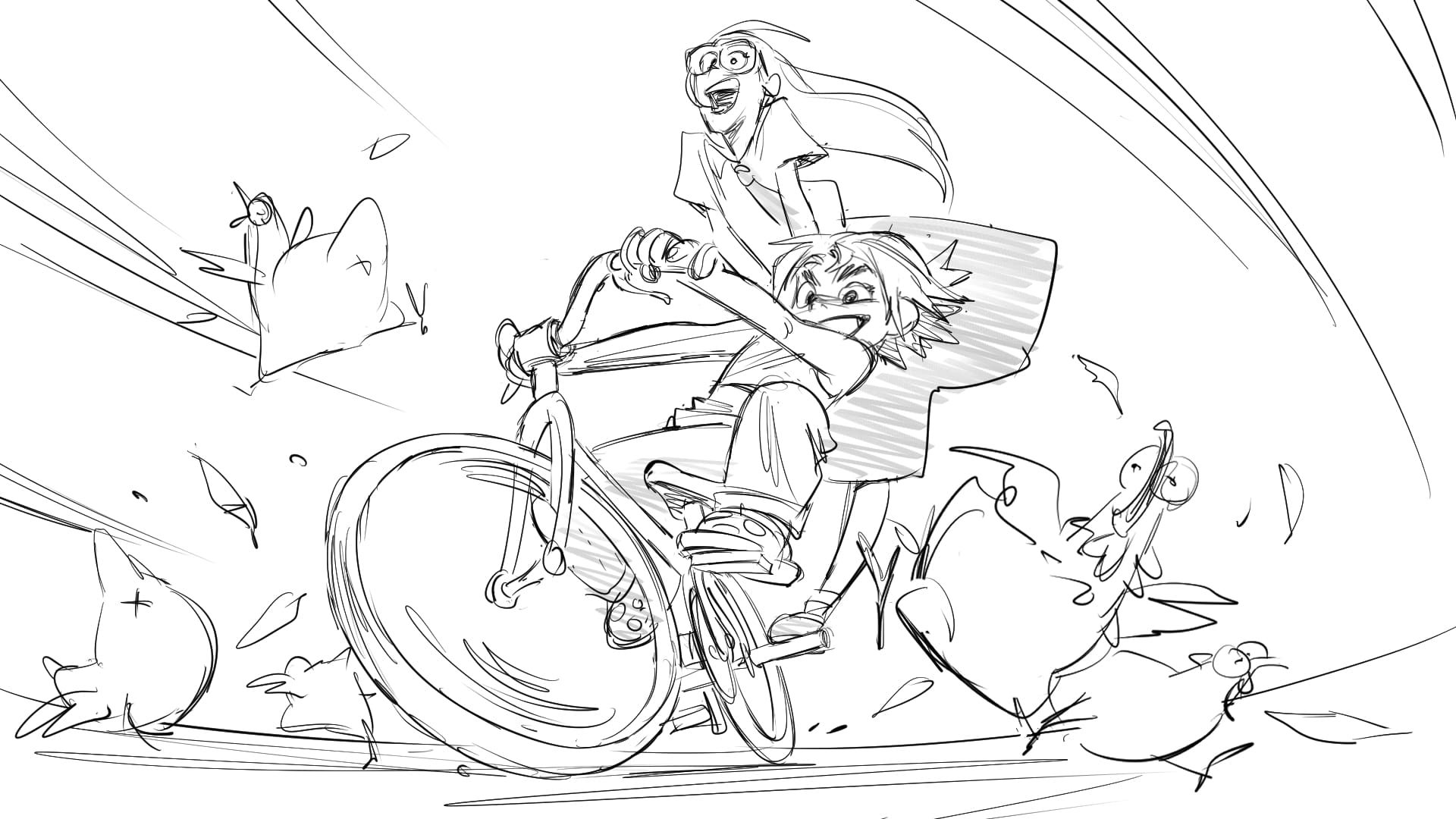
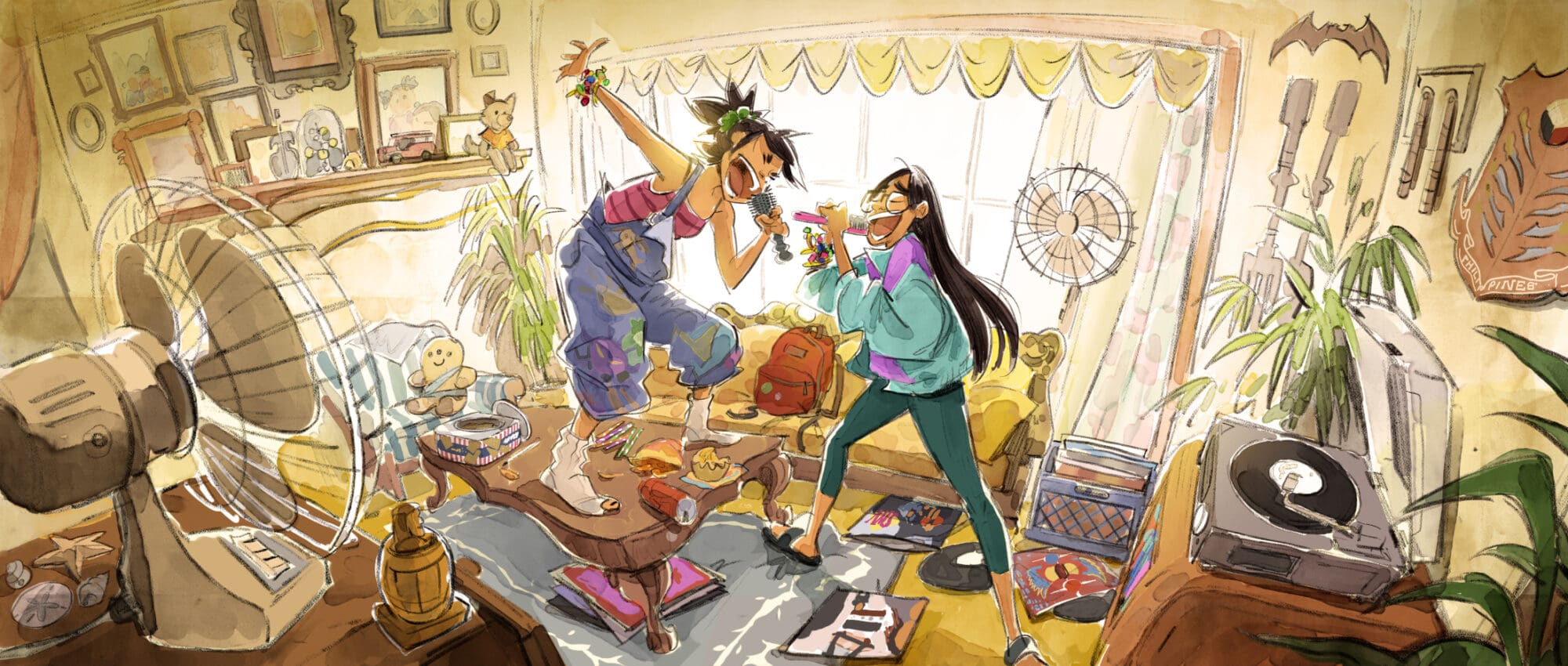
Crawford said an album of Mercado’s childhood photos from the Philippines helped shape the montage’s aged, tactile look.
“Seeing how tangible all those moments feel when you look at old pictures or old videos, there’s usually an interaction with the lens because the situation, or the environment’s not ideal,” he said. “There’s lens flares and dirt on the camera. In that growing-up montage and throughout the movie, like when it’s drizzling, there’s some rain that collects on the lens. We really wanted to actually counteract animation in a way with the invisible camera. Obviously, it’s a CG world, but we wanted everything to feel tangible in the same way as when you’re looking back at a photo of an old memory.”
The bracelets the friends wear accumulate charms representing memories the montage doesn’t show. Crawford said those details help the audience feel the years passing alongside Jo and Raissa: “When you see their bracelets full of charms that represent core memories, you’re like, ‘I get it.’ That was so important in the setup, and that’s one we’re really proud of how that turned out.”