.png)
‘KPop Demon Hunters’ Makes History As Netflix’s First-Ever Box Office No. 1: Sony’s Singalong Scores $18-$20M
Stay informed with free updates
Sign up to get our news digest — delivered directly to your inbox twice a week.
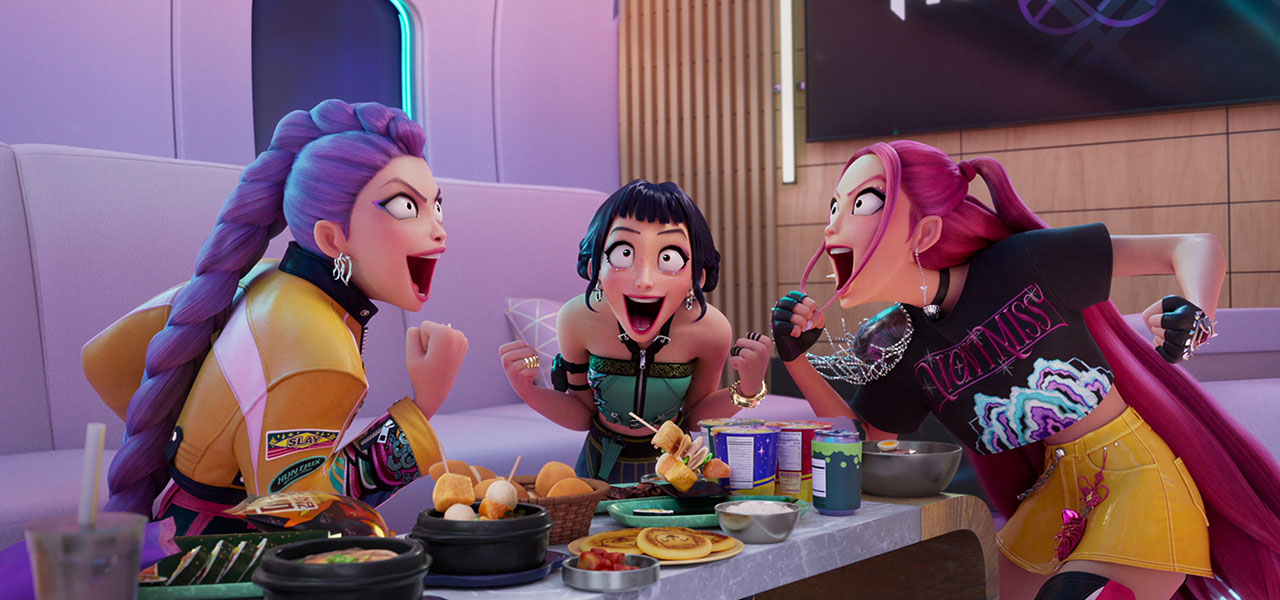
KPop Demon Hunters had already been available to stream for two months and watched over 200 million times when it debuted in theaters this weekend for a special sing-along release, but that didn’t stop Netflix and Sony’s summer megahit from taking the top spot at the box office, pulling in between $18-$20 million.
Early predictions had KPDH making $10 million over its one-weekend release, but the film made that on Saturday alone. Netflix isn’t reporting numbers for the release, but projections published in several trade magazines put ticket sales ahead of those for Warner Bros.’s Weapons, which sits at roughly $15.6 million from 3,631 theaters, twice as many as KPop Demon Hunters.
This marks the first time a Netflix feature has reached No. 1 at the domestic box office, a feat achieved with a film that was already freely available on the streamer. KPop Demon Hunters, produced by Sony Pictures Animation and directed by Maggie Kang and Chris Appelhans, has been on Netflix since June, where it quickly became the service’s most-watched original animated title ever, and will likely become the most-watched original film, live-action or animation, in the platform’s history by the time new viewership ratings are released on Tuesday.
Theatrical exhibitors are taking note. The event release ran across 1,700 theaters, with roughly two-thirds of showtimes selling out according to sources familiar with grosses. Cinemark, Regal, and Alamo Drafthouse embraced the film, while AMC, as expected, stuck to its policy of not booking titles already available on streaming platforms. Even so, the turnout reinforces that certain animated properties with fervent fandoms can draw significant crowds despite immediate streaming availability. Several Crunchyroll anime properties have done it previously, but this is a big first for Netflix.
Netflix, however, isn’t signaling a shift toward regular wide releases. Insiders and exhibitors alike see KPop Demon Hunters as a one-off, engineered around unusually strong fan demand and the type of participatory screenings that drive repeat viewership on streaming. Unlike awards-focused runs for prestige titles, this release was designed as an event and treated as such by audiences who arrived in costume, sang every lyric, and knew the dialogue by heart.
From a business standpoint, the strategy made sense precisely because the film had already proven itself on Netflix. The streamer could lean on data showing extraordinary engagement and a soundtrack that had already climbed the Billboard charts. That allowed a limited marketing push to convert into nearly full houses across 1,700 theaters, something that would have been far less certain had the movie opened theatrically from the start.
For animation studios and filmmakers, the takeaway is that streaming-first distribution can sometimes generate the kind of groundswell that later justifies a theatrical encore. But the reverse isn’t likely to happen often; most original projects won’t arrive with a ready-made, global fanbase willing to pay again for what they’ve already seen at home. KPop Demon Hunters was a perfect storm of music, fandom, and timing. While it won’t reset Netflix’s strategy, it shows how the right animated feature can straddle both worlds when audiences crave a shared big-screen experience.