.png)
‘KPop Demon Hunters’ Trilogy, Short Film, And More In The Works: Explaining The Data Behind Netflix’s Biggest-Ever Animated Hit
Stay informed with free updates
Sign up to get our news digest — delivered directly to your inbox twice a week.
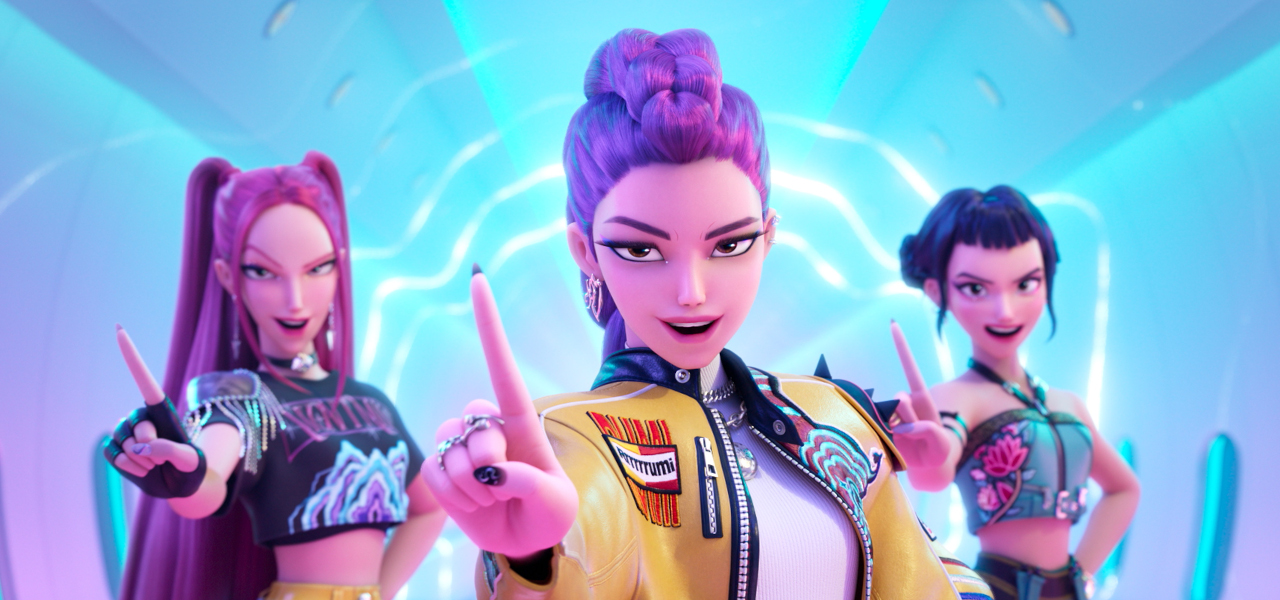
In an unsurprising turn of events, reports have come out this week that Netflix is planning to expand its summer mega-hit KPop Demon Hunters into a full-fledged animated IP, and perhaps even expand into live action. (August 2 Update: Sources close to the film have told us that, contrary to early reports, there have not been any discussions about expanding the KPop Demon Hunters franchise into live action.)
According to an article published today by The Wrap, which corroborates information that we’ve been hearing for a couple of weeks now from our own sources, the KPop Demon Hunters filmmakers are keen on expanding their story into a trilogy of features, and plotting ways to bridge the gap between now and the earliest that a sequel could be ready, likely a few years down the line.
There are ongoing talks regarding an animated short and other possible options to keep the KPop craze going strong while fans wait for a sequel. That said, it’s still early days, and a lot can and almost certainly will change before any new content is available for fans to obsess over.
It’s no surprise that the streamer wants to exploit its new fan favorite feature further. Netflix confirmed this week that K-Pop Demon Hunters has become the platform’s most-viewed original animated film of all time. But how did this musically-charged anime-style adventure break through Netflix’s notoriously crowded catalog and overcome the platform’s limited marketing muscle for animation? And what metrics is Netflix using to back its claim?
The answer lies not just in raw numbers but in the evolving way Netflix defines and tracks success. Netflix is notoriously selective in what it will and won’t share publicly, but by piecing together the company’s previous announcements and tracking statistics, we can draw some verifiable conclusions.
A Shift in Metrics
Netflix’s approach to measuring viewership has undergone several significant changes; it is, after all, as much a tech company as it is a content producer. These shifting metrics make direct comparisons difficult. Klaus, for example, debuted when Netflix viewer data was scarce and cherry-picked.
At different times, the platform has tallied total hours watched and percentage starters rates, and now rates its titles by number of views, defined as the total hours viewed divided by the running time of a film or a series’ entire season. For a long time, Netflix evaluated most content on a 28-day window. But executives found that animation often performs better over longer periods, as does almost all kids and family content. As a result, Netflix extended the evaluation window for all titles to 91 days.
In the case of K-Pop Demon Hunters, the film hadn’t even reached the 91-day benchmark before outperforming all prior Netflix animated originals to become the most popular animated movie of all time on the platform. Streaming charts show it gaining momentum rather than tapering off, a rare pattern in Netflix’s data.
The Viral Underdog
Interestingly, the film wasn’t expected to dominate, even internally. According to multiple sources close to the film, the market testing had many at Netflix convinced they had a niche kids’ or teens’ movie on their hands pre-launch. With limited marketing and virtually no cross-functional promotion from Netflix’s consumer products or regional marketing teams, the campaign focused narrowly on teen girls, an audience segment that ultimately became the spark for its viral breakout, but far from the only demographic to embrace the film.
Despite modest promotion, the film took off on platforms like TikTok and Instagram. Its popularity snowballed from teenage girls to older teens, then young men, and finally trickled down to kids, almost the exact opposite of what many initially expected it to do.
Internal Data: Off the Charts
The film outpaced previous platform favorites like Leo and The Sea Beast in both initial views and sustained engagement. Its rewatch rates — particularly key with family and musical films — surpassed benchmarks set by any of Netflix’s previous titles.
Unlike licensed titles such as Sing or the Despicable Me franchise films, which benefit from years of brand recognition and external marketing before hitting Netflix, K-Pop Demon Hunters had none of those advantages. It was a true original with no merchandising, franchise backing, or theatrical release.
The Netflix Conundrum
This runaway success also highlights Netflix’s internal contradictions. Despite backing the film, Netflix provided limited merchandising support or mainstream homepage promotion, and even fumbled the YouTube music video strategy. Looking at Netflix and Sony’s uploads, those posted by Netflix went to the streamer’s family channel, where comments are turned off. Conversely, Sony’s YouTube uploads did allow comments and have become the internet’s favored place for sing-alongs and fan discussion. Netflix’s lyric music video for “Golden,” for example, has 24 million views, while Sony’s boasts 113 million.
As K-Pop Demon Hunters tops charts and garners sequel or spinoff interest from fans, Netflix finds itself in a reactive position, scrambling to explore the best ways to leverage the film’s popularity after the fact. Whether that was an avoidable error on the part of Netflix or an inevitable reality of the unpredictable nature of internet breakout titles is debatable.
What It Means for Original Animation at Netflix
Netflix’s decentralized content model, unlike Disney’s tightly integrated franchises, means its animated catalog often lacks a unified brand identity. But that also allows for creative risk-taking and genre diversity. K-Pop Demon Hunters, produced by Sony Pictures Animation for Netflix, is a case study in how organic fan support can beat algorithm fatigue.
More than just a streaming hit, the film’s unexpected rise could force Netflix to reevaluate how it supports animation, especially as it races to catch up with the cultural dominance of anime and the merchandising empires of legacy studios.
If there’s one lesson from K-Pop Demon Hunters, it’s that in an oversaturated market, authenticity and fan-driven momentum can still create a phenomenon.