.png)
Nathan Greno Told John Lasseter He Wanted To ‘Blow Up’ His Own Movie, And Built ‘Swapped’ From the Debris (EXCLUSIVE BTS)
Stay informed with free updates
Sign up to get our news digest — delivered directly to your inbox twice a week.
NOTE: This article features some minor, non-specific spoilers. We recommend bookmarking this page and coming back later if you haven’t seen the film yet but plan to.
If there’s a common thread in animated feature development, it’s the brutal nature of the story refinement process. The constant fine-tuning of plots, storyboarding over and over again, and then killing whole storylines that no longer work, no matter how long they’ve existed, is de rigueur. Everything in service of making the best movie possible. It doesn’t matter whether you’re a newbie or a seasoned veteran: the process is the process.
‘Swapped’ director Nathan Greno tells Cartoon Brew that the truth certainly applied to his first feature with Skydance Animation, which went through a series of dramatic iterations before becoming the final version released on Netflix last week.
In the second part of our interview with Greno, he takes us back to February 2018, when he started working on Powerless, a teenage superhero story that evolved into what it is today: a cautionary tale set amongst several species of competing woodland creatures.
“It’s always been about empathy,” Greno says of the heart that’s remained in every iteration. “I really wanted to tell a story about empathy, so [at first] these teenagers could not be more different from one another.”
As they debated themes like what empathy is and how to portray it, Greno says it became clear that Powerless was shaping itself into a transformation movie.
“We’re digging into it, and it started going down this road of teenagers transforming,” he remembers. “And I will be completely honest with you, it got a little muddy. The whole thing was like, ‘What are we doing? What is this movie?'”
Greno says at the time he had a standing weekly meeting with Skydance Animation’s head of animation, John Lasseter, to discuss progress, and at one point he just flat out said: “John, I think we’re doing the movie wrong.”
“I was like, ‘The thing we have is some sort of Frankenstein that started off from my original pitch to where it is now,'” he remembers. “In talking about all of it, John goes, ‘I agree with you on these points. What do you want to do?’ So I said, ‘I want to blow it up. I want to start over.'”
Greno says, to Lasseter’s credit, he agreed, and they focused on how to change up the expected transformation movie tropes. Going back to his crew, Greno says someone brought up that the consistent thing in transformation movies is that usually the human transforms into the animal, and the human learns a lesson. “John thought about it for a second, and he goes, ‘How about we don’t have humans in it at all?’ And I was like, ‘That’s interesting.'”
After considering the pivot, he pitched his crew a major inversion based on that idea. “We all feel like we’re the smallest creature in our world, even when it’s like the big CEOs and everybody that controls everything, right?” Greno says of his thinking. “So, I went back and pitched, what if it’s the smallest creature that goes on a journey, and that we could relate to somehow? And that’s how this all came to be.”
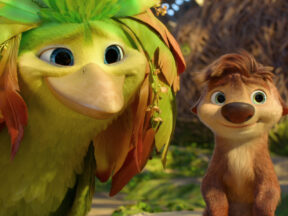
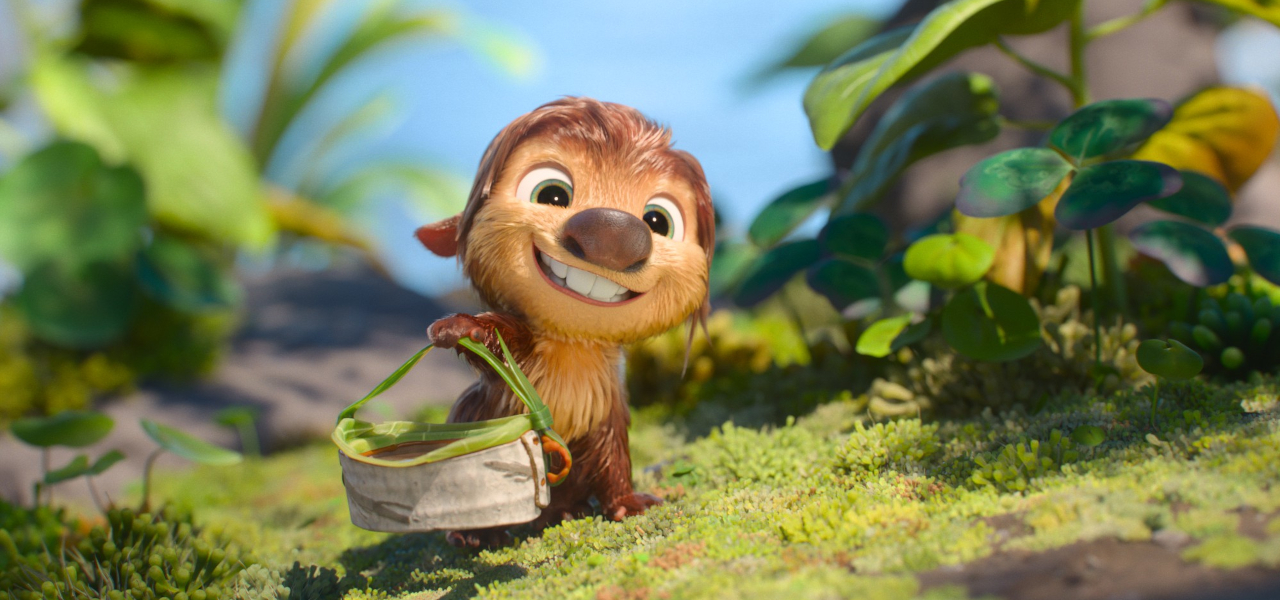
Powerless shifted to that smallest creature narrative, centered on a tiny fictional creature called a pookoo (the film’s previous title before it was changed to Swapped). Production designer Noëlle Triaureau (Spider-Man: Into the Spider-Verse) led the flora, fauna, and creature development, while Greno says they tried to create “the other” narrative within the natural world.
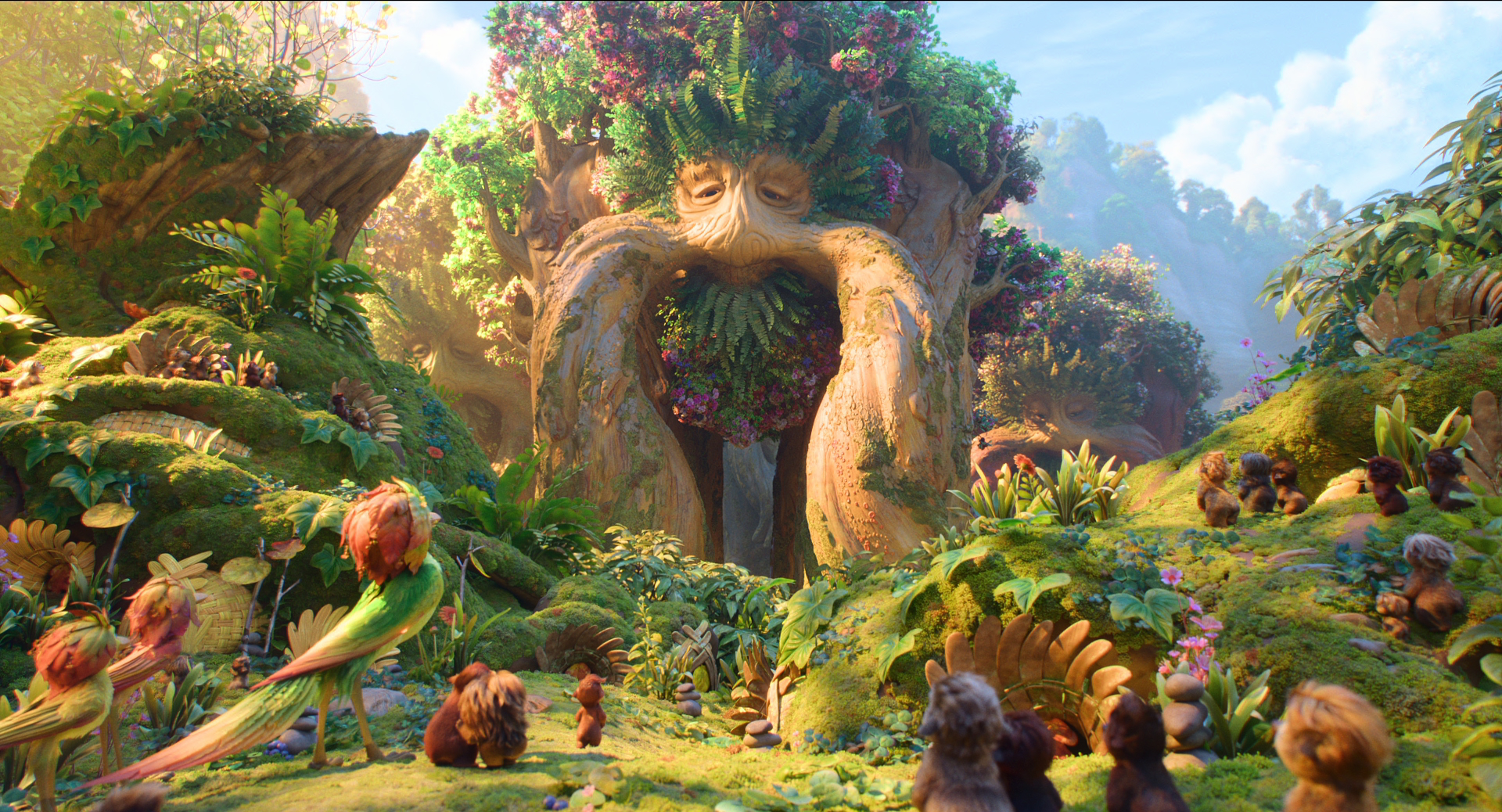
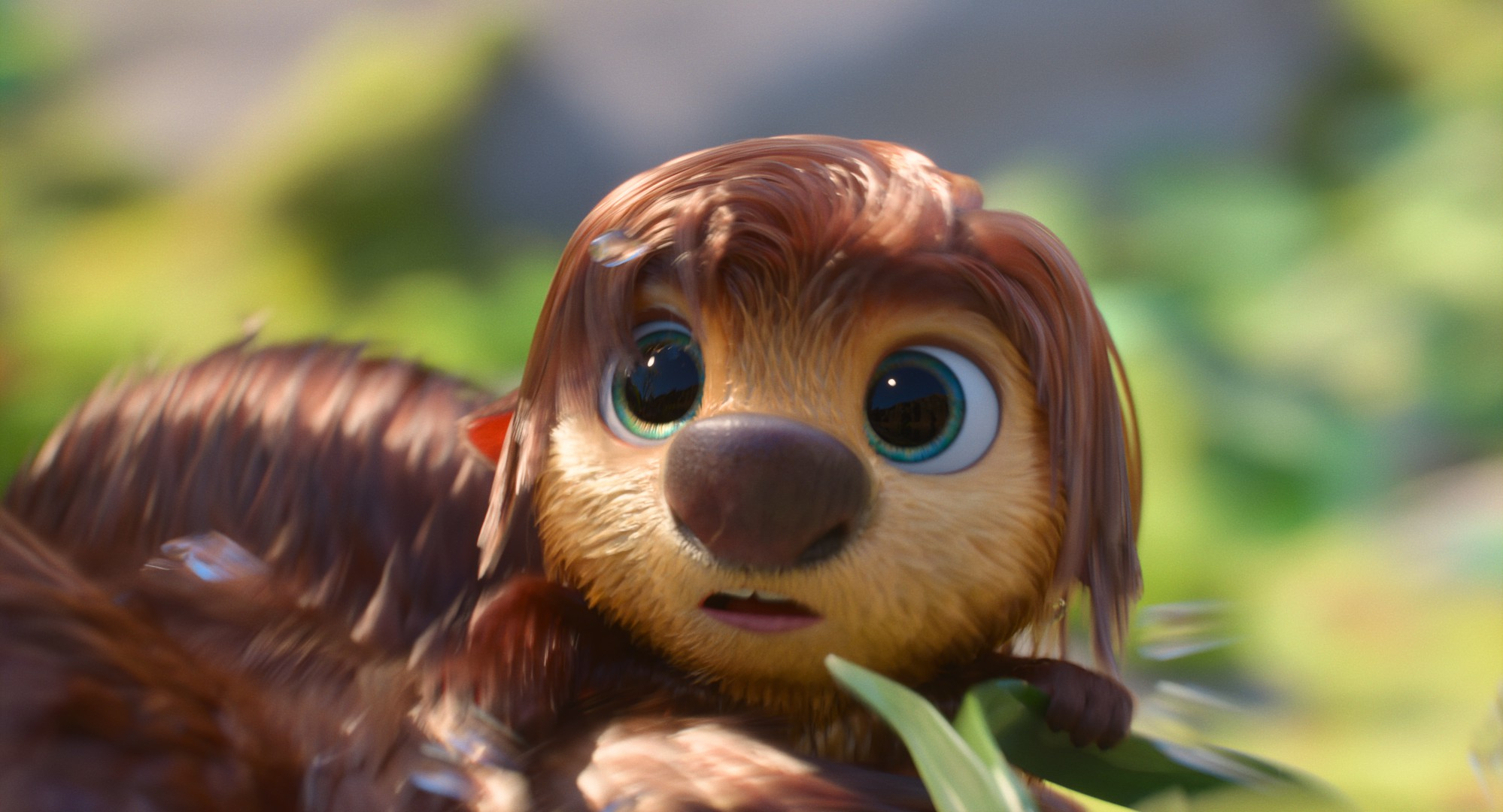
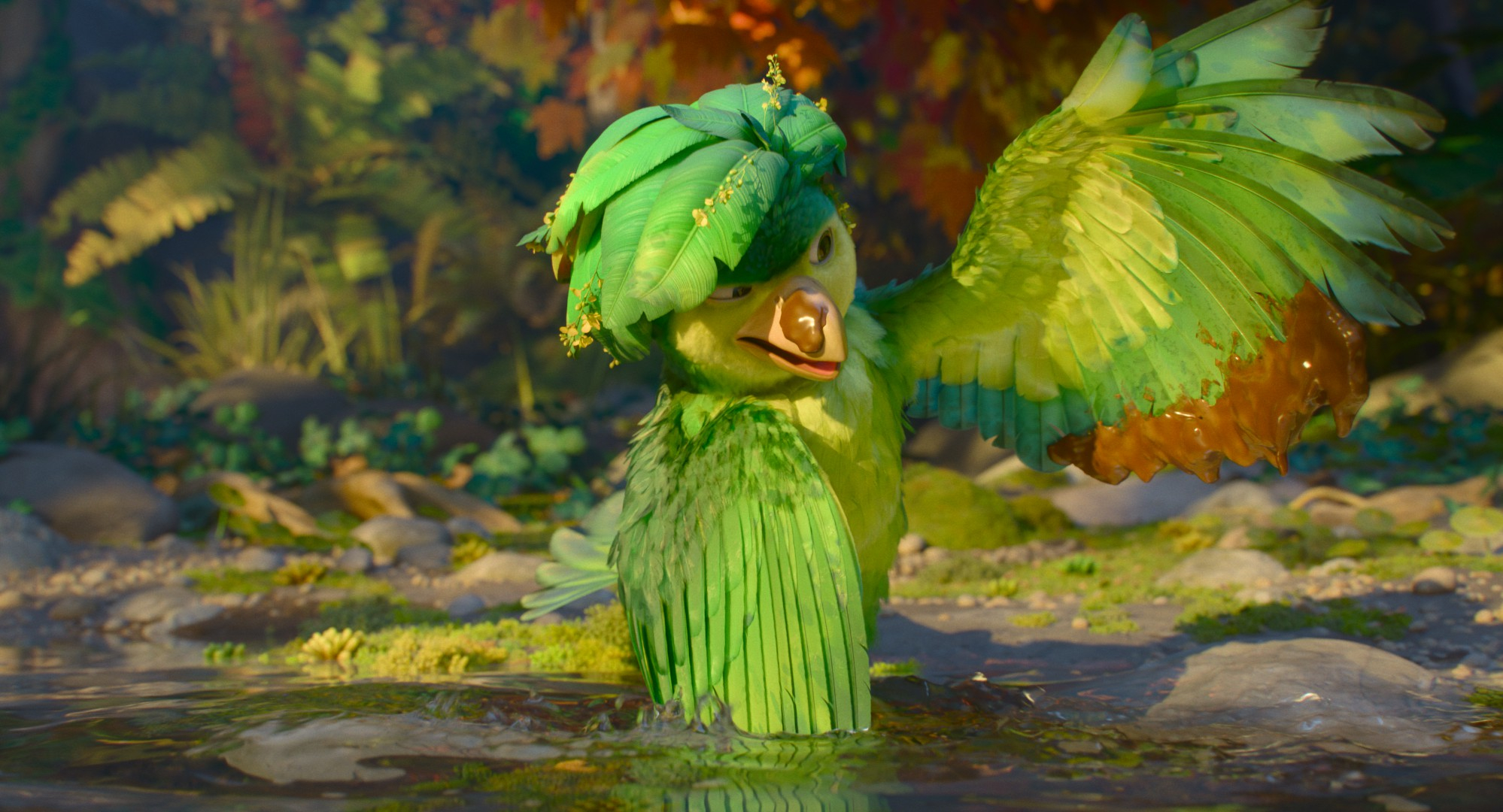
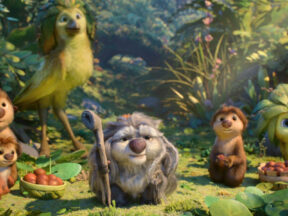
“That’s why we created our own species,” Greno explains. “That’s why we used scale [by] using creatures. Like, what in the world does this tiny pookoo have to do with these giant, walking redwoods? Seemingly, they could not be more different, and [we] do that throughout the movie. Also, the pookoo on our spectrum are the most animal. Everything else is a plant-hybrid kind of thing to create differences.”
In creating a whole world of new species, Greno says he gave their VFX supervisor, Juan-Luis Sanchez, all kinds of headaches. “In the very beginning, he said, ‘Hey, so I’m going to tell you, if we could, here’s the five or six things to stay away from that are going to be really challenging: fur touching feathers, feathers getting wet, fur getting wet, etc.’ And we did all of it,” Greno laughs. “It was worth it. That’s where I’ve got to hand it to the team. They really rose to the occasion, and I think they really leveled up the studio.”
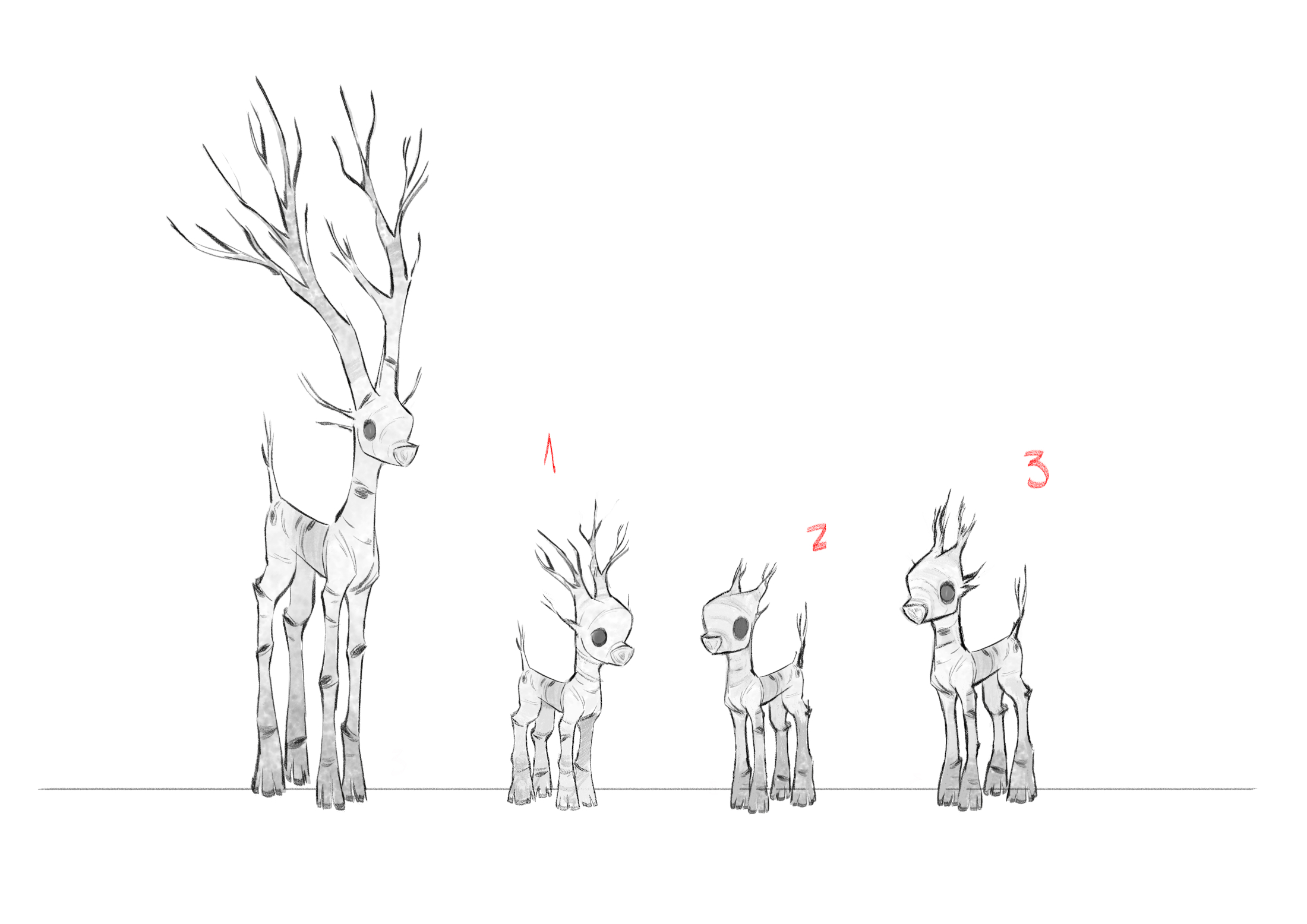
Greno and the Skydance team gave us access to exclusive development artwork showing how they created the film’s flora-fauna hybrids.
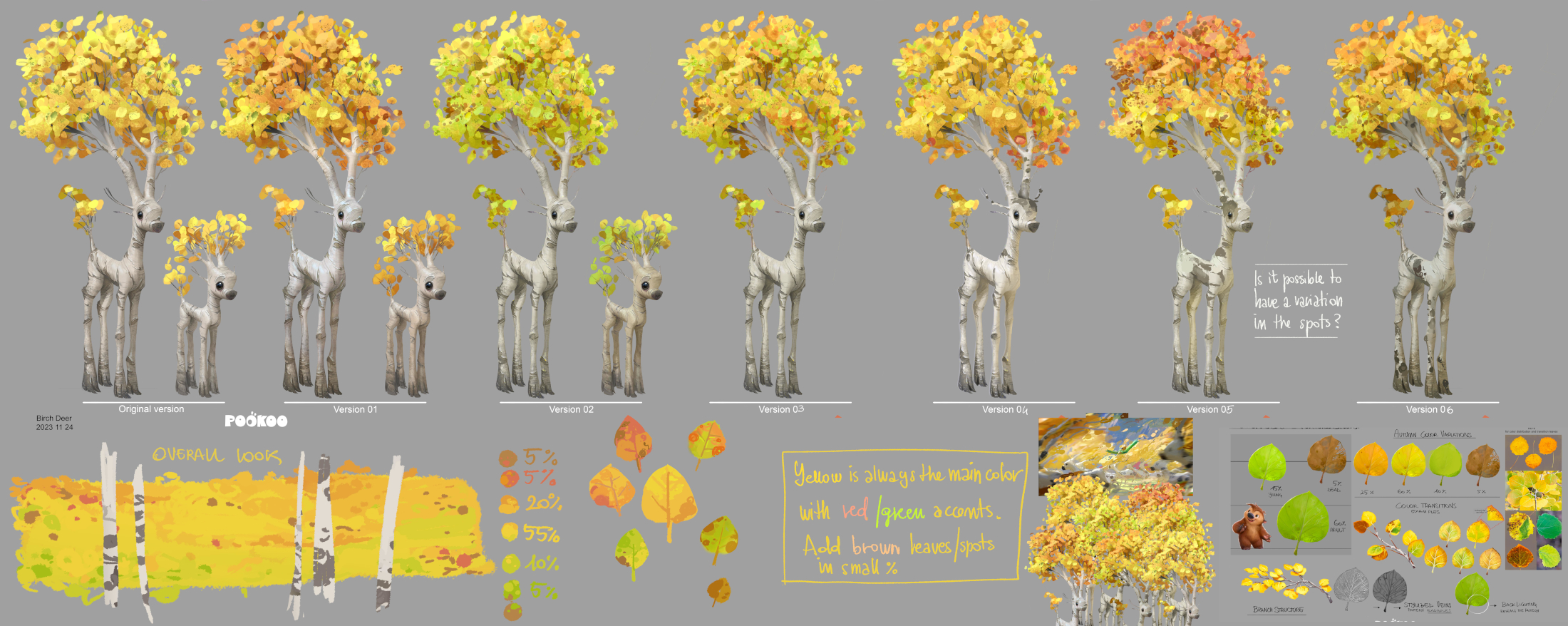
Greno is also candid in labeling Swapped as “one of the hardest movies I’ve ever worked on” because they worked long and hard on portraying the idea of true empathy. He says they did a lot of feedback screenings where a common note would be the audience expecting a clear villain.
“What we were trying to do is go with something that feels more of the times and, honestly, be more nuanced because that’s the world we live in,” Greno says of their challenge. “We don’t live in a black and white world. We really don’t, though we do have villains in our world. But I don’t think it’s fair what we do sometimes, where we look at groups of people, and we go, ‘Those are the bad guys. We’re the good guys.’ That is so black and white, and that is not fair. The answer is somewhere in the middle.”
Animation-wise, Swapped also features multiple environments for its diverse species, from Javan birds to wolves with tree antlers and huge talking fish creatures.
“Each part of the movie was a challenge, in and of itself,” Greno says of their fantasy biodiversity. “In some ways, I will say it brought energy to the team because it’s not a movie that just takes place underwater. It’s not a movie that just takes place on a small, miniature scale. It’s not a movie that’s just about flying creatures. We were trying to do everything. As we got into each challenge, of course, there’s going to be people going, ‘I don’t know if we can do this.’ And the fact that they hung in there, the fact that they pushed for it, and we really kept that bar high, I feel like they completely hit it.
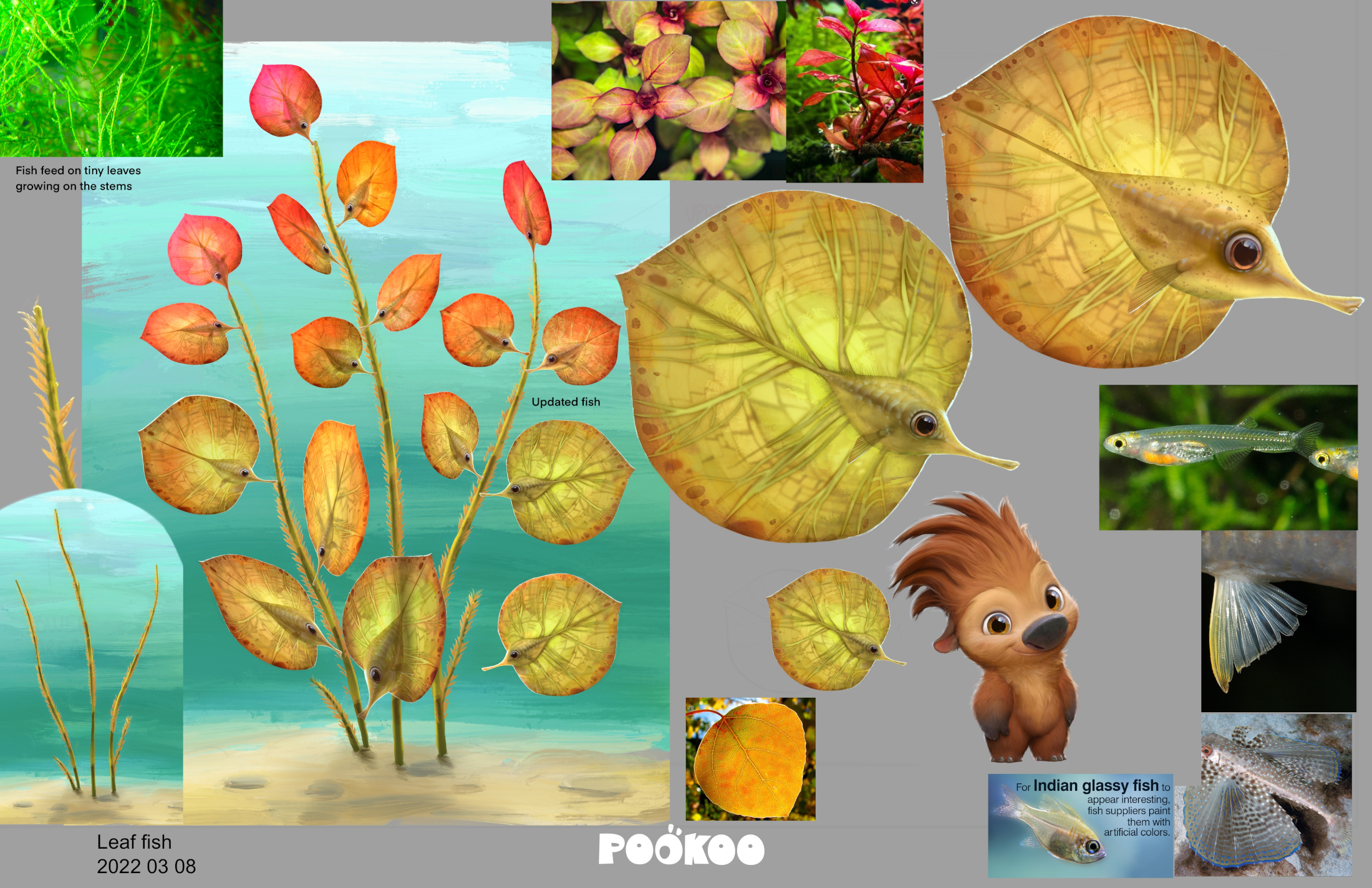
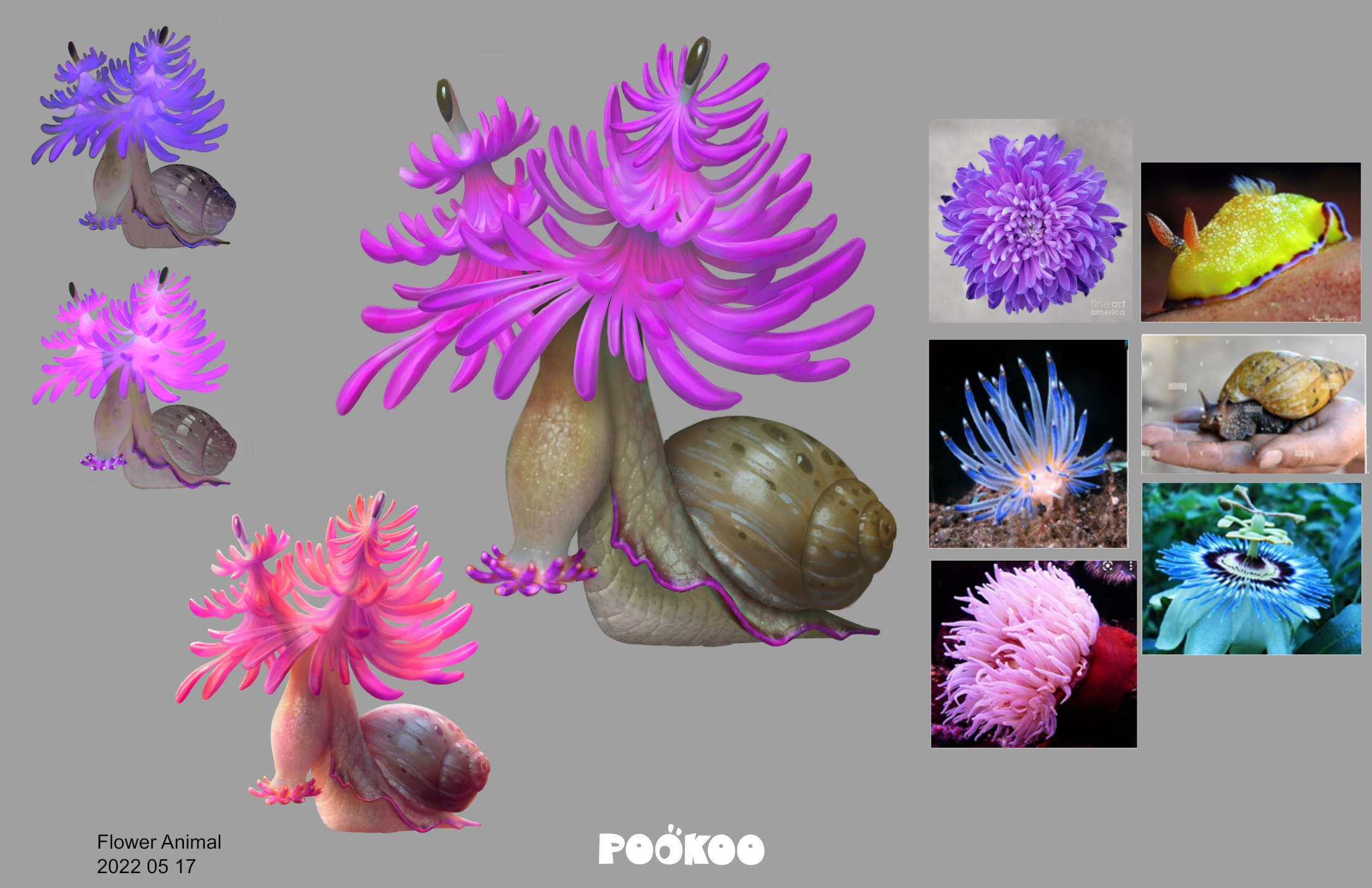
“And what it did for the team each time was, they gained confidence that we can do that,” the director points out. “As we got to the fire [sequence], which is one of the last things [we did], we didn’t have much time, and I don’t think it looks like that at all. They really put a lot of work into that fire and, boy, you really feel it,” he says of the third act set piece. “We said, let’s go for quality. Let’s go for the best possible thing. It doesn’t mean I got to do whatever I wanted. I needed to be mindful somewhat. But when it comes to selling the story and everything, it’s doing what’s best for the movie, and what’s best for the story.”
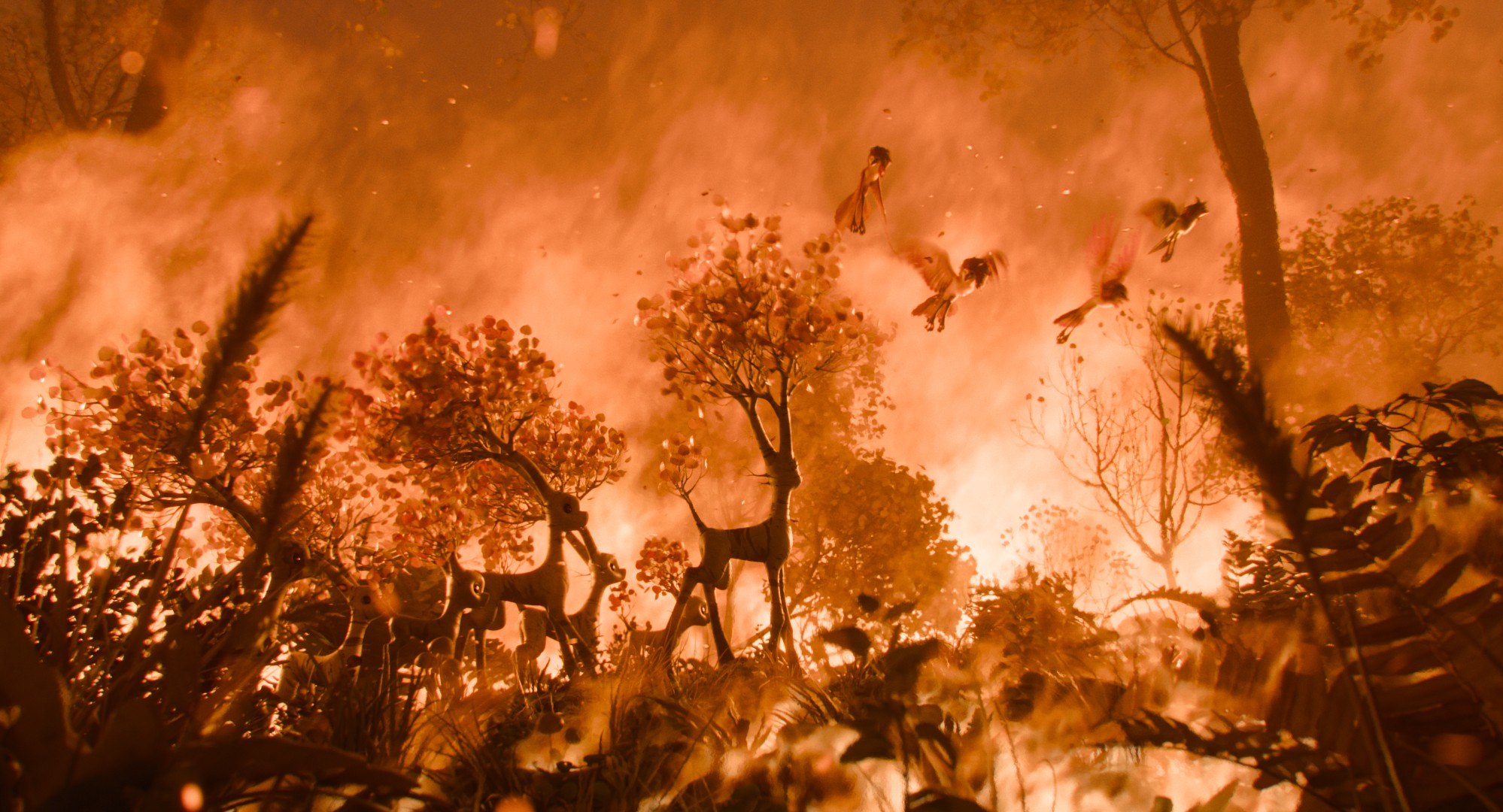
With his first Skydance Animation release complete, Greno says he’s got a few things to be proud of in Swapped. “I am proud of starting with a studio that was very new, very green, and to see it mature and grow, and being a part of that, and having a film that helps in elevating the Skydance story.
“And then working with such an amazing crew that I’m dying to work with again, that’s been the best part of it,” he continues. “And good news, which I can’t talk about too much, but I already have a green light for a new film. I’ll be making another one with Skydance and with Netflix, and I couldn’t be more thrilled. It’s gonna get me back over to seeing the Madrid friends. Now, I’m excited about the future, and things are going well.”