.png)
‘Shaun The Sheep’ Filmmakers On Kid-Friendly Scares And Bringing Halloween To Mossy Bottom
Stay informed with free updates
Sign up to get our news digest — delivered directly to your inbox twice a week.
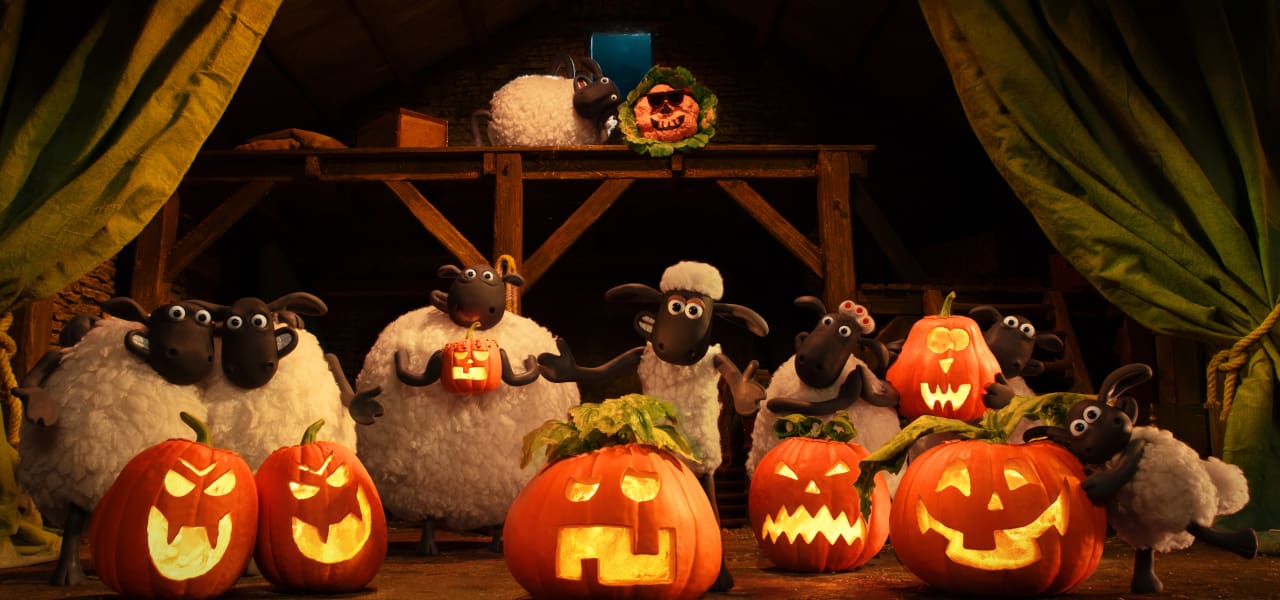
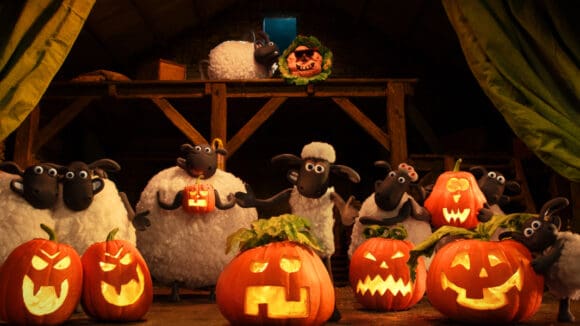
Shaun the Sheep is headed back to the big screen for his third feature, and this time, Aardman has dropped its dialogue-free hero into a Halloween story.
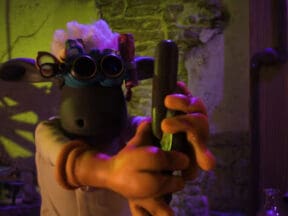
Directed by franchise vets but first-time feature helmers Steve Cox and Matthew Walker, Shaun the Sheep: The Beast of Mossy Bottom opens in U.S. theaters, distributed by GKIDS, on September 18. The film begins when the Farmer destroys the flock’s pumpkin patch, prompting Shaun to turn into a mad scientist in search of a solution. The experiment quickly gets out of control. Soon, the Farmer goes missing, and something large and hairy roams the woods outside Mossingham.
We spoke with Cox and Walker, and with art director Andy Brown and director of photography Charles Copping, about pushing Shaun into a new genre, finding the right level of scariness for young viewers, and completing an ambitious stop-motion feature on the studio’s tightest schedule yet.
A New Genre For Shaun
Cox and Walker brought years of experience in Shaun’s world to the project. Between them, they had worked on the franchise as animators, story artists, and episodic directors, while Cox previously directed the half-hour special Shaun the Sheep: The Flight Before Christmas.
“We’re so ingrained in the Shaun the Sheep language and the Shaun the Sheep world,” Cox told us. “We know the character of Shaun and the world of Shaun inside out. It feels very natural to us. When we’re developing the idea and the story, we know what Shaun would do and what Shaun wouldn’t do.”
That familiarity gave the first-time feature directors a strong foundation as they looked for a fresh direction for the character.
“With each film, we want to expand the world of Shaun and take him in new directions so we’re not repeating ourselves,” Walker explained. “The first film was where we first took Shaun off the farm and into the big city. Then, in the second film, we put Shaun into a whole new genre with a sci-fi film. This film was a great opportunity to do that again, but now with the Halloween genre.”
One key challenge was deciding how scary a Shaun the Sheep movie could and should be. The filmmakers wanted tension and atmosphere, but knew that the age range of viewers would likely stretch from toddlers to retirees.
“We know the audience for Shaun is very young, but it goes right up to adults,” Walker said. “We wanted a little bit of tension and a little bit of scariness, but not too much. There were a few sequences where, in early versions, we went a bit too far and made it a bit too scary, so we had to dial them back.”
Comedy became an important tool in easing the tension caused by some of the story’s spookier elements.
“Any time we had a tense moment, we would undercut it with some comedy so the audience could feel safe again and laugh,” Walker explained.
“We saw those scary, Halloweeny moments as a launchpad for a joke or a setup for some comedy,” Cox added. “We wanted to make it funny. That was always the primary goal.”
Family-Friendly Gothic
For Brown and Copping, Halloween offered the chance to expand the franchise’s well-established visual language.
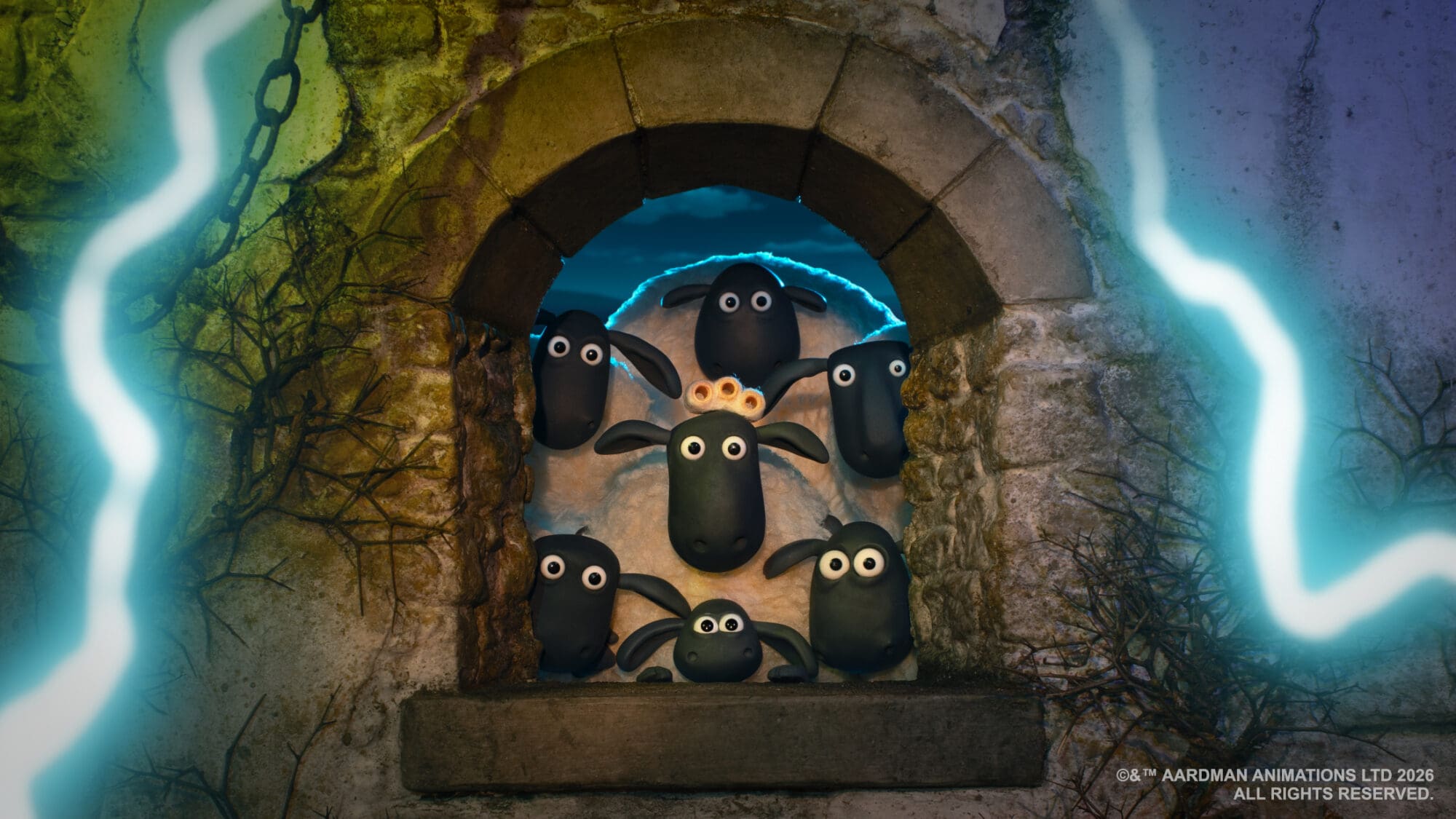
“It was a real pleasure to have a broader palette to work with,” Brown said. “On the series, we’re always saying it’s the same time: the middle of June, the middle of the day, the same lighting. This time, it’s Halloween. There are oranges and autumnal colors coming into play. We’ve got dawn and dusk.”
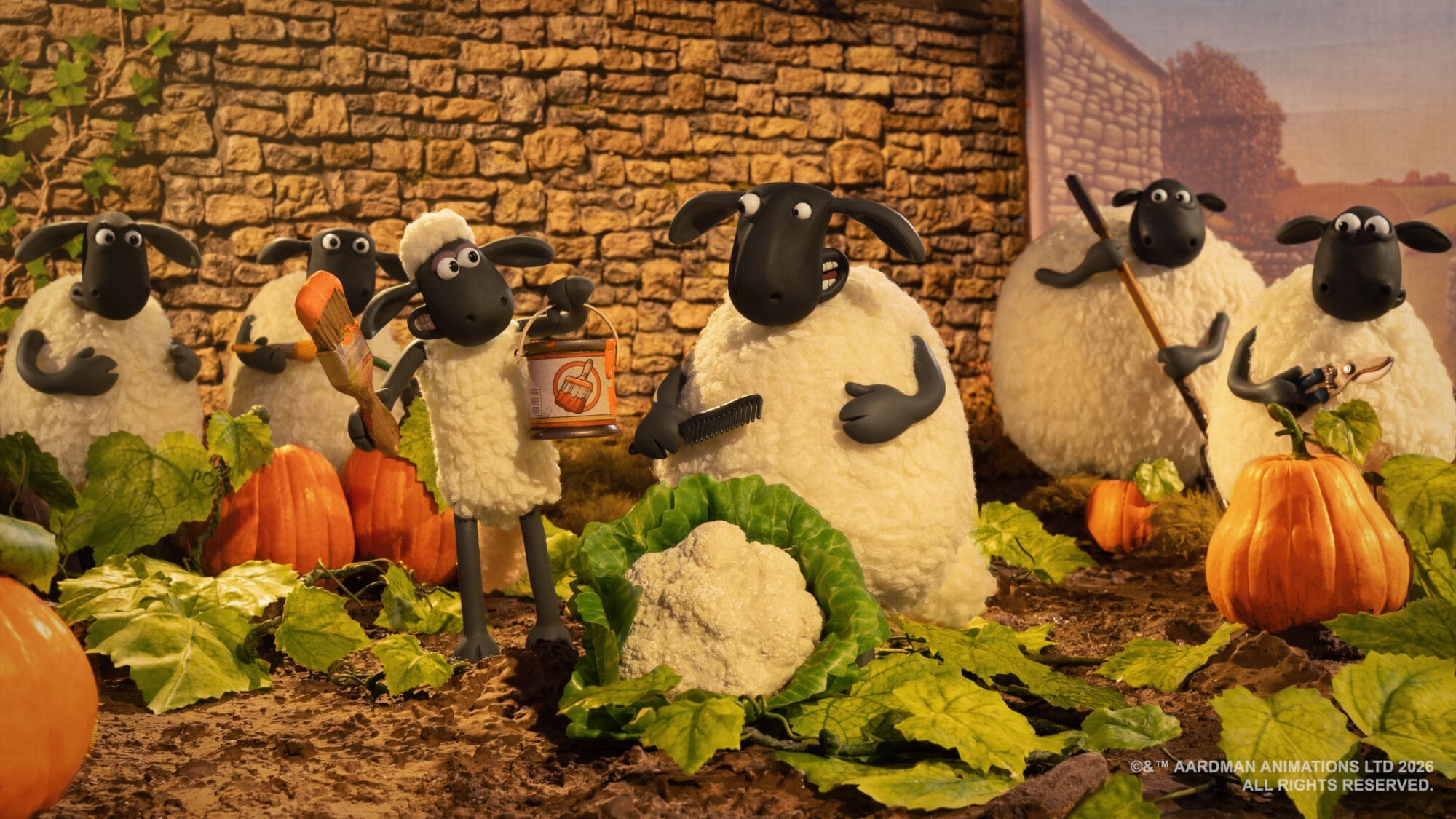
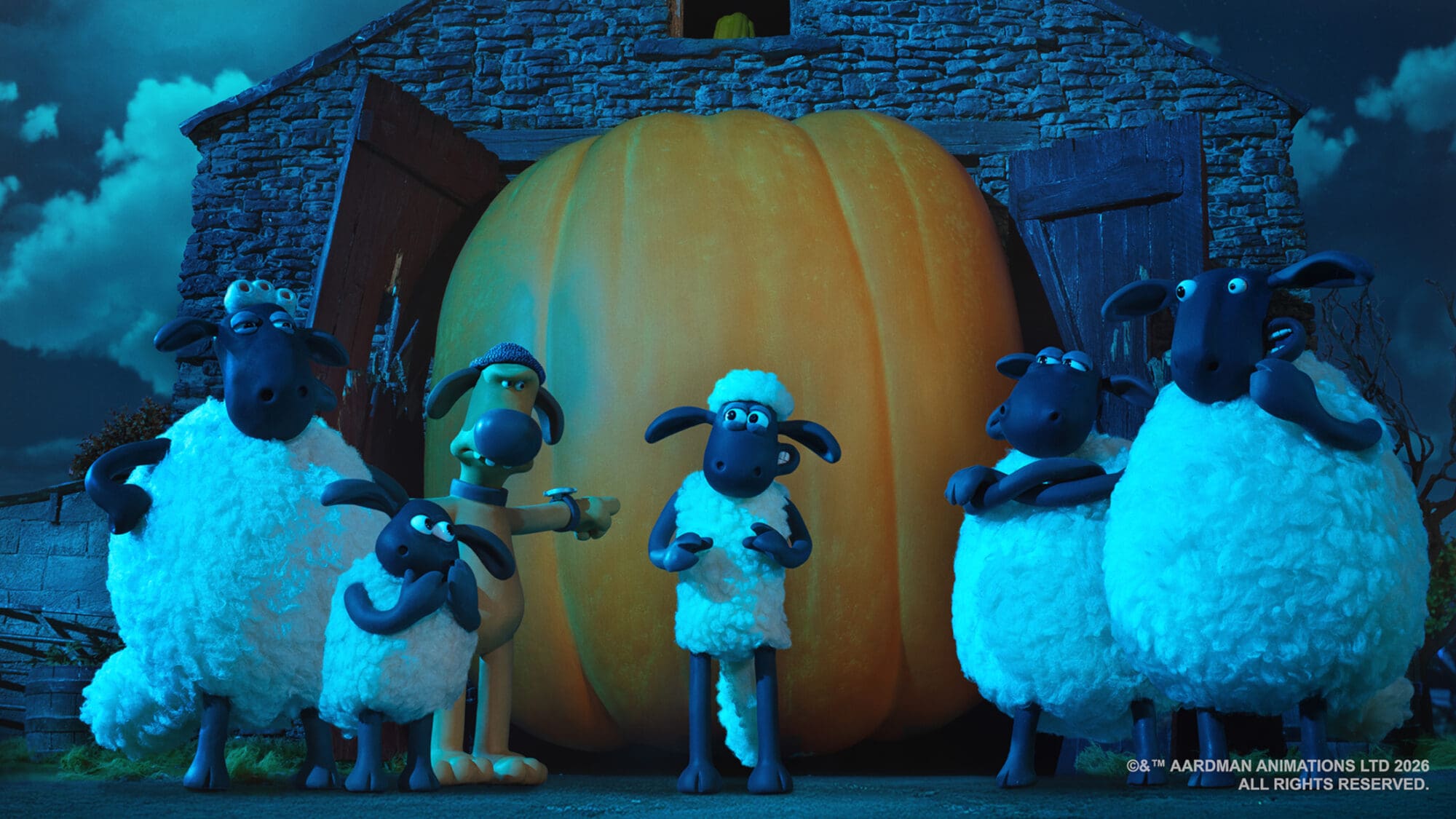
Copping paired gothic compositions and heavier shadows with unusually rich colors for a Shaun project.
“Each Shaun feature has taken a step in a new direction, and this time there was a conscious decision to push the aesthetic further,” he said. “It played into the autumnal colors and all the beautiful richness we could get from that look.”
Lighting artists selected gels that were more vibrant than those typically used on previous shows. That choice became especially important in Shaun’s science lab, one of several new environments created for the feature.
“We made that extremely colorful, and those threads ran through the lighting of the entire film,” Copping said. “The color choices helped soften the slightly gothic look and the heavier shadows. Having those bright, vibrant colors made it a family-friendly gothic look.”
Inspiration came from the heightened supernatural comedies of the 1980s, like Ghostbusters and The Addams Family. Its most experimental work came in the laboratory and windmill, which established the lighting scheme for the rest of the movie.
“The glowing liquids used UV light,” Copping explained. “We added UV material to the liquids themselves and did a pass with purely UV light so the glow and luminescence could be picked up by VFX. We could then rotate the color, and that enhanced the palette enormously.”
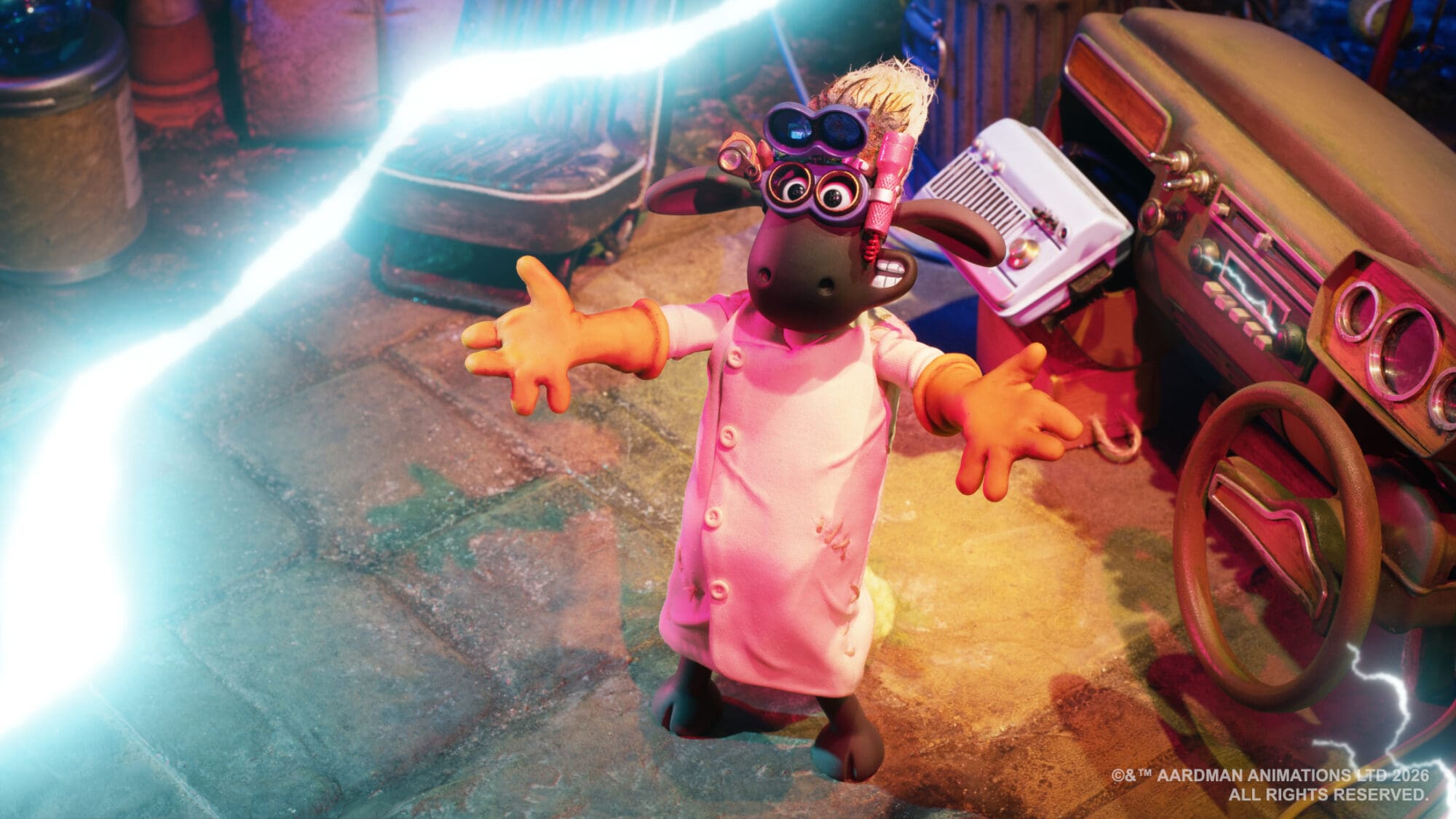
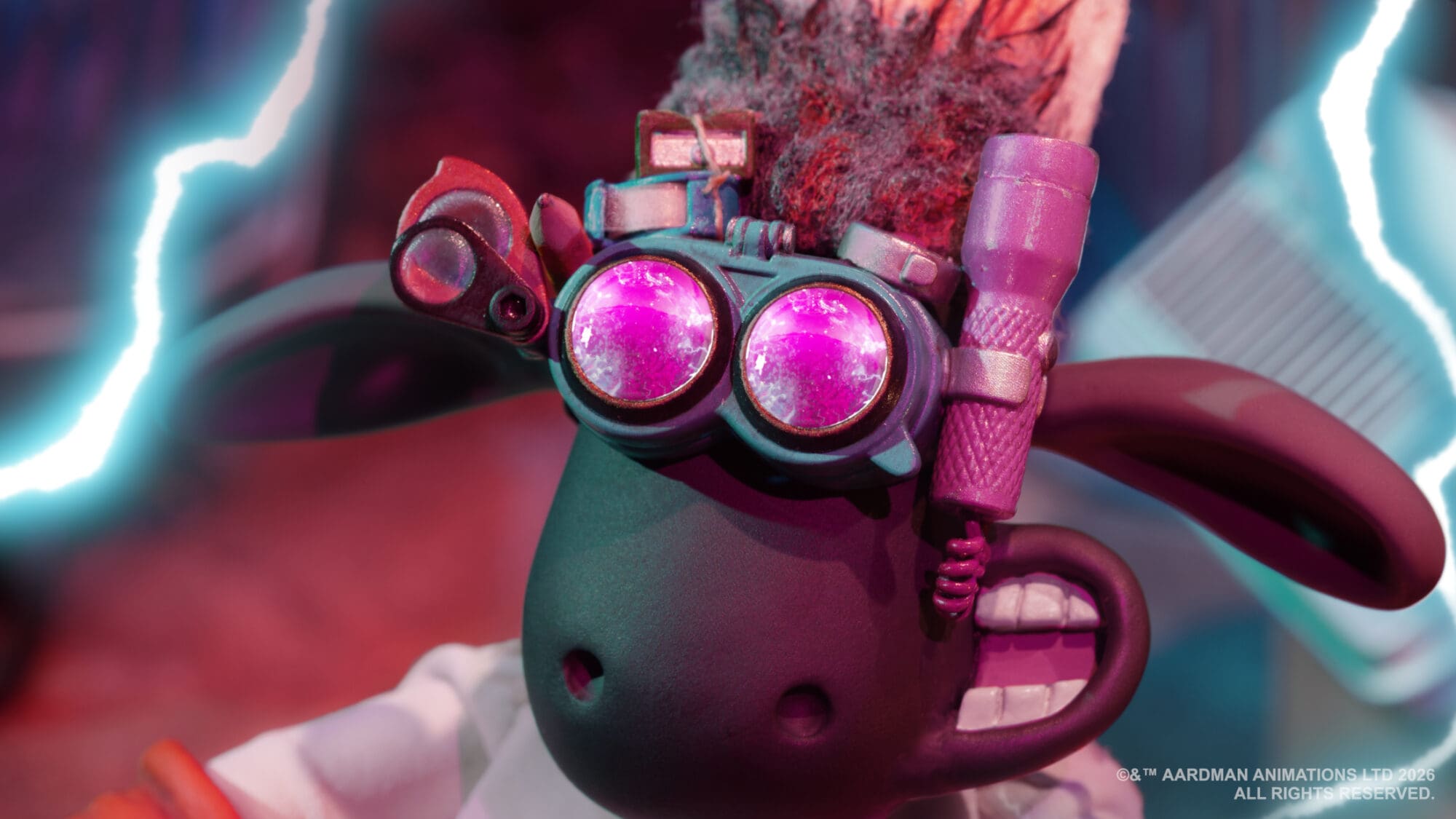
The additional lighting pass had to be photographed for every affected frame. The crew also placed tiny practical LEDs in the laboratory, including Christmas tree lights used to create soft, out-of-focus highlights.
“The science lab turned out exactly as we were looking for from the color script onwards,” Copping said. “Where it landed was exactly where I wanted it to.”
Copping wanted the images to retain the physicality of a stop-motion set, even with visual effects.
“One of the things that runs through all our feature films and half-hours at Aardman is that it needs to feel in-camera and believable,” he said. “It needs to be tangible, as though it actually exists in front of the camera. That’s our number-one drive.”
“You want the audience to feel like they could walk into that lab and it would look exactly as it does in the film,” he continued. “When you visit the set, it is all there. The chemicals aren’t glowing, but apart from that, everything is complete.”
Feature Filmmaking At TV Speed
Added ambition came with an accelerated production schedule. Principal photography wrapped in about eight months, with as many as 47 units operating simultaneously.
“We embraced that energy,” Brown said. “Everybody worked together more than usual. On previous films, if you had more time, you might take it in turns: the sets go in, then the lighting goes in. This time, we were all there together, which really helped.”
The planned theatrical release also increased the level of scrutiny applied to each environment.
“For every department, you spend more time on it because you know it has to live up to the big screen,” Brown said. “With textures on the bricks or pouring molds, you’re making sure there are no bubbles in some of the stonework. You’re applying more scrutiny and taking longer during that pre-filming stage.”
Copping believes the pace reinforced Shaun’s scrappy, spontaneous appeal.
“In some ways, squeezing the time is what adds to the Shaun aesthetic,” he said. “It has that feeling of immediacy and that organic quality. You can never finesse and fuss too much on a Shaun production. Shooting a Shaun feature is incredibly intuitive. You feel your way through it, and I think that really comes out on the screen.”
An unprecedented schedule required unprecedented levels of collaboration between departments. As soon as a set entered the studio, Brown could see how its surfaces responded to Copping’s lighting and decide whether anything needed rebuilding or retexturing.
“You get to know and feel straight away whether it’s going to work,” Brown said. “Do I need to take it out again and add more texture or use less texture? It’s very intuitive.”
“When everything comes together on the studio floor, that’s the moment when it all ties together,” Copping added. “It relies on everyone being completely in tune with the Shaun aesthetic. You don’t have the luxury of time, but the end result feels fresh and organic.”
Juggling 50 Sets
Cox and Walker worked closely together during development before dividing the movie into roughly equal groups of sequences. Each followed his scenes through storyboarding, animation, and editing.
“Once we got into production proper and were shooting the film, that’s when we had to separate,” Walker said. “But there were periods throughout the process when we would come back together in the edit, look at everything, and make sure it was all fitting together.”
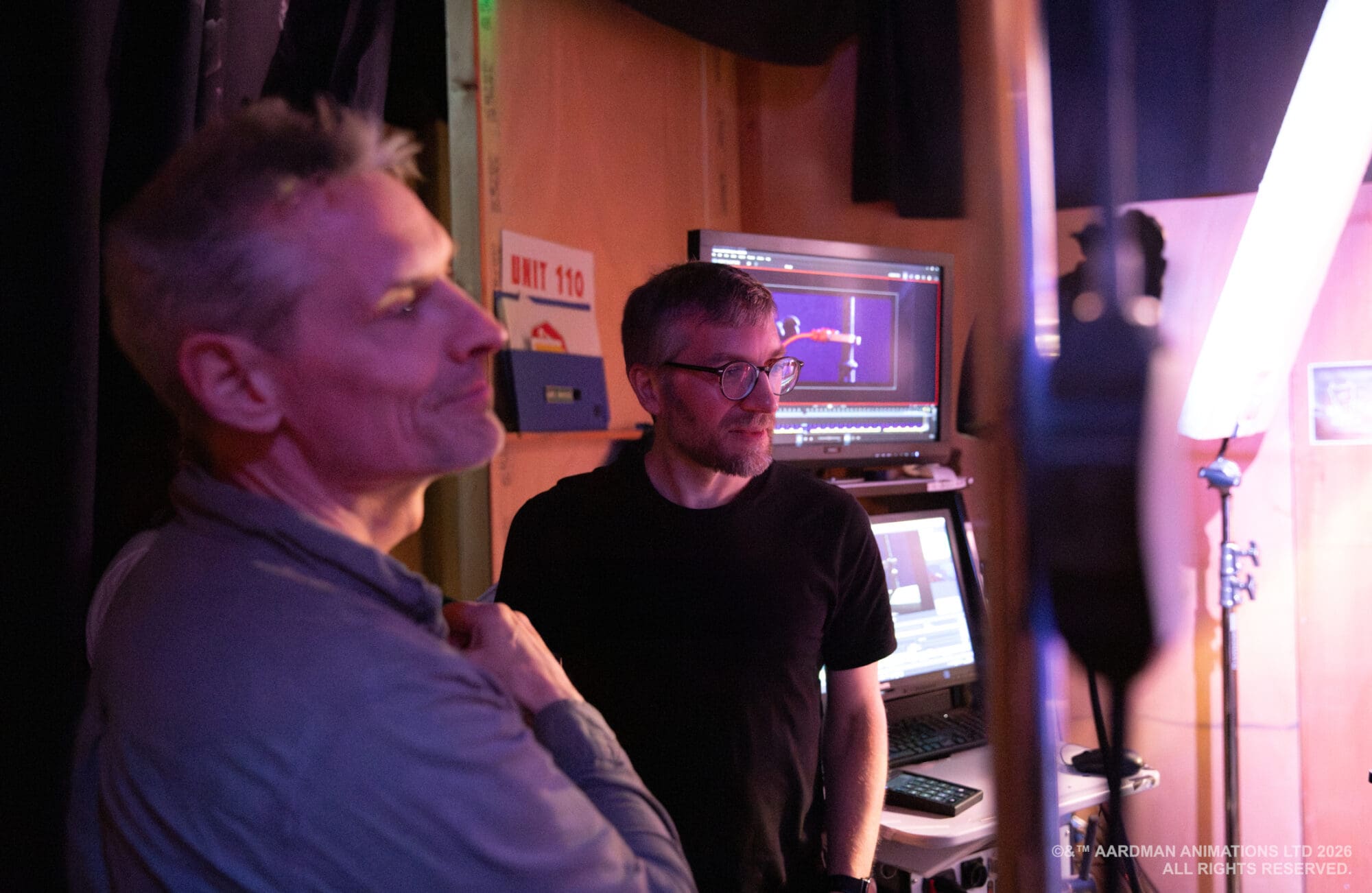
With almost 50 sets and between 30 and 40 animators working across the production, dividing the film was a practical necessity.
“That’s why a stop-motion film has to split between two directors,” Cox said. “The workload is massive.”
Each morning, the directors reviewed the previous day’s footage together, exchanged notes, and checked that the separate units were still producing one coherent film.
“We knew the film inside out, both halves of it, because we had been together during the writing process and while setting it up,” Cox said.
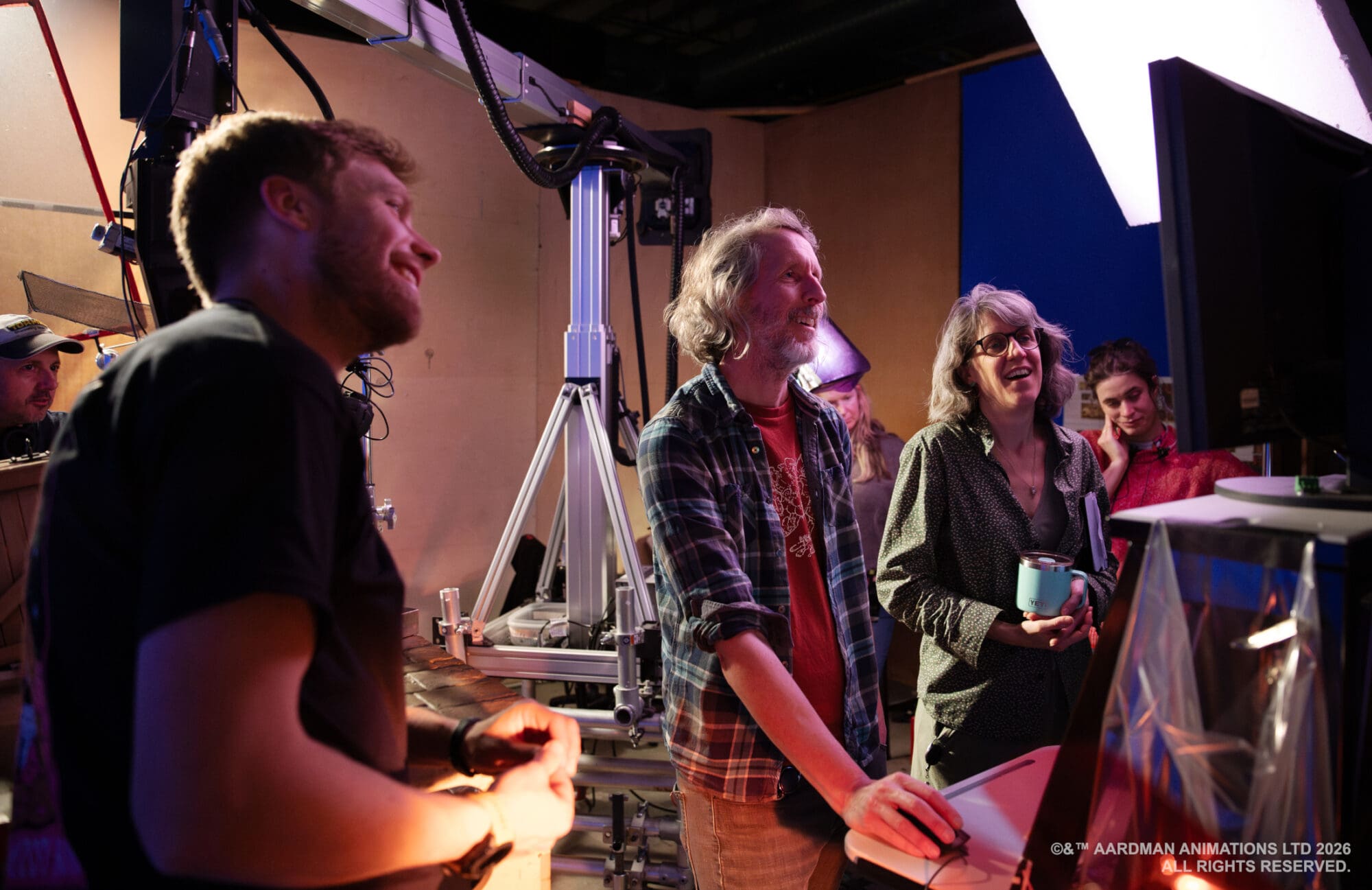
The animatic established the story, gags, and timing before photography began. The directors then relied on the animators to find the smaller details in each performance.
“Our animators are fantastic actors in themselves, and we really treat them like that,” Cox said. “We get the performances about 80% of the way there in the storyboards. Then we spend a lot of time with the animators on set, talking through the shots, and they bring a lot of themselves and their acting ability to those characters.”
Veteran Rookies
Walker said his television experience proved useful during the fast production, even as the longer format required a different approach to storytelling.
“On the series, you’re thinking in 10-minute chunks,” he said. “On a feature, you’re thinking about the bigger picture and making sure all the story threads link up and have a satisfying conclusion across an 80-minute film. But coming from television, we were used to working quickly and making decisions quickly.”
Cox entered the production believing a feature would provide an abundance of storytelling space. That feeling did not last long.
“I thought, ‘This is brilliant. I’ve got so much time to get everything we want into this film,’” he recalled. “But when you’re working out the story, it soon tightens up. You have to tell a clear story without rushing through it. You don’t have as much time as you think.”
His solution is simple. “Now I want to do a trilogy.”