.png)
‘You Have To Leave Him How You Found Him’: Derek Drymon And The Reel FX Team On Bringing SpongeBob Back To The Big Screen
Stay informed with free updates
Sign up to get our news digest — delivered directly to your inbox twice a week.
When Derek Drymon returned to SpongeBob SquarePants after nearly 20 years away, he wasn’t interested in modernizing the character or reshaping the franchise to fit contemporary animation trends. Instead, his approach to The SpongeBob Movie: Search for SquarePants was rooted in something far more fundamental: rediscovering what made SpongeBob work in the first place, and figuring out how to stretch that sensibility across a feature-length theatrical film.
“The TV show was designed for shorts,” Drymon says. “It was designed for 11 minutes.” That difference, he tells Cartoon Brew, fundamentally alters how you think about story, pacing, and character. “When I was doing this one, I kind of had that same thought in my mind where it’s like, okay, ‘How do you keep people interested for 80 minutes?’ The characters weren’t necessarily designed to last that long.”
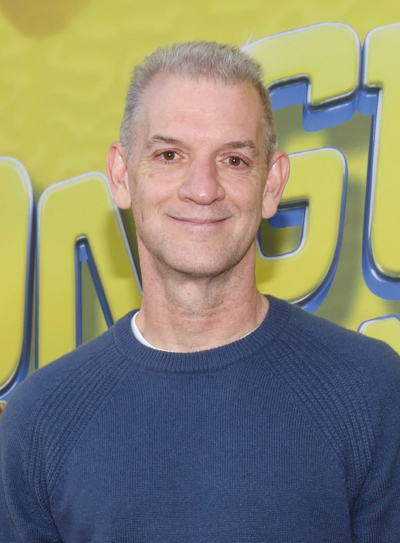
The answer, for Drymon, wasn’t a radical transformation. In fact, he’s actively resistant to that idea. “In a normal movie, by the end of the movie, the main character’s changed,” he says. “But on SpongeBob, you have to kind of leave them how you found them. You don’t want to change him too much. He has to be the same guy we all love.”
Instead, the film leans into emotional experiences rather than permanent growth. “What’s fun about a feature is you can go deeper into the relationships,” Drymon explains. “We explored SpongeBob’s relationship with Mr. Krabs a little deeper. There’s a moment between him and Patrick where their friendship is challenged a little bit.” Those interpersonal and intimate exchanges, he says, offer all the storytelling fuel needed to keep these characters interesting.
Additionally, those moments, he notes, are simply impossible in the show’s traditional format. “You don’t really want to do that in 11 minutes. You don’t have time for that emotion,” he says. “But in a movie, you do need that. You’ve got to reward people for sitting there for 80 minutes.”
One of the film’s most resonant emotional beats, Drymon says, comes from a surprisingly adult realization. “It’s kind of like when you come home from college,” he explains. “Your whole life you’re thinking about moving on, and then when you come home, you realize, oh, I can’t really go home anymore. Whatever you had is now gone.”
That feeling becomes central to SpongeBob’s arc in the film. “He kind of got what he dreamed,” Drymon says, “but then he kind of regrets it and realizes, oh man, maybe I didn’t appreciate what I had.”
A Return to Innocence
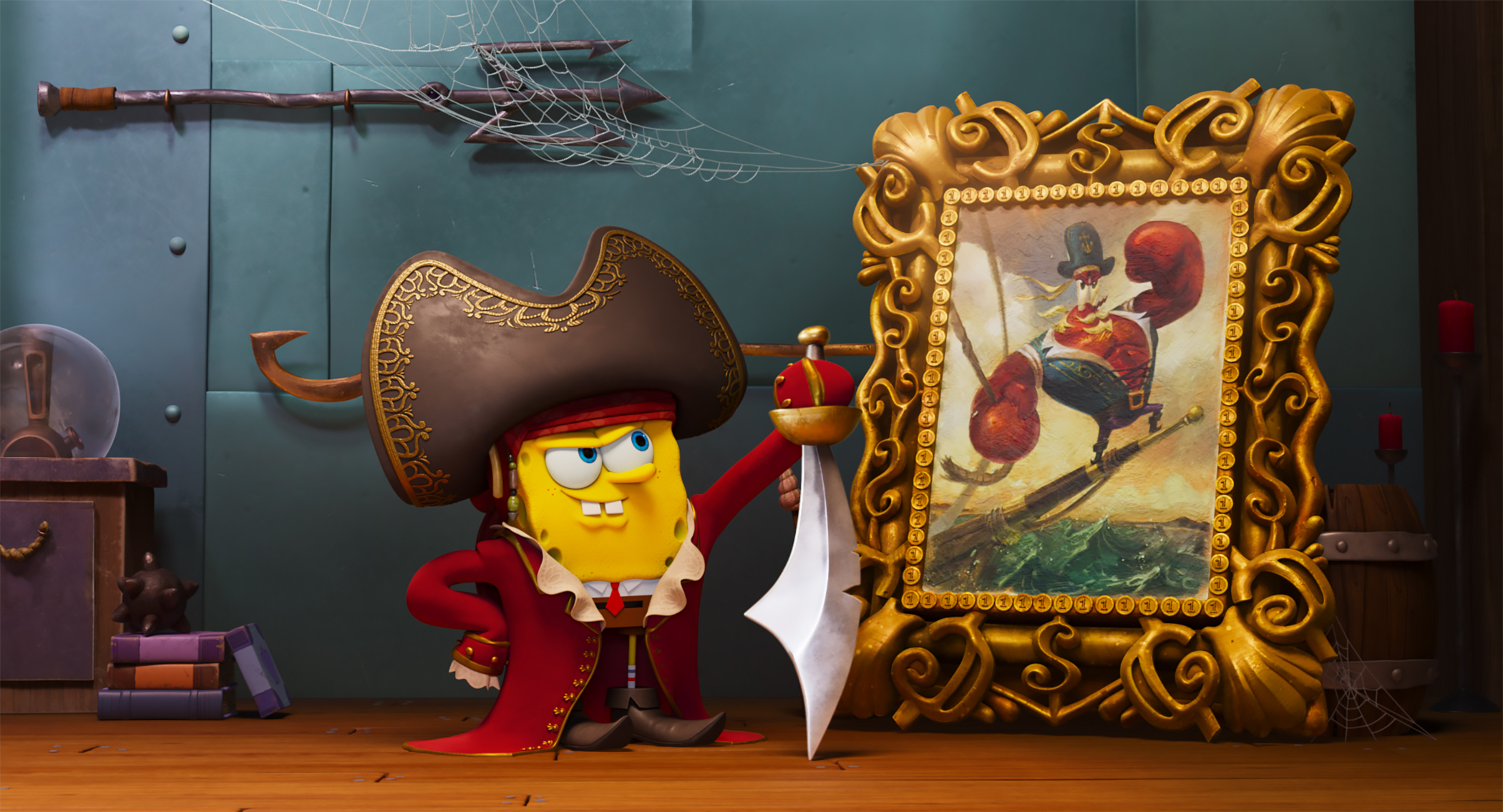
Drymon is adamant that SpongeBob’s innocence is non-negotiable. “I don’t need him to have major changes,” he says. “I like that he’s who he is.”
He compares the character to the comedy icons he grew up with. “I grew up watching Laurel and Hardy and the Three Stooges and Abbott and Costello. I don’t want to see Lou Costello become a grown-up. I like that he’s young and innocent and silly.”
For Drymon, SpongeBob stories often circle back to the same essential idea. “A lot of times, the message really is, it’s okay to be different. It’s okay to be a silly kid,” he says. “Being a kid wins. That was always the Nickelodeon message, kids first.”
That philosophy, he notes, is what allows the character to connect across generations. “For a kid, they’re living through it. For an adult, they’ve lived through it,” Drymon says. “They remember it.”
A CG World That Feels Handmade
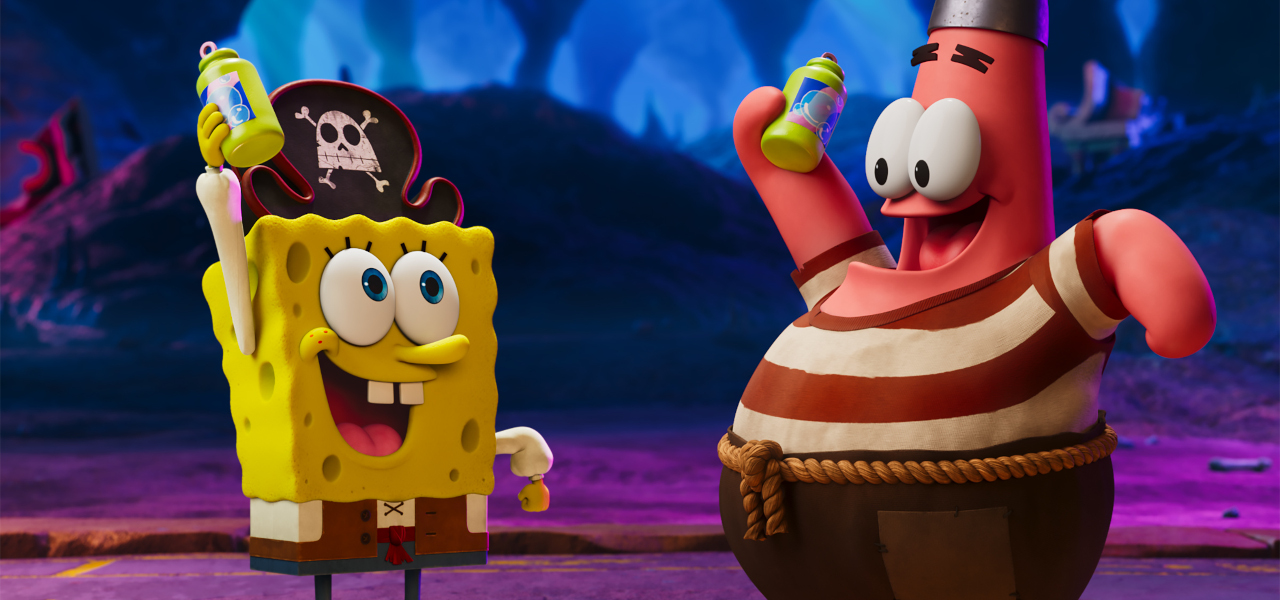
Visually, Search for SquarePants continues SpongeBob’s evolution into CG, but Drymon was wary of pushing the look too far. “If it got too slick, it wouldn’t feel right,” he says. “We really wanted it to kind of feel still handmade.”
Rather than pursue highly stylized CG meant to mimic 2D, Drymon drew inspiration from older, more tactile references. “SpongeBob is kind of inspired by kitschy ’60s stuff,” he says. “Plastic toys are a good example.”

That idea of toy-like tactility became a guiding principle for Reel FX, the animation studio behind the film. “We wanted something that feels true to the 2D SpongeBob world,” says Liz Hemme, visual effects supervisor at Reel FX, “but also has this fresh feel.”
Early on, she says, the team explored aggressively pushing texture, before eventually pulling back. “If we went too texturized, it started to become distracting,” Hemme explains. “It didn’t feel like the SpongeBob 2D. So we had to find that balance.”
That balance extended to nearly every surface in Bikini Bottom. “We spent a lot of time refining the metal,” Hemme says. “Something as simple as the metal in the Krusty Krab, we spent quite a bit of time in look dev making sure it was exactly right.”
Scale, too, required careful manipulation. “We had to explore scale within our sets, almost like on a stage,” Hemme says. “Because it had to work with these weird perspectives and weird camera views.”

Augusto Schillaci, Reel FX’s chief creative of officer and creative director, adds that many environments only make sense from the camera’s perspective. “If you see that set in the computer and not from the camera point of view, it did not make any sense,” he says. “It was all created for that camera.”
Deep Blue Sea
One of SpongeBob’s defining visual qualities, the sense that Bikini Bottom stretches endlessly in all directions, was something the team worked hard to preserve. “We really wanted to keep it clean,” Hemme says. “There is a sense of depth, but it’s never distracting.”
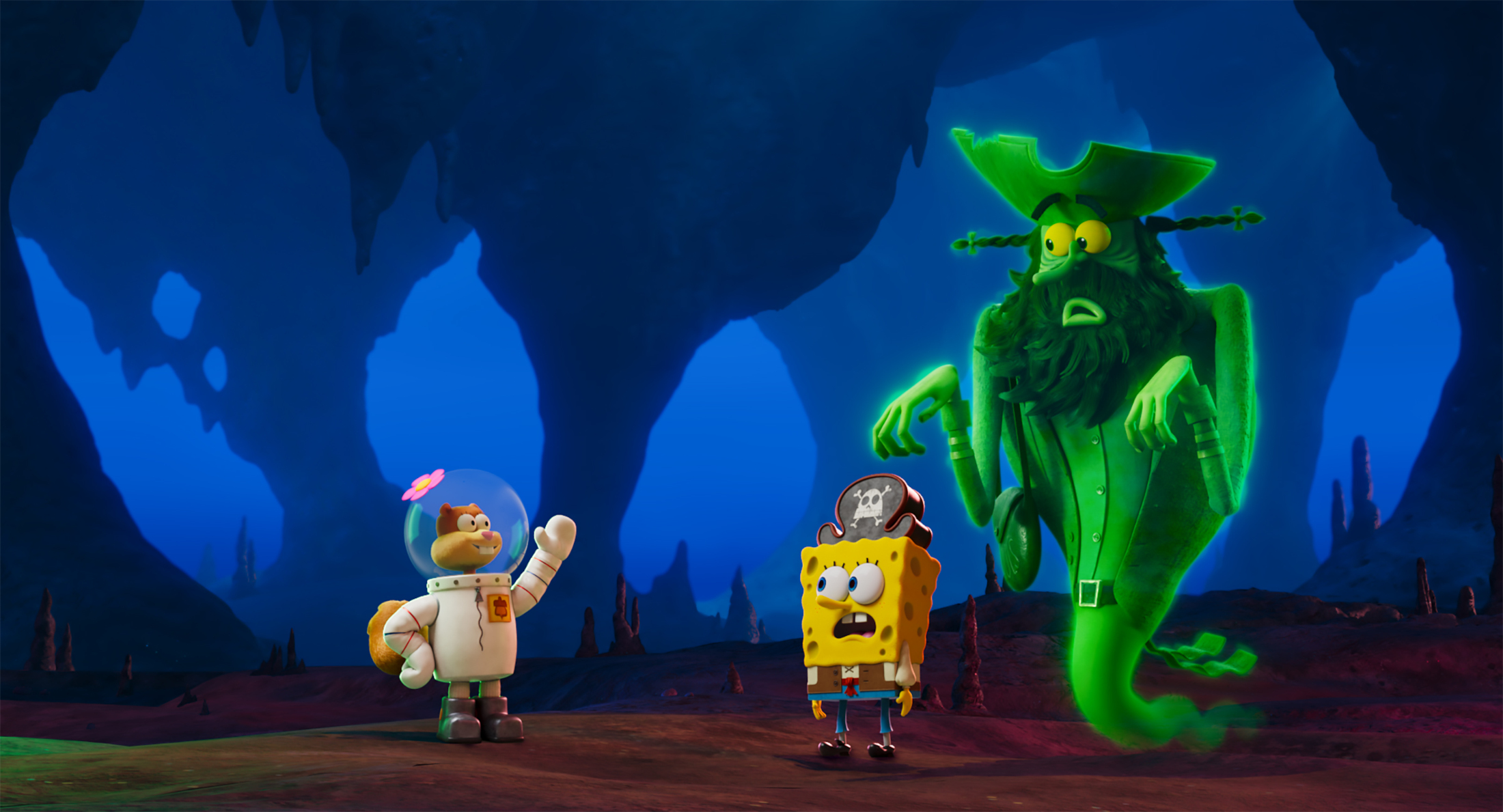
Achieving that required constant adjustment. “We had to dress environments to camera almost all the time,” she explains. “That’s different from other films where you build a set and just shoot within it.”
For the film’s underworld sequences, efficiency became critical. “We actually had a set made of puzzle pieces,” Hemme says. “We had a straight river, a curvy river, and we reused them depending on what we needed for the shot.”
Schillaci is candid about the reality behind those decisions. “Budgets are smaller these days,” he says. “But the quality bar stayed super high. So the team had to figure out smarter ways to achieve that quality.”
(Variety reports Search for SquarePants‘s final budget at $64 million)
The Good, The Bad, And The Charmingly Ugly
Drymon’s comfort with visible artifice is deeply rooted in how SpongeBob SquarePants was originally made. In the show’s early years, mixed media wasn’t a stylistic choice so much as a survival tactic. “When we were doing the show way back when, there were no rules,” Drymon says. “A lot of those cheap effects were done purely because we had no money.” Over time, those constraint-driven decisions like hand puppets, live action sequences, and abrupt stylistic shifts became part of the show’s comedic language rather than something to smooth over as budgets got bigger.
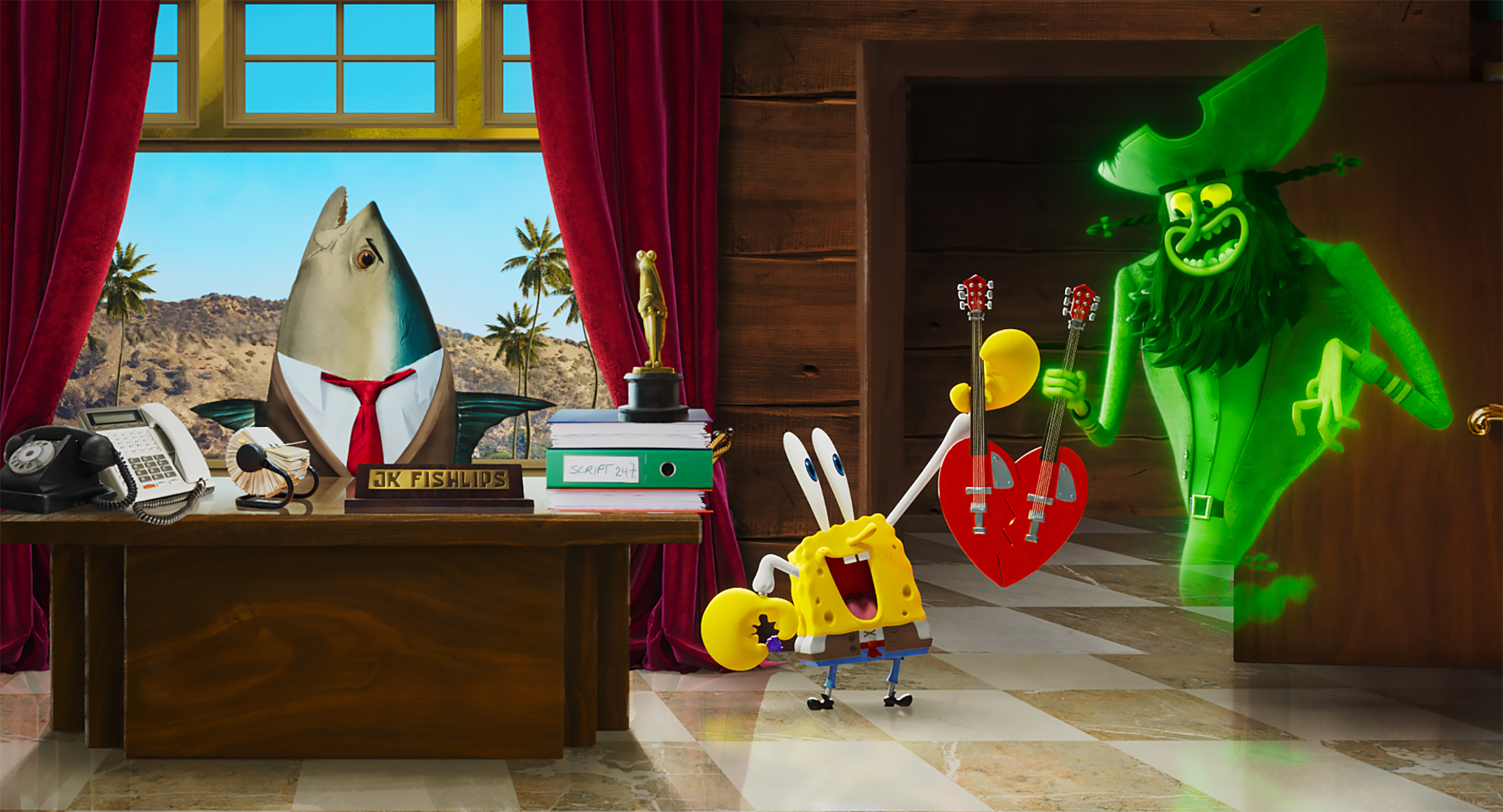
Instead of hiding that lineage in a modern CG feature pipeline, Drymon leaned into it. “It’s okay to let the audience see your budget,” he says. “It’s okay to let them see how you make it. That’s part of the fun.” For Drymon, visual inconsistency isn’t a flaw to be corrected; it’s a tool for comedy, particularly in a world that thrives on surprise and absurdity.
That philosophy runs counter to contemporary CG features that prioritize seamlessness and polish, or that go in the opposite direction, seeking a hand-drawn aesthetic in a CG pipeline.
Drymon instead cites classic live-action comedies as guiding references. “I don’t care if everything on screen matches,” he says bluntly. “Who cares? It’s like Airplane. That style where you just let it be dumb.” The humor, in his view, comes not from calling attention to the artifice, but from the characters’ complete indifference to it.
This approach directly shaped how live-action elements were integrated into Search for SquarePants. Rather than bending SpongeBob’s CG world toward realism, the hierarchy was inverted. According to Schillaci, rather than adapting the CG animation to match the film’s real-world scenes, the real world was bent to better fit in SpongeBob’s animated universe, “not the other way around.” Lighting mismatches, exaggerated scale, and intentionally artificial composites are allowed to coexist without apology.
The same logic extends to transitions and editorial language, another core part of SpongeBob’s identity that the film preserves. “The bubble wipes, the fun cuts—that stuff is very SpongeBob,” says Hemme. “It’s more complex for us technically, but they’re so fun, and they feel like the show.” In embracing those visible seams, Search for SquarePants doesn’t break SpongeBob’s rules; it returns to a time when there weren’t any.
Looking Back to Move Forward
To ground the film visually, Drymon revisited the franchise’s origins. “I went back to the original production designer, Nick Jennings,” he says. “He had all his paintings from the first three seasons in a binder. I sent those to the art department and said, ‘This is the Bible.’”
That gesture resonated deeply with the Reel FX team. “There’s a level of respect that comes with working on something like this,” Hemme says. “It’s legendary.”
Schillaci agrees. “They managed to take what Derek gave them and give it enough volume to bring it into 3D, while respecting what fans want from those early seasons,” he says.
In the end, The SpongeBob Movie: Search for SquarePants is less a reinvention and more a reaffirmation. It’s a film made by artists who understand that SpongeBob’s longevity comes not from polish or spectacle, but from sincerity, silliness, and a willingness to let the seams show.