.png)
Disney’s Quartet Of Remaining Ink And Paint Artists Preserve The Studio’s Handcrafted Legacy (VIDEO)
Stay informed with free updates
Sign up to get our news digest — delivered directly to your inbox twice a week.
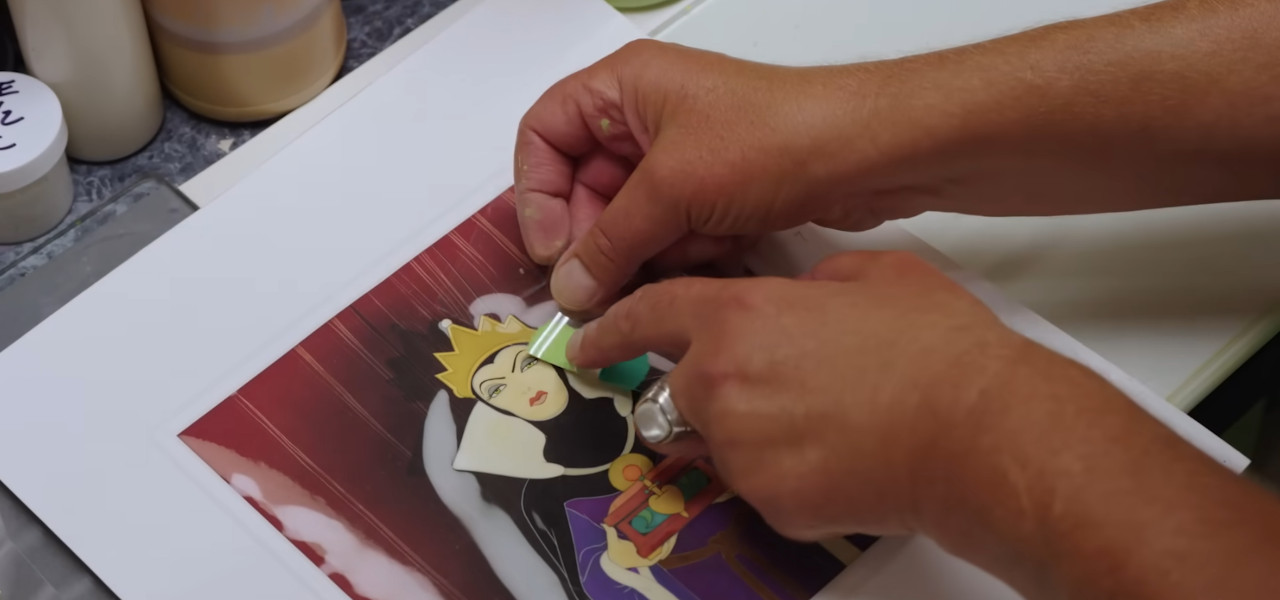
Earlier this year, the Academy shared a behind-the-scenes look at Disney’s once-vital, now-niche ink and paint department and the only four remaining artists who practice the art form at the company.
Featuring insights and anecdotes, the charming video spotlights artists Annie Hobbs, David Scott Smith, Antonio Pelayo, and Charles Landholm.
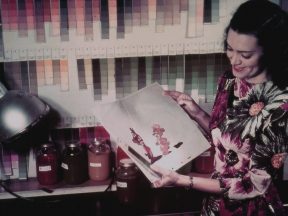
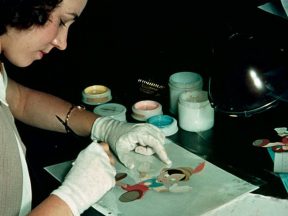
The ink and paint department at Disney was one of the most important yet underappreciated units at the studio, particularly during its early years. In the days of hand-drawn animation, animators produced pencil drawings that had to be meticulously transferred onto clear celluloid sheets, as demonstrated in the video.
For years, the task was handled almost exclusively by women known as “inkers” and “painters.” Inkers traced the animators’ lines onto the fronts of cels, while painters filled in the colors on the backs to avoid smudging the linework. This division of labor became a hallmark of Disney’s production pipeline, especially during the studio’s Golden Age, contributing to classics like Snow White and the Seven Dwarfs, Pinocchio, and Bambi.
As technology evolved, the ink and paint department adapted accordingly. The introduction of the Xerox process in the late 1950s and early 1960s, first widely used in One Hundred and One Dalmatians, reduced the need for manual inking by allowing animators’ drawings to be photocopied onto cels rather than traced. This sped up production but also dramatically reshaped the roles of many ink and paint artists.
By the 1990s, Disney transitioned fully to digital systems, effectively eliminating traditional cel painting at the company. As the video states, modern painted cels are treated as fine art rather than as a part of a production pipeline. While the department, in its original form, eventually dissolved, its legacy endures in the work of a quartet of highly skilled specialists.