.png)


Nearly Half Of 10–24 Year-Olds Prefer Animation, UCLA Finds
Stay informed with free updates
Sign up to get our news digest — delivered directly to your inbox twice a week.
Nearly half of young people prefer animation over live action, according to the Get Reel: Teens and Screens 2025 report from UCLA’s Center for Scholars & Storytellers (CSS). The research, based on a survey of 1,500 adolescents ages 10–24 – 100 from each age, found that 48.5% of respondents prefer animated content, compared with 51.5% who favor live-action content.
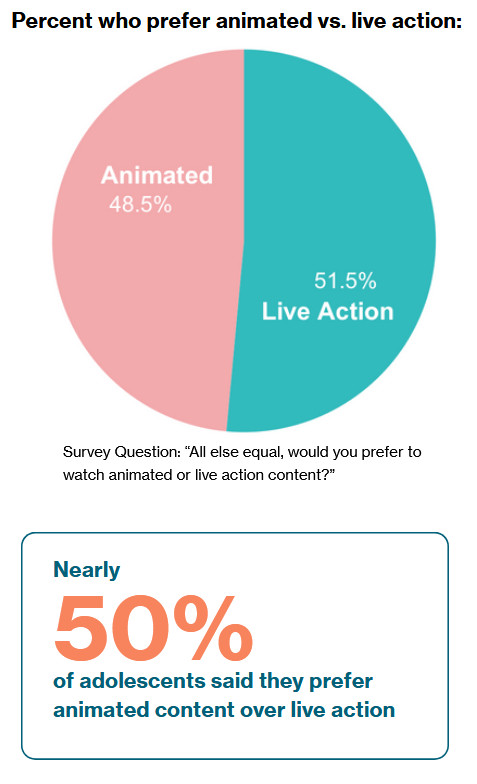
“We are well past the era when cartoons were made only for kids,” the researchers write. “Given the choice between animated and live action content, nearly as many adolescents said they prefer animated content… up from 42.0% last year.”
The study also found that enthusiasm for animation cuts across all demographics. “A love for animation did not differ significantly across age — nor across race, geography, sexual orientation, or gender,” the report notes. Even among older participants (ages 19–24), nearly half (47.8%) preferred animated content.
As one 17-year-old from Indiana put it, “I prefer animated content because it has so many possibilities and different types of stories to choose from.”
Animation Across Genres
The CSS researchers highlight that young audiences embrace animation in a variety of forms and genres, citing SpongeBob SquarePants, Family Guy, Naruto, and KPop Demon Hunters among the favorite titles named by participants. Animation “spans a wide variety of genres,” the report reads, although some traditional fan-favorites have dropped in popularity.
Shifting away from love stories, young audiences today prefer platonic relationships in their programming. Almost 60% of adolescents said they are more interested in friendships than in romantic relationships. Respondents were especially turned off by too many love triangle angles, toxic relationships, and relationships based on physical attraction rather than emotional attraction.
Realism, Relatability, and Representation
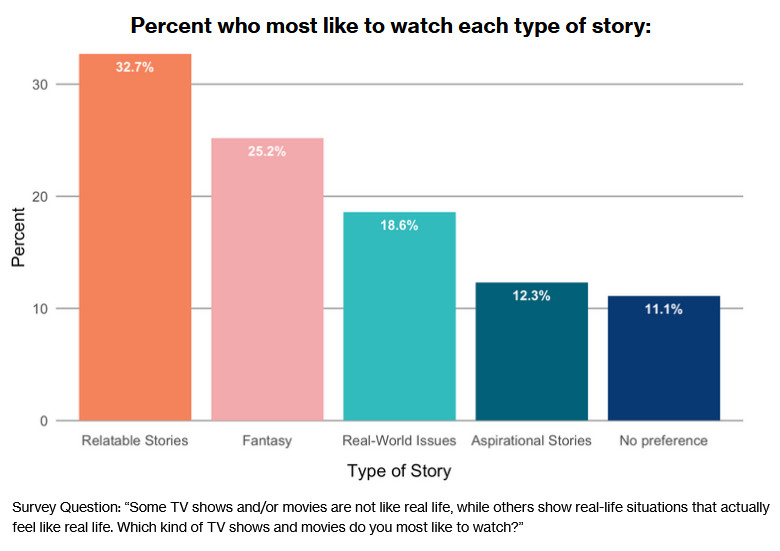
While animation drew widespread appeal, the study also underscored a strong desire for realism and relatability in storytelling overall. “Realistic, relatable stories swept the preferred topics list this year,” the authors write, adding that adolescents “want content with relatable stories more than fantasy, real-world issues, or aspirational stories — a 35.3% jump in support from last year.”
The top choice for what adolescents want to see more of: “People with lives like my own.”
On the Go
That desire for connection extends to format as well. CSS found that traditional storytelling mediums — including TV and movies, animated or otherwise — remain central to how young people connect with friends and with themselves. “They haven’t abandoned TV shows and movies—they’ve simply redefined how and where they watch them,” the report concludes.
The study found that 57% of adolescents said they watch traditional media — TV and movies — more than older generations think they do. The misunderstanding, respondents argued, stems from how young people watch. Almost 80% said they at least sometimes watch TV and movies on YouTube, TikTok, or other social media, and, in response to a separate question, 46.7% said they mostly watch TV and movies on a personal device other than their TV.
A Generation Drawn to Story
Overall, the study’s results seem like good news for studios, streamers, and broadcasters who often struggle to connect with adolescent audiences. Kids today are not rejecting traditional media, but reshaping it around what resonates with them emotionally and is available when and where they want it. “They’re hungry for stories that reflect their actual lives more than fantasy or glamor,” the report states. “They want to see people who look like them and face challenges like theirs.”
In short, roughly half of all young people now prefer animation, not as escapism, but as a flexible, expressive medium capable of reflecting the realness they crave. The real question is, when these kids talk, will the studios listen?