.png)
Italian Industry Rallies Around Zerocalcare, DogHead, Movimenti After Right-Wing Senator Offers His 2 Cents On Anonymous Labor Allegations
Stay informed with free updates
Sign up to get our news digest — delivered directly to your inbox twice a week.
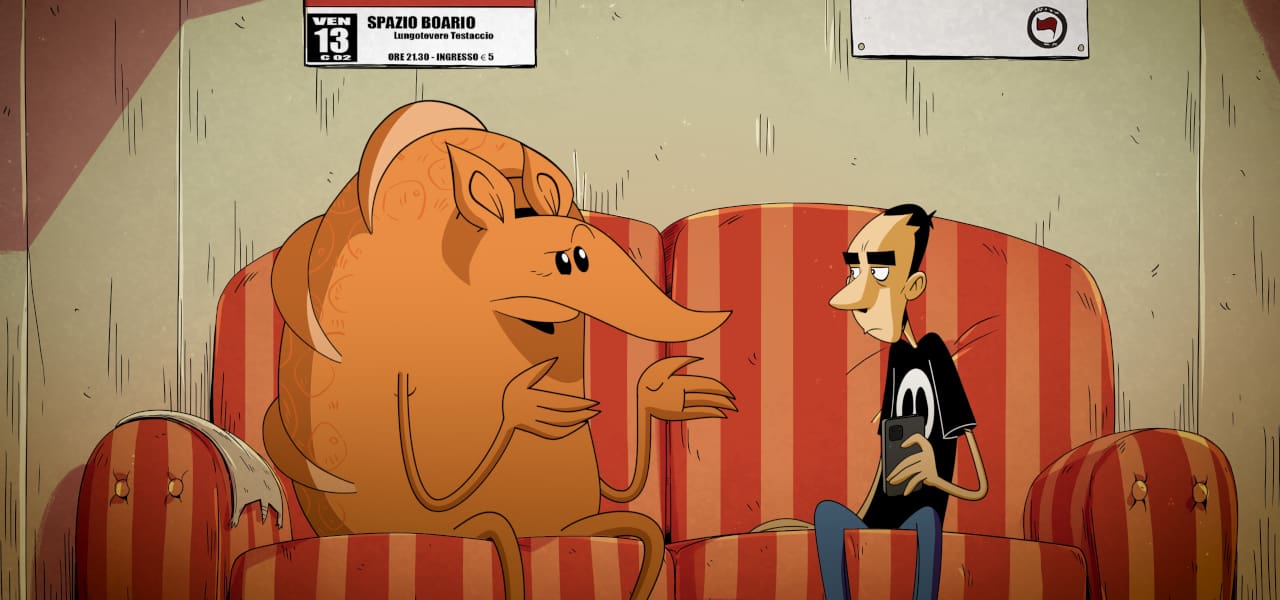
Italy’s animation industry is pushing back after right-wing Senator Maurizio Gasparri turned anonymous online allegations about labor conditions on a Netflix animated series into a political attack against cartoonist Michele Rech, better known as Zerocalcare, and the animation studios involved.
The controversy began over the weekend when anonymous social media posts accused the production of Zerocalcare’s new animated series, My 2 Cents (Due Spicci), of exploitative labor practices, including underpaying artists (as little as €6/hour) and increasing workloads late in production.
The allegations quickly spread through Italian media and were amplified by Gasparri, a longtime conservative politician from Silvio Berlusconi’s Forza Italia party who has frequently targeted progressive cultural figures. Gasparri called for a parliamentary investigation into the production and accused Zerocalcare of hypocrisy over workers’ rights.
What followed was an overwhelmingly unified response from Italy’s animation industry. ASIFA Italia, Cartoon Italia, ANICA, production companies, and Zerocalcare himself all publicly defended the productions while also acknowledging broader structural labor issues within the sector.
Studio Response
The accusations first circulated through anonymous Instagram submissions and online posts. Several claims focused on alleged low pay and worsening working conditions during production.
Movimenti Production and DogHead Animation strongly denied the allegations in a joint statement:
In recent hours, we have found ourselves facing an unacceptable attack originating from a group of individuals hiding behind anonymity and publishing a series of allegations that lack any credibility and which we firmly reject. Both Movimenti Production and DogHead Animation have always been committed to protecting the work and workers of the animation industry and have never offered contractual arrangements that fall outside the law, nor have they ever engaged in exploitative labor practices.
In an individual statement, Movimenti co-founder and CEO Giorgio Scorza added:
I want to be very clear: these allegations do not reflect the reality of our work or the way we operate, and I consider them deeply offensive to all those who contribute every day to our projects with commitment and professionalism. Anonymity neither encourages constructive dialogue nor proper scrutiny, and it makes it difficult to verify facts, responsibilities and context. For this reason, I believe that complex issues should always be addressed openly, with transparency and mutual respect.
The companies also stated that no formal complaints had ever been submitted through recognized industry associations, despite ample opportunities and regular outreach from organizations dedicated to workers’ rights:
To date, despite our involvement in numerous productions, no complaints have ever been submitted through the officially recognized professional associations, to which every artist has access and with which we continue to maintain an open and ongoing dialogue.
The studios disputed claims that artists were being paid as little as €6 per hour, saying compensation is based on individual project deliverables and artist seniority rather than hourly wages. Italian productions are backed by broadcasters and public funding systems; both government bodies and financing partners have access to all data regarding budgets, contracts, and artist compensation.
Management also rejected accusations that additional episodes were added late in production to increase workloads without adjusting schedules, explaining that the season’s total runtime remained unchanged and that the episodes were simply redistributed across more episodes.
Movimenti Production and its Florence-based animation studio DogHead Animation rank among the most important animation outlets in Italy’s growing animation industry. Alongside Zerocalcare’s Netflix productions, the companies have worked on international projects including Batman: Caped Crusader, Merry Little Batman, and Season 4 of Mr. Bean, while also investing heavily in developing original Italian animated productions and expanding domestic animation talent.
Gasparri’s Provocation
Despite the lack of publicly verified complaints, the controversy quickly entered Italian politics after Gasparri submitted a parliamentary question to Labor Minister Maria Elvira Calderone. In an interview with Italian publication Il Giornale.
I read your article and believe that the Ministry should investigate whether any violations have occurred, including possible cases of underpaid workers. Of course, everything may prove to be entirely lawful and compliant.
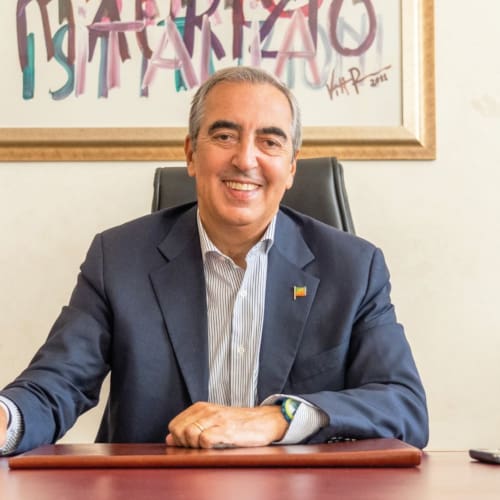
Gasparri framed the situation as political hypocrisy on the part of Zerocalcare, one of Italy’s most prominent progressive cartoonists:
It is rather striking when those who constantly preach about precarity and exploitation then risk falling into precisely the same trap themselves. It is the classic left-wing prophet.
Later in the interview, he mocked the artist directly.
Zerocalcare’s — more ‘Zero’ than ‘Calcare’, if you like. Jokes aside, he will say that he has nothing to do with it and that it is a matter for the production company.
The comments drew online criticism, particularly because Gasparri and Forza Italia had previously voted against proposals for a €9-per-hour national minimum wage in Italy.
Zerocalcare’s Reply
After two days of headlines linking him directly to the controversy, Zerocalcare released a lengthy Instagram statement addressing the allegations and his role in the productions:
It’s pretty obvious that I’m the author of the series. That means I do the creative part, write the story, draw the characters, voice the parts. I’m not the one who hires, decides, or pays the people working on the production.
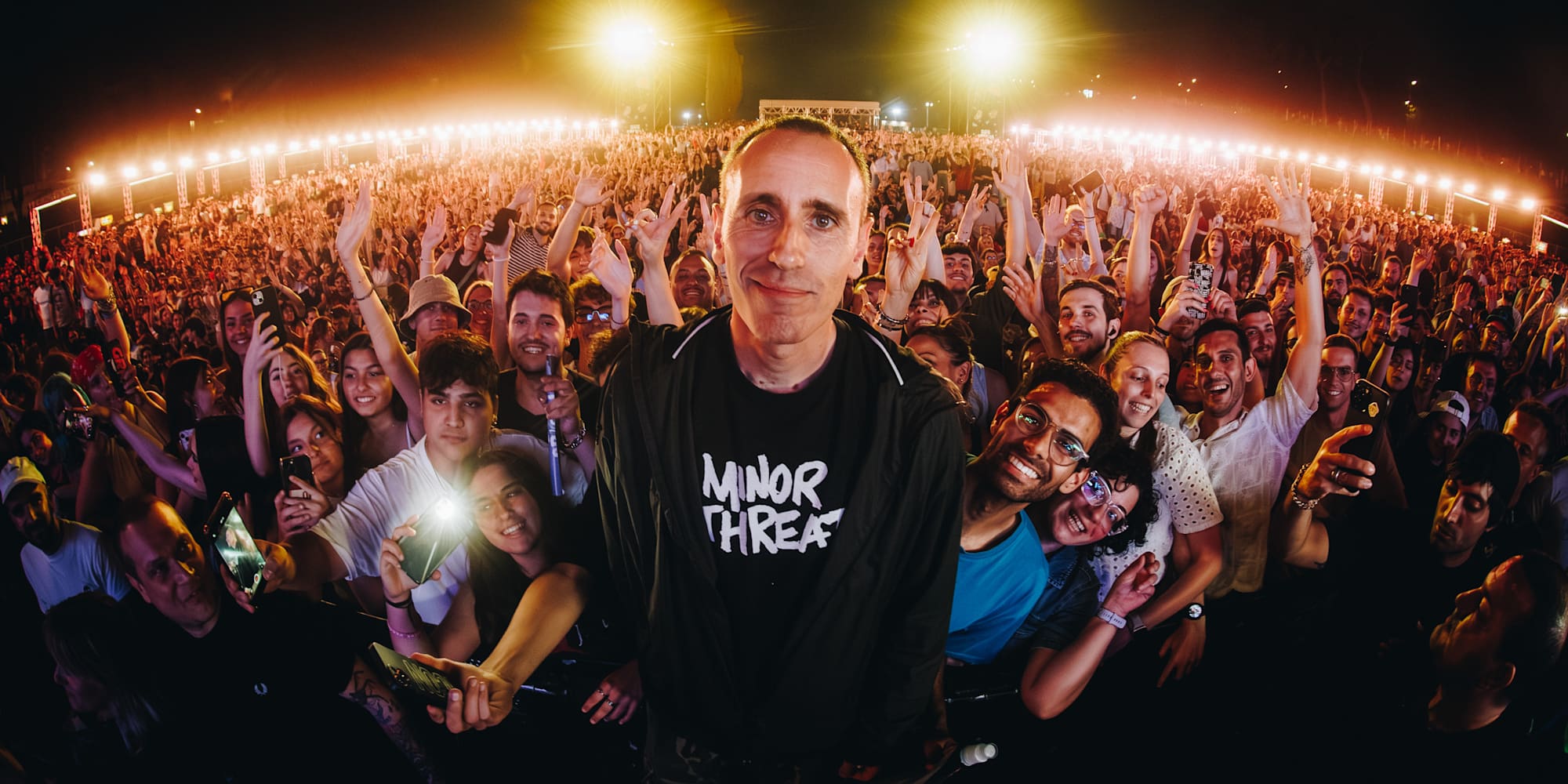
The cartoonist also expressed frustration that no one involved had approached him privately during production to discuss any problems:
If all the situations described in those stories were true, it seems absurd to me that nobody ever thought to write to me and ask for help. Maybe I could have been the one raising the issue and saying: ‘No, this can’t continue like this.’
At the same time, Zerocalcare acknowledged the larger pressures facing workers in project-based creative industries:
In sectors where contracts are project by project, it’s very difficult to organize disputes or mobilizations because people are afraid they won’t be hired again.
He also directly criticized the political exploitation of the controversy and the irony of Gasparri leading the charge:
I wake up one morning having to comment on anonymous Instagram stories I’d never heard about before. All of it is instrumentalized by scavengers who dump it onto me, with Gasparri acting like a crusader in Parliament after voting against the minimum wage.
Still, Zerocalcare argued that the discussion had exposed legitimate structural problems within animation and, more broadly, freelance labor:
Many of the things I read are real issues involving the entire animation sector, actually, the entire labor market. I think it’s right that these issues are discussed and brought around the table.
Industry Organizations Close Ranks
Italy’s animation industry responded quickly and publicly in defense of the productions.
ASIFA Italia released a statement supporting Zerocalcare while warning about the damage caused by unverified allegations:
The debate surrounding this matter has been based largely on anonymous allegations circulated through social media and subsequently echoed by the press and public discussion, often without adequate verification.
The organization added that “partial, unverifiable or distorted information risks causing serious harm to the Italian animation sector as a whole.”
ASIFA also framed the issue within the broader growth of Italian animation production:
His productions represent some of the most significant cultural and industrial successes achieved by the sector in recent years and have generated professional opportunities for numerous artists, technicians, and industry professionals.
Cartoon Italia, the national association of animation producers, and ANICA, Italy’s major film and audiovisual trade association, released a joint statement that similarly defended Movimenti Production and criticized what it described as anonymous accusations amplified without verification:
Movimenti Production finds itself responding not to specific, verifiable complaints formally submitted through the appropriate channels, but rather to a series of anonymous allegations circulated via social media and subsequently amplified by the press in an imprecise and undocumented manner.
Cartoon Italia also stated that it had “never received any report of irregularities or violations concerning the company in question.”
The strongest defense came from ANICA president Alessandro Usai:
Zerocalcare represents a centre of excellence within the Italian and European animation landscape, and Movimenti Production, which produced the series, is one of the leading companies in the sector in our country. The production created for Netflix has achieved significant success both in Italy and internationally. It is regrettable to witness attempts to fuel controversy in a case that should instead be a source of pride and recognition. Movimenti operates in accordance with the highest quality standards and in full compliance with applicable laws and regulations, employing hundreds of professionals across its animation studios. Movimenti is also a member of Cartoon Italia, which in turn is affiliated with ANICA. As President of ANICA, I therefore wish to express my regret at what is taking place, but above all to reaffirm the Association’s full support for and confidence in Movimenti and in its work.
A Fight Over the Future of Italian Animation
The dispute arrives at a pivotal moment for Italy’s animation industry.
For years, much of the country’s animation talent left for work abroad in countries such as Ireland, France, the U.K., and the U.S. More recently, studios including Movimenti and DogHead have helped expand domestic production capacity and develop original Italian animated projects with international reach.
According to Scorza, Movimenti and DogHead were founded for just that reason:
Davide [Rosio] and I founded these companies with a clear objective: to bring animation back to Italy and strengthen the industry here. We chose to invest in this country, in people’s talent and professional development, even when it might have been easier to do otherwise, perhaps by moving abroad.
At the same time, the controversy has highlighted real frustrations inside the industry over freelance labor, inconsistent wages, unstable tax incentives, and the difficulty many artists face building long-term careers in Italy.
Even the organizations defending the productions acknowledged that broader conversations about labor conditions are necessary.
“This situation highlights the need for a broader discussion on the specific nature of work within the animation industry,” ASIFA Italia said, describing a sector “undergoing continuous evolution” that requires stronger systems for “dialogue, consultation and representation.”
For now, the political firestorm may fade quickly. But the episode has already exposed the increasingly fragile intersection of labor concerns, social media outrage, and culture-war politics surrounding one of Europe’s quickly emerging animation industries.
Many of the quotes in this article were translated from Italian using automated software.