.png)
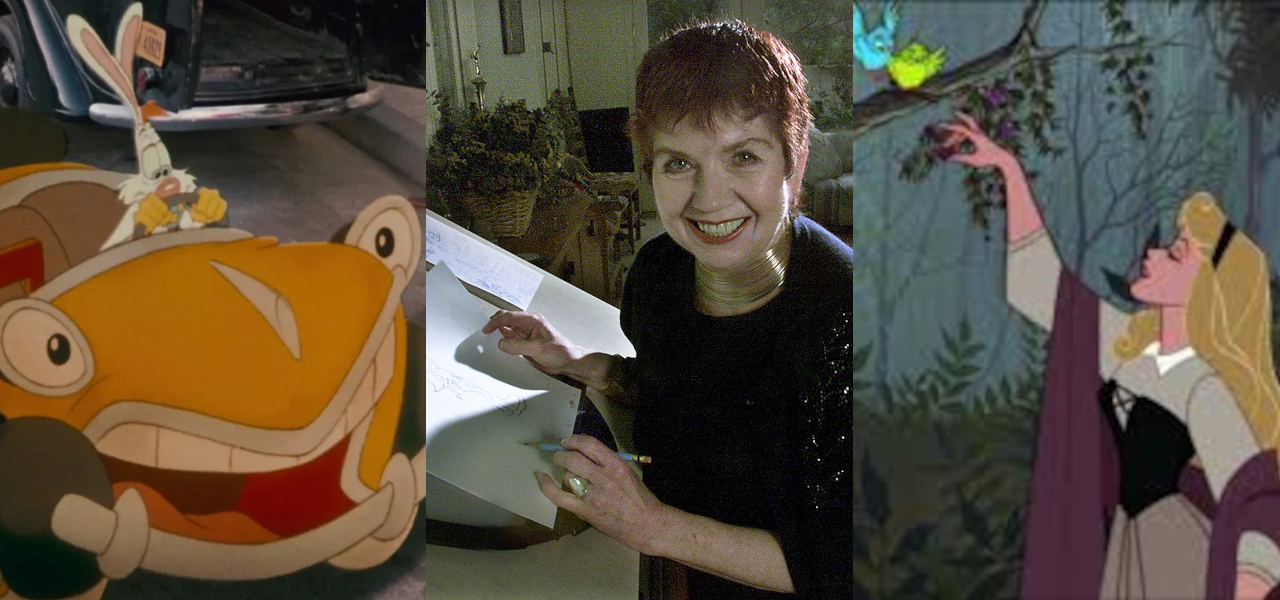
Jane Baer, Disney Great Who Worked On Films From ‘Sleeping Beauty’ Through ‘Who Framed Roger Rabbit,’ Dies At 91
Stay informed with free updates
Sign up to get our news digest — delivered directly to your inbox twice a week.
Jane Baer, a pioneering animator, producer, studio founder, and a founding member of Women in Animation (WIA), who worked continuously at the highest levels of American animation from the 1950s through the 1990s, died February 16, 2026, at her home in Van Nuys, California. She was 91.
Baer’s career traced a rare, uninterrupted arc through animation history: from the hand-inked fine art of Disney’s mid-century features, through television’s production-line years, and into the rapidly evolving hybrid era that peaked with Who Framed Roger Rabbit, a film on which she was intimately involved.
Along the way, she quietly became a guardian of classical early-Disney-era technique, an animator trusted not only with drawing, but with organization, supervision, and the translation of tradition into new production contexts, working in all sorts of roles across the production pipeline.
Born Jane Shattuck in Winnipeg, Manitoba, Baer showed artistic aptitude early and followed her father into illustration. She trained at Art Center College of Design in Pasadena and, in 1955, entered Walt Disney Productions as an assistant animator. Her timing could not have been better, as Disney was deep into production on Sleeping Beauty, a film that demanded unprecedented graphic control and precision for its time.
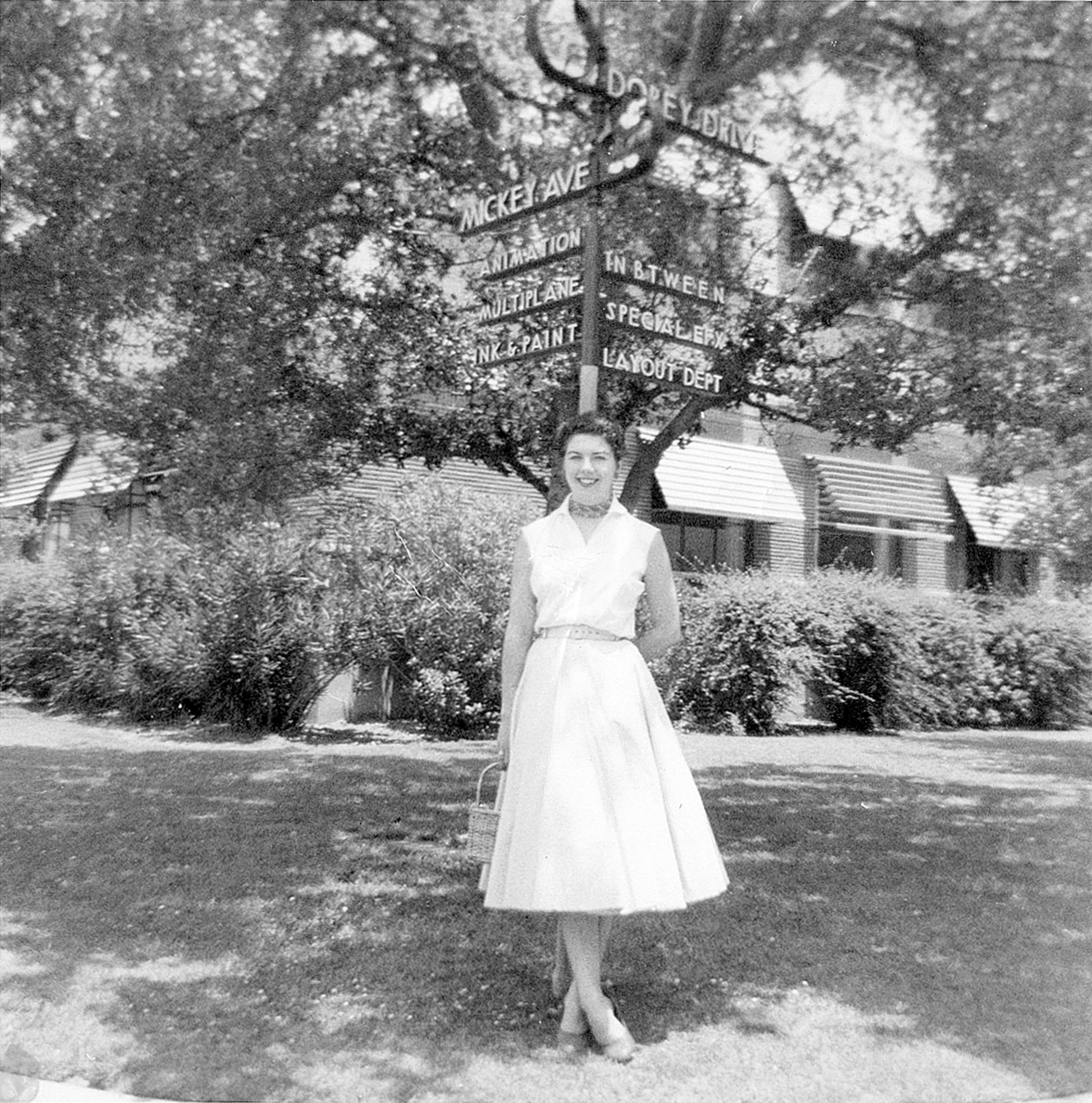
Working alongside members of the legendary Nine Old Men, Baer was trained to the studio’s highest standards of draftsmanship and performance-based animation. Sleeping Beauty (1959), now widely recognized as one of the most formally rigorous animated features ever produced, served as her apprenticeship in a system that prized clarity, discipline, and expressive restraint.
Though her name would rarely appear before the title, Baer was part of a generation of artists who formed the backbone of Disney animation during its transitional decades.
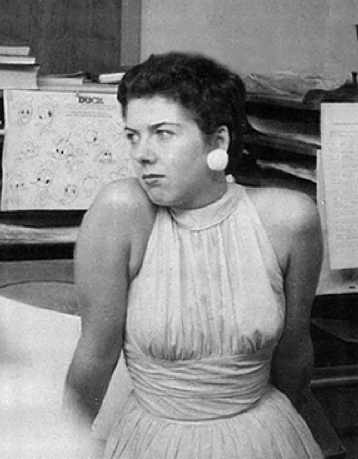
During this period, she met animator Iwao Takamoto, whom she later married. After leaving Disney in the early 1960s, Baer navigated a rapidly changing animation landscape as TV began playing a more significant role in the industry. She moved on to commercial and television work with Ed Graham Animation, and later spent time in Europe before returning to the United States, where she joined Pantomime Studios in the layout department, contributing to series such as Skyhawks and Speed Racer. She continued in layout at Filmation, working on shows including Aquaman and Journey to the Center of the Earth.
In the mid-1970s, Baer returned to Disney and served as an assistant animator under Milt Kahl on The Rescuers, working on the villain Medusa. She went on to contribute to The Fox and the Hound, Mickey’s Christmas Carol, and The Black Cauldron, films that bridged the studio’s aging classical workforce with a new generation looking to make their mark.
By the early 1980s, Baer was also freelancing as a storyboard artist for Hanna-Barbera, including work on the original Smurfs television series, further expanding her influence across formative eras for both feature and television animation.
In 1984, Baer entered a new phase of her career when she co-founded Baer Animation with her then-husband, animator Dale Baer. The studio quickly became one of the most respected independent animation houses in Hollywood, known for its adherence to classical standards at a time when the industry was increasingly looking to cut costs and corners, even and often at the expense of quality.
One of Baer Animation’s defining achievements came with Who Framed Roger Rabbit (1988), on which the studio created the entire Toontown sequence. Jane Baer served as supervising character animator on Benny the Cab and played a central role in managing the extraordinarily complex integration of hand-drawn animation with live-action cinematography.
Under her supervision, Baer Animation grew into one of the few fully self-contained independent animation facilities in the United States, housing departments for animation, digital ink and paint, compositing, sound recording, effects, and camera services. The studio’s camera department handled sequences of The Little Mermaid and The Prince and the Pauper, as well as work on FernGully: The Last Rainforest, Rover Dangerfield, The Swan Princess, and numerous Warner Bros. and Hanna-Barbera projects.
Baer also served as animation producer or supervisor on a wide range of features, including Fletch Lives, Last Action Hero, The Beautician and the Beast, and Rover Dangerfield, and was the writer and executive producer of Annabelle’s Wish. She handled key sequences on The Lion King and was an animation producer on Tom & Jerry: The Movie.
Following Dale Baer’s departure in the early 1990s, Jane Baer continued to run the studio independently, overseeing teams of 50 to more than 100 artists, until her retirement in the early 2000s.
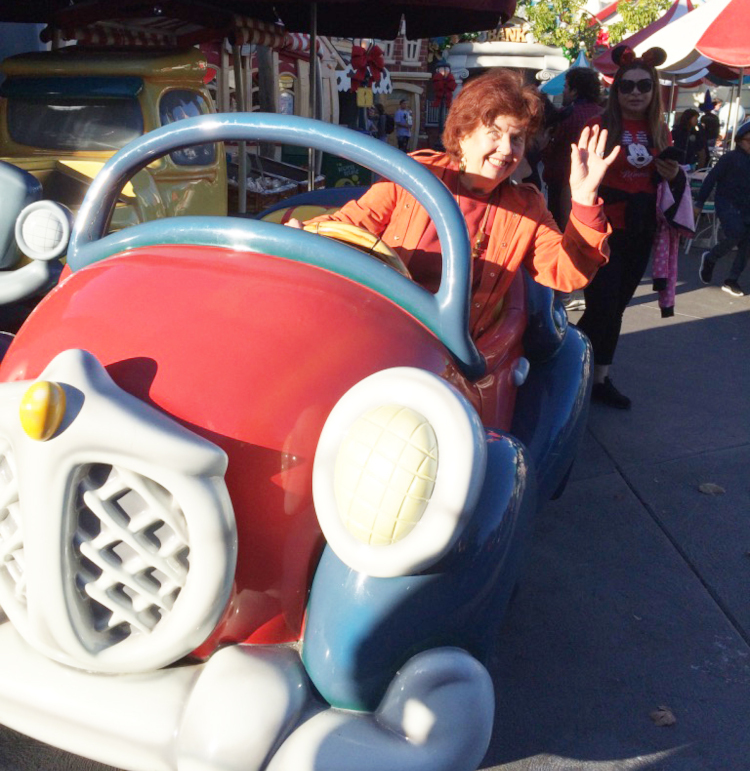
Beyond production, Baer was deeply involved in professional advocacy. She was a longtime member of the Academy of Motion Picture Arts and Sciences, the Academy of Television Arts and Sciences, The Animation Guild, and Women in Film. She was also a founding member of Women in Animation and later served on its advisory board, helping to create institutional support for women entering a historically male-dominated field.
In her later years, Baer became a valued historian and mentor, appearing at festivals, panels, and classrooms to share firsthand knowledge of animation’s working methods across decades. She was featured in Mindy Johnson’s Ink & Paint: The Women of Walt Disney’s Animation, received the Golden Award honoring her 50-year career, and was awarded the Inkpot Award in 2002. She also appeared in the phenomenal documentary Pencils vs. Pixels (2023).
Jane Baer is survived by her son Michael, his partner Beth, and extended family in Canada. Her legacy endures not only in the films she helped create but in the continuity of craft she preserved across five decades, carrying the rigor and unyielding standards of quality from Disney’s golden age into an industry that often struggled to remember its fine art foundations.
This piece, like any good post about women in American animation in the 20th century should, draws heavily on the work of author, historian, and educator Mindy Johnson. We highly recommend this interview if you want to know more about Baer.
Thank you to Howard Green for providing the wonderful photos of Baer throughout her incredible career.