.png)
‘Adventure Time: Side Quests’ Season 2 Is A Proof Of Concept For More In-House Animation (EXCLUSIVE)
Stay informed with free updates
Sign up to get our news digest — delivered directly to your inbox twice a week.
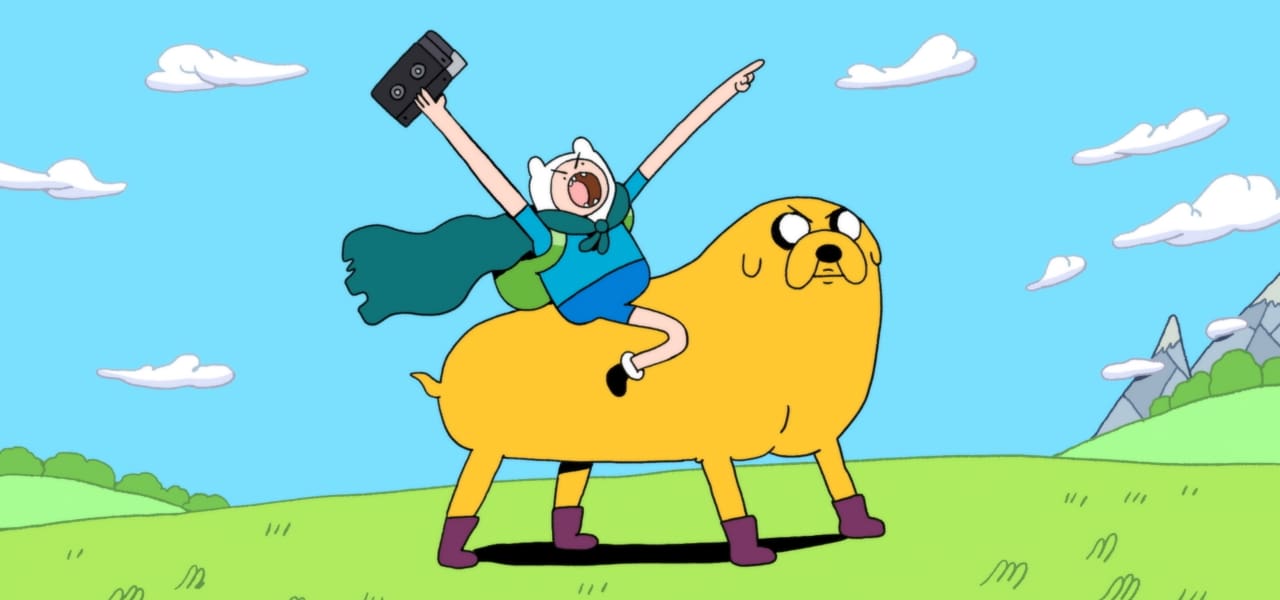
Finn and Jake’s return in Adventure Time: Side Quests was warmly received when the series debuted in June on Hulu and Disney+. Now, the team behind the show is using its second season to make a case for something increasingly uncommon in U.S. television animation: doing more of the animation itself in-house.
Season two premieres October 2 with “Death Fiction,” a darkly comic ode to the movies and other media many of us probably saw too young. The episode also doubles as a proof of concept for Cartoon Network and Hulu that domestic, in-house animation can work within a television production schedule and budget.
Supervising director Victor Courtright (ThunderCats Roar) tells Cartoon Brew that producing animation in-house had long been a serious ambition for the Side Quests team. He had done it before and knew it could be accomplished with turnaround times and costs comparable to outsourcing the work overseas.
“We did not go into writing this episode with this in mind at all,” Courtright says of how “Death Fiction” came into production. “We’d talked about the idea of, ‘It would be really awesome if we could do some animation here.’ And we’d talked to the execs multiple times about different ideas of how we could do something like that. It was floating out there, but by the time we started getting them excited about the idea, like maybe it could happen, this [episode] was already in the works.”
Storyboard artists Keith Pakiz and Matt Yang built the episode around Finn and Jake accidentally discovering an unearthed VHS anthology they immediately regret watching. The tape contains a rapid-fire, Lynchian barrage of strange and grotesque imagery that horrifies the pair.
“Keith boarded that section, and that’s 100% from some dark place in his soul,” Courtright laughs.
Showrunner Nate Cash (Over the Garden Wall) says Pakiz traced the idea back to seeing The Terminator when he was too young. The episode’s title, meanwhile, came from Pulp Fiction. “Even as an adult, I’m like, ‘I really liked a lot of that, and I wish I could unsee a lot of it.’”
Courtright continues, “When Keith was pitching [the inserts] in the very first board pitch, I almost passed out from laughter. It was so funny. And then that section actually was a bit of a collaboration. Keith did those boards, and then he was in the middle of animating an entire half of an episode, so he asked if I would help out with animation.
“I took his beautiful boards and planned out how many frames I would need, and then I basically transferred all of it to paper with brush, pen, and pencil. I taped a peg bar to my Cintiq and used the digital version for reference, then comped it digitally with some simple mattes, then transferred it to VHS where I was shaking the VCR and smacking it a little bit,” he adds.
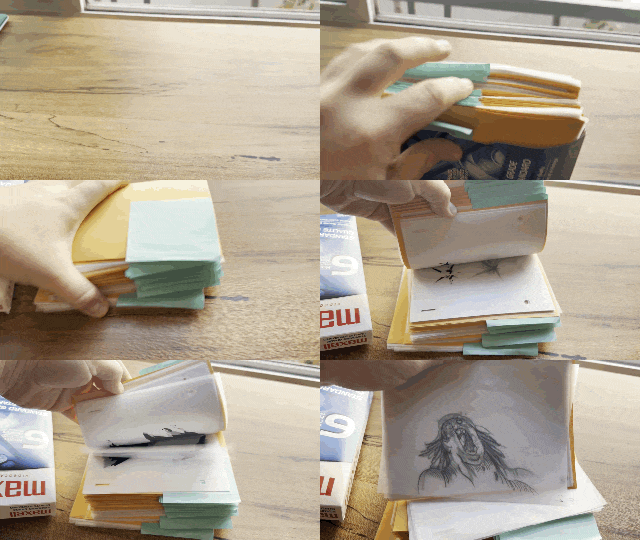
The in-house work involved several crew members, although Courtright says Pakiz and Yang handled most of the animation, with Courtright assisting on the inserts.
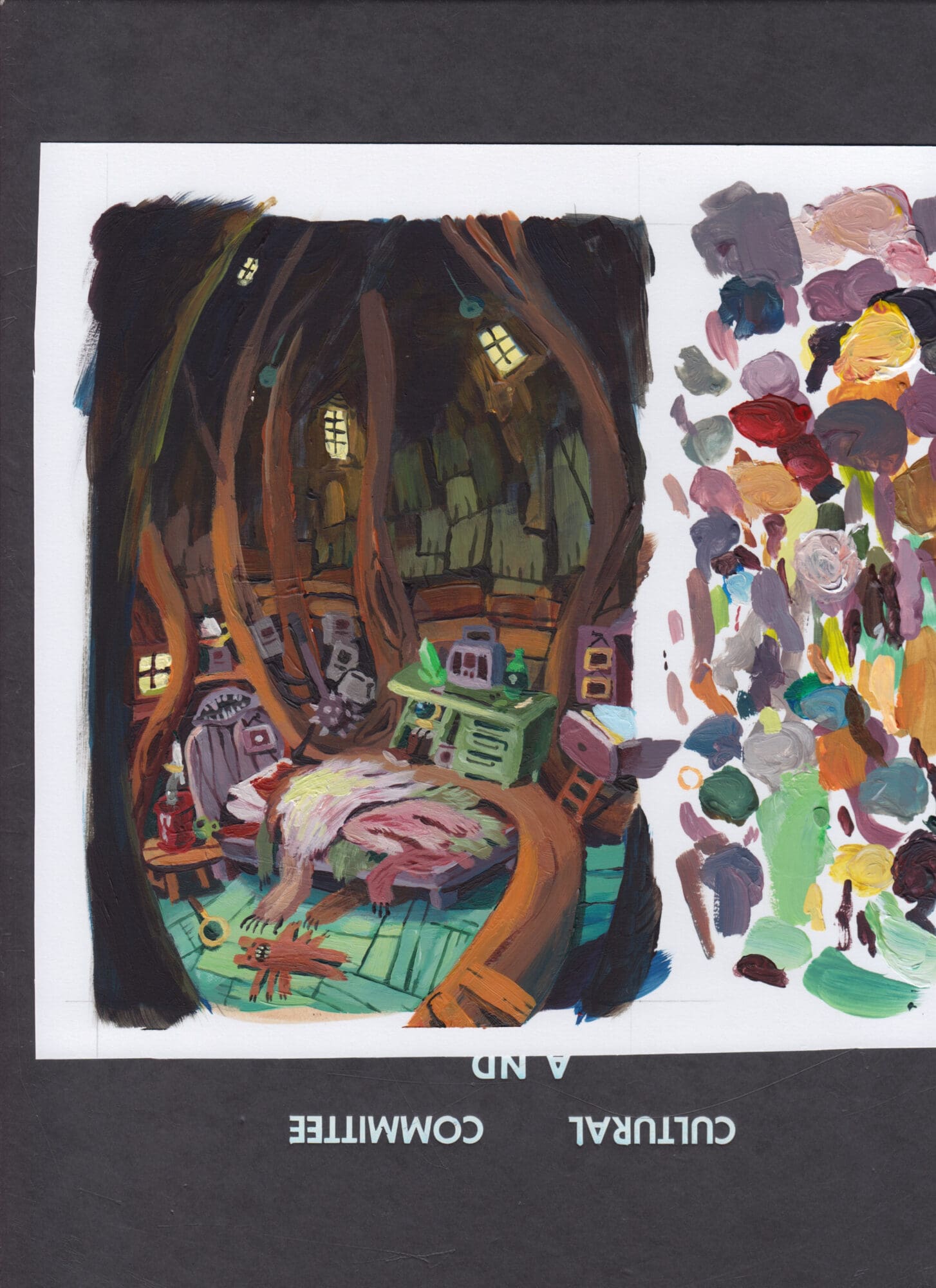
“Nick Cross, our art director, painted the title card, and then worked with our crew,” he says. “Harper Sims did a whole bunch of beautiful black and white backgrounds, and some of the still assets. Katie Aldworth directed the episode in the board and animatic phase. Nick Lamaro edited the animatic, so it went through a lot of the big-picture process stuff. But as far as animation, it was pretty much the two of them doing the meat of the whole thing.”
The episode was completed in 20 weeks, a schedule Courtright calls “fast but doable” for an experienced team. For him, the production offers evidence that studios may be underestimating how much animation an individual artist can produce domestically.
“The really exciting thing about this is I don’t think the studios know how long it actually takes for a single person to do animation,” he says. “This is fast, but for someone who knows what they’re doing, it’s entirely doable. You’re able to say, ‘You don’t need to pay a low price to send it somewhere else.’
“You can work with some amazing studios and get some really amazing work, but having the ability to maintain the ownership of [the animation] all the way through, and having the same person who boarded it draw the final frame, is magical.”
Cash says keeping the work with the artists who boarded it also preserved details that can disappear when animation passes between teams.
“When you ship something overseas, the biggest problem is when a drawing or expression is so perfect, and then it just gets put on model, which erases the personality of anything. [Here], it was amazing to get every single frame of their own sections and to have that intention behind it.”
He points to the timing of the flashback sequences as an example.
“And cutting back to Finn and Jake’s expressions and the sweat that’s forming, there’s no way that could be sent to another set of hands and come out in that way,” Cash says. “Even just the artistry of how Victor executed those flashback sequences, it’s totally inserted, cool-looking art. You can go back and freeze frame it for how cool each individual frame looks.”
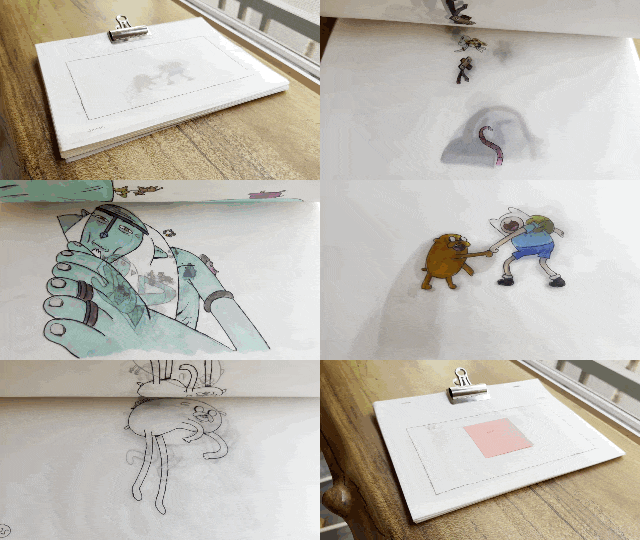
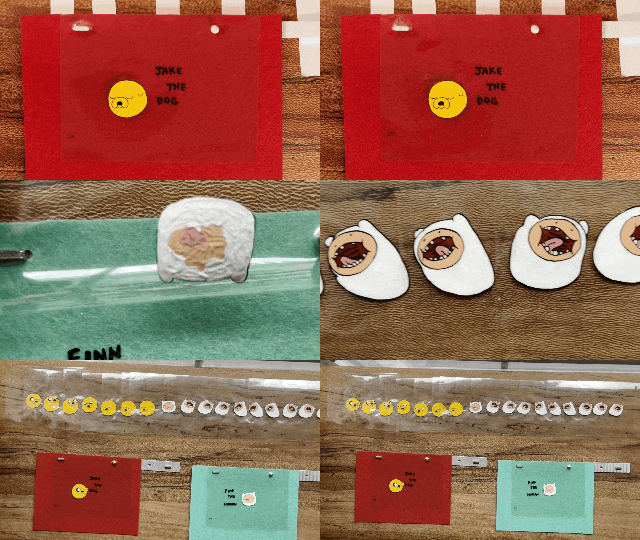
The episode’s main titles got a similar treatment. Pakiz and Yang boarded the sequence, which the small team then recreated using traditional techniques.
“Keith basically reanimated the entire intro with just pencil and ink on tracing paper,” Courtright says. “Then Matt did the characters that overlay on top of it. Keith did beautiful background painting, some stop-motion, and even some cel animation. It’s awesome and so fun to see. I actually have them in my living room. Maybe, I’ll give them back,” he laughs.
According to Cash, Cartoon Network and Hulu were encouraged enough by the results that the experiment has opened a broader conversation about bringing more episodes in-house if the series continues.
“If, and when, we get our pickup for more episodes, we definitely are going to do more than just one of those,” he says. “I think at least five of them would be ideal. If we could do two boards, and then a roll back and start animating on the second one while the first one’s going through the approval process, I think that would be ideal. With a couple of teams doing it, I think that’s totally doable.”
Courtright adds, “I think they would probably also think that’s doable. But I’m like, ‘Let’s do 20!’”