.png)
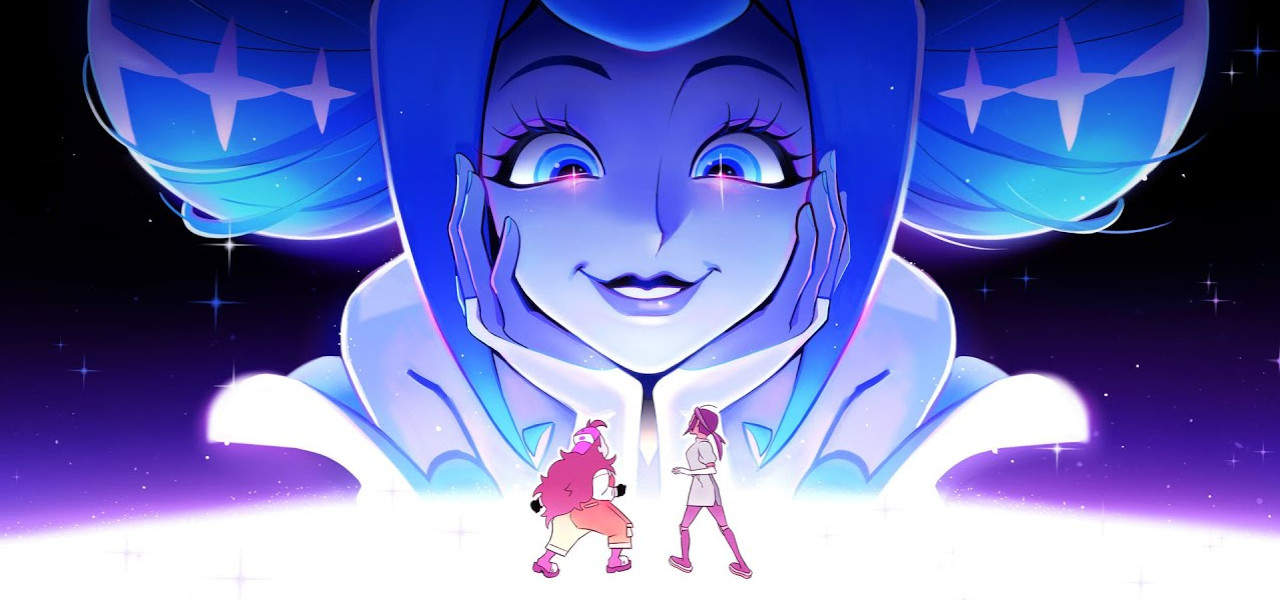
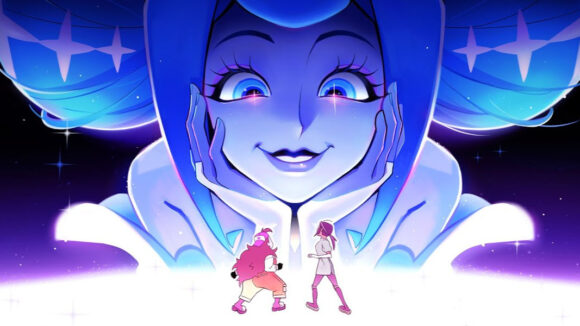
Dana Terrace’s On ‘Knights Of Guinevere’ Full Greenlight And The Show’s Promised Ending: ‘That’s The Whole Reason This Show Exists’
Stay informed with free updates
Sign up to get our news digest — delivered directly to your inbox twice a week.
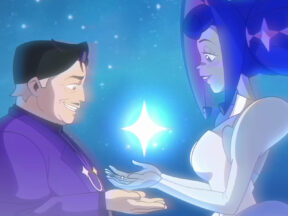
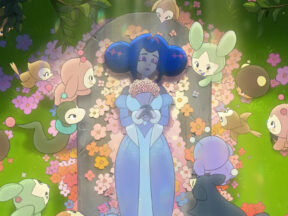
When Glitch Productions released the pilot for Knights of Guinevere last year, it marked a major step forward for 2D indie animation. The Australian studio, known primarily for 3D digital hits, was stepping into 2D animation for the first time.
And it was doing so with Dana Terrace, the creator of The Owl House, who had already proven she could launch and sustain a hit inside the traditional studio system. Terrace teamed up with longtime collaborators and fellow big studio vets John Bailey Owen (The Owl House, Clarence) and Zach Marcus (The Owl House, Star vs. the Forces of Evil) to create and develop Knights of Guinevere, now a genuine viral hit on YouTube.
Now, that experiment has turned into a full campaign. Glitch has officially greenlit a full production of Knights of Guinevere. Release date, number of episodes, and other details are still under wraps, but Glitch released a trailer for the upcoming episodes, seen below.
The order transforms what began as a standalone YouTube pilot into a sustained series and positions the show as one of the most closely watched examples of how independent 2D production might function at scale. Yes, it helps to have a star attached, and yes, Glitch has more financial muscle than many other indie outfits. Nonetheless, Knights of Guinevere stands out as a true vanguard of the current shift towards fandom-led indie animation, as studios stick to broader, IP-driven fare.
For Terrace, the pickup represents more than an expansion. It validates a production model she deliberately built from the ground up.
Act II
From its earliest stages, Knights of Guinevere was as much about infrastructure as it was about storytelling. Terrace was not interested in simply making another show. She wanted to build a pipeline.
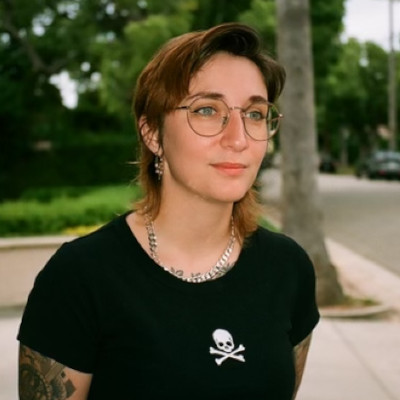
“Honestly, one of the things that made me jump on this opportunity,” Terrace told Cartoon Brew, “was the chance to build my own pipeline in a studio that didn’t have a precedent for a 2D show.”
That distinction is crucial. At Glitch, there was no inherited 2D framework, no established departmental flow, no default budgeting model, and no long-standing executive hierarchy telling her how it had always been done. For a creator who spent years navigating those structures at a major U.S. studio, that absence was liberating.
“I learned a lot working my way up through the studio system,” she said. “I learned from people I admire, and I learned from toxic leadership, things I didn’t want to emulate. I wanted to take everything I learned and see if I could create a workable pipeline and make something stunning and beautiful with the resources we had.”
The pilot suggested that ambition was not misplaced. With a relatively small team compared to big U.S. studio shows, Knights of Guinevere delivered a level of polish and worldbuilding that rivaled the best that Western TV animation has to offer. It did not look like a scaled-down indie proof of concept; it wasn’t an animatic of what might be; it was 26 minutes of stunning work that has been watched more than 16 million times in four months.
Glitch’s full order confirms that the pilot was not just an experiment. It was the opening chapter of a larger narrative Terrace had had mapped out from the beginning.
Built By Hand
One of the most striking elements of Knights of Guinevere is its production design. The show juxtaposes pristine fantasy iconography with industrial decay, layering mythic imagery over infrastructure and labor.
Terrace credits that specificity to collaboration, particularly with art director Amber Blade Jones. From the outset, both were determined that even the most fantastical environments should feel tangible.
“Everything needed to feel like it was made by human hands,” Terrace said. “Even the park. From a distance, it looks perfect and pristine. But when you get closer, you see the screws, the paint flecks, the maintenance details.”
Jones’ background in themed entertainment proved unexpectedly useful. During research, they studied how real-world attractions conceal their mechanics. “You’re not allowed to meet the construction workers at the park,” Terrace said. “They have to be invisible so the guests’ experience isn’t ruined. Adding that flavor into our backgrounds is essential.”
That design philosophy mirrors the show’s thematic concerns. Beneath the glitzy spectacle of a familiar-looking park and the show’s thoughtfully developed characters lies labor. Beneath illusion lies machinery. It is a sensibility that feels pointedly contemporary and grounded in a creator who has seen firsthand how large systems operate, for better and for worse.
Visually, the series retains Terrace’s instinct for appealing character design, even as the subject matter darkens. “I just personally really like appealing, cute proportions on characters,” she said. That instinct creates a deliberate contrast as familiar silhouettes are paired with tragic arcs and psychological tension.
“There’s a freedom that Knights of Guinevere gives me,” she added. “It lets me explore a genre I’ve never explored before and work with an audience that’s older than what I’m used to.”
A Sustainable Pipeline
As the Knights of Guinevere pilot demonstrated tremendous creative ambition, the season will test its structural durability.
Terrace has been candid about the differences between her experience inside a major studio and her current arrangement at Glitch. On a traditional television production, she might have been juggling 10 or more episodes simultaneously under tight broadcast windows. On Knights of Guinevere, the scale is more contained, allowing for longer board schedules and more iterative problem-solving.
“At Disney, if something needed to be re-boarded, we were kind of boned,” she said. “Here, if something isn’t working, we can say, ‘This isn’t working.’ And they’ll say, ‘Okay, let’s try something else.’”
That flexibility extends to staffing, too. Rather than relying primarily on freelancers, the production employs salaried in-house animators at Glitch.
“We have animators on salary,” Terrace said. “They’re not being paid per drawing. And we have more full-time in-house animators than freelancers.”
It is a meaningful distinction at a moment when 2D television work is routinely fragmented and outsourced. That said, Terrace is careful not to romanticize the indie model. “I’m not going to pretend independent studios are giving the same salaries as Disney,” she laughed, including her own compensation package in that reality. “They can’t. I knew that going in.”
But she frames the tradeoff as one of autonomy and long-term sustainability. “We are trying to figure out a pipeline that can provide beautiful and interesting animation while still being sustainable. There’s always room for improvement. But we are figuring it out.”
With a full order now confirmed, the question becomes whether that model can scale without sacrificing the creative flexibility that made the pilot stand out.
A Definitive Ending
Unlike many contemporary streaming projects launched with the hope of future work but no defined finish line, Knights of Guinevere was conceived with a defined arc, including a finale.
“I knew how it was going to start,” Terrace said. “And we know how it’s going to end. The ending was figured out at the beginning. That’s the whole reason this show exists.”
How the series travels between those endpoints remains deliberately flexible. Terrace prefers allowing space in the middle for experimentation, rewriting, and character evolution.
“If you’re too rigid,” she said, “you lose artistry. You’re not allowing yourself to experiment or follow the characters if they start having a life of their own.”
That philosophy reflects her broader creative trajectory. Having already shepherded one culturally resonant series, Terrace is wary of being defined by a single aesthetic lane.
“It makes me feel like even after this, I can move on and do something completely different,” she said. “That’s what I want.”
The Knights of Guinevere pilot proved that independent 2D animation can achieve visual parity with major studio output and draw tens of millions of views, even without Hollywood marketing budgets and PR teams. The full season may determine whether that quality, and the production infrastructure supporting it, can endure and be replicated.
“There’s a story that’s going to be told,” Terrace said. “And at some point, it’s going to end. And I’m going to move on to the next thing.”
Along with the series greenlight, Glitch has announced a limited edition BTS art book available in the Glitch Productions Official Store, in both hardcover and softcover.