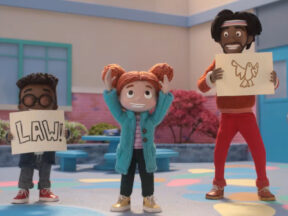
.png)
‘The Material In ‘KYR-U’ Is Constitutional, Civic, And Genuinely Nonpartisan’: Inside The ACLU’s New Stop-Motion Series
Stay informed with free updates
Sign up to get our news digest — delivered directly to your inbox twice a week.
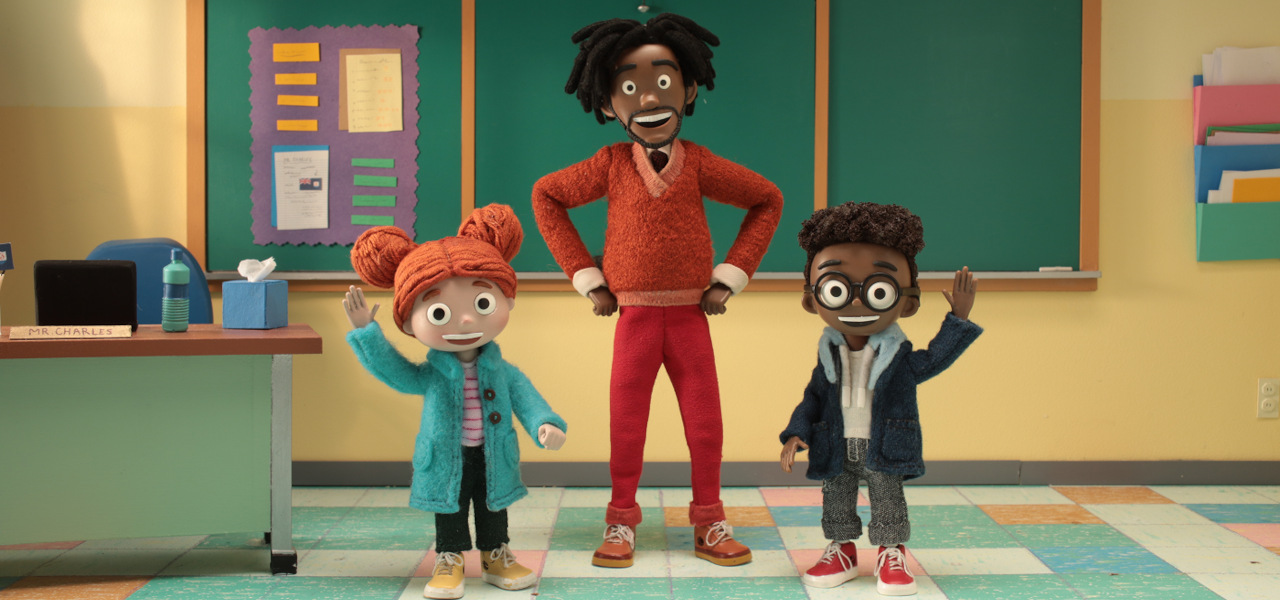
The American Civil Liberties Union (ACLU) producing a series of stop-motion animated educational videos for kids and their parents probably wasn’t on a lot of people’s 2026 Bingo cards when the year kicked off. But last month, the organization debuted Know Your Rights University on YouTube, and not only are the videos packed with useful civics lessons, but they also feature some incredibly sharp animation.
The organization has released a new episode today, which addresses the decades-old debate around school book bannings.
For an organization recognized more as a courtroom force and a protector of constitutionally guaranteed rights, warm puppets, pastel sets, and kid-friendly pacing seemed almost atypical for the group, although the message couldn’t have been more on brand. That gap between expectation and execution is exactly the territory that creator and director Brandon Lake has been exploring for the past year and a half.
Lake, senior creative producer at the ACLU, came up through stop motion before joining the organization. He spent roughly eight years in and out of Stoopid Buddy Stoodios on shows like Robot Chicken, SuperMansion, and Buddy Thunderstruck, and did a season at Bix Pix on Tumble Leaf. By the time he made his way to the East Coast and into a role at the ACLU, he was eight years deep into a parallel career in editorial and motion graphics, with stop motion in his back pocket and teaching gigs at the high school and university levels filling in the gaps. KYR-U is, in a very real sense, the project that pulled all of those threads together at once.
The Pitch
KYR-U started as an internal feeling at the ACLU that the organization had been doing too much reactive work and could stand to put more energy into education. With a hundred-year archive of legal expertise in the building, the question became what to do with that vault without just preaching to an already invested choir.
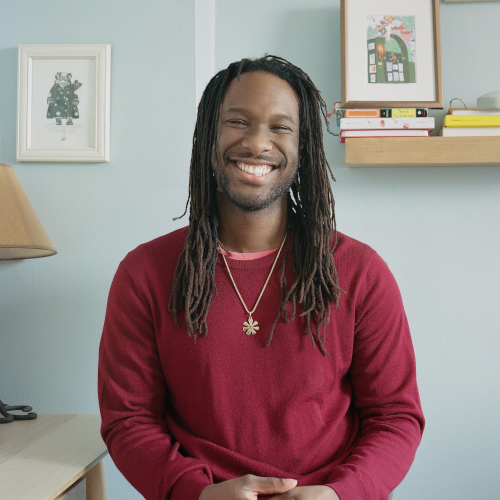
Speaking to Cartoon Brew, Lake pointed to Schoolhouse Rock!, The Magic School Bus, and “the kind of educational content that made learning feel playful rather than assigned.” He pitched something in that spirit internally, fully aware that animated kids’ programming had no real precedent at the ACLU. “If you had told me four years ago that we were going to do this thing, I would have laughed you out of the room,” he says. “From the word ‘go,’ everyone at the ACLU was on board.”
He reached out to former collaborators from Los Angeles and gradually assembled a team of animators, fabricators, set designers, and writers Musa Brooker and Joe Pontillo.
There was also a personal dimension driving the project. Lake has a three-year-old, and says the constant stream of children’s programming in his house helped him understand “what the form feels like from the receiving end.” That perspective helped keep KYR-U from drifting into what he describes as a more “heavy-handed” register people might expect from an ACLU production.
The Production
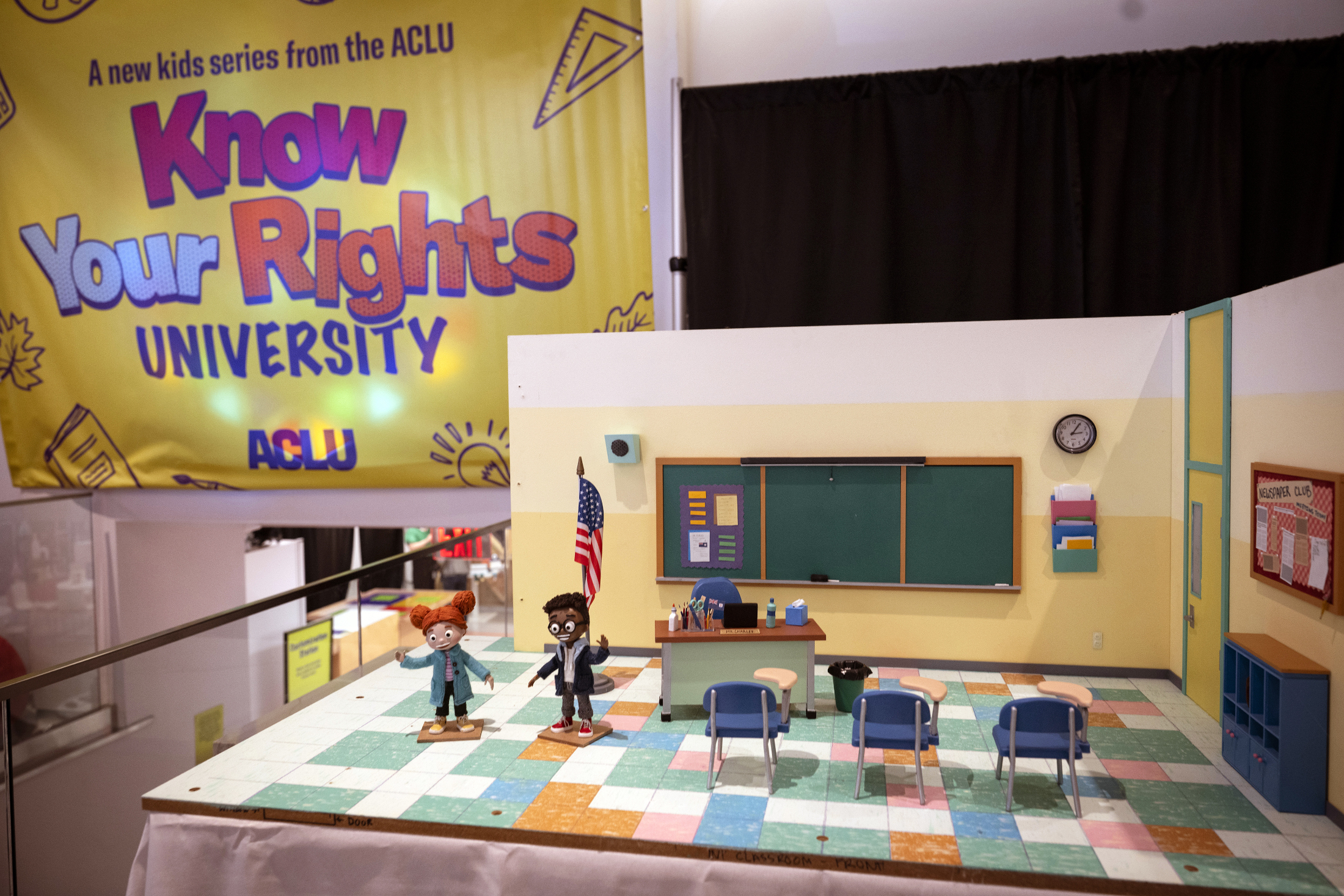
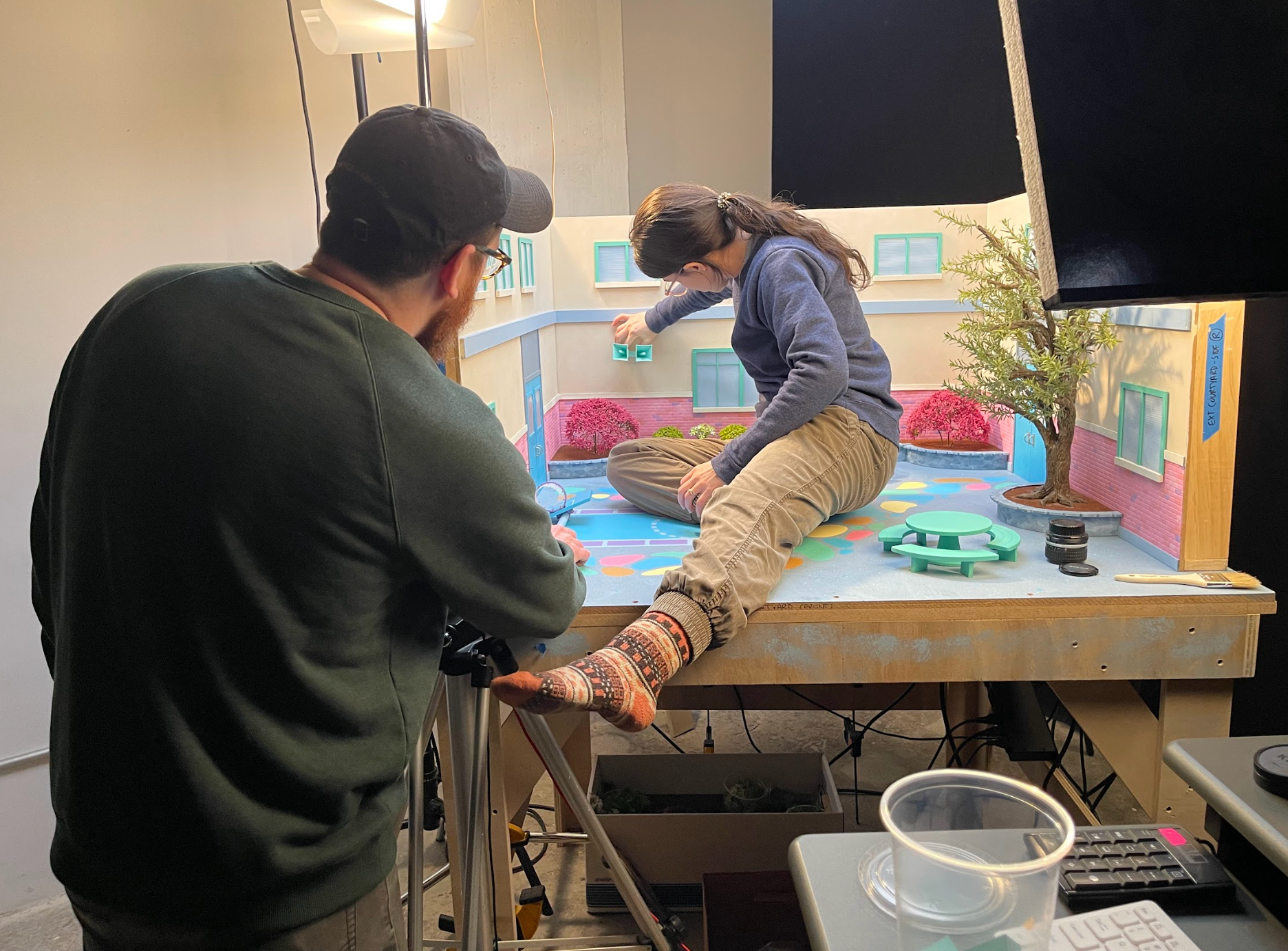
The original plan was to produce the series in-house at the ACLU office, but the scale required for high-quality stop motion quickly changed that. The team instead partnered with Threadwood, an upstate New York studio whose owners Lake had known since his Los Angeles years. Producer Elise Kelly’s company, Neon Zoo, also joined the production.
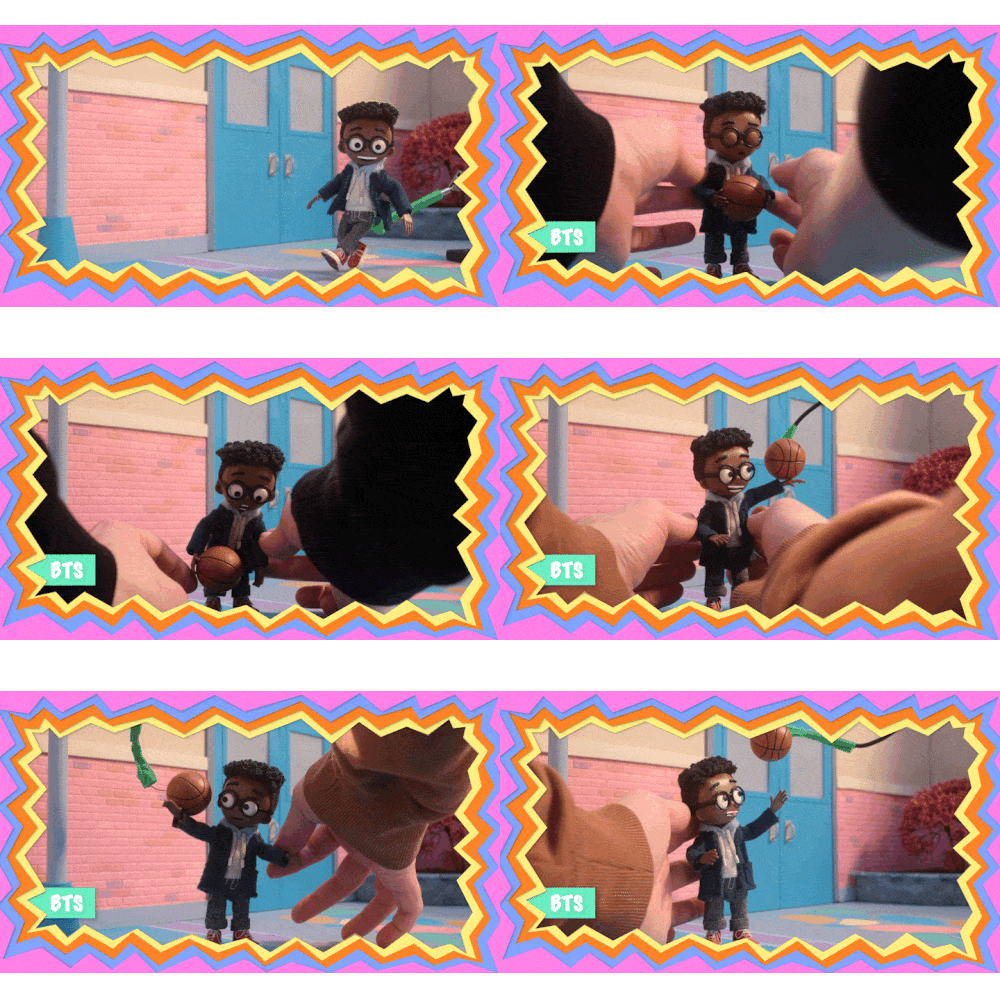
Lake describes the show’s visual development process as highly collaborative, with long stretches spent refining everything from school uniform colors to the world’s overall palette. “We were ruling out things that felt too close to other contemporary stop-motion looks,” he says, eventually landing on a pastel-heavy aesthetic that gave the series its own aesthetic identity.
The cast was designed to feel like real New York kids rather than stock archetypes, while the teacher character, Mr. Charles, gradually evolved into an accidental self-portrait. “That wasn’t the original plan,” Lake laughs, “but it just kind of worked out that way.” His own teaching background directly informed the character’s tone, and Lake voices the amiable teacher.
From initial pitch to launch, the process took about a year and a half, with roughly twelve of those months spent in production. The first season consists of four narrative episodes alongside four music-video-style installments that lean even more directly into the Schoolhouse Rock! tradition that inspired Lake and the team.
The Distribution
For a project like this, the distribution question really only ever had one answer. “The ACLU doesn’t have a network channel and isn’t going to get one,” Lake says. Meanwhile, many of the traditional homes for educational children’s programming have either disappeared or have been dramatically scaled back in the U.S.
“YouTube was where the audience already was,” he says, “with no gatekeepers between the work and the viewer.”
Lake also pointed to the platform’s discovery mechanics. Parents increasingly use YouTube as a search engine, and the algorithm can introduce KYR-U to viewers who would never think to visit the ACLU’s website directly. The series lives on the organization’s YouTube channel and on aclu.org, where study guides accompany the episodes for families and teachers.
The Delivery
One of the things that makes KYR-U connect with early viewers is that it largely avoids talking down to its audience. The kids in the show are well-informed and engage in meaningful conversations with the adult characters. Lake credits that partly to watching his own son absorb information casually, without being directly instructed to pay attention.
He also emphasizes that the show’s writing had to function on multiple levels because parents are inevitably going to watch, too, and because they would be the ones fielding follow-up questions afterward. The goal was never to create a definitive civics curriculum, but to spark curiosity and give families a starting point for larger conversations.
The Reception and the Follow-Up
The response since launch has been, in Lake’s words, “overwhelmingly positive,” with many viewers surprised that the ACLU made something like this at all.
“The material in KYR-U is constitutional, civic, and genuinely nonpartisan,” he says. “The First Amendment applies to everyone, the three branches of government work the way they work, and the show doesn’t care which administration is in office.”
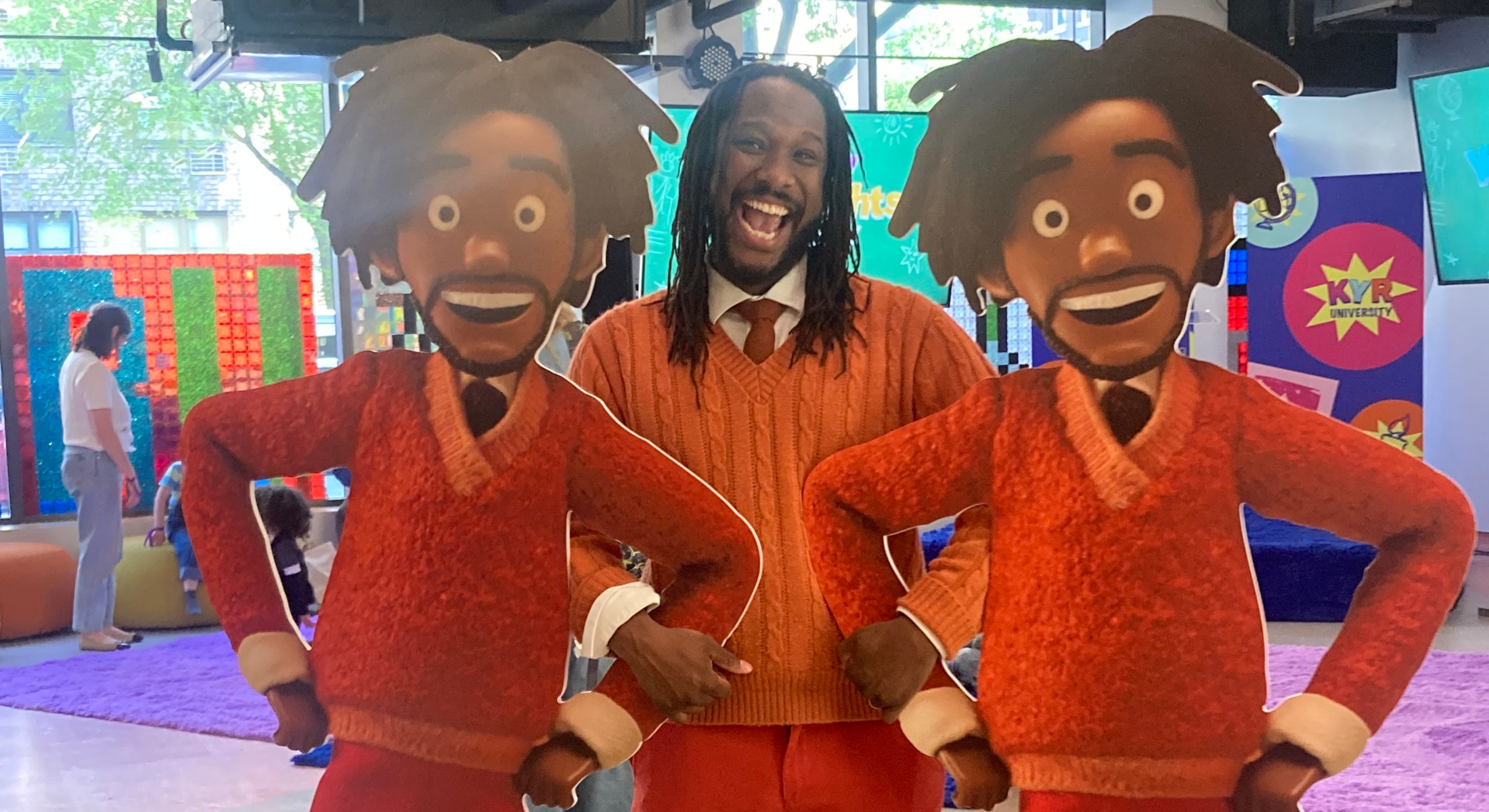
At a premiere screening in New York, Lake had his first experience of being recognized in costume as Mr. C, with children reacting as though the character had stepped out of the screen. “Animators are usually behind the curtain,” he says with a laugh, recalling the joy of realizing the show was resonating with kids.
With the first season still rolling out, the team is already thinking about expanding the world of KYR-U further. Lake says a festival run is planned once all episodes are released, both for recognition and as another way to get the series in front of audiences without relying on a traditional network pipeline.
For now, Know Your Rights University is doing exactly what it was meant to: introducing kids and their families to concepts that every American should be familiar with, and inspiring viewers to learn more about their constitutionally protected civil liberties.