.png)
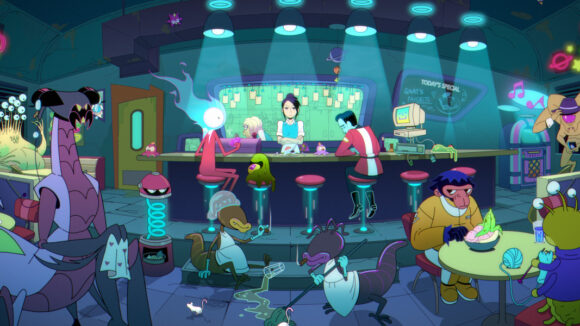
Hit Indie Sci-Fi Comedy ‘Sunny Side Down’ Wraps Season With A Hard-Earned Finale (EXCLUSIVE)
Stay informed with free updates
Sign up to get our news digest — delivered directly to your inbox twice a week.
With the debut of its sixth and final episode, Sunny Side Down is the latest case study in how independent animation studios are rethinking financing, production, distribution, and audience-building from the ground up.
Produced by Minnesota’s Make Originals, the original IP wing of Make’s successful commercial studio, the six-part sci-fi comedy is also a reminder that impactful indie animation can come from anywhere, even the frozen north.
We’re excited to be exclusively launching this final episode with Make Originals and creator/director Natalia Poteryakhin, who joined us to discuss the company’s unique financing and distribution pipeline, finding a familiar yet original (and legally distinct) look for the sci-fi spoof, and future plans and hopes for the property.
Against Convention
Current trends often begin with crowdfunding or pre-existing audiences, but Sunny Side Down flips the sequence. The series was developed largely in-house first, then released episodically to build traction while production on later episodes was underway. So far, it’s working, with the series racking up more than 1.2 million views across the five episodes already available.
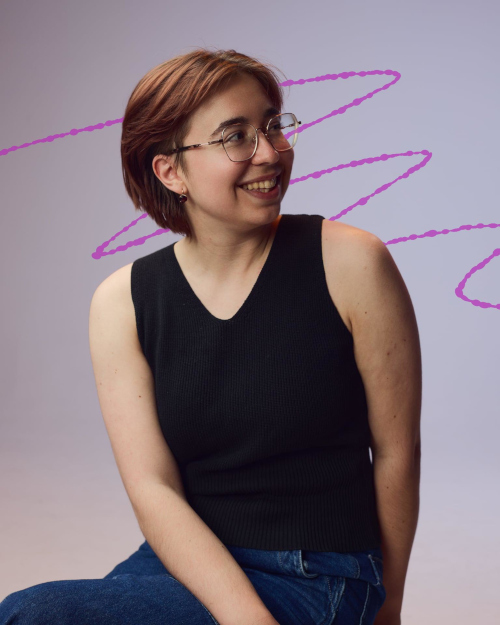
“The invisible labor there is that we developed and worked on it for three years before release,” Poteryakhin explains.
This approach reflects Make Originals’ hybrid identity as both a commercial studio and an IP incubator. Rather than pitching unfinished ideas, the team invests upfront, absorbing risk in exchange for creative autonomy.
“We’re kind of making the thing first, and then we’re hoping to build the audience after,” Poteryakhin says. “We’re only able to afford to do that because we are a commercial studio, balancing these two halves.”
That balance is crucial. Commercial client work subsidizes original IP development, allowing the studio to operate more like a European co-production house than a typical creator-led indie.
A Lean Pipeline
At its core, Sunny Side Down is a small-team production. Poteryakhin describes a tight internal group driving the series creatively, with service work help from abroad.
“On Sunny Side Down, most of the time I’m working with maybe like eight people,” she explains.
Working with such a compact team, early development and the first episodes were done entirely in-house. But scaling to a monthly release cadence required a strategic pivot, bringing in an external animation partner.
“To hit the once-a-month release schedule, that’s when we connected with DeeDee Animation in Vietnam,” she says.
Importantly, the collaboration wasn’t treated as outsourced labor in the traditional sense. Make integrated the overseas team into the creative identity of the show.
“We’re putting all of their animators’ names in our credits alongside ours; they also contributed creatively to this series.”
By mixing a small core team with workers outside the studio, Make’s strategy mirrors broader industry shifts toward hybrid pipelines, especially in digital-native studios.
Designing for Speed, Style, and Reuse
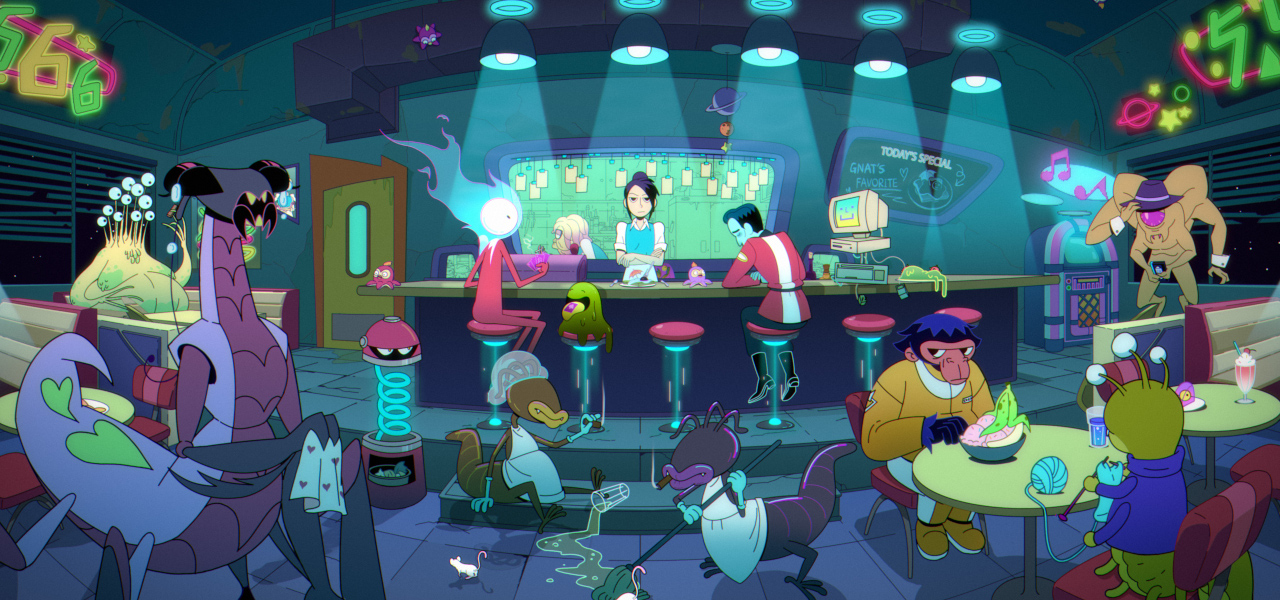
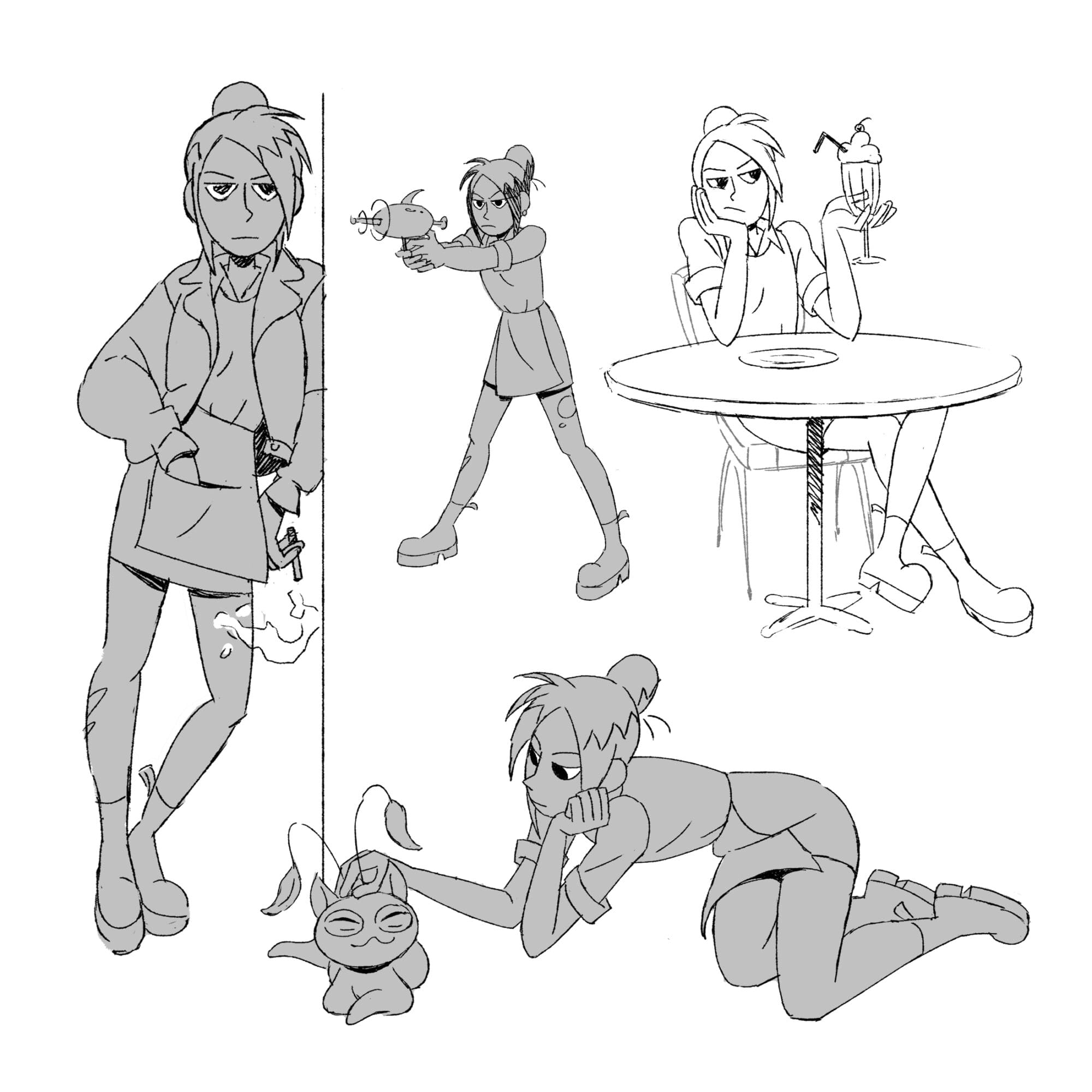
From a craft standpoint, Sunny Side Down is engineered for efficiency while maintaining a distinct and consistent aesthetic. The entire series takes place largely within a single location, a space diner orbiting a black hole, allowing for maximum reuse and iterative refinement.
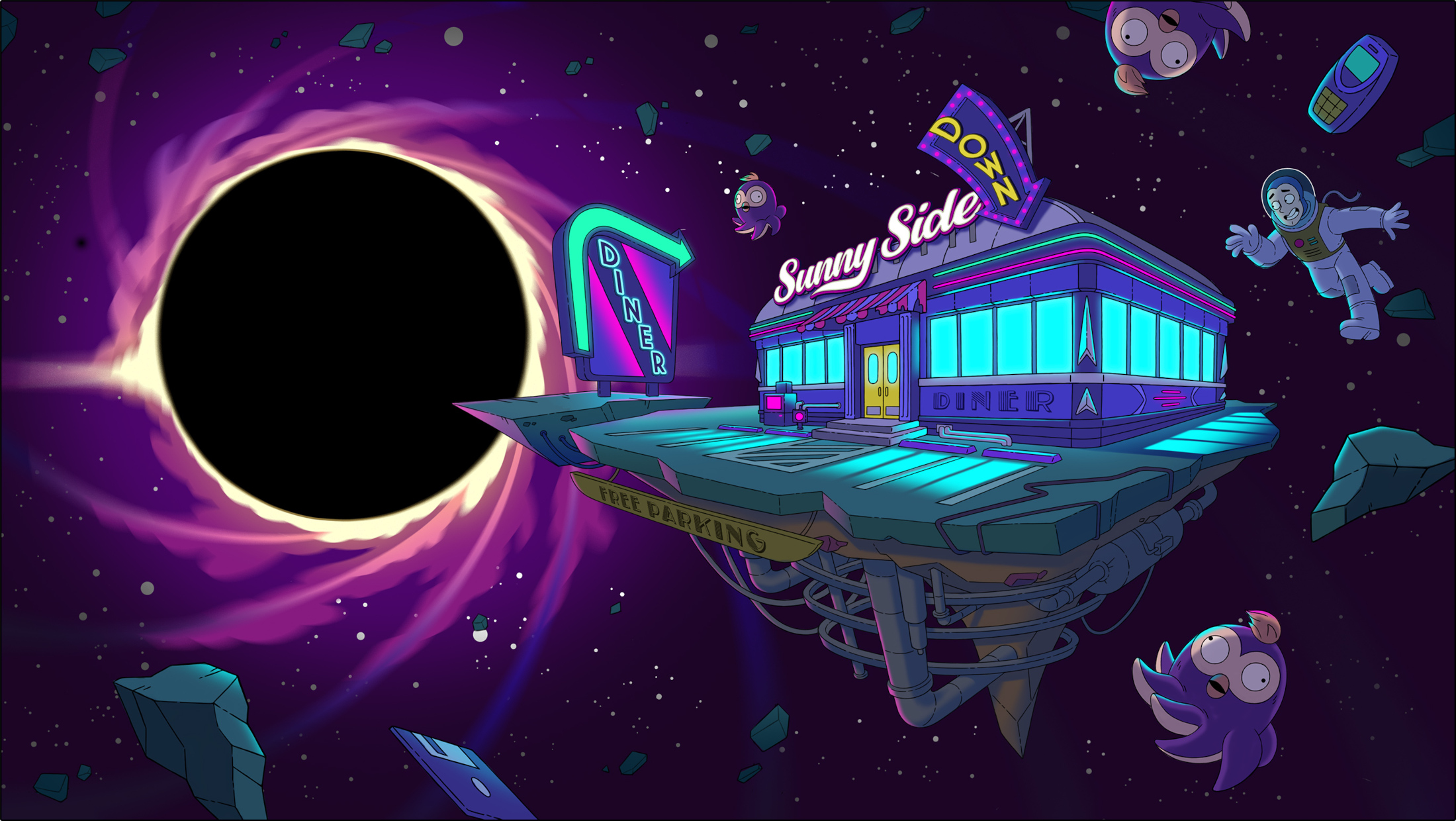
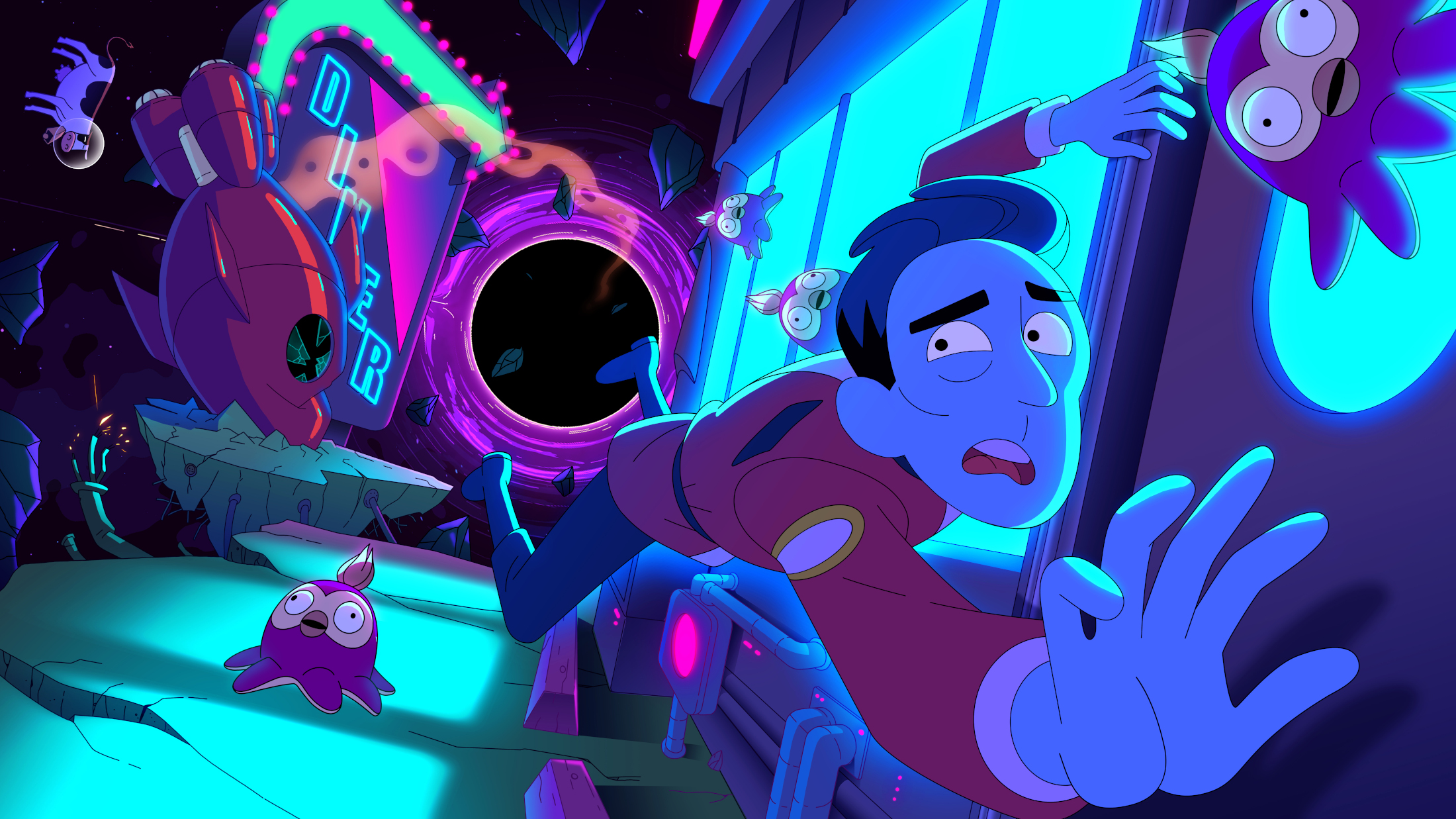
“There’s a bit of sleight of hand; every episode happens in the same place,” Poteryakhin notes. “We made a full 3D model of it, to help speed up our background layouts and for storyboarding.”
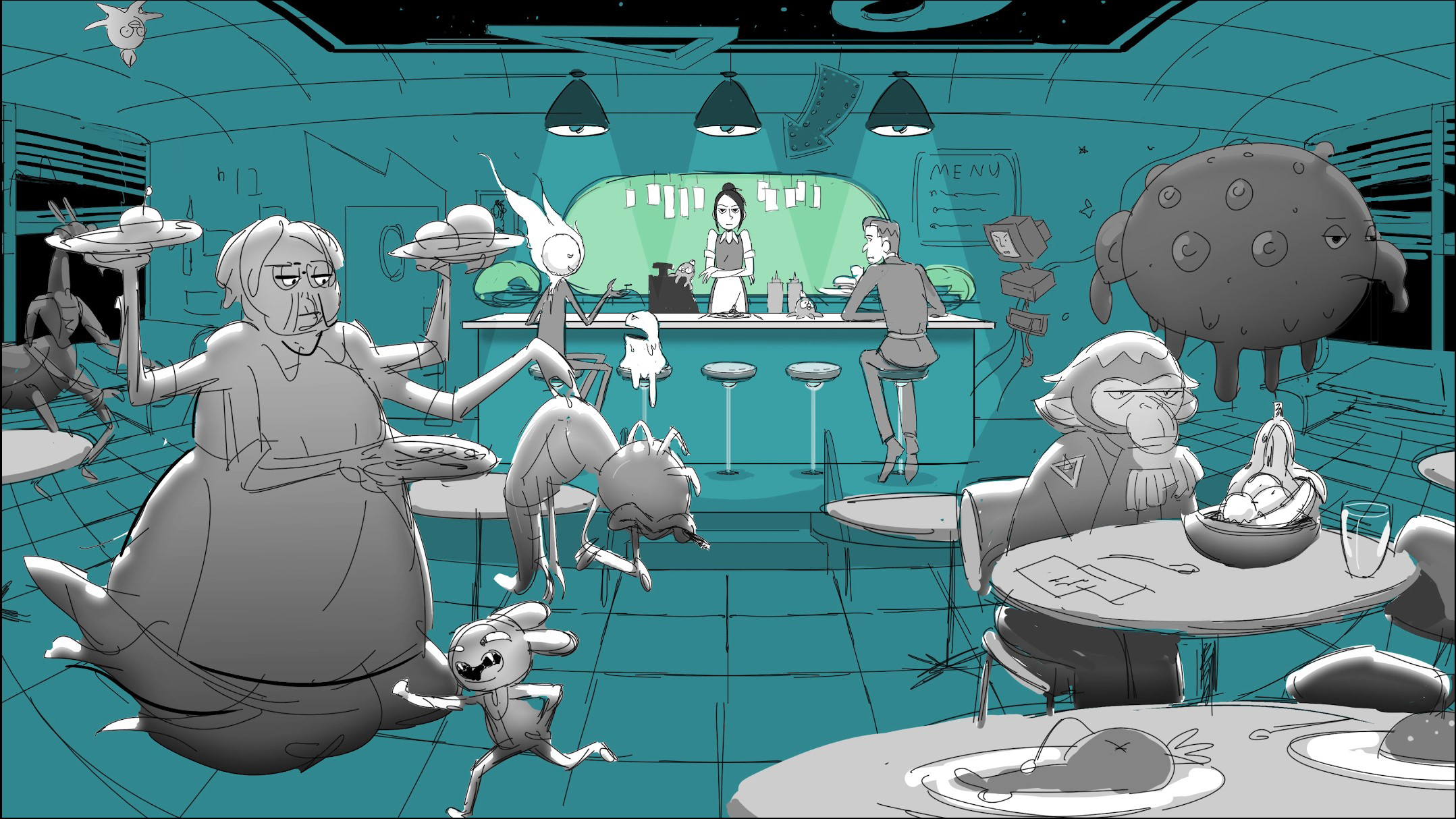
Pairing 3D environments with 2D animation enabled flexible camera staging while reducing layout overhead. The software pipeline reflects a similar push towards pragmatism. Early experiments animating in Photoshop were scrapped. “We very quickly were like, that’s insane, let’s go to a vector line program. So we got into Toon Boom Harmony.”
Backgrounds remained in Photoshop, while 3D elements were handled in Autodesk’s 3ds Max, creating a modular pipeline optimized for the production’s small Minnesota-based team.
Familiar, But Distinct
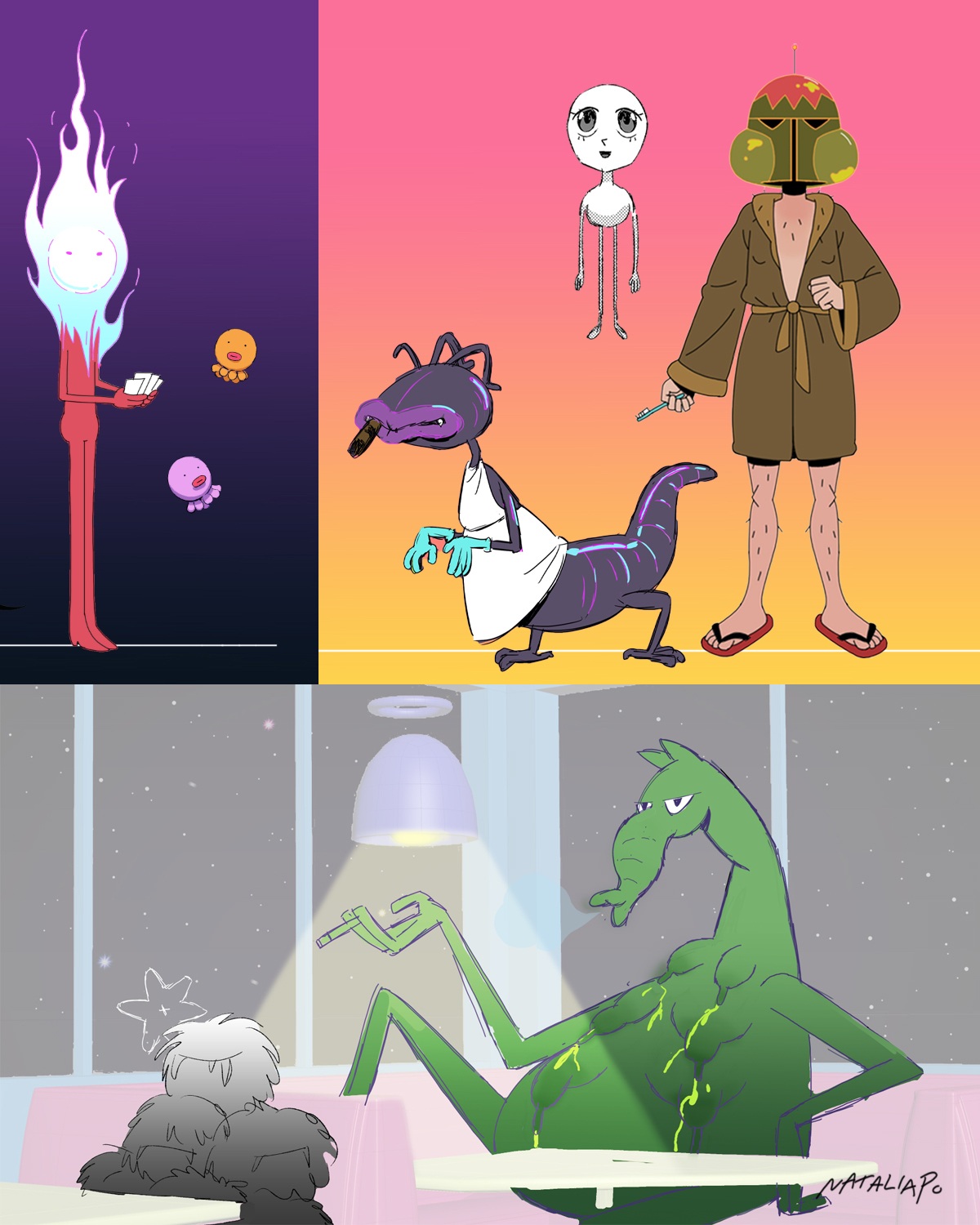
One of the show’s defining creative challenges is balancing parody with originality. Each episode riffs on recognizable sci-fi tropes like Star Trek, Terminator, and Hitchhiker’s Guide, but must remain legally and stylistically distinct.
“You have to make sure that it’s very clearly a parody,” Poteryakhin laughs.
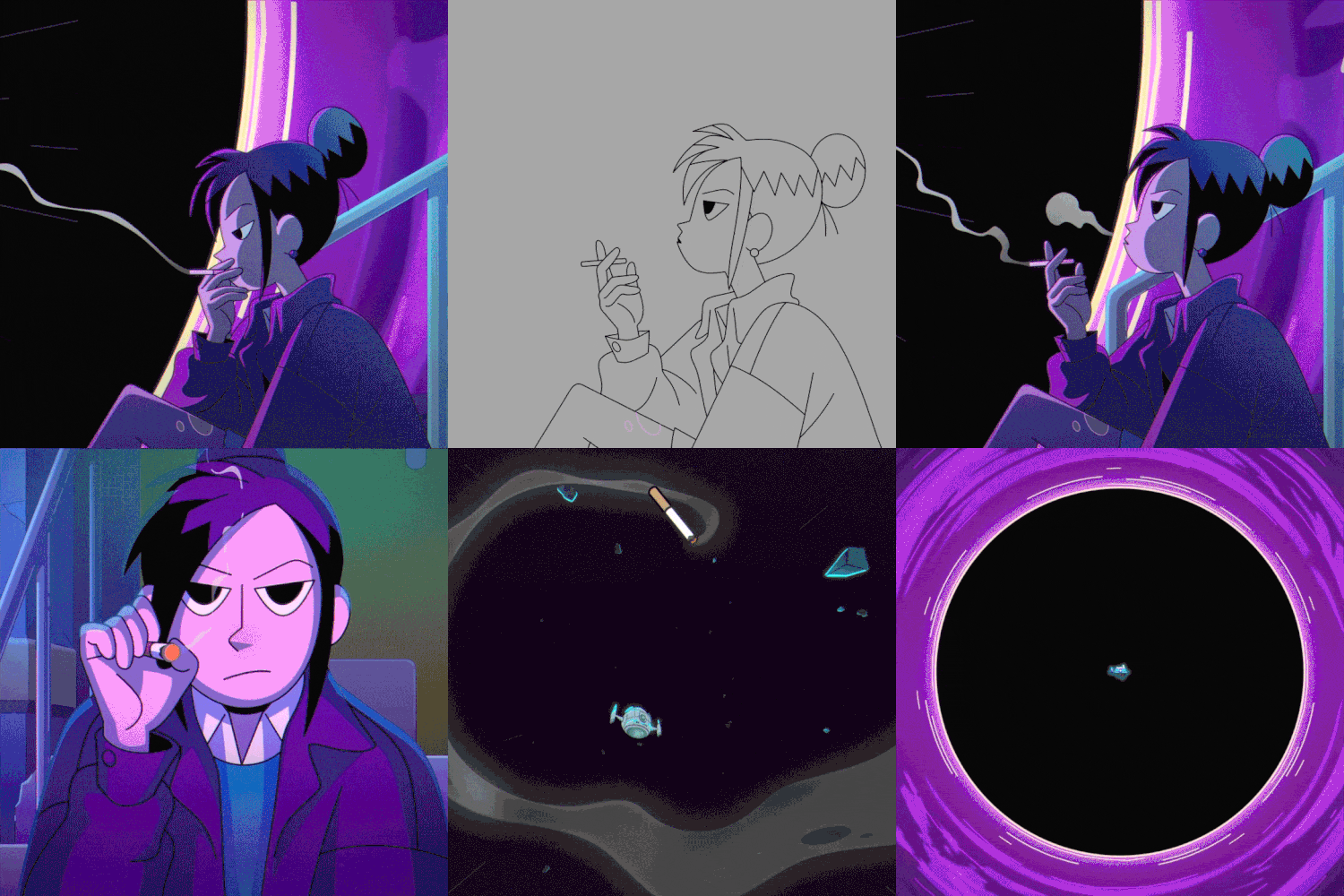
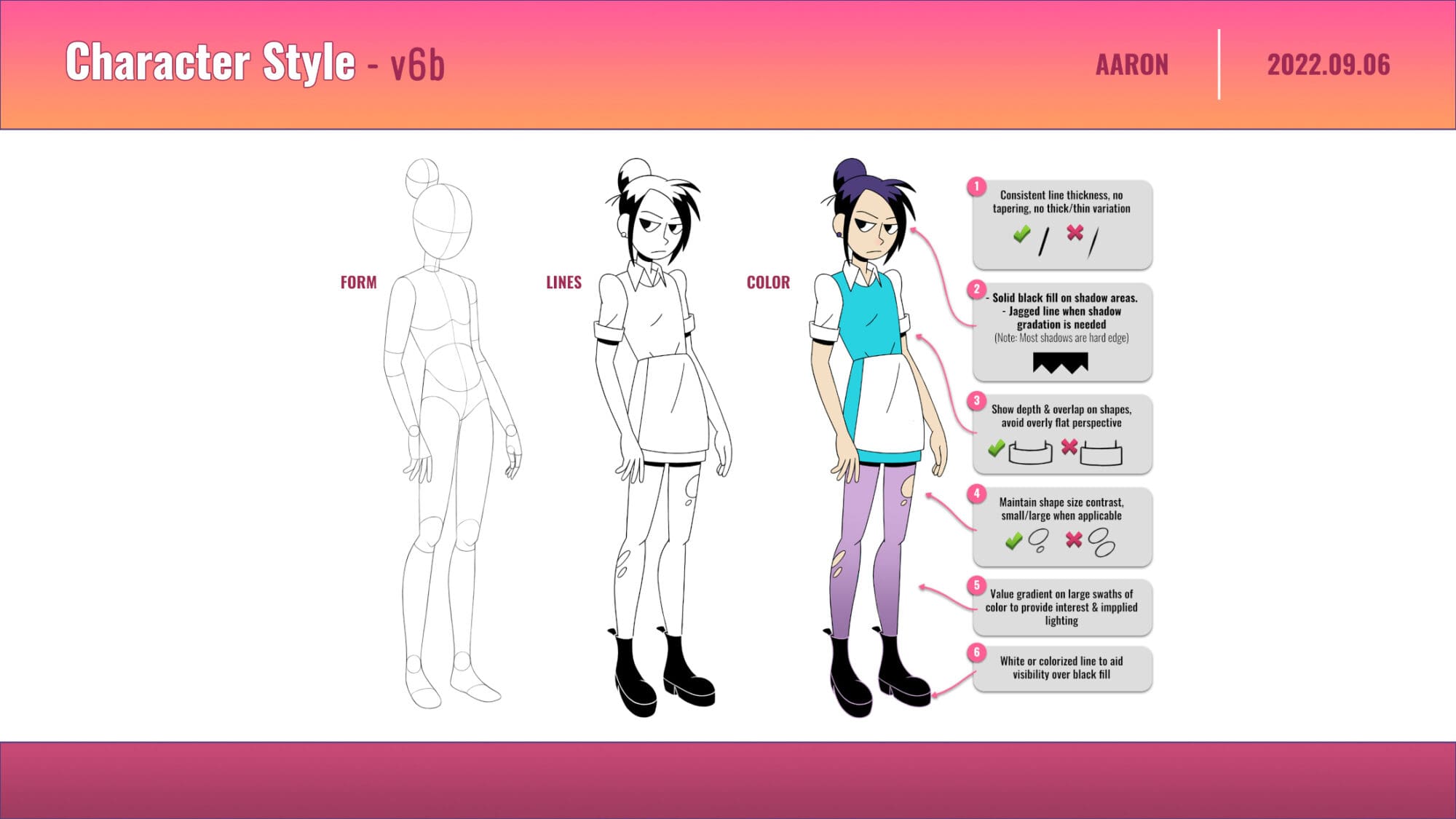
Visually, the team leaned into a hybrid aesthetic that blends Western adult-animation sensibilities with heightened color and lighting inspired by anime and experimental series.
“We kind of designed an adult animation look, but nicer and with anime lighting, really colorful neon gradients.”
Lighting, in particular, became a storytelling tool. The diner environment shifts between grimy, shadowy corners and overexposed kitchen fluorescents, grounding the sci-fi setting in tactile realism.
“The lighting sets the tone and the mood; everything feels kind of grimy and dark anyway.”
Representation, No Permission Needed
Narratively, Sunny Side Down also reflects a deliberate departure from genre conventions, particularly in its character design.
Poteryakhin cites her frustration with the lack of diverse female representation in sci-fi, and not just in animation. “It felt like there was always just one stock woman, the love interest,” she says, not dismissing her own admiration for some heroines like Princess Leia.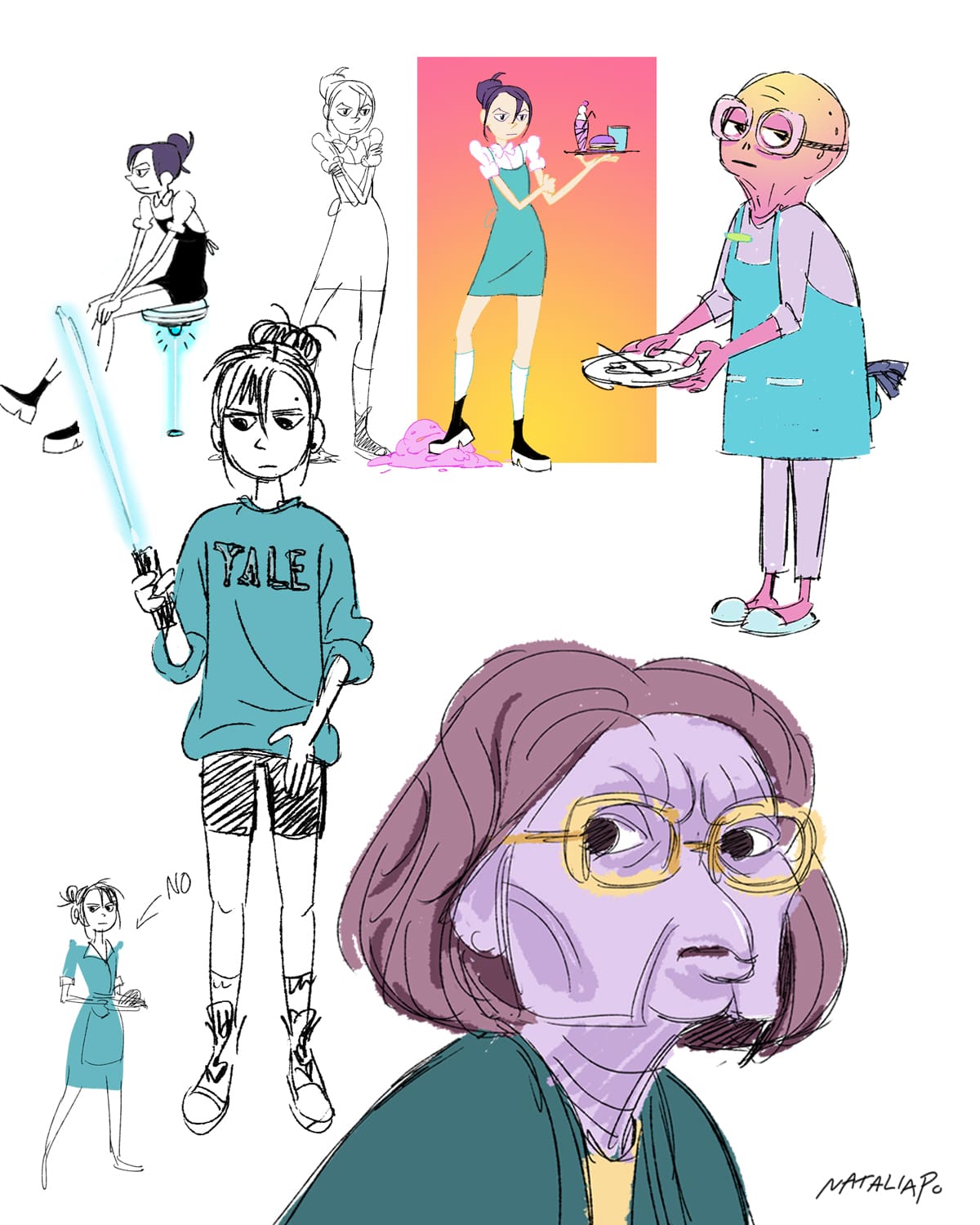
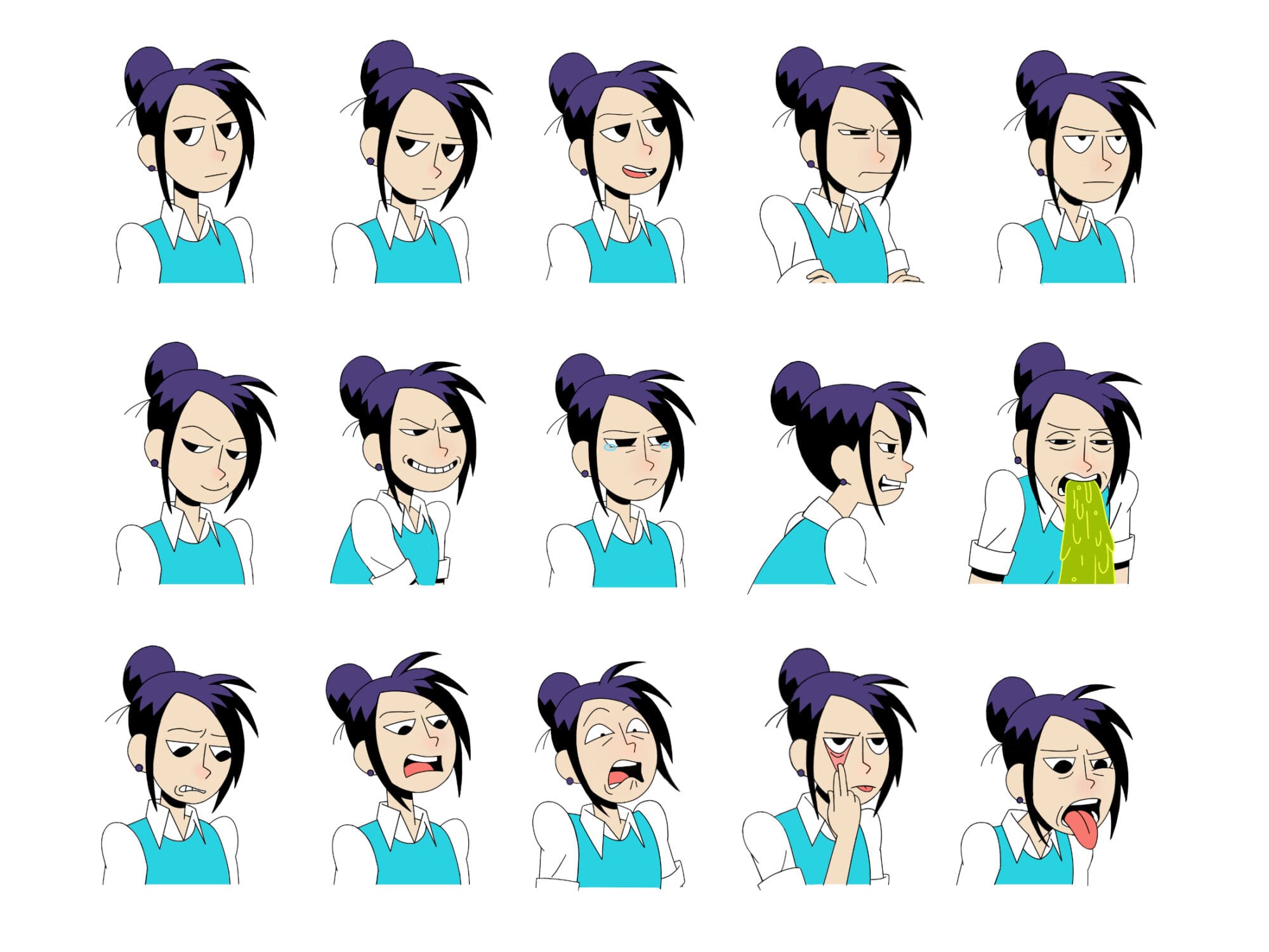
So, rather than one woman lead, she went with two. “I’m gonna make the two main characters women,” she laughs, explaining the mentor-mentee relationship between leads Nat, a human waitress, and Yabba, a grizzled line-cook mentor figure inspired by archetypes like Yoda or Gandalf.
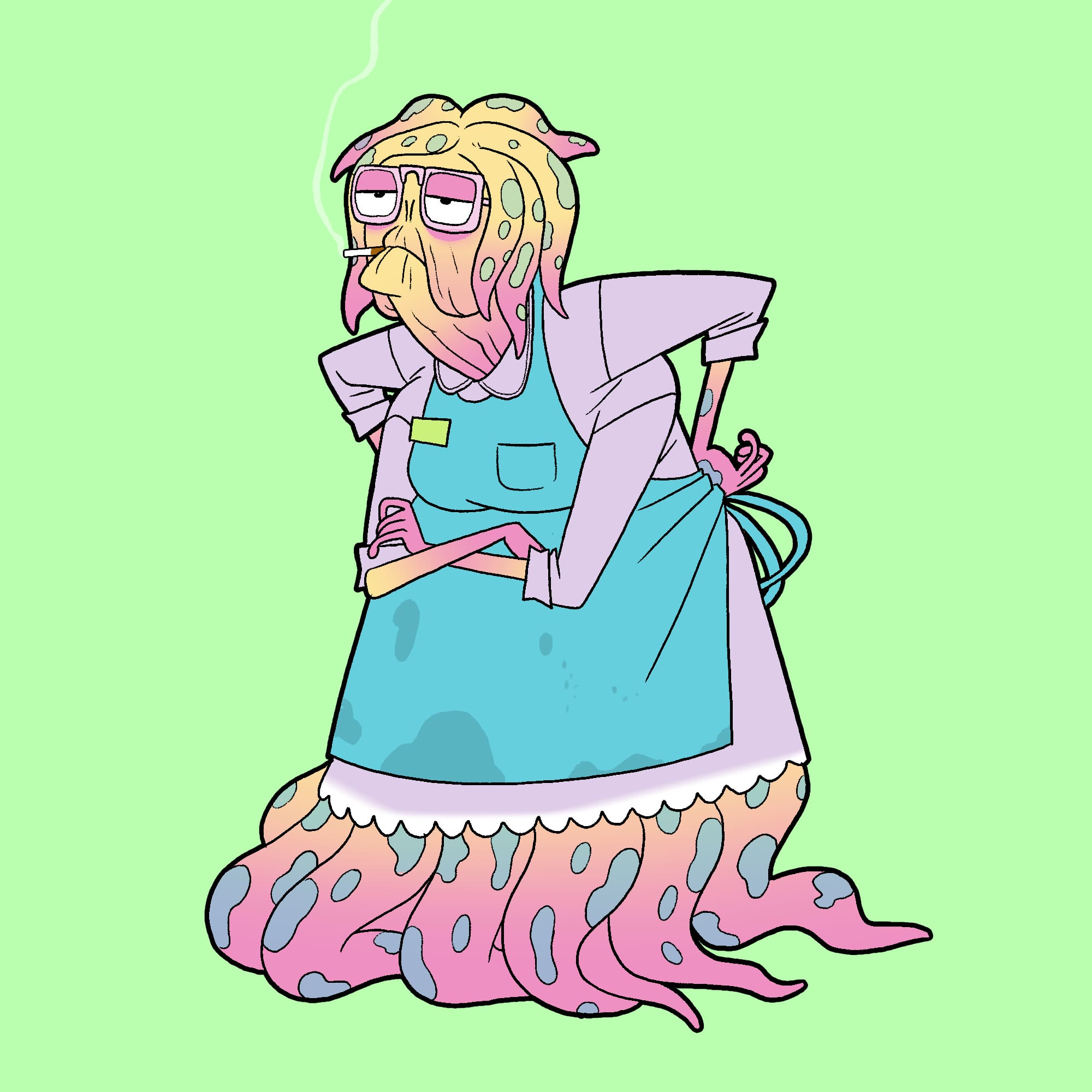
“For some reason, that person is never a woman,” Poteryakhin proposes. “Why not have this tough coach character be like my Russian great-grandmothers?”
Because the project was developed internally, these choices faced no external pushback. “There was no one else outside of Make that had executive decision-making. We were just going to make the thing we were going to make.”
The YouTube Model, and Its Limits
Distribution for Sunny Side Down is entirely digital-first, with episodes released monthly on YouTube. The strategy prioritizes sustained engagement over viral spikes and could lead to bigger things down the road.
“It’s more about that continued engagement from a somewhat niche audience,” Poteryakhin explains of the show’s intended appeal.
This aligns with broader shifts in the industry, where dedicated fandoms are increasingly valued over mass but passive viewership.
“When everyone’s attention is so splintered, having people who are 100% passionate becomes way more valuable,” says Poteryakhin.
Still, the model has clear limitations, particularly when transitioning to traditional financing. Despite a strong reception, conversations among studios, broadcasters, and streamers often circle back to a familiar request. “They’ll throw it back at us, like: ‘Could you finance making a full 15-minute pilot then come back to us?’”
In other words, even as indie studios prove creative viability, they’re increasingly expected to shoulder the up-front financial risk.
What Comes After the Finale
After the sixth episode, a pilot version of the full six episodes pieced together is planned to further pitch and drive audience growth.
“We’re going to do like a compiled pilot after the finale with all of them together,” Poteryakhin explains. “Our goal is to give enough of a taste to build an audience and hopefully fund longer and better and more.”
Whether that next phase happens within Make Originals or through external partners remains open. But the blueprint is already in place. Make Originals will continue to be crafted with lean teams, hybrid pipelines, and direct-to-audience distribution.
In an industry still recalibrating after the streaming boom, Sunny Side Down offers a compelling model for how to make a show and, equally, how to sustain one outside the system that once defined success.