.png)
‘Boundaries’ Is Seun Yee’s One-Person, Stop-Motion Meditation On The Space We Owe Each Other (EXCLUSIVE TEASER)
Stay informed with free updates
Sign up to get our news digest — delivered directly to your inbox twice a week.
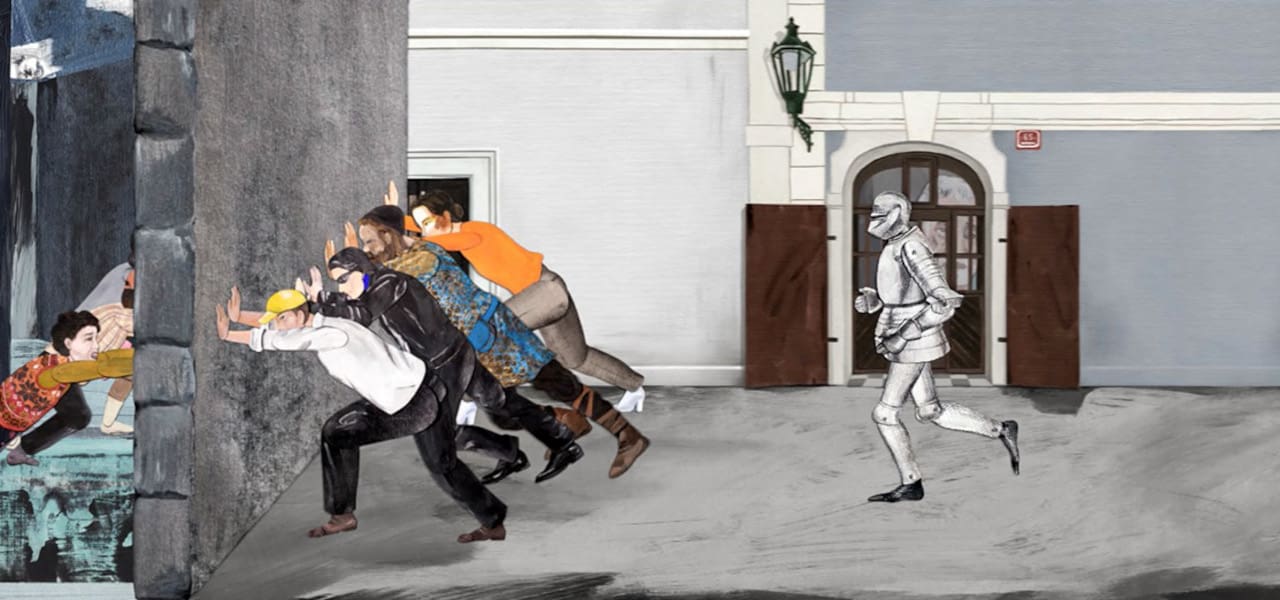
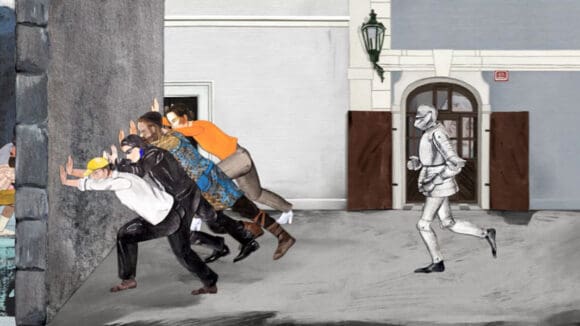
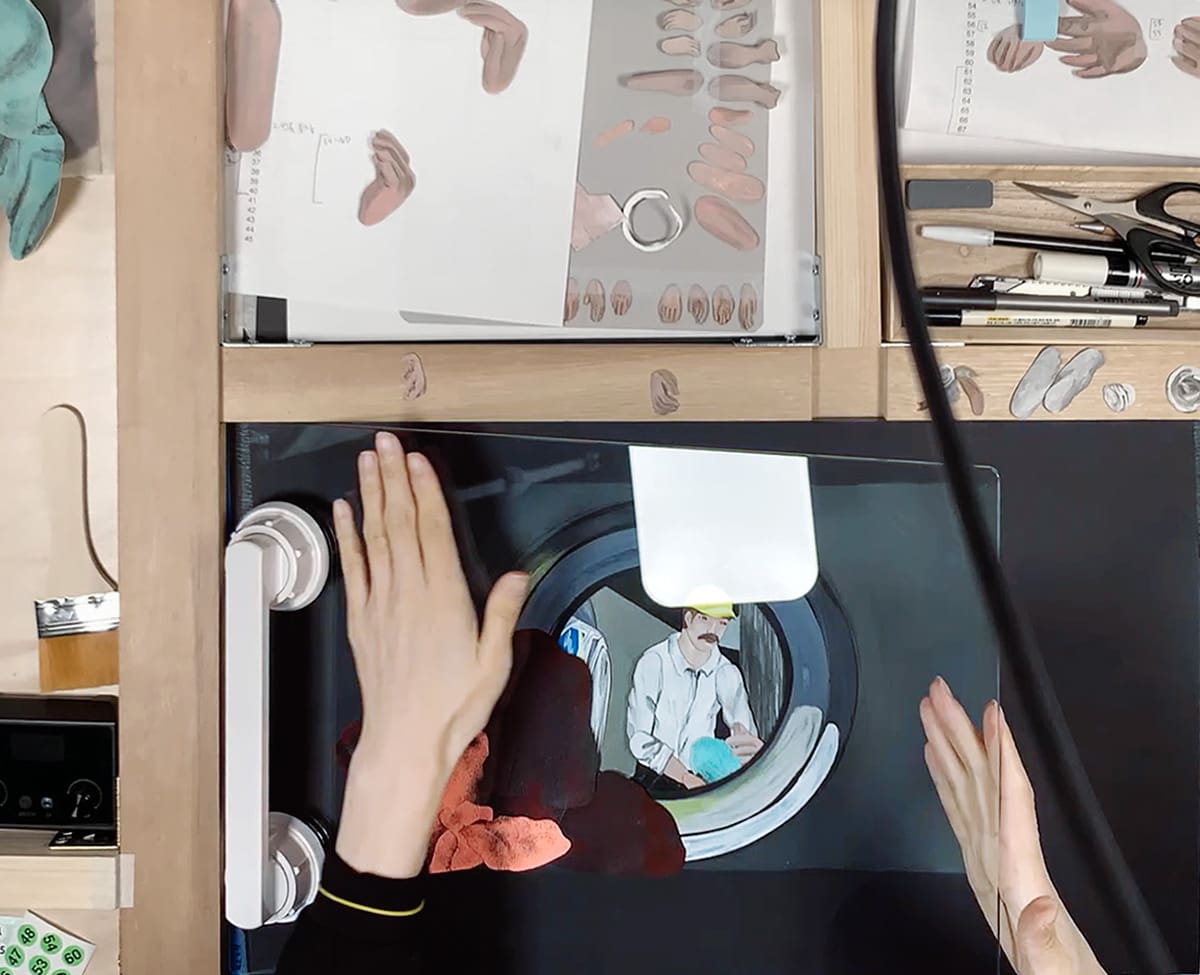
Every figure in Boundaries began as a piece of paper, cut by hand and strung together with thread at the joints, then pinned flat beneath a sheet of glass and shot frame by frame from an overhead camera.
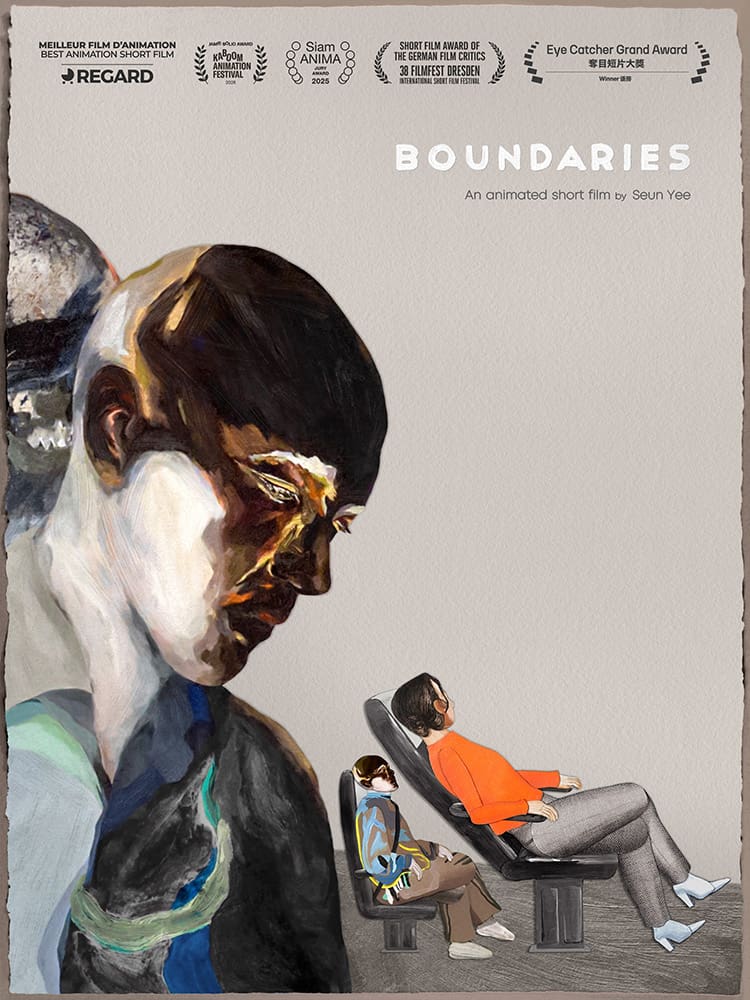
It’s a laborious way to animate a film, and it’s central to how director Seun Yee’s Boundaries turned an ordinary irritation into an artist’s vision. The animated short made its Australian premiere at MIFF this month, and now, Cartoon Brew is debuting the film’s teaser and poster.
The story starts small. When a stranger reclines his bus seat too far into a young woman’s lap, she contemplates her options. From there, Yee’s film expands into a surreal, expansive meditation on how people intrude on and defend both physical and territorial space, alone and collectively.
Yee chose paper cut-out stop-motion specifically for what its flatness could do. “When the characters’ bodies are pressed against the backs of seats or against walls, those moments create emotional tension,” she told Cartoon Brew. “I felt that the physicality of paper could convey that tactile sense of pressure more directly.”
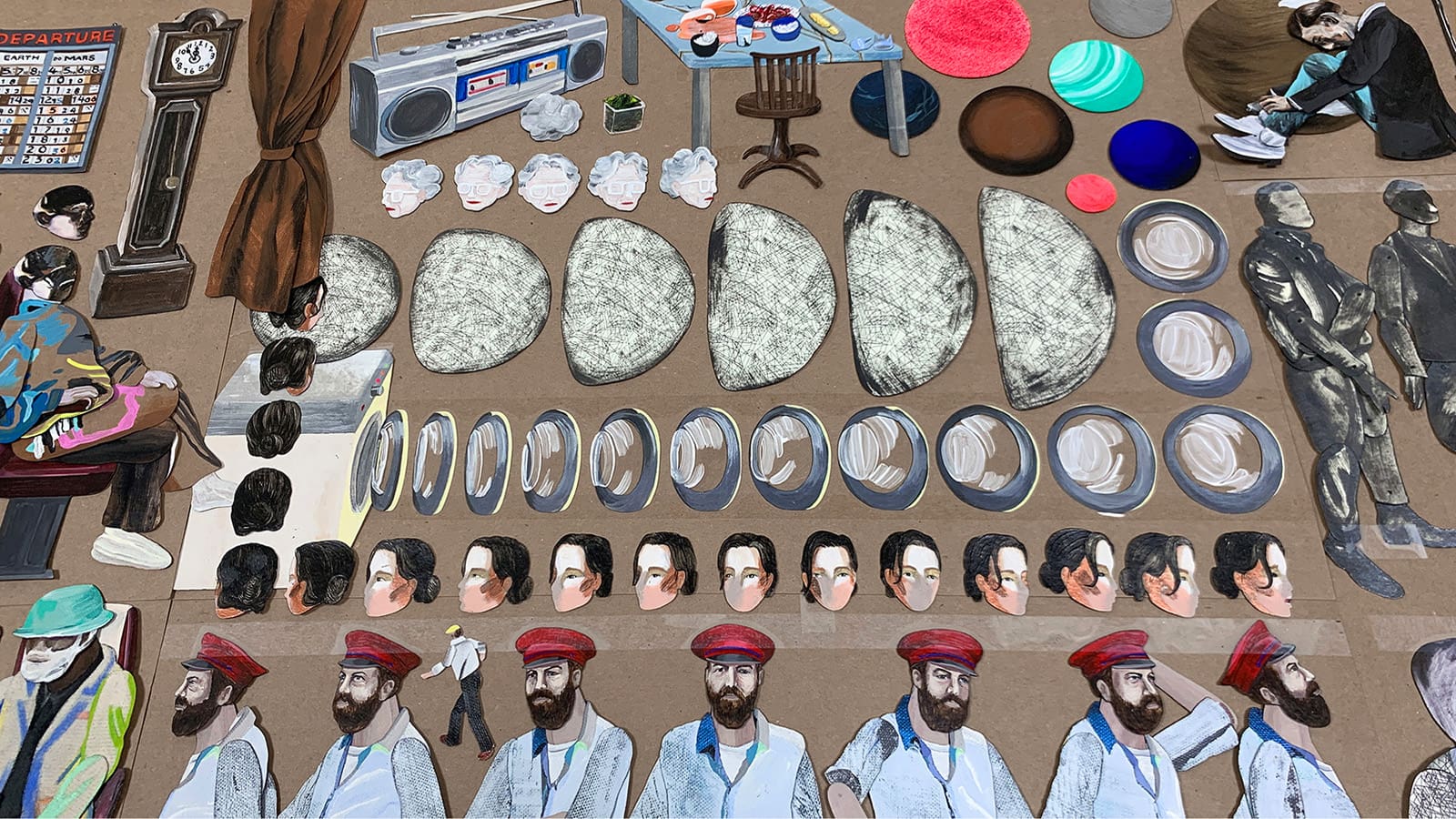
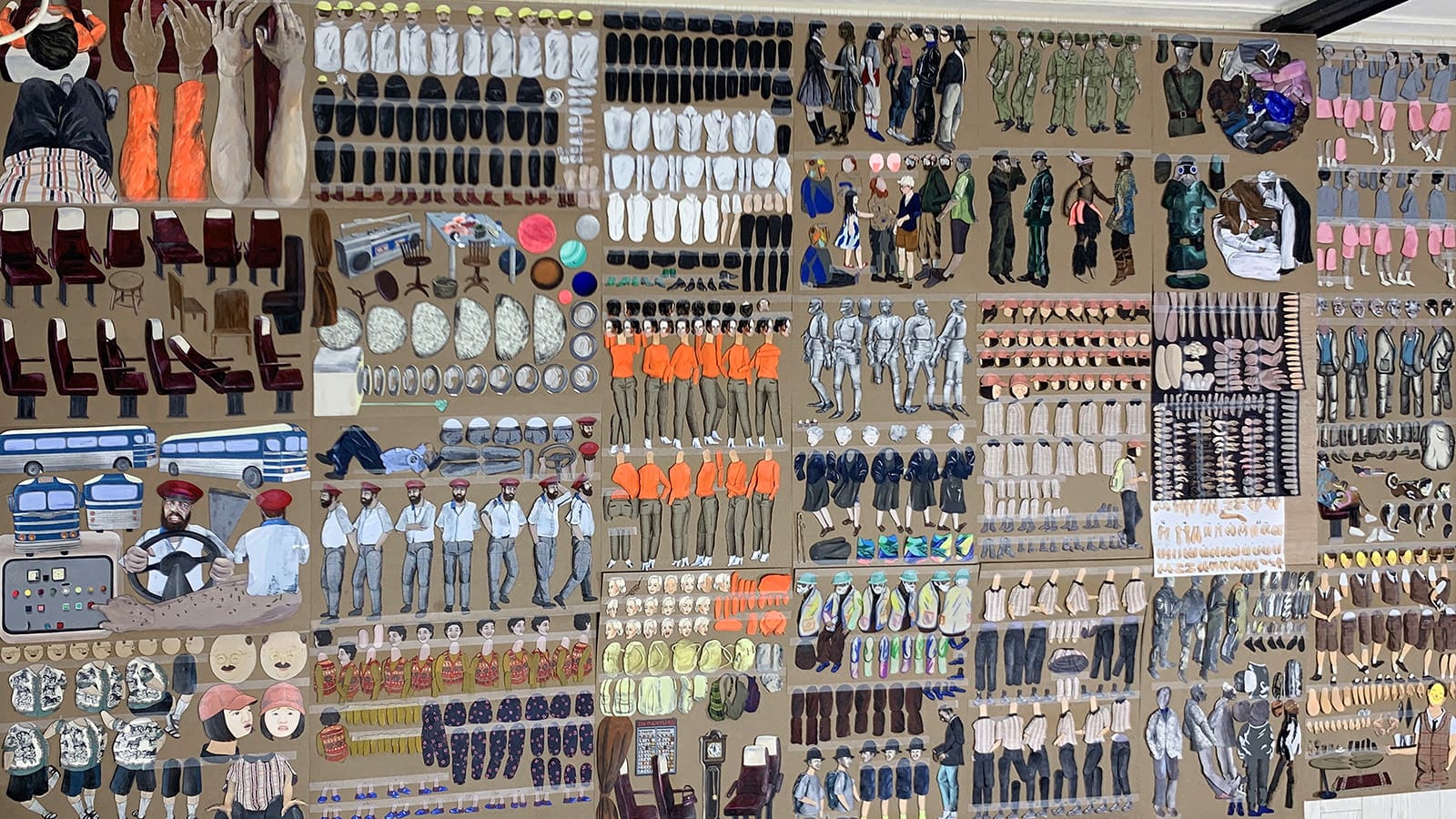
That handmade quality extends to how each character is drawn and rendered. Yee combines pencil drawing and acrylic painting within the same frame, letting a few vivid colors punctuate otherwise monochrome scenes for emotional emphasis. Some characters are rendered figuratively, others as geometric patterns, and a few with almost no facial features at all, which was a distinction Yee made deliberately. “Just as people in real life each have a different kind of presence,” she said, “I was thinking about how some people leave a very distinct impression, while others remain more indistinct in our memory.”
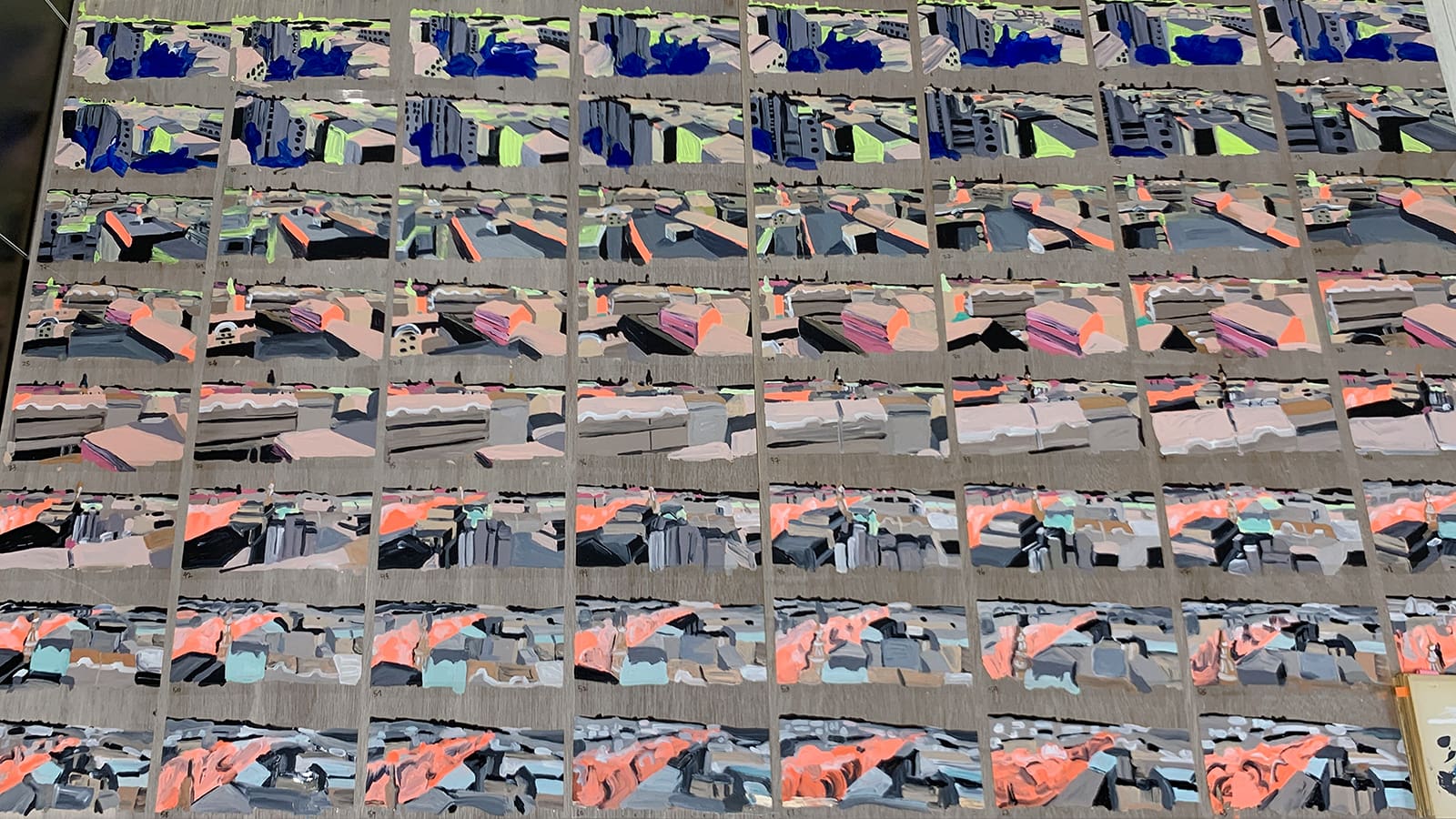
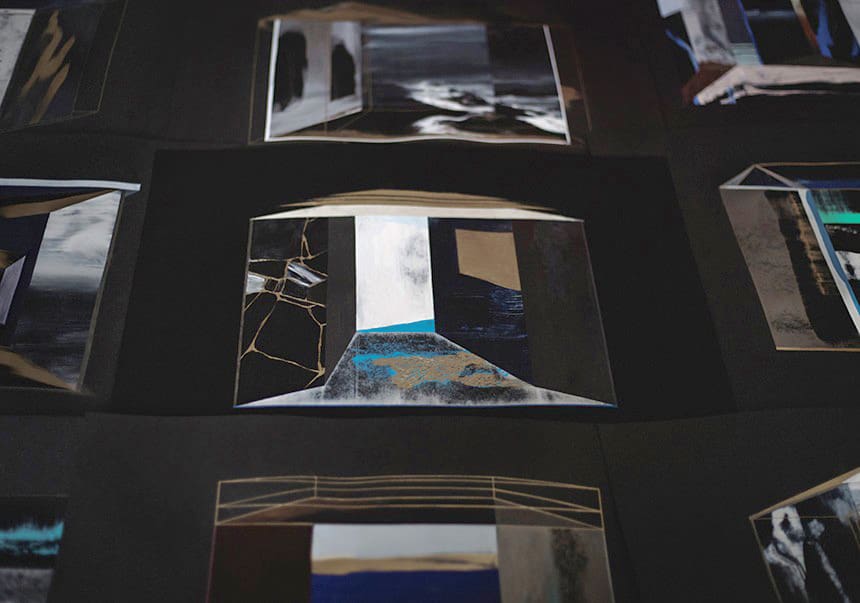
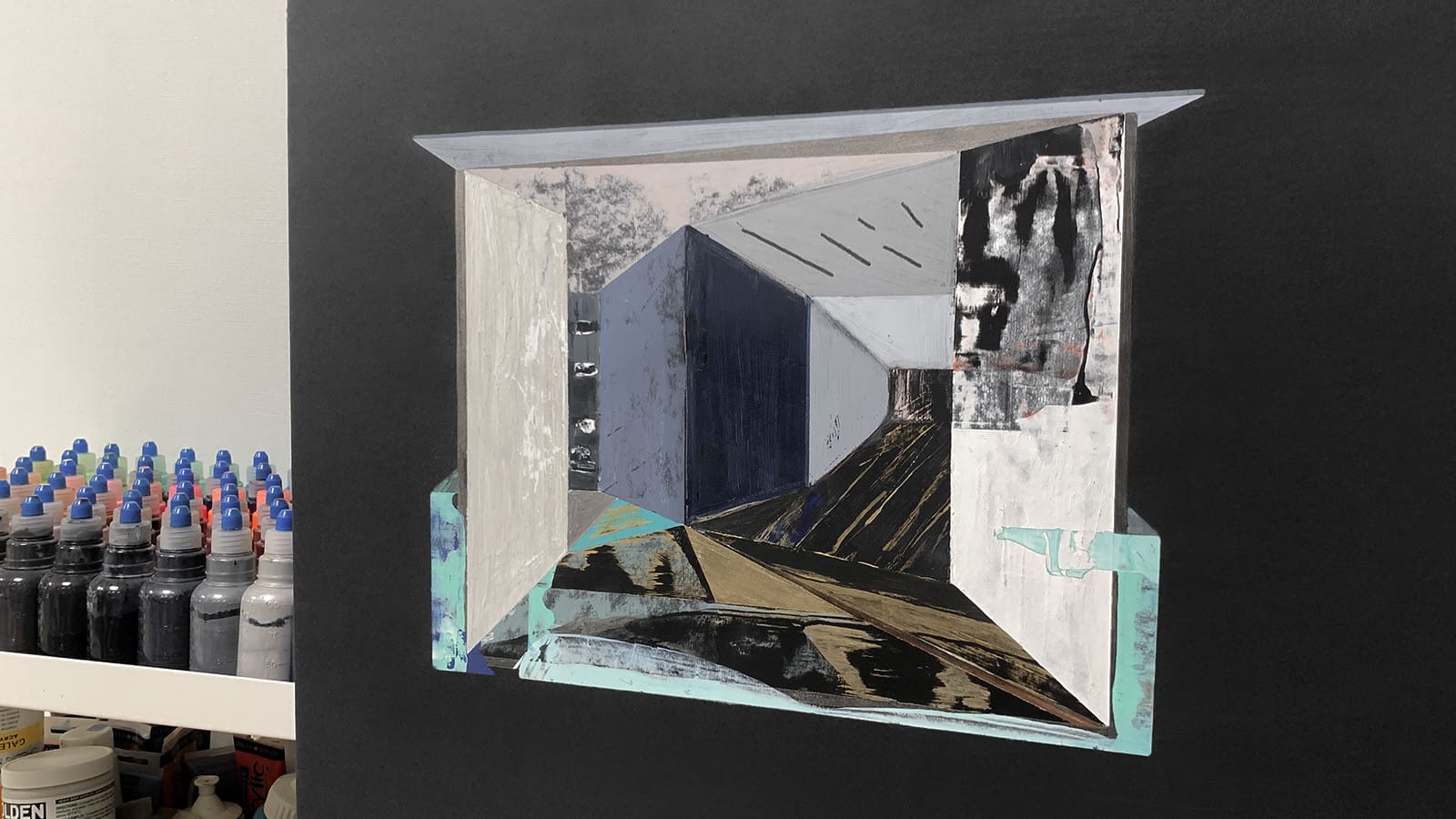
The film’s backdrops came from a separate, methodical project. Yee created fifty empty interiors, painted on black paper, one per day for fifty days. Public spaces like stations and buses are rendered fairly realistically, while other rooms resemble something closer to psychological interiors, liminal and Escher-esque. “The atmosphere and feeling of the space mattered more than a realistic depiction,” Yee said, describing how the same wall can register as either shelter or threat depending on how close it presses against a body.
The score, composed and performed by Jan Šikl on drums and cello, was recorded live while he watched the film, chasing the immediate closeness of silent-era cinema accompaniment. Yee wanted the music, like the image, to loosen its grip as more characters crowded the frame. “I felt that the music should reflect this through a less tightly controlled approach,” she said, “leaving some room for the chance that comes with experimental improvisation.”
Yee directed, produced, wrote, shot, edited, and designed Boundaries herself. After graduating from art school in Prague, she now lives and works in Korea. She has previously shown work at EXIS Seoul, Annecy, Zagreb, Hiroshima, Filmfest Dresden, and the Austrian Film Museum.