.png)

Annecy Winner Shaddy Safadi’s Terrifying New Short ‘Diaboli’ Debuts Online (EXCLUSIVE)
Stay informed with free updates
Sign up to get our news digest — delivered directly to your inbox twice a week.
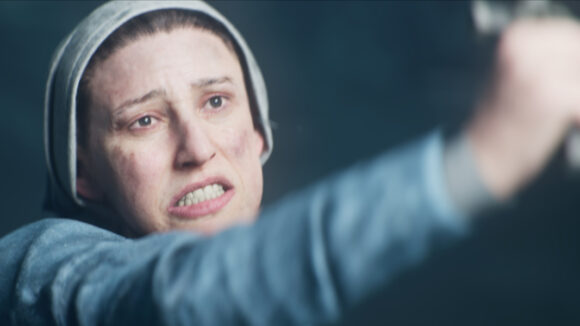
On the eve of Halloween, we’re thrilled to host the online premiere of Diaboli, a terrifying proof-of-concept short from the team behind this year’s Annecy Cristal-winning TV production Christo the Civilized Barbarian and the producers of the Emmy-winning The White Rabbit.
Diaboli, the latest animated short from artist and filmmaker Shaddy Safadi, is a proof-of-concept for a possible feature, set during the height of the Holy Crusades. The film imagines a world where faith, war, and myth collide, and where the Devil himself returns to walk the earth.
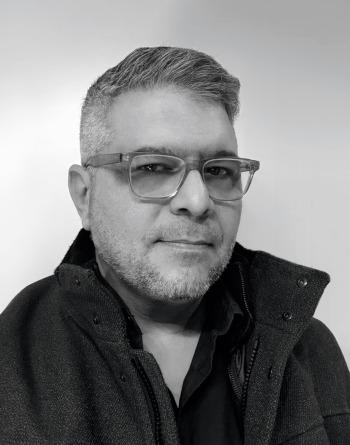
Safadi is best known as the founder of One Pixel Brush, one of the most respected concept art studios in gaming. His team’s fingerprints can be found on some of the biggest franchises of the last decade, from The Last of Us and Call of Duty to DC’s Blue Beetle. After fifteen years of mostly commercial work, Safadi is now ready to tell his own stories. His previous short, Christo the Civilized Barbarian, was a CG-animated comedy that picked up more than fifteen festival awards, including the aforementioned Cristal at Annecy earlier this year. Now, with Diaboli, he’s traded jokes for pure, gory dread. “They are polar opposites in tone and style, but both are things I found interesting to say,” he says.
Faith, Fear, and the End of the World
The idea for Diaboli came from Safadi’s desire to redesign one of storytelling’s most overused figures, the Devil himself. “I wanted to design the literal Christian Devil, but I want to make it actually scary,” he says. “Movie monsters are always muscular, angry, and human-like. Real predators aren’t mad, they’re just hungry or defending their young. That relative indifference, to me, is far more terrifying.”
Drawing inspiration from the Book of Revelation and conversations with ordained clergy, Safadi set his story in a time when faith, superstition, and fear ruled daily life. The short follows an atheist who discovers Christianity is real as the Devil returns and brings Armageddon with him. “It’s a story about belief, fear, and the end of all things,” he explains. “I think this resonates with all of us right now because we are so close to the precipice as a civilization on so many fronts.”
Avoiding Slowdowns
The production of Diaboli was as scrappy as it was ambitious. Safadi partnered with Maciej Kuciara and Emily Yang, co-producers fresh off their Emmy win for The White Rabbit, and worked with the crowdfunding platform Shibuya to finance the project. “They covered about half the budget, and I financed the rest when costs went dramatically over,” he laughs. “I even tried to quit! But Maciej wouldn’t let me… I’m extremely glad they made us finish it because now we have this awesome thing to show.”
The team used motion capture and Unreal Engine’s MetaHuman tools to bring the medieval world to life. That efficiency-driven approach, Safadi says, is part of his philosophy as an art director. Safadi says there is a “poisonous” insecurity in the industry right now, paralyzing productions with endless versions and ideation.
To avoid getting caught up in that paralysis, Safadi trusted his team. “If you have super talented artists and a clear vision, and most importantly, know what your priority is, then it doesn’t matter what the exact design of the building in the village in the background is, as long as it doesn’t distract from the scene. “
Visually, he kept the world subdued so the horror could shine. “We’re also counterintuitively trying to keep everything boring on purpose,” he elaborated. The buildings, costumes, and even the lighting were left muted so when the supernatural shows up, “it hits harder,” he argues.
Sound, Symbolism, and Subtlety
Sound plays an equally unsettling role. Composer Gavin Brivik (HBO’s The Pit) and sound designer Jiri Niznik crafted an atmosphere that’s eerie without leaning on cliché. “No growls, metal scrapes, or demonic voices,” Safadi says. His team stuck with sounds that feel scary but aren’t necessarily identifiable. Their first passes were almost perfect. “Honestly, both of them just sent their near first versions, and I was like, ‘Yep, sounds great.’”
Faith and mortality run through the film’s imagery as well. “We began with a cross and a dead bird,” Safadi recalls. “That immediately signaled death and faith.” The result is a story that feels ancient but unsettlingly modern in its emotions, exploring what happens when doubt meets the apocalypse.
Festival Success to What’s Next
Since its completion, Diaboli has been making the festival rounds, winning honors at FilmHaus, the New York Film & Cinematography Awards, and the Cannes World Film Festival. For Safadi, that success is both validation and fuel for what comes next.
“Ideally, we get an option, meaning either an agent, producer, or an actor loves it and wants to be a part of it, buys the rights to it, and has me on as an advisor, consultant, co-writer, or someone to just sort of help see it through,” he says.
Between Christo the Civilized Barbarian’s riotous humor and Diaboli’s apocalyptic terror, Safadi has proven that One Pixel Brush’s leap from concept art to filmmaking isn’t just a change in medium, but an evolution in storytelling from a studio ready to pump up its pipeline.
