.png)

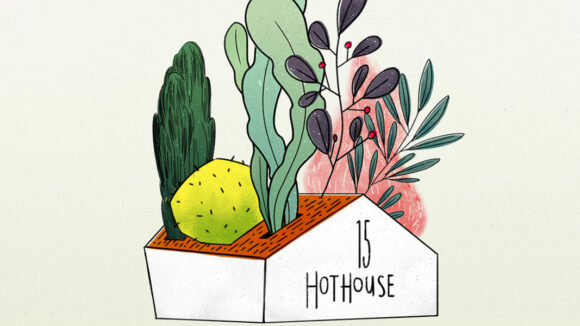
Inside Hothouse 15: How A 12-Week Sprint Keeps Canadian Animation Fresh
Stay informed with free updates
Sign up to get our news digest — delivered directly to your inbox twice a week.
The National Film Board of Canada’s (NFB) 12-week mentorship program recently wrapped up its 15th edition and is sharing six films online. This year’s theme was People Watching. The participants create a one-minute film from start to finish. They receive professional and technical guidance from the crew at the NFB’s English Animation Unit.
This year’s films are I Want to Go Home (Mégan Dupont), Panoptic (Katie Finn), Springrise (Mitchell Keys), Intruder (Max Ma), Super Mr. Woods (Aerin Wu), and Get a Grip (Abbey Collings).
Hothouse sprouted to life in 2003 as an initiative of now-former NFBers Michael Fukushima and David Verrall. Hothouse producer Maral Mohammadian adds that Hothouse was “named after horticultural hothouses where gardeners activate the flowering of exotic plants in a short period of time, under intense conditions—the program was designed to quickly nurture new talent in the unique character of the NFB: it’s not a funder for independent filmmaking and it’s not client-based work. Its purpose is to help young artists hone their voice and find self-expression using animation within the social mandate of the NFB and the high standards of NFB animation.”
To say that Hothouse has been a success would be an understatement. Over 90 animators have participated in Hothouse, among them fixtures in the animation community: Alex Boya (Bread Will Walk), Patrick Doyon (Sunday), Philip Eddolls (Git Gob), Eva Cvijanović (Hedgehog’s Home), David Barlow-Krelina (Caterpillarplasty), as well as Howie Shia, Malcolm Sutherland, and the duo Dale Hayward and Sylvie Trouvé.
Each Hothouse session comes with a specific theme. Past themes have included Chance Encounters, Water, The Time I Changed My Mind, Small Things Considered.
“We start thinking about the theme a few months before we open the call for submissions,” says NFB English animation unit producer Maral Mohammadian, who has been involved with Hothouse since 2007. “I usually have a running list of ideas that I jot down as life passes by: words or phrases about what’s happening around me, in the news, in society. We look for a concept that gets ideas flowing, evokes a visceral reaction. It can’t be too prescriptive; it needs to be inspiring but flexible in its interpretation. I decide the theme with the associate producer. We bat ideas around until one feels like the one.”
This year’s theme, People Watching, was an attempt to push applicants to fix their gaze on the outside world. “After several years of pandemic turmoil, social isolation, and explorations around self and identity, I wanted to explicitly turn the focus outwards, to the observable world,” says Mohammadian. “The cool thing about People Watching is that it can be interpreted in different ways. That’s what we want in a theme: we want people to play with it, twist and subvert it, and show off their originality.”
Hothouse 15 received 241 applications from across Canada. What exactly does the NFB team look for in these applications?
“We’re looking for standouts,” says Mohammadian. “Is the idea exciting? Is the artwork compelling? Does the application demonstrate vision, a unique point of view? Does it show self-awareness, creative maturity? Sometimes people write very elaborate proposals with lots of big ideas, but there is no awareness of the complexity of what they’re proposing, and that’s a red flag because that’s the number-one challenge: Can you distill your idea? Can you convey it artistically? Is this a short film? Does it fit within the program’s parameters? We know ideas can be workshopped, so we usually go with the six people who demonstrate a diversity of viewpoints, techniques, and regions, and who ultimately excite the selection committee the most.”
Once selected, the applicants have about six weeks to prepare before things get rolling. Some temporarily relocate to Montreal to get the full experience of working at the NFB, but it’s not mandatory. That said, the experience is richer by being at the NFB, surrounded by like-minded filmmakers of all levels.
“During those six weeks,” adds Mohammadian, “we do some technical and creative pre-production: Is their workstation at home sufficient, or do we need to provide them with better gear? What tools, materials, and software will they need? We also provide feedback about their project, which they can chew on to address strengths and weaknesses.”
“In week one, all the directors are brought to Montreal for orientation week,” says Mohammadian. “We take them through the 12-week structure, define the deadlines, explain the pipeline from concept through to final mix and mastering at the end. They meet their sound and editing crew and visit the edit suites, mixing theatre, and recording studios. They also meet the Marketing, Distribution, and Publicity teams. On the third day, they have to present their storyboards. Some of them won’t see each other again in person until the final week, when they return for post-production.”
Hothouse is structured around stages: Week 1: storyboard presentations; Week 2: concept lock; Week 7: picture-edit lock; Week 12: online and mix. Progress reviews are given every two weeks.
“The mentoring director [Lilian Chan served this role for Hothouse 15] is the main creative ally supporting the evolution of story and design,” says Mohammadian. “The producer is there to challenge assumptions and stand in for the audience. The associate producer is the glue that binds everything together: they are the directors’ go-to for everything, and they must have a keen sense of animation, technique, art, story, logistics, and everything under the sun because there are all kinds of surprises. The associate producer is the only full-time resource dedicated to the program, so they have a critical job.”
On the last day, the films are screened at the NFB for the first time. Then the NFB’s Marketing and Distribution division takes over the process of getting the films ready for the public.
We’ve heard from the NFB, but what does a participant have to say about the program and process?
“I first came across Hothouse through Akash Jones’s Amma in edition 14 and was really curious about the program,” says Hothouse 15 participant Abbey Collings. “Hothouse is unique in that it positions itself as an apprenticeship rather than just funding or schooling. The idea that you’re a filmmaker with a producer and distributor made it feel like a real, financially viable path into the world of filmmaking post-college.”
Collings pitched a fable about a puffin who discovers he has hands. “I connected the People Watching theme to how I navigated fitting in while growing up: through observation of the people around me. Living in Nova Scotia while I was writing my application, it felt fitting to base it on the setting around me.”
Once in Montreal, Collings recalls that things moved rapidly: “We moved from concept to story in about a week. By week four, I was building puppets, and in week eight, I was animating them. The film evolved constantly to navigate production constraints. Nothing was built that wasn’t shown in the film. As weeks went by, time went faster, as if the film was appearing in real time before me.”
For Collings, just being around other filmmakers and roaming the hallways of the hallowed NFB was a unique experience. “You are not creating your film in a void. As an inexperienced filmmaker, working alongside other independent filmmakers with their own vision helped to catapult me into the world of filmmaking. Just walking around the office, I was able to access a swath of knowledge from professionals. You are also working with more overhead and structure than when doing something alone, which I personally found helped keep my film’s momentum going.”
While Collings admits that “time definitely felt faster than I thought it would,” the overall experience was about what she anticipated and hoped for. “Learning how to juggle multiple stages of production or learning where I needed to cut back on the story was challenging. Luckily, the Hothouse team largely foresaw where things would come up short and were ready to bring in support or talk about the game plan before things derailed. The most pleasant surprise, though, was snacks from our associate producer, Fred Casia.”
Get a Grip screens in the Young Audiences competition at this year’s Ottawa International Animation Festival. You can also see Katie Finn’s Panoptic in the Canadian Panorama screening there.
The public can also go behind the scenes in the companion series Inside Hothouse, launching on September 22 on NFB platforms, with exclusive access to the NFB’s world-renowned animation studios.