.png)

Simón Bucher On Animating Chile’s Great Sausage Uprising In Box Office Hit ‘Denominación De Origen’
Stay informed with free updates
Sign up to get our news digest — delivered directly to your inbox twice a week.
Tomás Alzamora’s microbudget comedic documentary Denominación de Origen, about a sausage-based uprising in the rural Chilean town of San Carlos, became an unlikely national phenomenon last year. The wickedly funny film drew more than 100,000 viewers during its theatrical run, making it Chile’s most-watched domestic production of 2025.
Amid the civic rebellion, regional pride, red tape, and longaniza (a local delicacy at the heart of all the film’s drama) lore is a wonderfully strange and unmistakably Chilean stop-motion sequence directed by Simón Bucher, which we’re debuting exclusively below ahead of the film’s Mubi debut in Chile and several Latin American territories later this week.
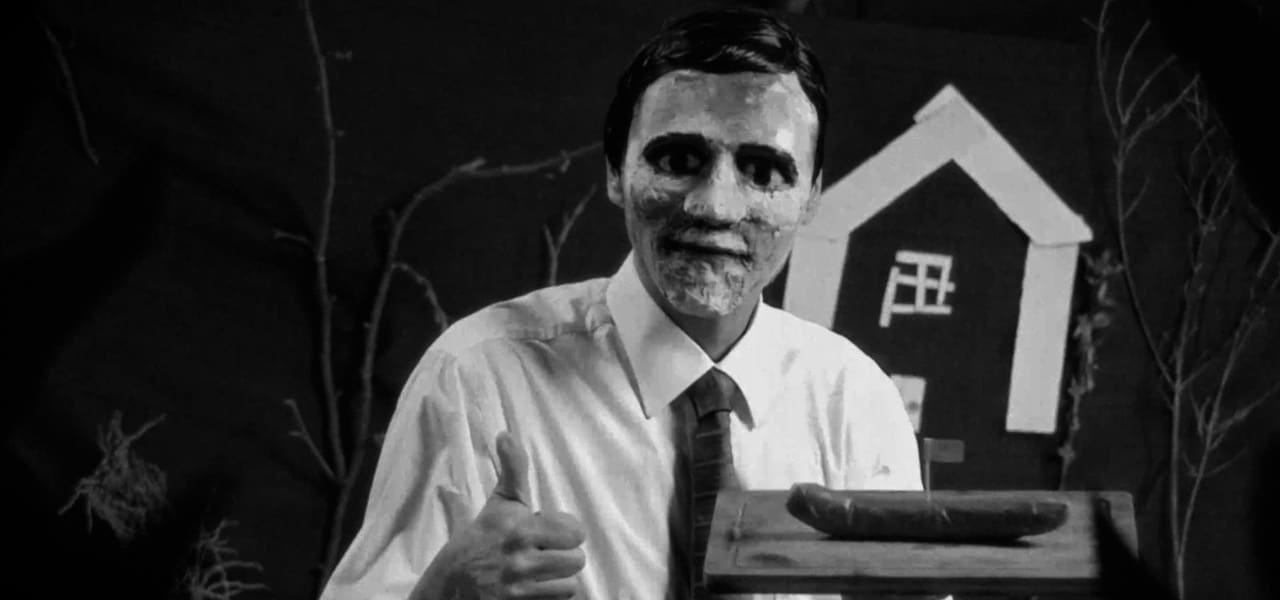
Bucher’s grainy, black-and-white sequence visualizes the film’s invented history as though the audience has slipped inside an old photo album. Chilling masks, earth, metal, local symbols, and food combine in a surreal creation myth for the San Carlos longaniza, rendered in a style that would make León and Cociña proud. The sequence helps explain the dubious history behind the delicacy that inspires a motley crew of locals to seek a denominación de origen, or designation of origin, for their hometown sausage.
A Connection Cooked Up In Ñuble
Bucher studied audiovisual direction at the Pontifical Catholic University of Chile, but his path into animation began during an internship at Santiago animation company Pista B. The studio was then working with local animation superstars Cristóbal León and Joaquín Cociña, directors of The Wolf House and Los Huesos.

“I became very close with them, and they inspired me a lot,” Bucher told Cartoon Brew. “I love their work. León and Cociña are among my greatest references, and The Wolf House is one of my favorite films. Working with them was incredible.”
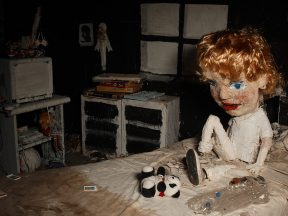
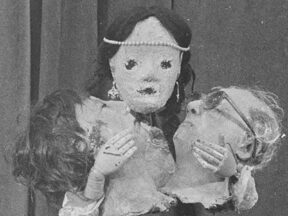
For his university graduation project, Bucher co-directed the pixilation horror short The Feast with Claudia Saldivia and Amanda Rivera. It screened in Annecy’s graduation competition in 2023 and went on to more than 40 festivals.
The short also played at the Ñuble National Film Festival, founded and directed by Denominación de Origen director Alzamora. Bucher introduced himself after the screening, and the two arranged to meet up later.
When they did, “He said, ‘Simón, I don’t know if you know that I’m working on a film about longanizas,’” Bucher recalled with a chuckle. “People had heard that somebody was making a longaniza movie, and everyone was wondering what it was. Then he told me, ‘I want to make an animated scene. I saw The Feast, and I want you to do it. Put together a team, make a proposal, and send it to me.’”
Alzamora sent Bucher the live-action passage where the animation would be inserted and gave him lots of freedom to decide what happened next. The Wolf House was a key visual reference for both artists.
“It was like: I have to do something related to The Feast, but they’re inviting me to take it in this direction,” he said. “I wrote the sequence, and I still have the storyboard somewhere. The final version remained pretty close to it.”
Old-Time Photography
At the foundation of the sequence is a photograph supposedly of the inventor of the longaniza. In keeping with the film’s playful uncertainty over what is documentary and what has been added for entertainment, the supposed historical evidence was itself repurposed.
“I asked Tomás if it was real, and he told me, ‘No, it’s my grandfather,’ or a photo of another relative,” Bucher said. “He plays with what is real and what isn’t.”
Bucher often begins his projects by identifying the physical substance that can carry the idea. Food was central to The Feast, as was newspaper. For Denominación de Origen, the photograph itself was central.
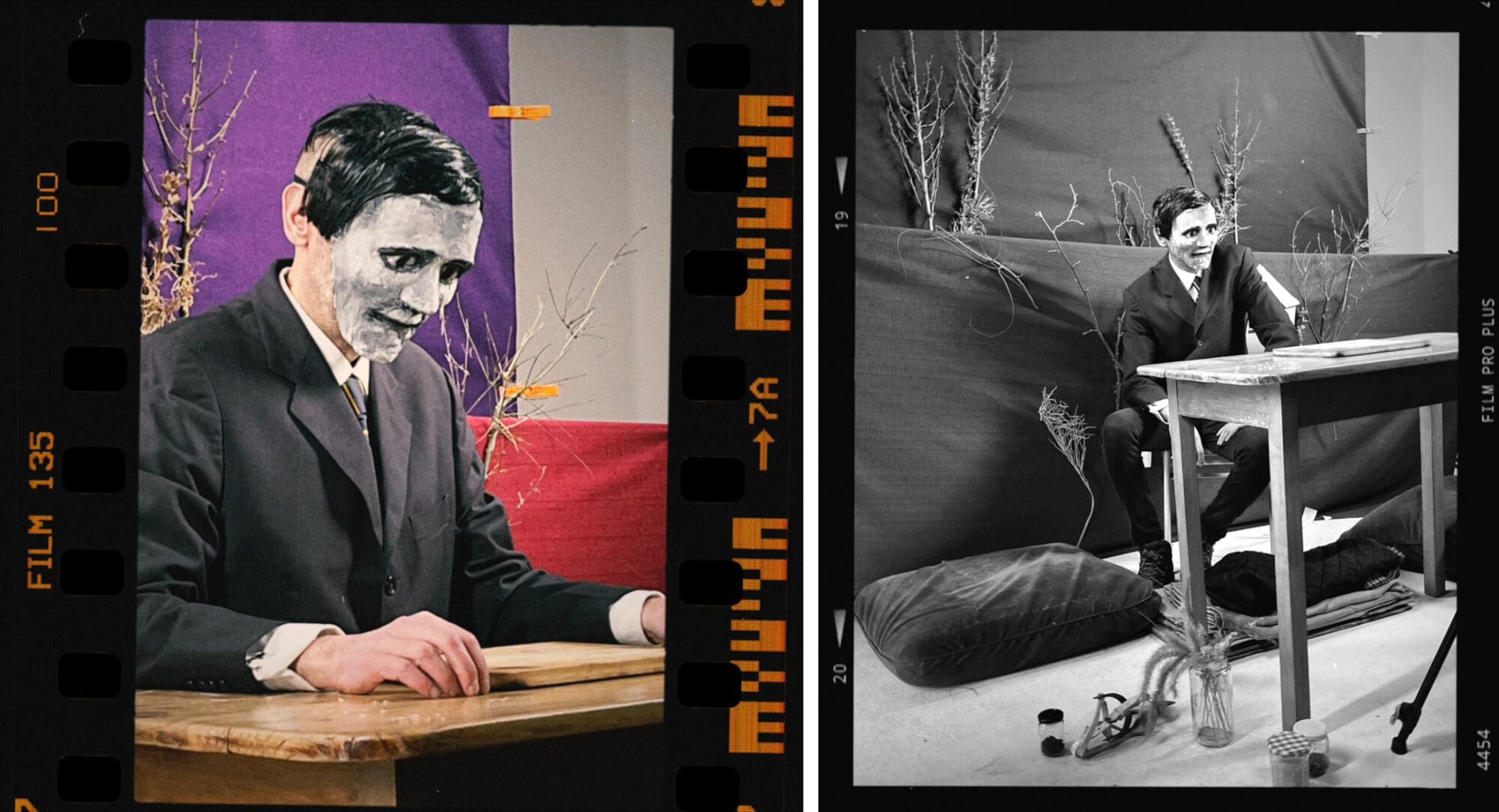
“I wanted it to feel as if we were looking at an old photo, or looking through one,” he explained. “Pixilation already works through photography, so we decided to make it black-and-white and grainy, with the look of a photograph from around 1900. We gave the character a mask so it would feel bizarre, as if we had truly entered the image. You can’t see the person’s face very clearly in the original photo, so the idea became: make it dreamlike, make it strange.”
Bulb flashes evoke early photographic equipment, while earth and rural objects are folded into the sausage-making ritual. Spurs, horseshoes, and other bits of metal disappear into the mixture. A tiny flag belongs specifically to San Carlos.
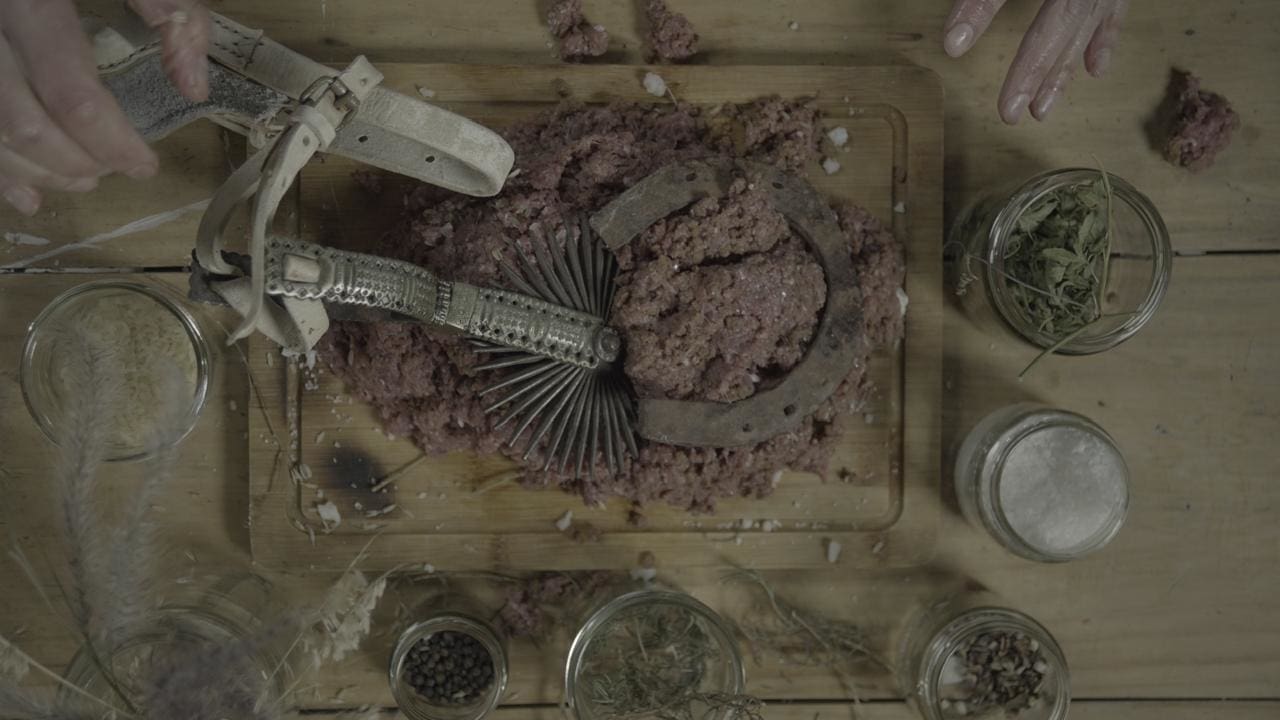
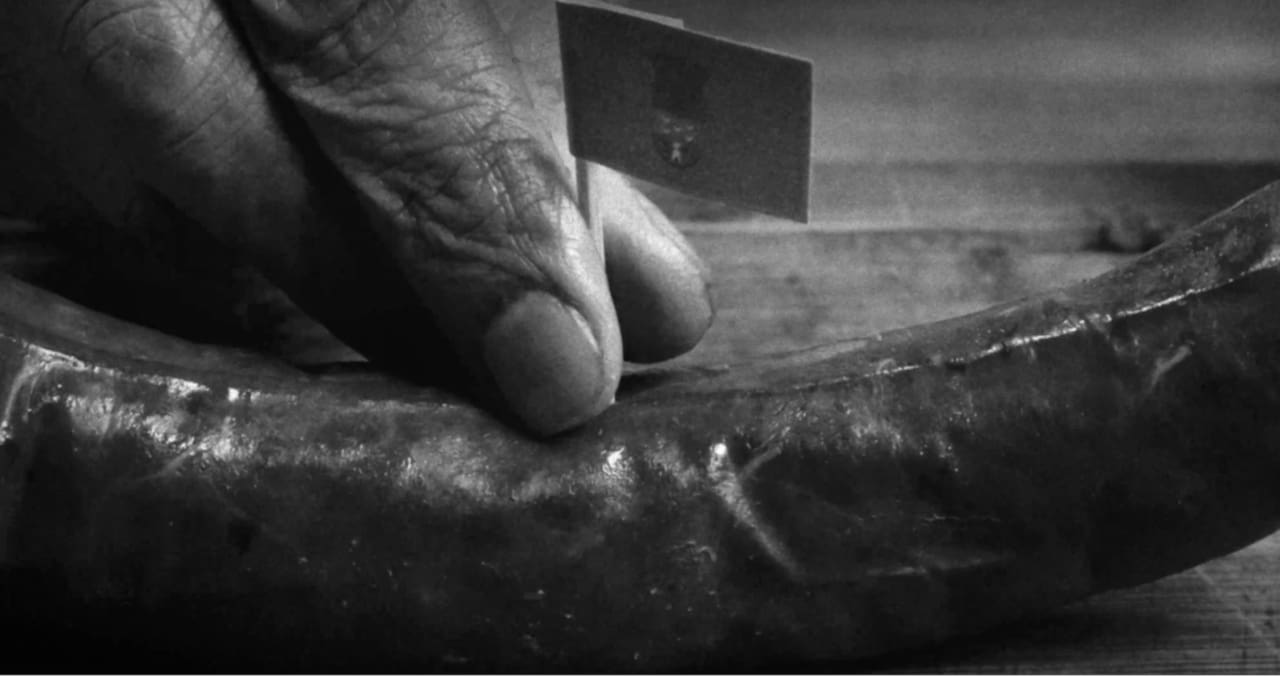
“We wanted it to resemble those documentary videos that explain how something was created, but through a stranger version that remained connected to the earth,” Bucher said. “It is Chilean culture inserting itself into the creation of a longaniza.”
Warts And All
Bucher describes his approach to pixilation as rough and dirty, in this case, literally. That looseness is a philosophy shaped by the limits of independent production in Chile and an affection for visible human labor.
“Latin America doesn’t have the same financial resources as Europe or North America,” he said. “Our art comes more from surviving. We have to animate with what we have. The Feast, Denominación de Origen, and our other projects were made with materials that were partly recycled or reused.”
He also sees stop motion’s physicality as a counter to the growing flood of genAI slop. Bucher doesn’t use AI in his projects and expects audiences’ appetite for tangible processes to grow as AI-generated imagery becomes more common.
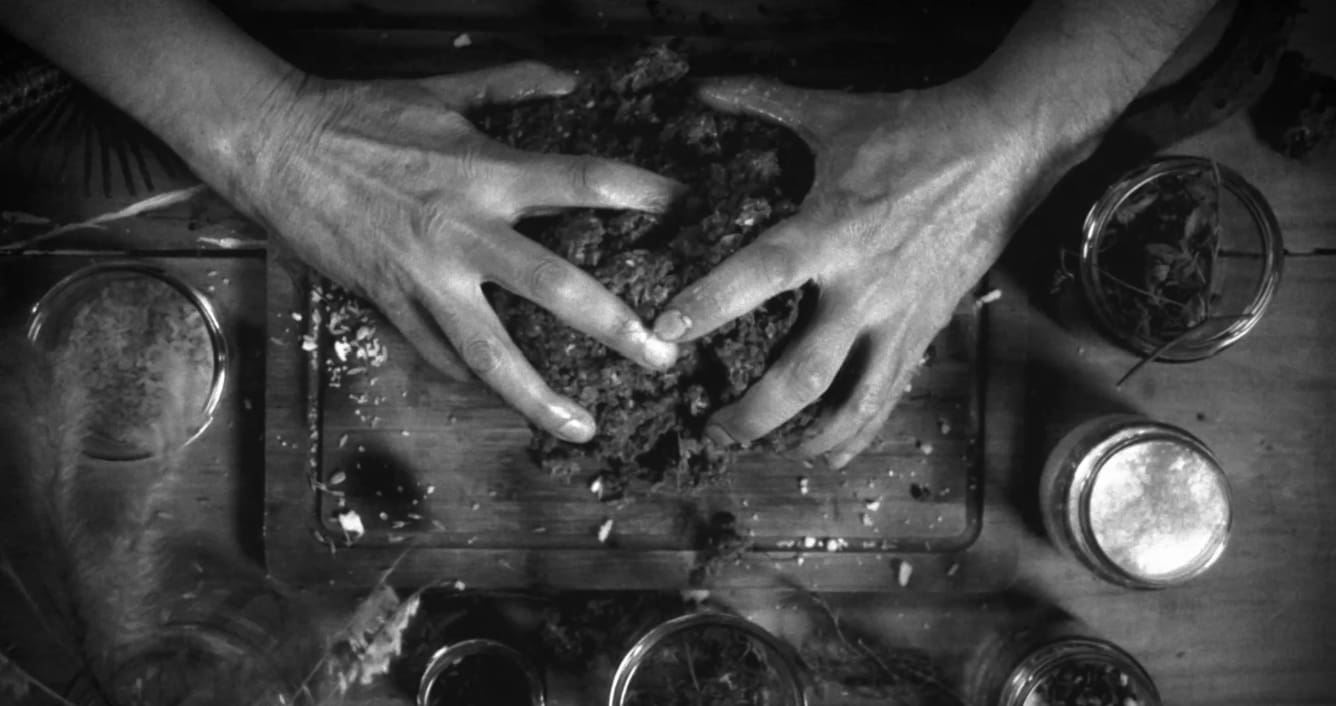
“There will be a point when AI levels off, and the counterculture, stop motion and everything physical, will rise again because we’ll want to consume things that are human,” he said. “People are recording their processes more now. You show what you made and how you made it, and the response is, ‘How beautiful. You made it yourself. You physically handled it.’”
For Bucher, the evidence of touch includes fingerprints, smudges, and accidents. A slightly shifted frame or imperfect movement can be more expressive than a perfectly fluid camera.
“Embrace the error,” he said. “In our kind of stop motion, a frame moves or something shifts a little. Leave it. In the end, that gives it life; it gives it the life of the people who made it. AI makes fewer and fewer mistakes, and everything becomes super-perfect. Let it feel human. Let the error be felt.”
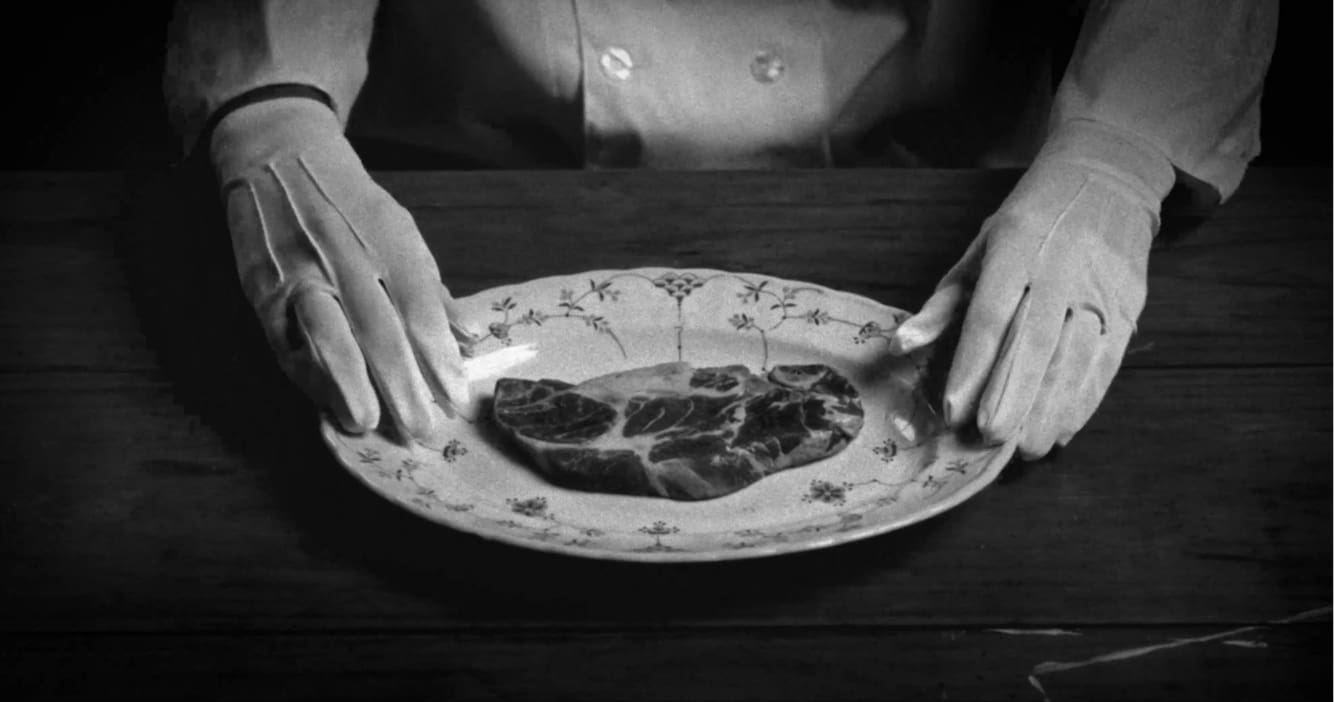
That principle made Bucher a natural fit for Denominación de Origen, a film whose comedy, affection, and politics all come from as specific a source as could be imagined. When he first saw the completed movie at its Valdivia premiere, he said the response was overwhelming.
“It was madness,” Bucher recalled. “It was the most beautiful Valdivia I’ve been able to experience.”
Bucher has since completed another short film titled Gacela Gazette, co-directed with Cote Ramirez, and is currently developing his first animated feature as a co-director alongside Raimundo Bucher, marking their debut as a directorial brother duo with L4IK4 (a working title for a 3D, stop-motion, and pixilation hybrid).