.png)
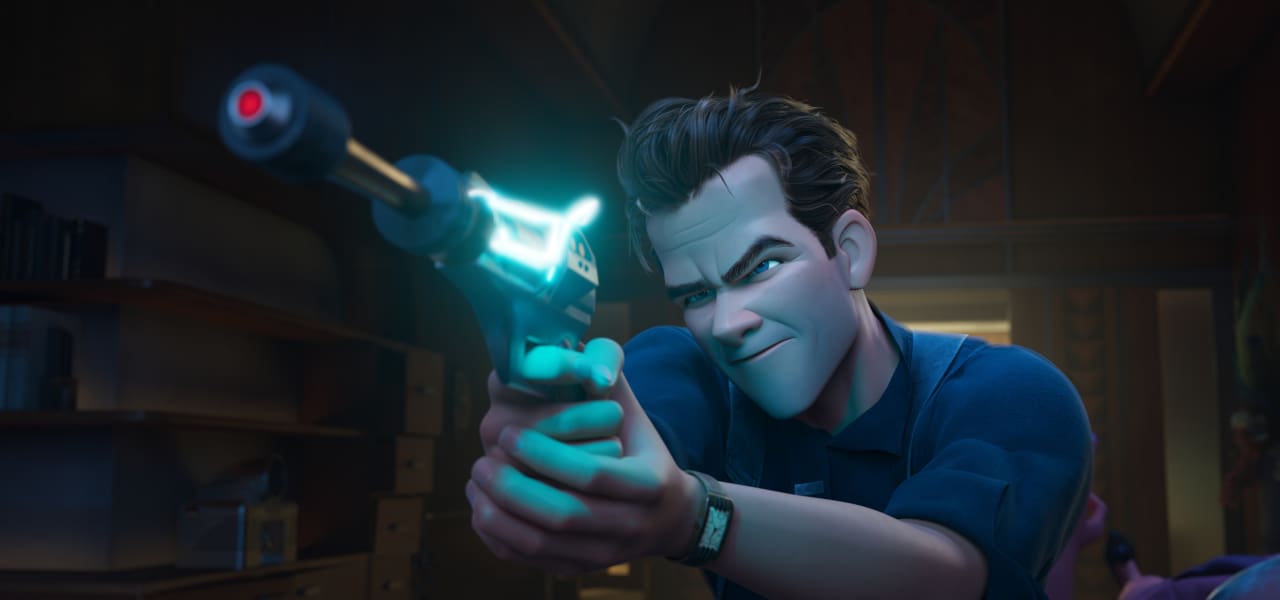
Netflix Shares New Images, Release Date For Brad Bird’s ‘Ray Gunn’: Early Looks At ‘Ghostbuster,’ Wonka Projects
Stay informed with free updates
Sign up to get our news digest — delivered directly to your inbox twice a week.
Netflix used both its Los Angeles press preview last week and its official Annecy Festival presentation this week to showcase several of its biggest upcoming animated projects. The big name at both events was clearly Brad Bird’s long-awaited feature, Ray Gunn, but in Annecy, there were also very well-received teases for the new animated series Ghostbusters: Night Shift and Charlie vs. the Chocolate Factory.
Ray Gunn closed Netflix’s Los Angeles showcase before returning to center stage in Annecy, where Bird joined Aardman co-founder Peter Lord for an extended conversation about the project, and Netflix confirmed that the feature will debut on December 18.
Bird has spoken publicly about Ray Gunn for years, but Annecy audiences got their most substantial look yet at the film, including its opening seven minutes and an additional sequence from later in the story.
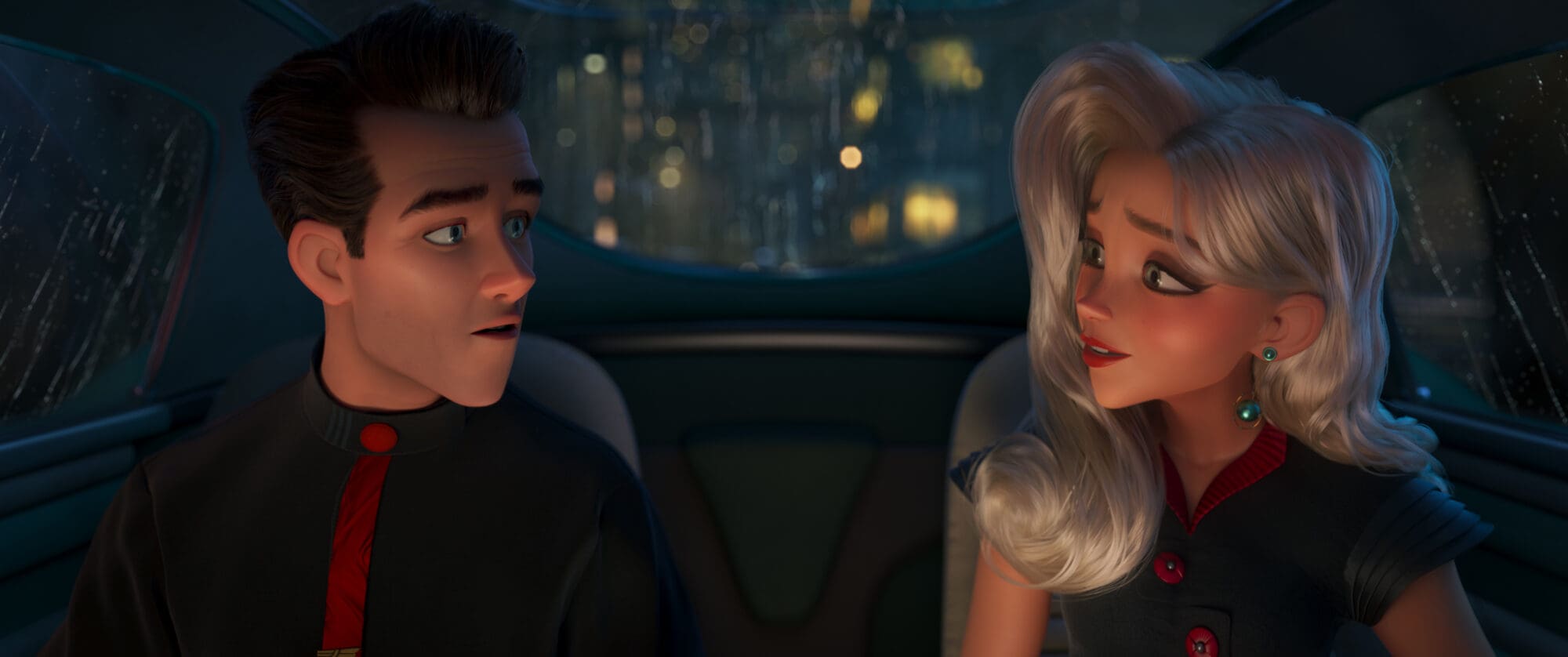
The feature follows a detective named Ray Gunn, voiced by Sam Rockwell, in a retro-futuristic world populated by both humans and aliens. Scarlett Johansson voices Venus Nova, while Tom Waits plays an alien named Ira.
Speaking with Lord, Bird recalled that the film’s origins can be traced back to a simple misunderstanding.
“The first time I heard the B-52s’ Planet Claire,” Bird said, “I thought it was the theme from Peter Gunn.”
The confusion quickly sparked a larger idea.
“I went, ‘No, it’s not Peter Gunn. What is it? It’s Ray Gunn.’ Then I went, ‘That’s cool. That’s the guy’s name.’”
From there, Bird began imagining a detective story set in a future inspired by the design language of the 1930s.
“This movie takes place in the future as seen from 1939,” he said. “It’s Buck Rogers meets The Maltese Falcon.”
That combination was evident in both the footage and production artwork shown in Annecy. The film unfolds in a massive city filled with towering skyscrapers, streamlined vehicles, neon signage, and densely populated streets. Bird cited designers Hugh Ferriss and Raymond Loewy among the influences that helped shape the film’s visual identity.
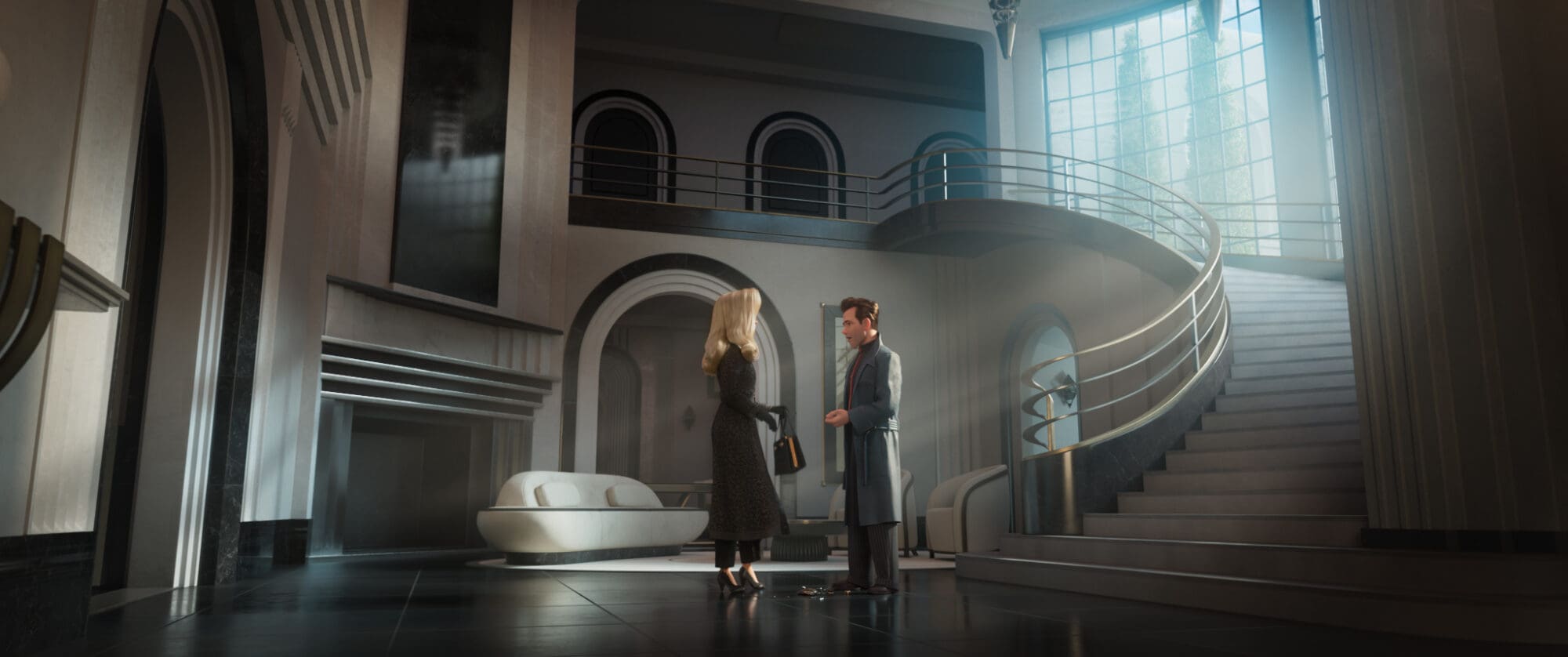
“World War II kind of killed a very positive era of design,” Bird said. “There’s something about having an optimistic vision of the city and still showing that you have desperate characters and slimeballs and corruption.”
Although the detective framework provides the film’s structure, Bird suggested that Ray Gunn gradually became interested in larger questions about identity and the different versions of ourselves we present to the world.
“There’s a line in The Incredibles where Syndrome says they keep asking you to be true to yourself, but they don’t say which side of yourself to be true to,” Bird said. “We all have multiple characters in us. Certain people or situations bring out different characters.”
One of the clips shown in Annecy followed Ray as he searches for a replacement weapon after his current gun stops working. The scene highlighted the film’s blend of comedy, character acting, and world-building as an eccentric shop owner attempts to sell increasingly absurd futuristic weapons.
Bird and Lord also spent considerable time discussing animation itself, particularly Bird’s long-running frustration with the belief that the medium should primarily serve children.
“When I first started in the business, there were old animators, and not the good ones,” Bird said. “There were old hacks that would say, ‘If you can do it in live action, don’t do it in animation.’”
Bird argued that the strength of animation lies in caricature, not realism.
“The reason to do animation is caricature,” he said. “It means boiling something down to the essence. Not only how a character looks, but how they move.”
The director also suggested that animation allows filmmakers to move between emotional states more freely than live action.
“You can change on a dime,” he said, recalling his experience working on The Simpsons. “We got away with stuff that we never would have gotten away with in live action.”
The conversation also addressed the project’s famously long development history. While Ray Gunn is often described as a film Bird has been developing for three decades, the director noted that the project spent much of that time dormant.
“It stayed in a filing cabinet at Warner Bros.,” he laughed.
Eventually, Bird negotiated to regain control of the property and sought financing elsewhere, allowing the project to finally move forward.
“I really wanted to see it,” Bird said. “And the only way to see it was to make it.”
A New Generation Takes Over New York In Ghostbusters: Night Shift
Netflix also devoted significant attention to Ghostbusters: Night Shift, its upcoming animated entry in the long-running supernatural franchise.
Set in 1994, the series follows a new generation of Ghostbusters tasked with protecting New York City during the period between the original films and the recent live-action sequels.
“When most of you think about animated Ghostbusters, you think back on the 1985 show The Real Ghostbusters with Slimer,” said filmmaker Jason Reitman in a prerecorded message. “You think about waking up Saturday morning eating cereal.”
Reitman said the creative team wanted a different approach this time.
“We knew if we were going to return to animation, this show needed to be excellent and maybe something a little bit scarier, maybe something not just for the kids.”
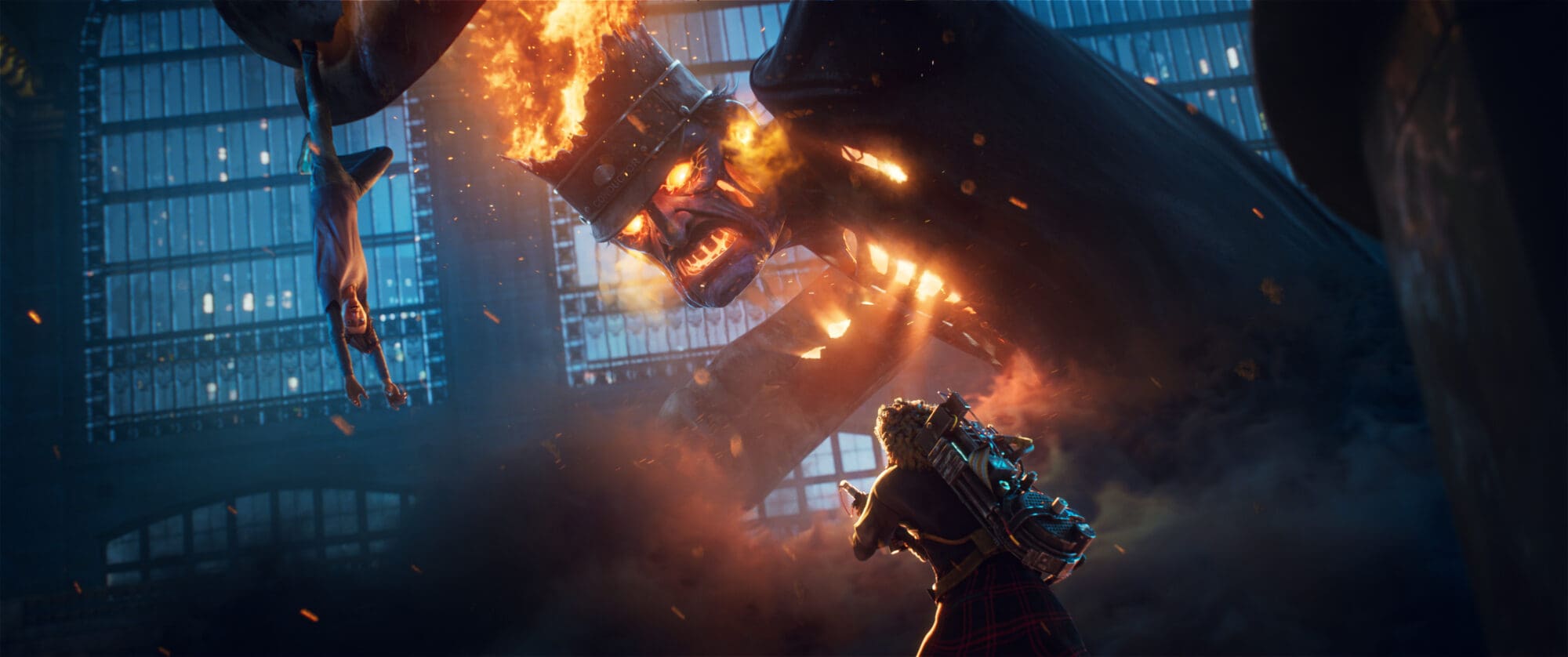
Showrunner Ben Hibon described the series as “an official continuity, in-canon chapter of the Ghostbusters saga.”
“We are finally revealing who stepped in to defend New York from supernatural danger in the period between the original movies and the Afterlife generation,” he said.
The creative team repeatedly emphasized the show’s horror elements.
“This show is legit scary,” said co-showrunner Elliott Kalan. “When you are not laughing at Ghostbusters: Night Shift, you will be screaming. That is a warning.”
Visually, the series draws heavily from New York City in the early 1990s.
“We tapped into the grimier, DIY punk and layered street aesthetic of that time,” Hibon explained.
Kalan summarized the goal more directly.
“It’s a New York that smells.”
That approach extends to the equipment used by the young Ghostbusters, whose gear is assembled from salvaged and repurposed components rather than sleek technology.
Throughout the series, the artists have experimented with a wide variety of ghost designs, allowing them to explore different textures, scales, and visual styles while maintaining the show’s commitment to genuine scares.
“Animation as a medium allows us to approach each horror element of the story with various degrees of stylization,” Hibon said. “Think of keeping violence graphical and abstract, and really infuse and craft a sense of dread, tension, and fear right into the design of the world itself.”
Netflix Offers An Early Look At Charlie vs. the Chocolate Factory
The third major project featured during Netflix’s Annecy presentation was Charlie vs. the Chocolate Factory, the streamer’s animated continuation of Roald Dahl’s classic world.
Netflix Animation Studios head Hannah Minghella stressed that the film is not a retelling of Charlie and the Chocolate Factory.
“This is the same Wonka but an entirely different Charlie,” she said.
Directors Jared Stern and Elaine Bogan introduced a new preview reel, explaining that the story follows Willy Wonka, voiced by Taika Waititi, years after the events of the original story.
According to the filmmakers, Wonka has spent time in prison after turning a child into a blueberry and now returns to his factory hoping to make the world a sweeter place.

Set in modern-day London, the film introduces a new cast of characters while also bringing back familiar elements from Dahl’s universe.
“At the time of filming this intro for you, we have approximately 50% of our rough layout complete, about 35% animation, and 10% lighting,” Bogan said while presenting the unfinished footage.
No additional release date information was announced, though the film remains slated for 2027.
With Ghostbusters: Night Shift targeting older franchise fans, Charlie vs. the Chocolate Factory reinventing one of children’s literature’s most enduring worlds, and Ray Gunn positioned as a major awards-season release, Netflix’s Annecy presentation underscored the company’s continued effort to broaden the scope of its animation output beyond traditional family fare.
Jamie Lang contributed to this article.