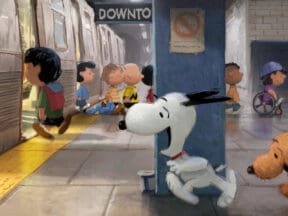
.png)
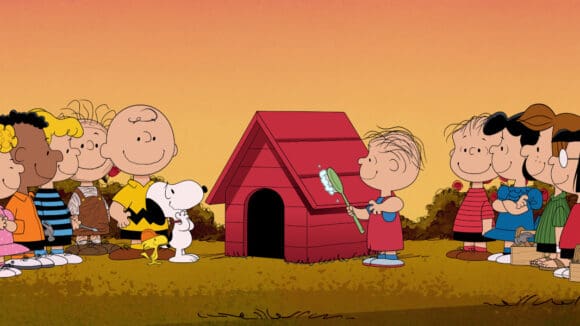
‘There’s No Place Like Home, Snoopy’ Takes Apple TV+’s Peanuts Into Longer-Form Storytelling
Stay informed with free updates
Sign up to get our news digest — delivered directly to your inbox twice a week.
Executive producer and writer Mark Evestaff has been part of the Peanuts animation renaissance on Apple TV+ since the streamer’s 2019 launch (back when it still had a +). With EP Betsy Walters, he co-developed the first Apple TV+ and WildBrain Studios animated series, Snoopy in Space. Evestaff then went on to co-develop, write, and executive produce three seasons of The Snoopy Show, which ended in 2023.
Now, he’s back with Peanuts series director Rob Boutilier, head writer Alex Galatis, and episodic director Ridd Sorensen to literally shake up Snoopy’s doghouse in the brand-new animated special Snoopy Presents: There’s No Place Like Home, Snoopy, available to stream July 31.
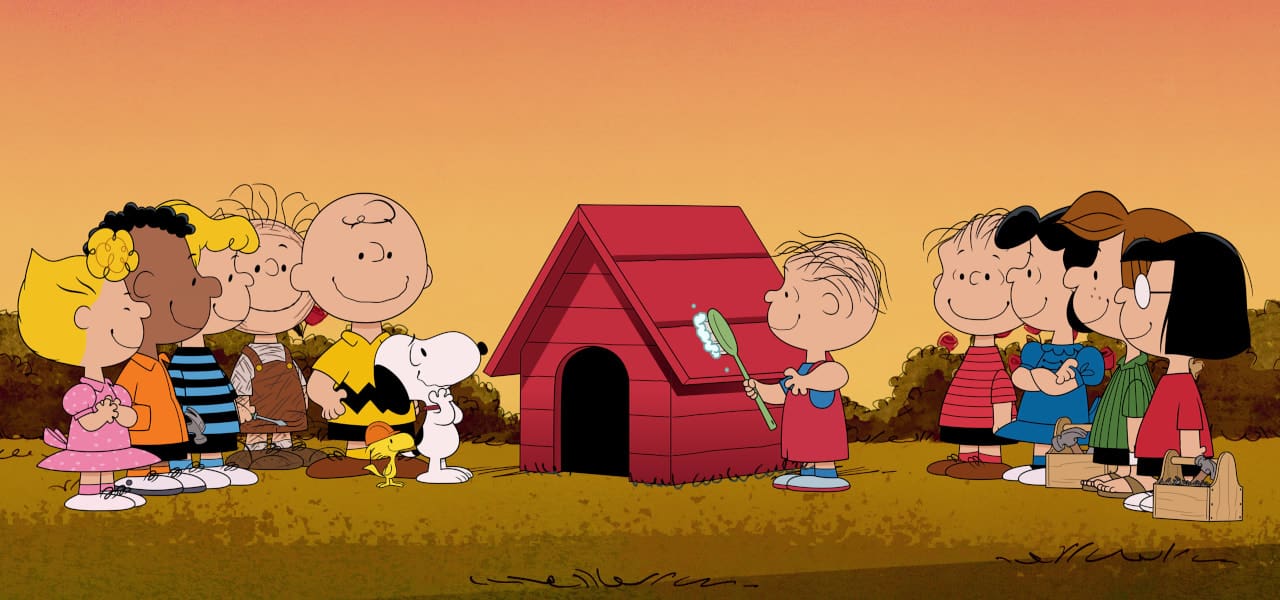
In this non-holiday-related, Snoopy-and-Woodstock-centric story, Charlie Brown’s little sister Sally accidentally sells Snoopy’s beloved red doghouse at her yard sale, leaving the pooch bereft. The trio then set out to get it back while reminiscing about the amazing memories it has given them.
Cartoon Brew recently caught up with Evestaff to discuss the state of the Peanuts animated world seven years into the IP’s creative partnership with Apple TV+, what he’s learned about writing for Charles M. Schulz’s beloved characters, and how Snoopy Presents: There’s No Place Like Home, Snoopy became the team’s most ambitious story to date.
You’ve spent close to a decade working with the Peanuts characters in these modern-era Apple TV+ animated shows. What have you learned about the sweet spot for telling Peanuts stories?
It’s a good question because I feel like this is not the kind of story we could have told when we started The Snoopy Show. As ambitious and as big of fans as we all were going in, and as excited as we were, this was a bigger story. When we first pitched The Snoopy Show, it really was seven minutes, akin to the [comic] strip, and we liked that idea. But we had the bones of this story when we were working on The Snoopy Show. It wasn’t until a couple of years ago, when Apple TV+ and WildBrain reached back out to us and said, “Are there any longer-form ideas?” We were like, “Absolutely!” This was an idea that we had bubbling up, and it was wonderful to get the opportunity to explore it.
Is it easier to balance the spirit of a Peanuts project with your creative ambitions this many years into the franchise?
We were very careful not to mess with what worked and what was so beloved about the comic strip and the original specials, as there was so much that did work and still continues to work. Whether it was the pacing, the staging, or the simplicity, we tried our best to be true to these characters in terms of their design and their voices.
But it was also an opportunity for new artists, who all grew up with this beloved, multigenerational brand, to jump in and put a little bit of their spin on it, as long as it always filtered back to this guiding principle, which was Mr. Schulz’s vision. We honed these skills on Snoopy in Space and then The Snoopy Show, and you get hungrier for more. There are almost 18,000 comic strips to pull from, and every idea has a home in those strips. Every story idea we had for The Snoopy Show — and this idea, too — was born from those strips.
You mentioned that Apple TV+ and WildBrain came back to you for new pitches. Do you feel like you’re a trusted member of the Peanuts family now, and can you see yourself popping in and out of the franchise?
I would love that to be true. I hope that it is and that we’ve earned this level of trust. Certainly, WildBrain and Apple TV+ have been great to me personally, and the same goes for Peanuts Worldwide and the family. It’s just been a great relationship because everyone comes in with this foundation that we’re all trying to do the same thing: honor Mr. Schulz’s vision and carry on this legacy. It all comes from a really good place.
And there are so many characters to pull from. In this [special], we focus mostly on Snoopy, but Charlie Brown carries a pretty heavy thread as well. What we found, too, is that when you dig into the relationship between Snoopy and Woodstock, there are tons of lovely strips about their relationship. Digging into that has also given us a lot of treasures and ideas for shows. There’s lots left to give, so if they were to come back, absolutely, we have more ideas.
How does it work keeping abreast of what’s being developed around Peanuts at Apple TV+?
There’s the feature [Snoopy Unleashed] coming out, and that’s a very talented, entirely different crew. There are a couple of different crews that have worked on the other Snoopy Presents specials as well. For us, I love working with this team because we have been in place for this long, with the passion and commitment to quality. The uncompromising quality that people give to Peanuts, the brand, is just so wonderful to see. Especially when everything in life seems so fleeting, this is something that has stayed and endured. To get to be a part of it is really wonderful.
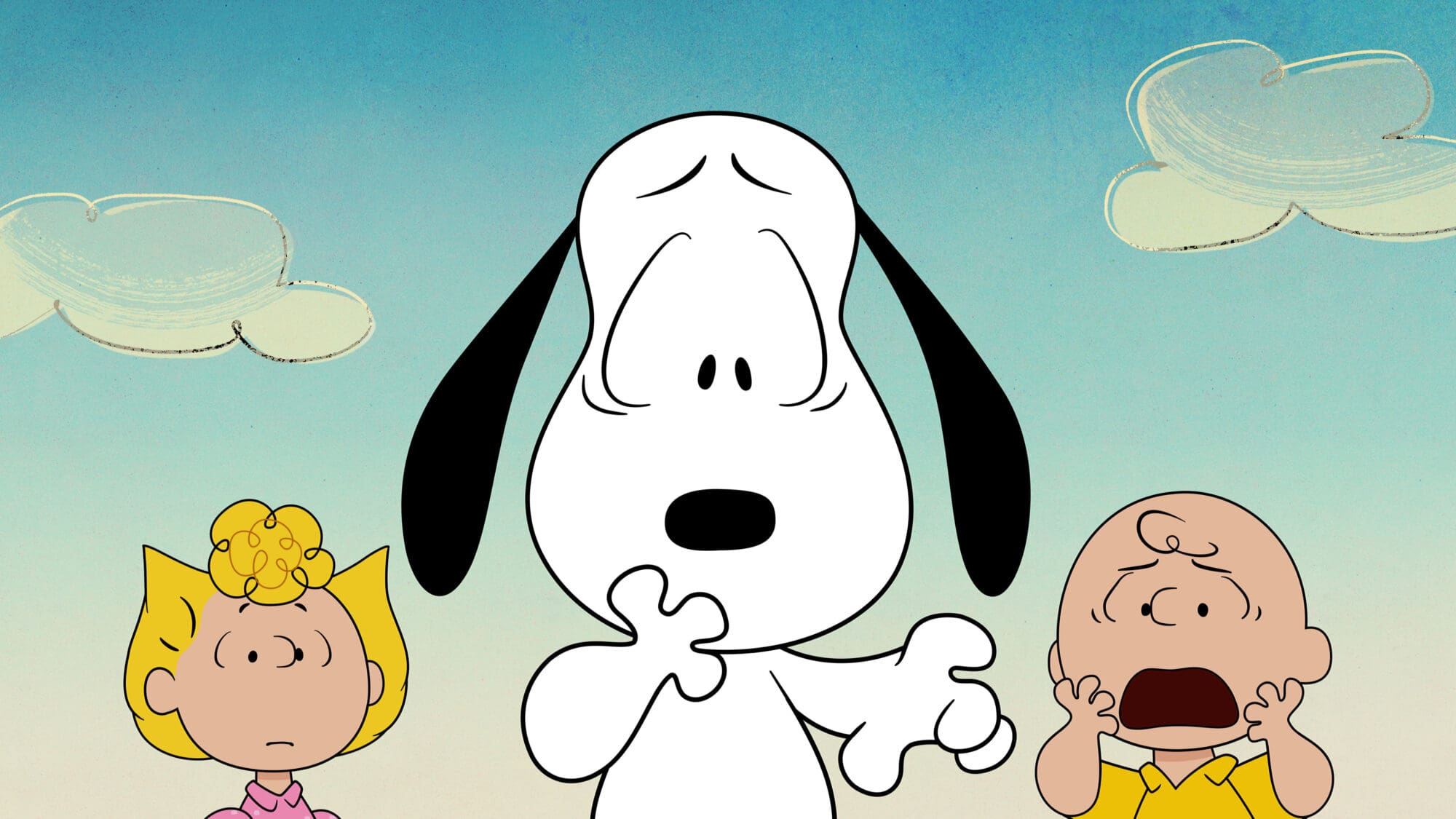
In There’s No Place Like Home, Snoopy, you get to have a lot of fun with the dialogue-free rapport between Snoopy and Woodstock. Is it particularly challenging to figure out how long to sustain scenes without dialogue in a half-hour special?
It’s a good question. I’m not going to say we struggled with it, but we probably did because that’s the process, and you work through it. Just as you see Mr. Schulz’s characters evolve over time, it’s the same thing. We would have overdrawn. We would have overposed. We would have given them too much Snoopy-speak, like his vocalizations. It really was a push and pull to find that balance and make sure it felt authentic. Again, it has its foundations in the original, but at the same time, we’re doing new things with these characters while making sure they still move and sound authentic and true to the original. But definitely, it’s not as though we had this vision and it just worked. There was lots of trial and error, just like everything.
Let’s talk about writing a story in which Snoopy’s doghouse disappears, which must be sacrosanct to the Schulz family. Does a story like this mean you suddenly have a lot more eyes on every aspect of what you’re doing with it? Do you have to pitch every element to make sure everybody feels comfortable?
Absolutely. It was definitely something that everyone was aware of going in, and it was carefully addressed every step of the way. Even with the artists — some of our board artists who would draw the house — they would have to draw it broken and busted up, and you could feel the emotions. Everything was very carefully done.
The creative team we had on this — from our storyboard artists all the way up and down the line, to art direction and the composer — it seemed like we had all the resources necessary to accomplish that goal. So that was the great thing, too, because quite often, as you know, in a lot of productions, you’re just trying to find ways to patch something or fix this or that. But it never broke. It was just additive in terms of, “How can we make this better?” It was a lovely experience.
Is there a sequence that you’re particularly proud of, whether it was intentionally crafted that way or came from the team making something better?
It’s just being given the opportunity to work in a longer format and having the privilege and luxury of being able to do that. When we were working on the song [“Home, Where Your Heart Found Me”], we knew there was going to be a place for it. And when Allen Stone’s song came in, that changed some things. It was a really beautiful song, and it made us go back in. We went back into the storyboards and shifted things around. We tried to give it a little bit more meaning and tried to wrap it around the story. That was a great experience because it was this wonderful collective of artists coming together to honor the past but also provide a bit of a pathway for the future. It’s a beautiful song, and we were able to dig into Snoopy’s personas and include some little nuggets, even from The Snoopy Show.
Not a lot of legacy animation IP gets resurrected with the consistency and quality that Peanuts has had at Apple TV+. What does it mean to you and your team that you get to be a part of carrying on the Bill Melendez and Lee Mendelson legacy for a new generation?
Yeah, that’s the starting ground for everyone. Everyone on the show has a history with this brand. Rob Boutilier is the biggest Peanuts fan, so this is a dream come true for him. As an artist, treating it respectfully and putting in everything you can, everyone rises to the occasion on the show. It’s everyone going above and beyond. And not just the artists, but the production staff, too — moving things and the schedule around to provide us with the resources we needed. It was always additive, and we just didn’t get a lot of pushback because everyone wanted the same end result. Artists typically do that anyway, but this came from a collective place of love for the brand and a desire to do right by it.
I guess the other thing, too, is that in this environment, we know how special it is to have that opportunity. And it was relatively easy to get the people we wanted on this project. Even if they had other gigs, for the chance to draw the dog and these characters, people just jumped on board. It was a wonderful thing to see. So when you see that level of commitment, again, everyone is just firing on all cylinders and giving everything they have.