.png)

More Than An Ad Campaign: Aardman Artists Discuss Their Work On Coinbase’s ‘Human Nature’ Shorts
Stay informed with free updates
Sign up to get our news digest — delivered directly to your inbox twice a week.
Can clay critters discussing financial concerns help clarify the complexities of the contemporary economy? That’s one of the aims of a new campaign from cryptocurrency exchange Coinbase in partnership with Aardman, the Oscar-winning stop-motion studio behind Wallace & Gromit and Shaun the Sheep.
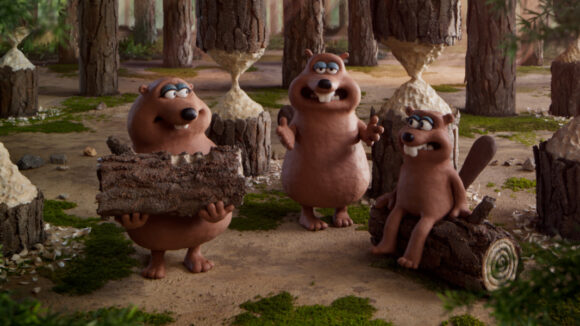
Titled “Human Nature”, the seven-part film series captures authentic conversations about the everyday financial struggles of Americans, rendered in handcrafted stop-motion starring clay-constrcuted animals that will feel instantly familiar to Aardman fans. The campaign aims to spark a dialogue about suggested potential limitations of the traditional financial system and subtly position cryptocurrency as a modern tool for otherwise anxious investors.
Crypto conversations can feel alienating or abstract to many, so relying on a much-loved company like Aardman and leveraging its unmistakable aesthetics is a clever way for Coinbase to get a foot in the door with sceptical viewers.
Real Conversations
The charm of “Human Nature” lies in its unfiltered authenticity. Each short film is built around real voices telling their own stories, drawn from over 36 hours of recorded interviews across the U.S. Casting began with over 70 self-tapes and culminated in nine in-depth conversations, from which the most resonant moments were selected.
Rather than matching puppets to people, Aardman chose not to see the faces behind the voices. Artists working on the shorts didn’t want the identity of the voices to influence the creative process, explains Steve Harding-Hill, creative director of short form and commercials at Aardman. Instead, they built the narrative and characters based entirely on what the voices were saying.
That decision led to some inspired design choices. For instance, a family of raccoons emerged from a recording that had a heavy metallic echo. That sound suggested the clatter of a dumpster, leading to a scene with a raccoon family rummaging through the trash.

Audio to Animation
Transforming raw audio into a fully animated story involved a multi-stage, highly collaborative effort. Director Rich Webber and editor Michael Percival (aka Percy) worked closely with the interviewing team in the U.S., even attending some sessions live.
According to Harding-Hill, “When reviewing the audio, both were listening for clear themes and spent hours on the clips, cutting them down from up to five hours’ worth into smaller edits.” Webber then used the tone and tenor of each voice to inspire the design and personality of the characters.
Once the personalities were established, a storyboard artist mapped out the visual flow. Meanwhile, a concept artist began visualizing the environments, whether it was the sun-scorched canyons of the American Southwest for a desert lizard or the fast food chaos of a trash-filled alley for the raccoons. “We really wanted the canyon-style mountains and atmosphere, and the Raccoons lived in a dumpster, so we replicated the waste foods you might find in there, like fast food packaging,” says Harding-Hill, noting their blend of natural research and stylized worldbuilding.


Tiny Puppets, Big Effort
Each film, although just a few minutes long, required tremendous attention to detail. The production involved:
- 28 puppets
- 416 mouth replacements
- 16,400 total frames
- 60–70 frames shot per day, equating to roughly 2.5 seconds of animation daily
Some characters were particularly challenging. “The raccoons were the hardest,” admits Harding-Hill. “We used some creative license to adapt so they were easier to animate, and ensured the colours stayed separate and didn’t blend as the clay got hotter during filming. We had several experiments with creating the iconic Raccoon tail, and their muzzles were particularly tricky to make.”


A Team Effort
Despite the complexity, the production was a testament to teamwork. At its peak, the crew included:
- Nine puppet fabricators
- Seven set artists
- Three animators and two junior animators
“We’re a team!” said Harding-Hill. “Everyone had a role to fulfill on the production, and we all worked closely together to ensure we created that Aardman magic.”
A New Kind of Financial Conversation
From a marketing standpoint, the appeal of “Human Nature” is in its approachability. By distilling real financial concerns through the unmistakable artistry of Aardman, the campaign effectively disarms viewers. The shorts are as entertaining as they are informative.
In a world where conversations around money and crypto can often feel alienating or abstract, these familiar critters make them personal. Whether or not audiences embrace crypto, they’re likely to find something they enjoy in “Human Nature,” a rare achievement for an ad campaign.
HUMAN NATURE
Agency: Coinbase Creative Studio
Production Company: Aardman
Audio Production: Where The Buffalo Roam
COINBASE
CEO – Brian Armstrong
VP, Creative – Michael Tabtabai
Group Creative Director – Jean Morrow
Creative Director – Mike Giepert
Creative Director – Matt Moore
Creative – Robbie Rane
Creative – Andy Laugenour
Social Creative Director – Cory Conrad
Head of Production – Patrick Marzullo
Sr Producer – Julie Gursha
Sr Producer – Lucia Riera
Integrated Marketing Director – Sarah Albertelli
Integrated Marketing Manager – Daniel Hopper
Business Affairs (Hailstorm) – Krista Horn
WHERE THE BUFFALO ROAM
Audio Producer – Hillary Bergmann
Consultant – Starlee Kine
Audio Tech –
- Catherine Hood
- Stephen Thorpe
AARDMAN
Director – Rich Webber
Producer – Helen Argo
Production Manager – Liz Boyles
Production Coordinator – Chelsea Galloway
Storyboard Artist – Andy Janes
Concept Artist – Jim Grant
Puppet Team Leader – George Watson
Puppet Makers
- Saeed Ahmed
- Claire Drewett
- Cormac Mckee
- Mariella Sartori
- Jack Slade
- Harriet Thomas
Junior Puppet Maker – Anna Taylor
Animators
- Suzy Parr
- Darren Thomson
- Lee Wilton
Junior Animator – Hannah Brooks
Assistant Animator – Lily Goodwin
Additional Junior Animator – Adrian Piqueras Sanchez
Art Director – Bridget Phelan
Senior Set Dressers
- Rachel Bennett
- Hannah Greenhouse
Senior Carpenter – Cath Webber
Set Dressers & Prop Makers
- Maria Collado-Bonu
- Bronny Salter
- Jonathan Thrower
Director of Photography – Sam Morris
Camera Assistant – Erica Pownall
Electrician – James Owens
Rigger – Al Barrett
VFX Supervisor – Bram Ttwheam
Senior Compositor – Jon Biggins
Junior Compositor – Ethan Mainwaring-Taylor
Editors
- Michael Percival
- Dominic Pitt
Track breakdown Editor – Chris Stock
Sound Mixer – William Davies
Colourist – Bram Ttwheam