.png)


Piderman Homecoming: After 10 Years, ‘Baman Piderman’ Creators Reclaim Streaming Rights, Plan New Episodes To Conclude The Series
Stay informed with free updates
Sign up to get our news digest — delivered directly to your inbox twice a week.
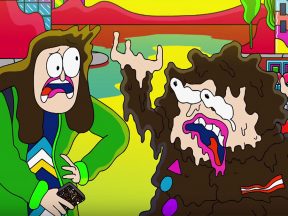
In the golden age of early YouTube and Newgrounds, when viral Flash cartoons reigned supreme and indie animation was still finding its legs, a bizarre, charming, and defiantly original web series burst onto the scene. Baman Piderman, not at all a Batman and/or Spider-Man parody, was something far stranger, more esoteric, and heartfelt, and entirely its own thing.
Created by animation duo Lindsay and Alex Small-Butera (although they were still dating and hadn’t yet hyphenated at the time), now collectively known as Smallbu, the series gained a cult following with its offbeat humor, hand-drawn style, and surprising emotional depth. But after nearly 15 years, the story of Baman Piderman is as much about the legal and emotional journey behind the scenes as it is about its animated hijinks.
Now, after more than a decade in distribution limbo, Lindsay and Alex have finally licensed the series, episode by episode, and will bring it back to their own YouTube channel on August 1, allowing fans old and new to experience the series as it once was, in the halcyon days of internet-native animation.
For the duo behind Smallbu, it’s not just about reclaiming an IP. It’s about coming home.
“We Were Just Kids”
“We were so young when this started,” says Lindsay. “Alex had just graduated from college. I was still finishing my degree. It was the early internet. YouTube was new. There wasn’t an online animation community like there is now, just Newgrounds and Ebaum’s World.”
The duo created the first three episodes of Baman Piderman while Lindsay was still a student. Their absurd humor, awkward timing, and strange, lovable characters quickly caught on. Initially uploaded to Newgrounds in black and white, a colorized version of the first shorts only ever got made because Baman Piderman was selected to screen at the prestigious Ottawa International Animation Festival, so their college professor told them they needed a color version. The cartoons were later moved to YouTube, where they achieved viral success in the pre-algorithmic days of the platform.
“Back then, YouTube had a curated homepage,” Lindsay explains. “If the YouTube staff liked something, they just put it on the front page. That’s how the colored version of the first Baman Piderman went viral. Millions of hits. That was unheard of back then.”
Sadly, the show’s initial impact is impossible to quantify today. When it migrated to Mondo, all its interactions were lost to internet history. “I think the original was at 1.3 million or something, when we took it down. Those are all gone, the comments are gone, it’s really too bad,” Alex laments.
The Mondo Years: A Double-Edged Sword
The viral success caught the attention of Mondo Media, a digital animation company riding high off the success of web series like Dick Figures. Mondo offered Lindsay and Alex the chance to work on Baman Piderman full-time.
“We were like 25, 26 years old,” Lindsay says. “They told us, ‘Quit your jobs and come work on your own show.’ And we did. We were young and dumb and didn’t know any better.”
They signed over the rights to the show in exchange for full-time employment and a commitment to complete the series under Mondo’s banner. But Mondo, like many early digital content platforms, struggled, and Baman Piderman got too costly to continue producing.
“They struggled partway through our contract,” Lindsay says. “With them, they took everything. We lost the rights to our own show.”
And so began nearly a decade of legal complications. New owners now held the rights, none of whom were responsible for the original contract, but all of whom were legally entangled in its consequences.
“The current rights holders are good people,” Lindsay emphasizes. “They’ve tried really hard to help us figure this out. It’s just that the situation was so complicated. They didn’t even know how messy it was when they inherited it.”
A Series Without a Platform
Unable to distribute their most famous work, Lindsay and Alex watched as fans pleaded for more episodes or simply asked what had happened. But legal restrictions kept them silent.
“It was heartbreaking,” Lindsay says. “We had an episode that was basically finished that we couldn’t release. We’d made ‘Ghost Night 2’ as a send-off, knowing things were going badly. But we couldn’t say anything.”
Fans, unaware of the behind-the-scenes drama, accused the pair of abandoning the series or misleading backers of the original Kickstarter campaign. The silence bred misinformation, and misinformation bred toxicity.
“People were cruel to us online for years,” Lindsay recalls. “But we couldn’t explain. Saying anything would have jeopardized the legal process and the people trying to help us.”


The Birth of Smallbu
Out of the ashes of Baman Piderman‘s original run came something new: Smallbu, the studio Lindsay and Alex formed together as a creative and professional partnership. Having left their animation jobs in Boston, they began picking up freelance gigs.
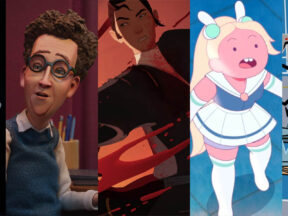
Their big break came when Cartoon Network asked them to animate sequences for the show Clarence. That success opened doors across the industry. Soon, Smallbu was producing content for major players including Nickelodeon, Disney, Adult Swim, PBS, and more.
“It felt amazing to be trailblazing that kind of remote work,” Lindsay says. “We were in New England, working on Cartoon Network shows. That just didn’t happen back then.”
Their later work included animating a full 8-minute sequence for Adventure Time and the stylish intro for the Fionna and Cake spinoff. The duo earned two Emmy awards and solidified their status as high-tier freelance animators.
Returning to Personal Work
As meaningful as the industry recognition was, the Small-Buteras longed to return to making something entirely their own.
“We missed it so much,” Lindsay says. “When you’re working on someone else’s show, it’s amazing to be part of something beloved. But we missed telling our own stories.”
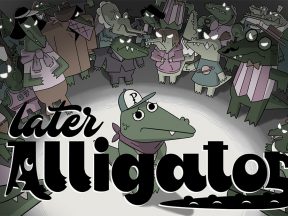
In 2019, they released Later Alligator, a fully hand-animated comedy mystery video game set in an alligator-populated version of New York. Developed in partnership with Pillow Fight Games, the title became an indie darling on Steam and Nintendo Switch.
“It’s my favorite thing we’ve ever done,” Lindsay says. “It was like finally getting to do our own storytelling again. And it came out just before the pandemic, so people played it like crazy while they were stuck at home. It felt like it helped people.”
Bringing Baman Home
Now, after years of negotiation, Baman Piderman is finally coming home. Thanks to a generous licensing agreement with the current rights holders, Lindsay and Alex can release the series on their own channel. The license is free, a gift from the new owners of Mondo’s current.
“We don’t make any money off of this,” Lindsay says. “We’re doing it because it’s important to us, and to the fans.”
The full existing series, comprising more than 25 episodes and over 90 minutes of footage, will go live on August 1, 2025. Included will be rare special episodes, like the one created by fellow animator Worthikids, and a long-completed but never-before-seen “bloopers/art house” episode.
After that, Smallbu plans to produce the final four to five episodes of the series, concluding it the way they always intended.
“The scripts have existed for a decade,” Lindsay says. “But we’re older now, better storytellers. I’m tweaking the pacing and structure a bit. It’s still the same story. Just more polished.”
The final episodes will be released one at a time, beginning in late 2025.


The Legacy of Baman Piderman
Part of what has always made Baman Piderman special is its refusal to conform. The show eschews traditional narrative and visual structure in favor of gradual character evolution, dream logic, and long-form emotional payoff.
“It starts off so silly,” Lindsay says. “But we always knew where it was going. There is a story. And everything that happens stays in continuity. Everything matters.” she explains.
In that sense, the series is less a parody and more a playful animation experiment, an examination of two sweetly innocent characters embossed with slapstick elements. Each character evolves. Relationships deepen. And yet, it never loses its strangeness.
“It’s internet Winnie-the-Pooh,” Lindsay jokes. “That’s what we call it. It’s sweet. It’s weird. It’s about connection.”
What Comes Next?
Smallbu isn’t stopping with Baman Piderman. Lindsay and Alex continue to work on studio service projects while developing original projects in the background, with a major announcement forthcoming. Without going into specifics, Alex calls it “the hardest thing we’ve ever done. But it feels like we’re finally making what we were always meant to make.”
In the meantime, the return of Baman Piderman will be a major moment for indie animation, YouTube nostalgia, and the passionate fans who have waited patiently for a proper conclusion.
“This isn’t about money or fame,” Lindsay says. “It’s just about doing right by something we love. And hopefully making a few people feel good along the way.”
The world has changed dramatically since Baman Piderman first emerged from the depths of student sketchbooks and Flash timelines. But in a time when the animation industry is reckoning with corporate contraction, AI anxiety, and uncertain futures, the return of something this handmade, this heartfelt, and this human feels like a small but powerful victory.
And as Lindsay says: “It’s for the love of the game.”