.png)
From Burnout Doodle To Fully Playable Game Prototype: JuanPe Arroyo’s ‘Deaths of Peck’ Goes Public (EXCLUSIVE BTS)
Stay informed with free updates
Sign up to get our news digest — delivered directly to your inbox twice a week.
Conceived as an exercise to overcome industry burnout, then pitched a five-minute short at Spain’s Weird Market, Deaths of Peck has since evolved into a video game at London’s The Line, with a prototype that goes live today. Having already pitched at gaming meetups and markets, the seeds of a full game are now out in the real world, ready to be tested, broken, and judged by players.
For creator JuanPe Arroyo, the six-year path from sketch to playable prototype still feels slightly unreal. The project has changed shape multiple times, but its core idea has stayed stubbornly intact: a goblin who dies over and over again but always keeps going.
A Cure for Burnout
Peck began as a workaround. Arroyo had stopped drawing during a period of burnout and needed a way back to the discipline he loved. The solution was to lower the stakes as much as possible by creating a single character, drawn quickly, over and over, with a built-in excuse to repeat the same action endlessly.
“I needed something small, something I could draw without pressure,” he says. “Peck became the character that helped me find my way back.”
At first, the idea was purely practical. If Peck could not die permanently, he could be killed in as many ways as Arroyo could think of. That loop gave him something to return to each day. Over time, the repetition started to carry weight. Peck stopped feeling like a throwaway gag and began to reflect the process itself. “I’ll draw him 100 times,” Arroyo remembers thinking early on. “And when I run out of ways to kill him, I’ll get bored and stop.” He never did, with some help from an eager audience.
Posting those drawings online changed the trajectory of the project. People responded to the character, sometimes with sympathy, sometimes with a darker sense of humor. Eventually, Arroyo began asking his audience how Peck should die next. That input fed directly into the work, turning a personal exercise into a shared one.
“It became collaborative,” he says. “People started deciding how to kill him, and that was really fun.”
In Front of a Live Audience
That collaborative streak carried into the next phase. Arroyo developed Peck into a short film concept and took it to Spain’s Weird Market (we picked it as one of that year’s best pitches), where animation projects can be tested in front of a live audience without needing to be fully finished.

“I quite like it that it’s one of the few festivals where they offer you the opportunity for you to test something in front of an audience,” Arroyo says. “And they don’t really ask anything in return. It’s almost like a comedy open mic but for animation. You have the opportunity to test your material and see if it works with a live audience.”
At the time, Peck was chasing something for himself, pushing through pain in pursuit of a goal that might or might not justify the effort. The audience reaction gave Arroyo a useful signal as to whether or not the pitch was landing. “We were sitting there thinking, it’s about this goblin who dies again and again,” he says. “And people were laughing. We were like, okay, it works.”
A Change of Format
The shift into games came through Arroyo’s ongoing work with The Line. The London-based studio, known for its commercial animation, music videos, and video game cinematic work, has also spent years developing original projects on the side. At some point, the question came up internally. Could Peck work as a game?
Arroyo hadn’t considered it before. “They said, ‘ Do you think you can turn this into a video game?’” he recalls. “And I was like, man, I never thought of that. But it’s an amazing idea.”
He took a couple of weeks to think it through, then committed. While he didn’t bring the technical experience of a seasoned game dev, he did have a charming character already shaped by audience interaction, and a concept built around repetition and variation. Those qualities carried over once he started thinking in terms of gameplay.
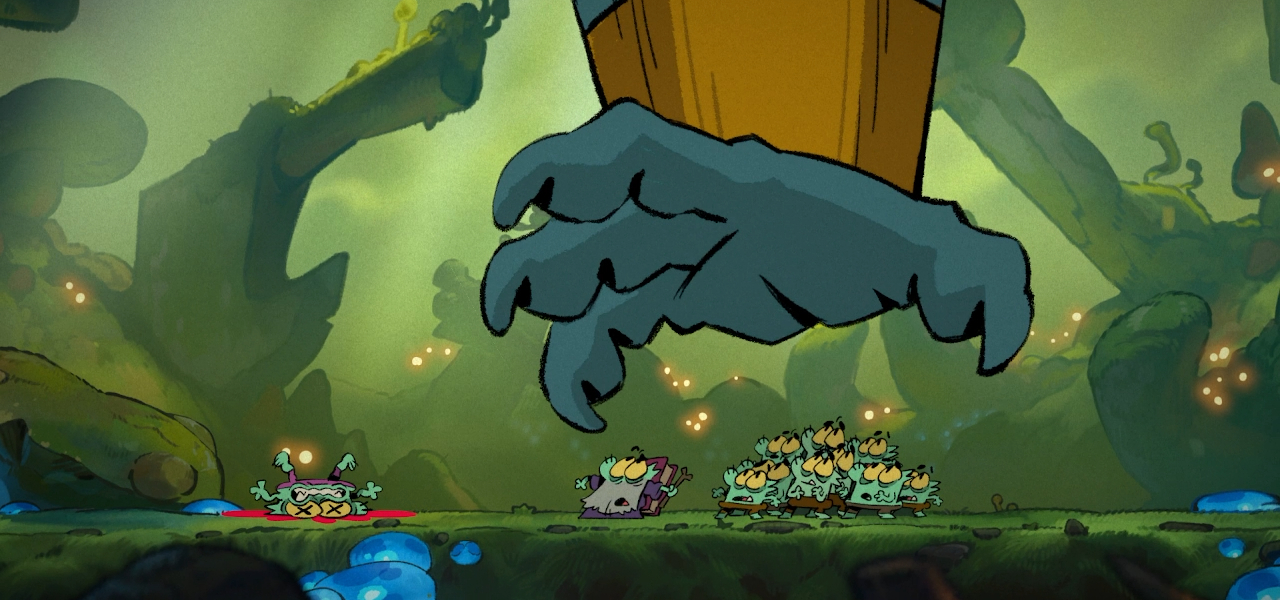
Two years later, the result is a fast-paced 2D platformer currently in prototype, where players control Peck as he attempts to rescue other goblins captured by orcs.
Death With a Purpose
As Arroyo saw it, the central challenge of developing a Peck game was mechanical. In most games, death marks failure. It resets progress and pushes the player to avoid it. Peck’s entire identity revolves around dying, so that convention had to be reworked.
Arroyo spent a long time circling the problem. Early ideas tried to sidestep immortality altogether. “I was looking for excuses,” he says. “Trying different things to avoid it.” None of them worked. The breakthrough came when he stopped resisting the premise and leaned into it completely.
“You’re really trying to avoid the thing that makes him special,” a friend told him. That stuck.
Arroyo flipped the logic. Death became the point and a key game mechanic. “If in every other game death is bad, in this game death is good,” he says. “You have to die because you cannot permanently die.”
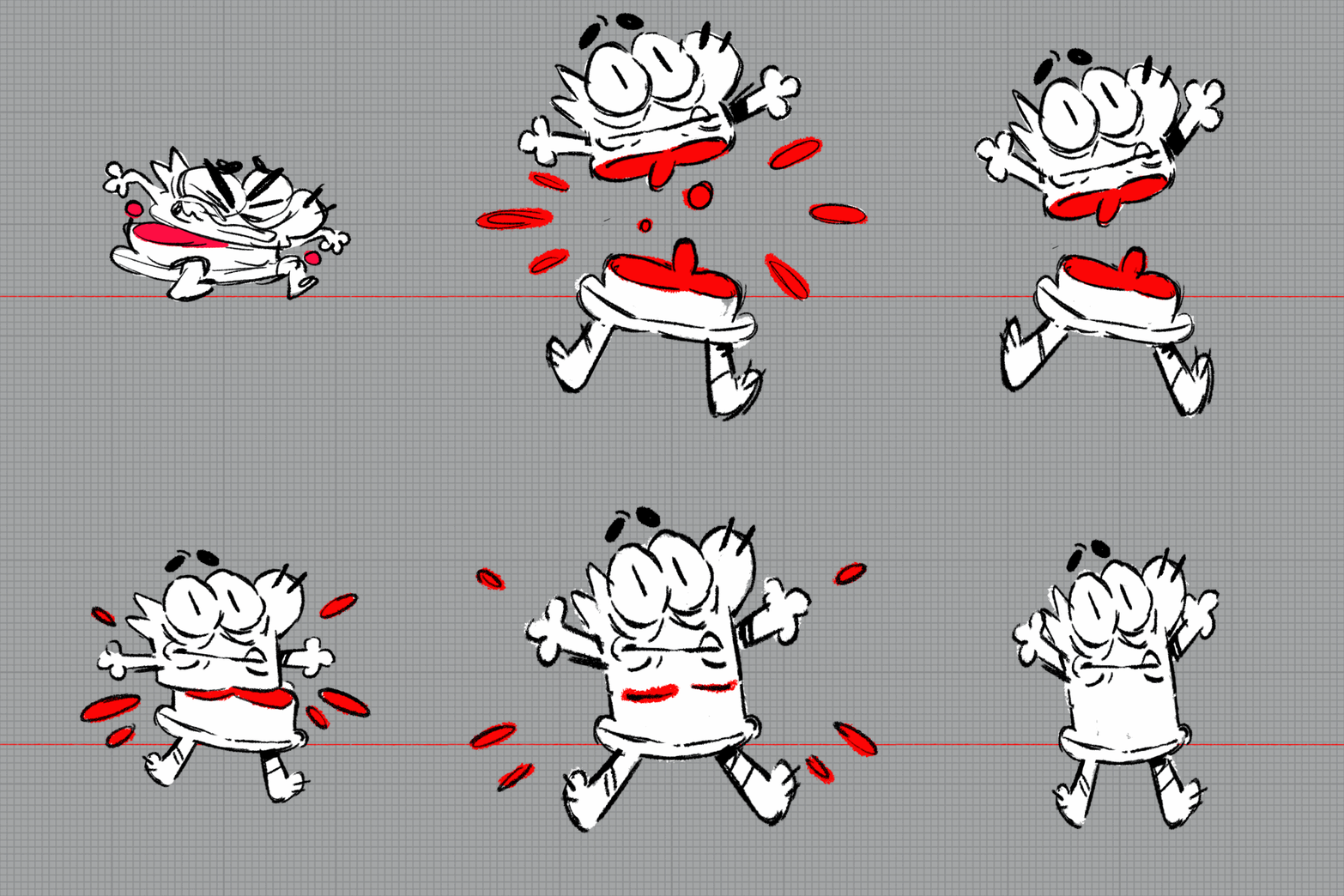
Each time Peck is killed, he gains a new ability tied to the way he died. A violent split might unlock a new movement option. Crushing impacts open different paths. Fire changes how he interacts with obstacles. The press materials describe it as a system that “turns failure into a strategic tool.”
That shift also brings the original metaphor back into focus. Peck improves through damage. The loop that helped Arroyo get back to drawing now sits at the center of the game design.
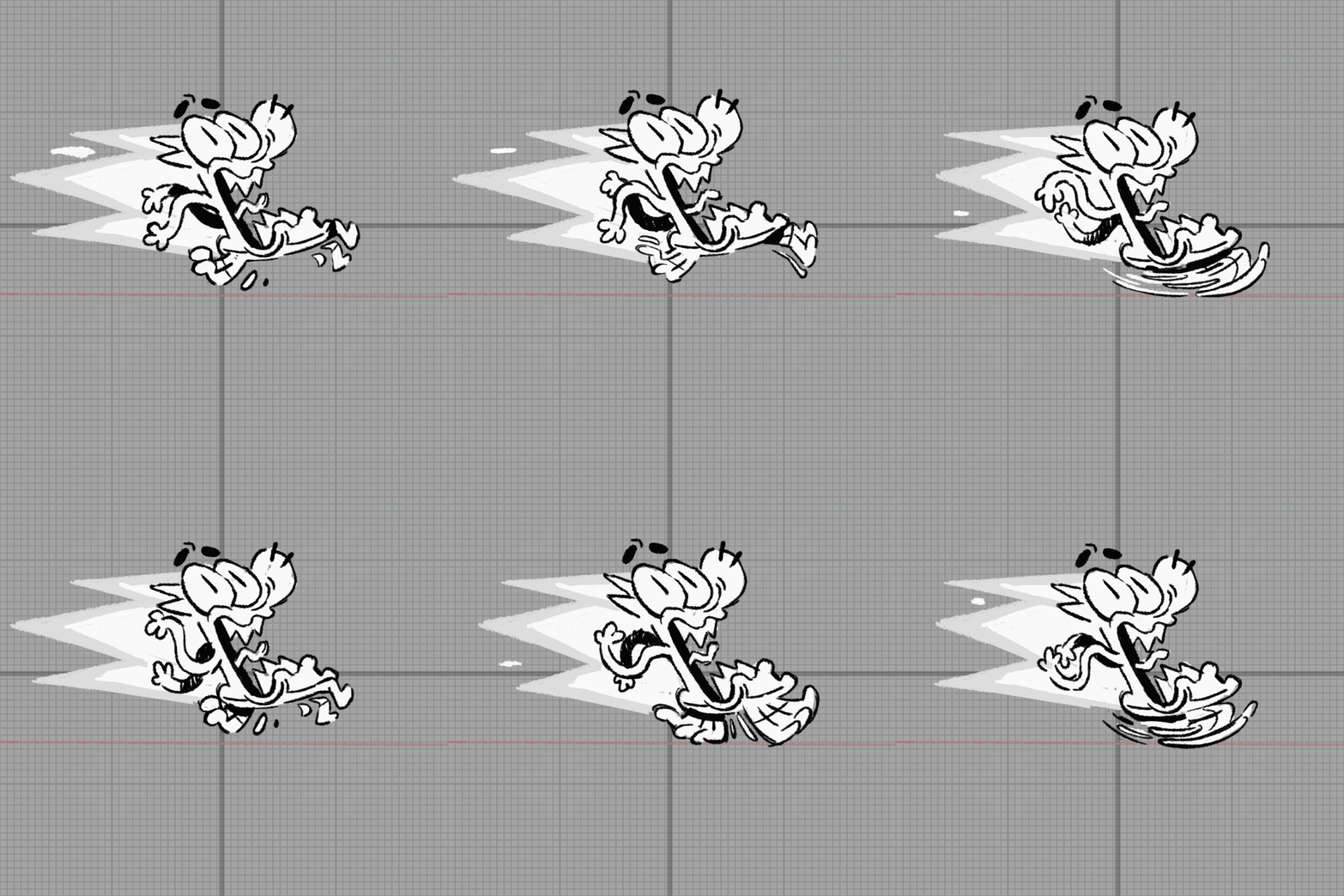
Worldbuilding
The game’s narrative and setting structures expand beyond the initial idea without losing its simplicity. Players move between two main environments. A goblin village acts as a hub, where rescued characters gather and new interactions open up. The tower, controlled by orcs, serves as the primary challenge space.
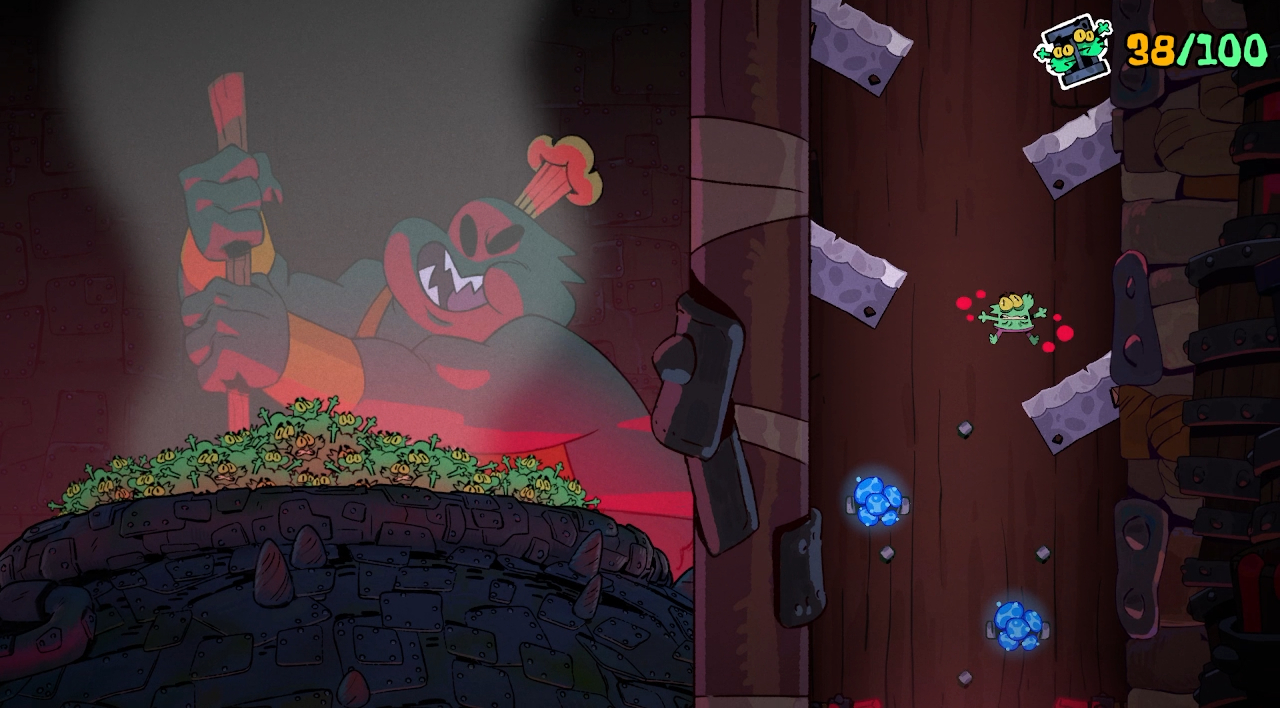
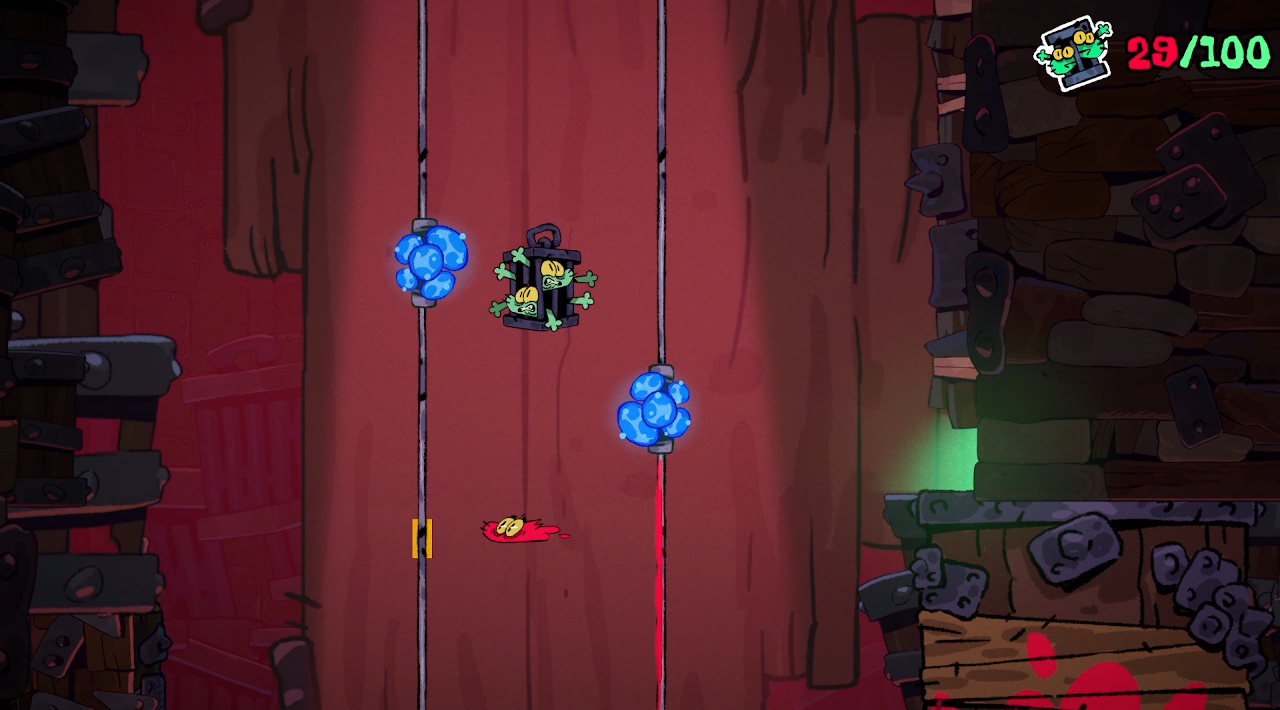
According to the press kit, the tower is a vertical stronghold filled with hazards and enemies, while the village provides a place to rebuild and regroup. The contrast gives the game a rhythm. Intensity inside the tower, release back in the village.
The premise itself has shifted along the way. Earlier versions of Peck were more self-interested. Now he is framed as a reluctant hero. “He’s dying for a cause,” Arroyo says. “He’s not dying just for himself. He’s trying to save his friends.”
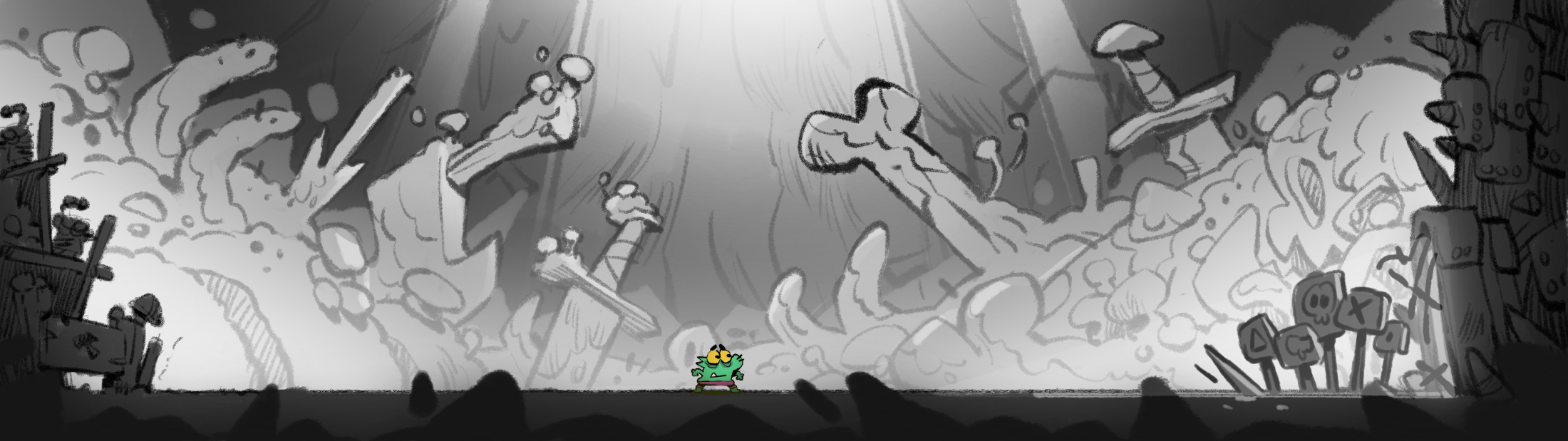
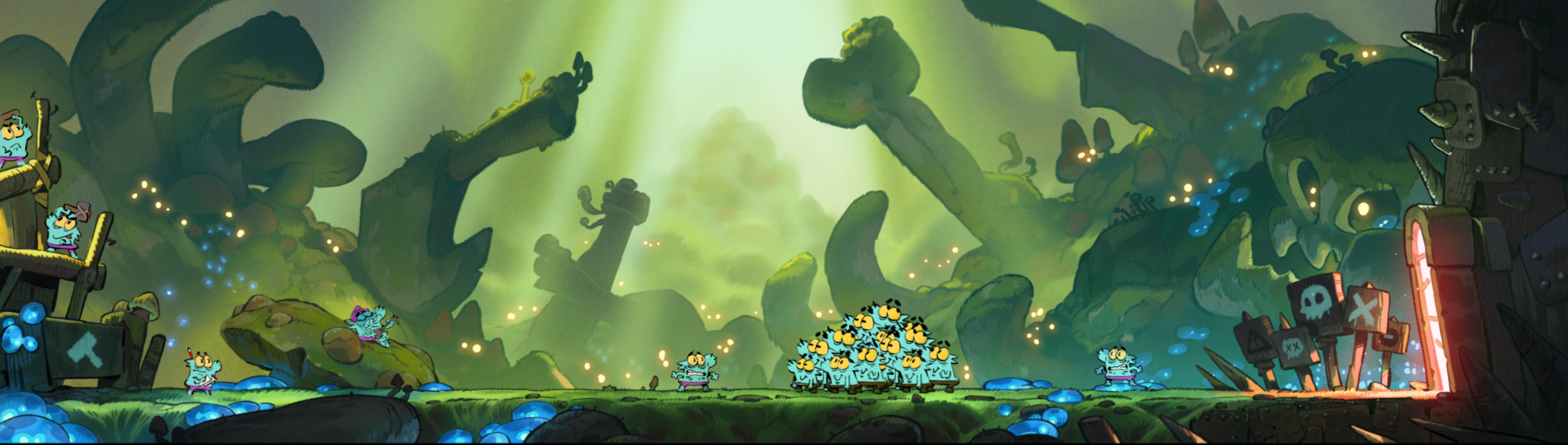
Visually, the project carries over his animation background. The characters move with exaggerated squash-and-stretch, and the tone sits somewhere between playful and gruesome. The Line describes it as a hand-drawn adventure with a “mischievous and slightly gory twist.”
Learning Through Doing
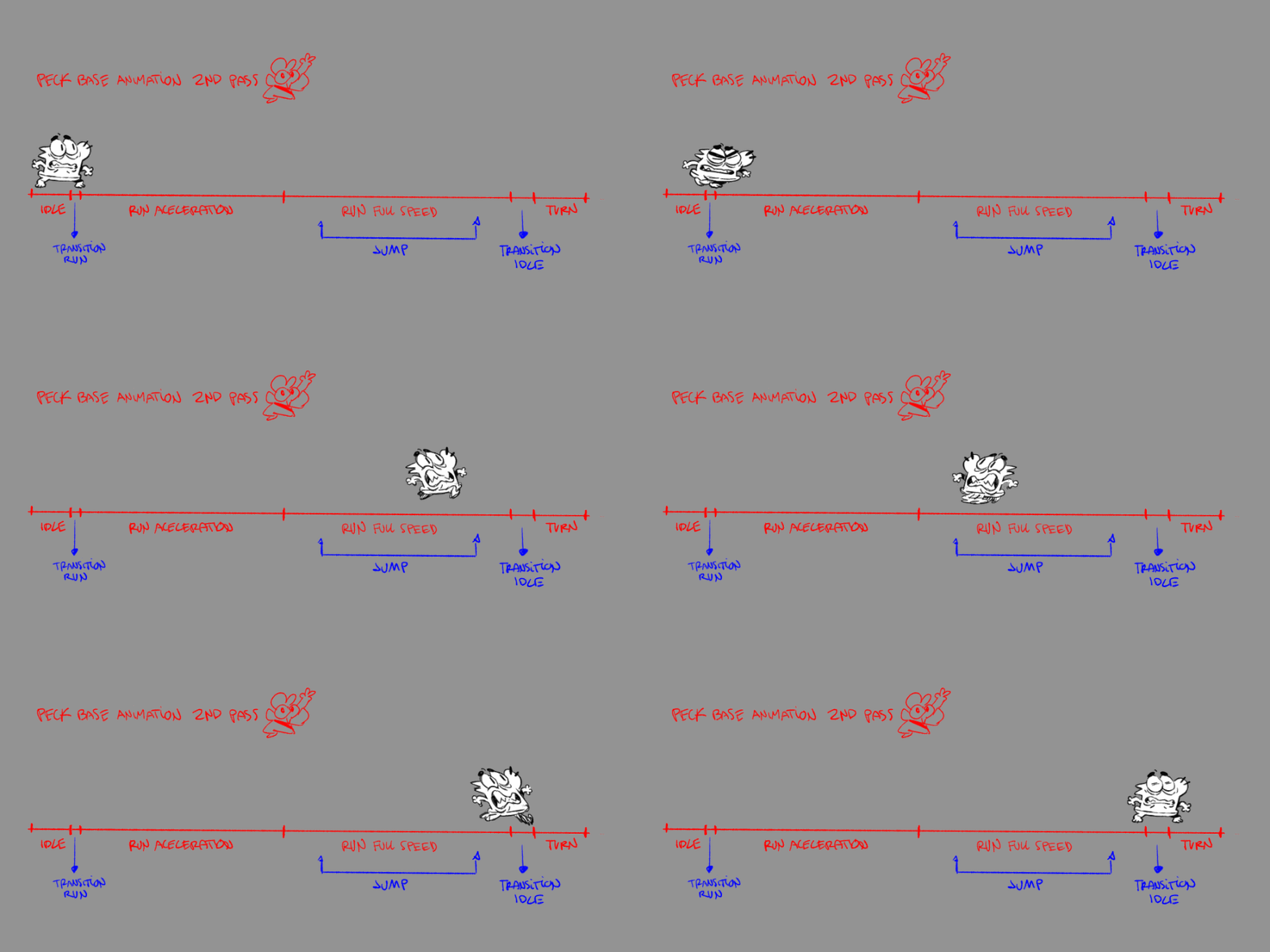
Moving from animation into game development meant rebuilding parts of his workflow. Instead of animating full sequences as he was used to, Arroyo had to break movement into smaller components that the game engine could trigger and combine.
“I had no idea how to use Unity,” he laughs. “I had to learn everything while doing it.” He credits Noname’s Ayman M. Ahmed for teaching him “everything I know about Unity. He’s a hero!”
He learned the process while building the prototype, working closely with Noname Studio in Barcelona, which handled the programming side. He would animate something, drop it into the game, test it, and adjust it. “You export it, you put it in, and suddenly it’s moving,” he says. “It’s alive.”
That immediacy helped sustain the project. After the earlier burnout, having something tangible to work on each day made a difference. “It was the best thing that could happen to me,” he says. “I was waking up and working on my thing.”
The prototype came together in a matter of months, with more than a hundred individual animations driving Peck’s movement and actions.
In the Hands of Players
The version available now is still early. The prototype serves as a test of creativity and commercial viability. The team has already shown the game at events such as the London Game Festival and Gamescom, gathering feedback from players and industry figures.
Releasing it publicly opens that process up. Anyone can download the demo, play through it, and decide whether the idea holds together. That response will shape what happens next.
Publishers have expressed interest, but committing to a project at this stage remains a hurdle. The current approach leans on visibility and proving that this thing can make money before investors take a swing in a market increasingly averse to risk.
For Arroyo, the appeal is more immediate. Watching people interact with Peck, struggle through the mechanics, and eventually figure them out carries its own reward.
“My favorite thing is to see people play it,” he says. “The game in its current state is quite hard, but they stay. They want to finish it.”
The project started as a way to get back to drawing. Now it sits before an audience again, asking a different question. Whether this idea can carry all the way through to a finished game.