.png)
Fake Xerox And Real Piano Wire: How Gorillaz Went Old School For ‘The Mountain’
Stay informed with free updates
Sign up to get our news digest — delivered directly to your inbox twice a week.
Perhaps more than ever, audiences now crave real texture in their imagery, and the artists behind some animated music videos are catching on. With the general sense that tangible feeling in moving-image art has gradually been left behind with the advent of digital (and more recently, generated images spat out by gen AI), the handmade qualities of the short The Mountain, The Moon Cave and the Sad God from Gorillaz and the artists at London’s The Line studio have immediately captured people’s wistfulness for animation you can touch. (You can also see this reflected in the nostalgic music video for “Spirit Jumper” by spktra, which was similarly studious in how it replicated the textures of cel animation through digital methods.)
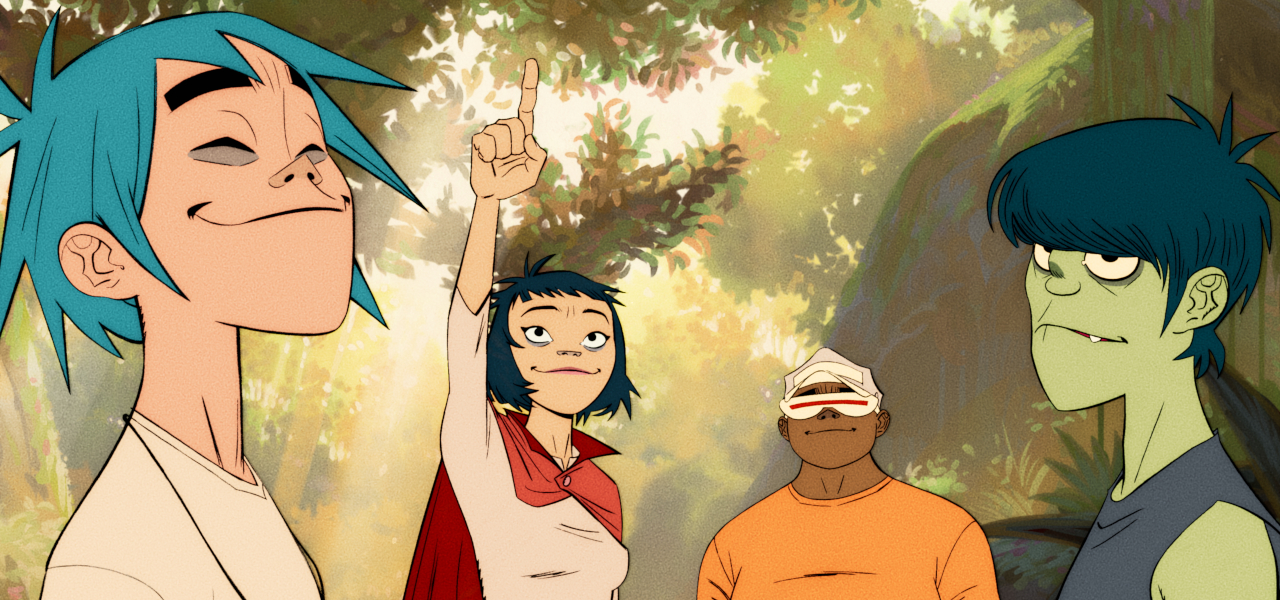
The new video, named for three songs off the band’s new album The Mountain, was produced through a fascinating hybrid workflow of actual paintings with digital touch-ups, physical props and lighting tricks, optical effects on film, and hand-drawn animation created digitally. All of these analog and digital layers combine into a piece that feels authentically textured.
Co-directors (and co-founders of The Line) Max Taylor and Tim McCourt were enthusiastic about unspooling each individual component that would add up to the look of a Western animated film from the 1950s and ’60s. “From the start to the finish, we recreated every step of the process,” Taylor says, “mirroring how it would have been done in the analog way, so the final effect is that you feel that it’s something tangible and real.” The effect, as the directors put it, is additive — each small detail building into something holistic despite the variety of methods.
This began with the work of the film’s other co-director and Gorillaz co-founder, artist Jamie Hewlett, who wanted to evoke a classical era of animation and reached out to the team to tackle the challenge. Hewlett worked on storyboards and animatics, with the team at The Line doing “a due diligence pass” before moving into animation.
Building on that foundation, the team sought to recreate the texture of that era of filmmaking piece by piece, going to great lengths to do so. “The whole film was very much an exercise in paying homage to something — researching all the references for how we could recreate that specific feeling,” Taylor says.
One example was emulating how a cel was painted and then Xeroxed — a process popularized by Disney films in the late 1950s and ’60s. “One thing we liked about the era was when they started Xeroxing or photocopying onto cel, which gave the quality of the cel a different look,” McCourt says, noting how it complemented Hewlett’s style. “He tends to have a bit more of a clean line now, but if you look at Demon Days and Plastic Beach, you have this lovely pencil line work.”
Taylor adds, “We were taking our cleanup with a pencil line, treating that to make sure it felt like it had been Xeroxed, and then adding colors with textures and boils, subtle drop shadows. It’s about minor details adding up — you can’t really pick one out and say, ‘Oh, I can see that’s an effect.’” The team’s research was thorough. Though the animation wasn’t done on cels, they created a few for reference. (“Even just trying to get [the frame] printed onto the cel was difficult,” McCourt admits, describing a complex struggle with Sellotape.)
To replicate the grain of celluloid film, they used scans of actual film overlaid onto the shots. “Within the film there are lots of optical effects where we filmed live-action components,” Taylor says. “We then emulated the double exposures they would have done back in the day on film. As far as the grain, dirt, and noise, it’s scanned film — blank film overlaid to give the final image that real film texture.” McCourt adds that they introduced gate weave — the characteristic wobble of film as it runs through a projector — to reinforce the effect.
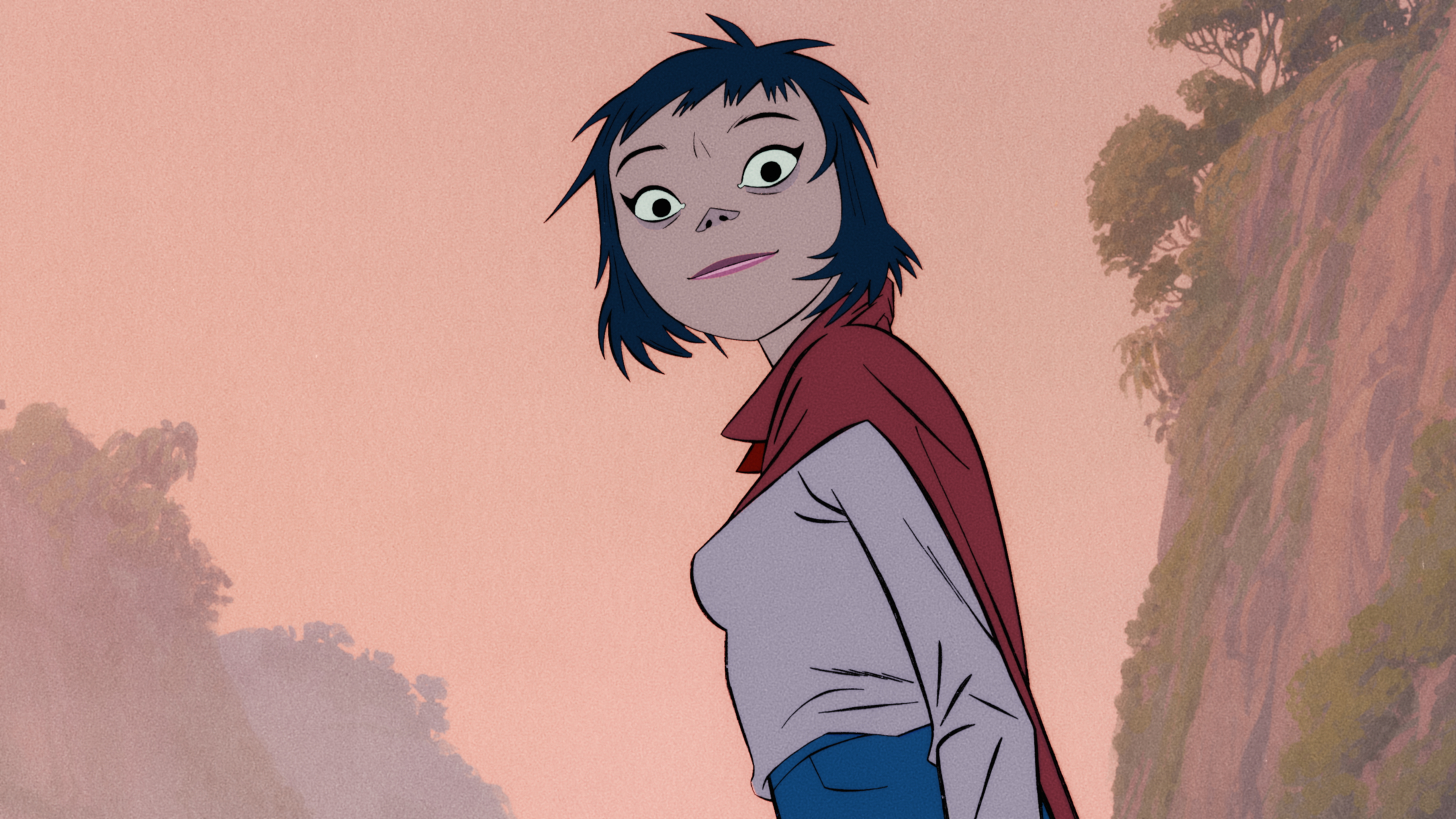
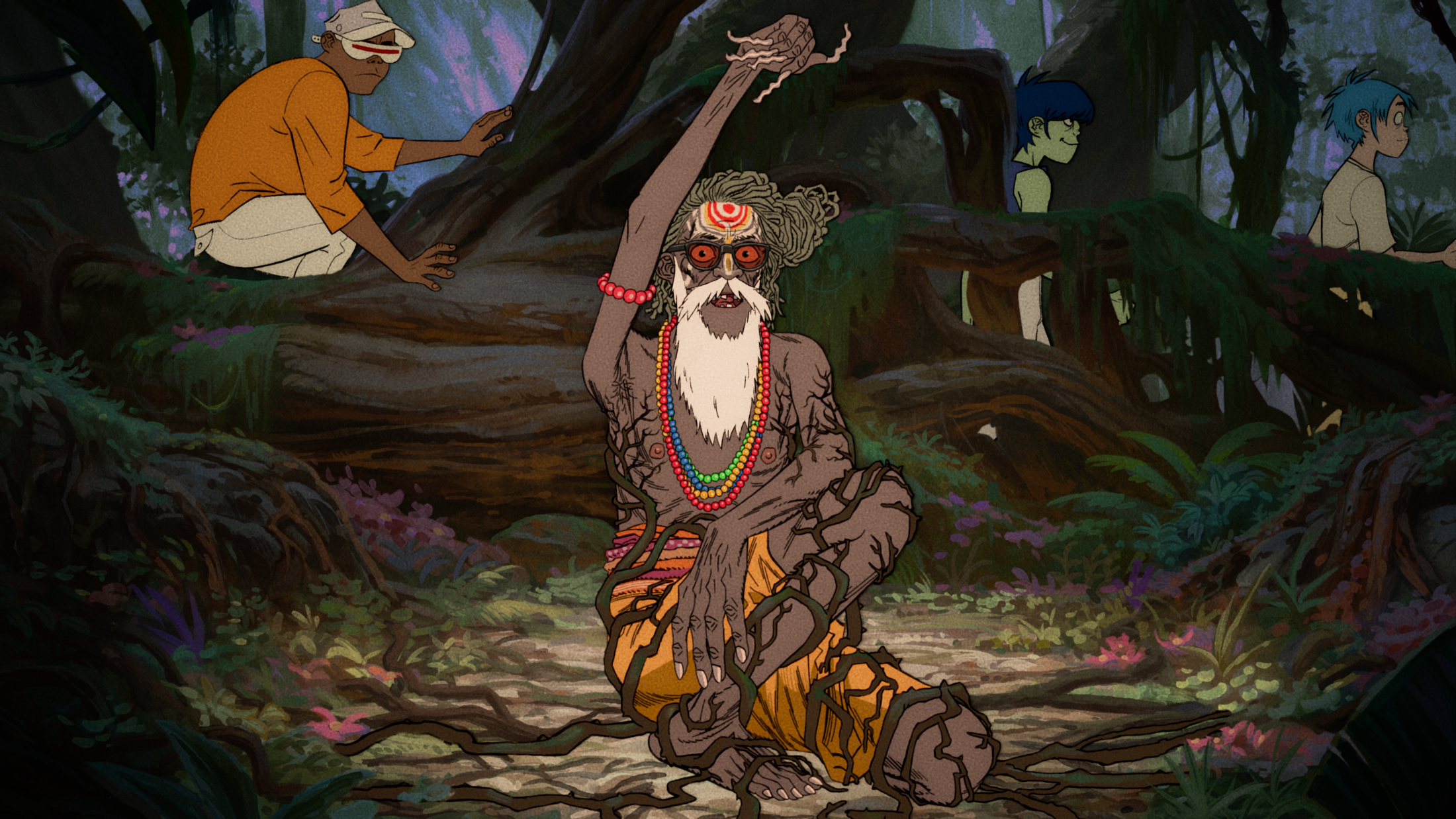
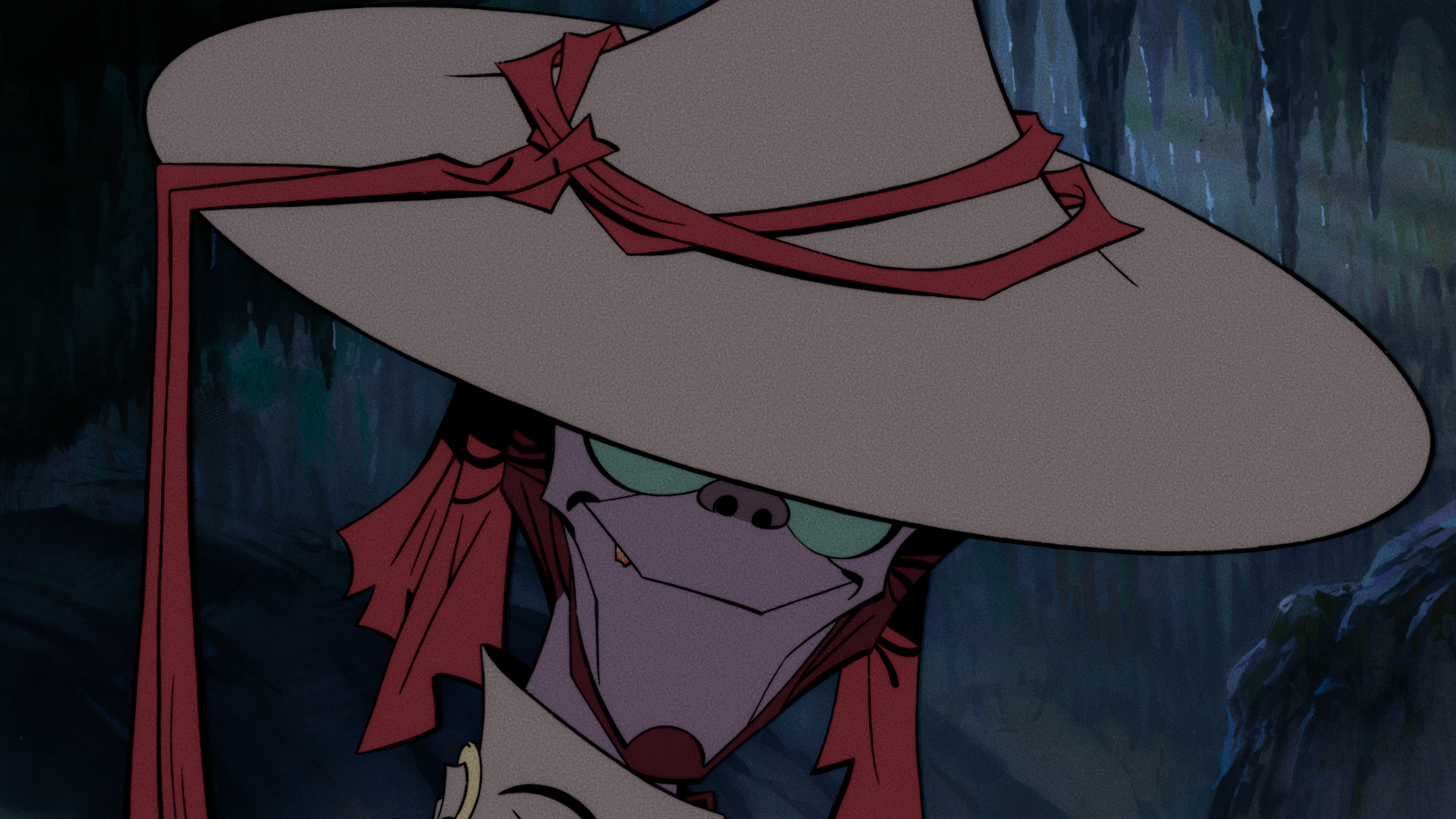

Live-action footage and physical props also played a significant role. Some inspiration came from Hermann Schultheis, an artist on Fantasia, with the directors citing his collected notes in The Lost Notebook as a reference point.
“It’s a really fascinating book. It gave us good insight into some of the practical optical effects they did,” Taylor says. “For example, in the film, we have a waterfall. They would have filmed smoke in water, flipped it upside down, and double-exposed it over the painted waterfall to get that sense of water spray.”
There were other practical props as well, including the fairytale book that opens the short. “We worked with one of the last remaining bookbinders in London that’s actually down the road from our studio, called Wyvern Bindery,” Taylor says. The book was filmed and rigged with piano wire so the pages appear to open magically. “We deliberately didn’t paint out the piano wire — you can see it — because I don’t think they would have had that kind of touch-up or postproduction facility back then,” he adds.
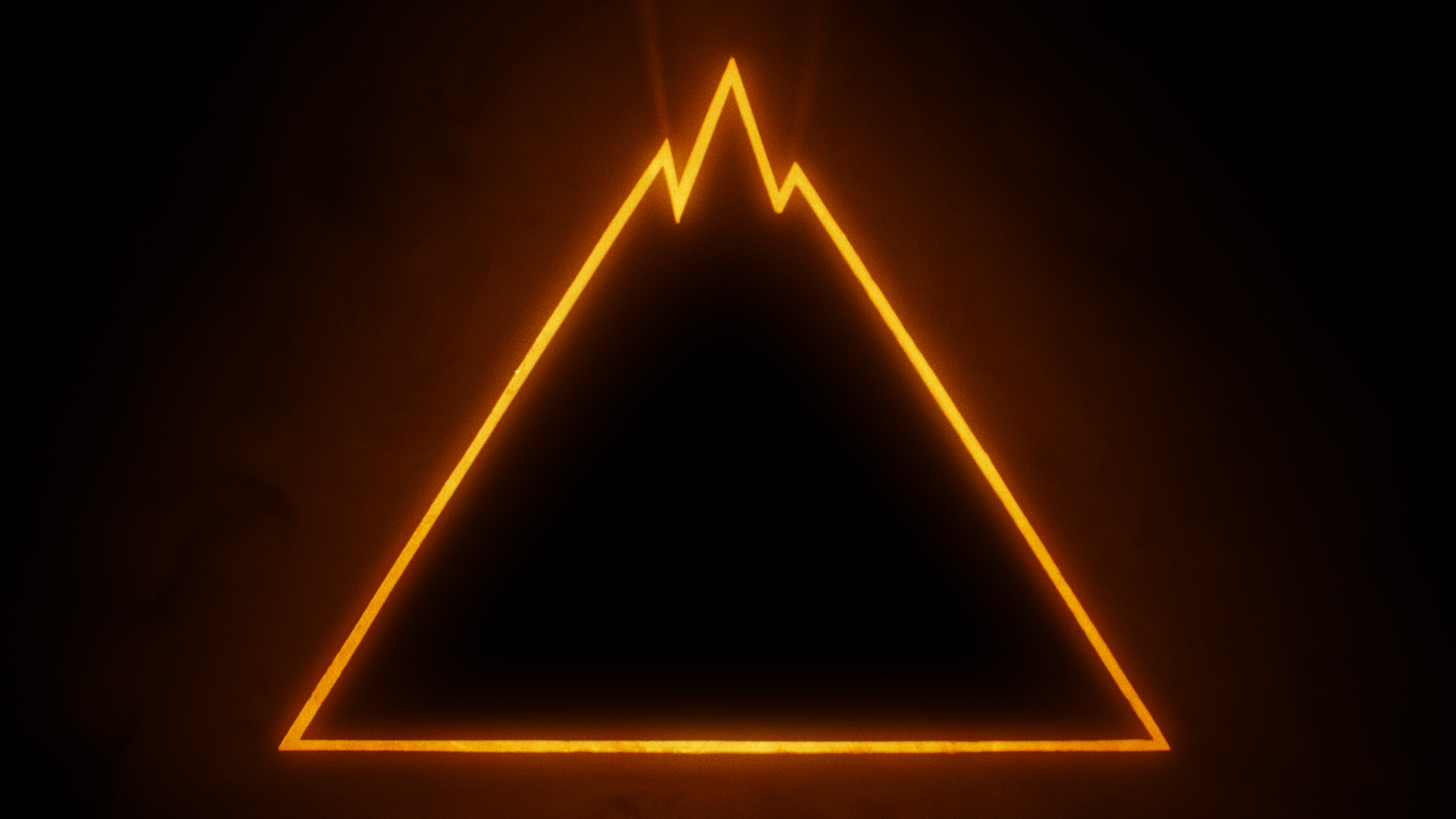
Even seemingly minor elements involved hands-on experimentation. For the glowing gold mountain logo that appears later in the film, the team cut the logo out of a black acrylic sheet and rigged an elaborate rostrum camera setup, pumping smoke beneath the sheet. The reveal was achieved by pouring black sand into the crack to cover the logo, then playing the footage in reverse. “Even the glow is literally someone cranking the light temperature up in the room — it’s a real optical glow,” McCourt says. “You get bits of sand stuck, imperfections where the light shifts and creates these God rays. Or hotspots where the light hits differently. All of that is so hard to replicate digitally — and it just wouldn’t look as cool.”
The Earth shot was similarly achieved optically. “It’s something they did in old sci-fi movies — take a big polystyrene sphere covered in plaster, then project a painting of the Earth onto it,” Taylor explains. “In Jamie’s animatic, he wanted the sun rising from behind, revealing this giant planet. So the light poking around the Earth is just a light on a C-stand that we tilt toward the camera. You get a natural lens flare and a feeling of sunrise.” The shadow revealing the planet? Simply Taylor is moving his hand in front of the projector.
These creative solutions emerged from self-imposed restrictions, guided by the available technology of the period they were emulating. As McCourt puts it: “Our philosophy was that if they couldn’t have done something in that era, then we didn’t do it.”
That meant scaling back contemporary conveniences. “Multiplane was the most expensive type of camera work you could do back then. Now it’s cheap — you put a bunch of layers in After Effects and move them, and every shot could have multiplane if you wanted,” McCourt says. Instead, they limited themselves to a plausible number of layers. “We were thinking about where productions would have spent that money. They might only have been able to afford six layers — or three — even though we could have had 50. That approach affected the directorial style as much as the practical side.” Many shots use only two to four layers, and camera movement remains largely linear and restrained.
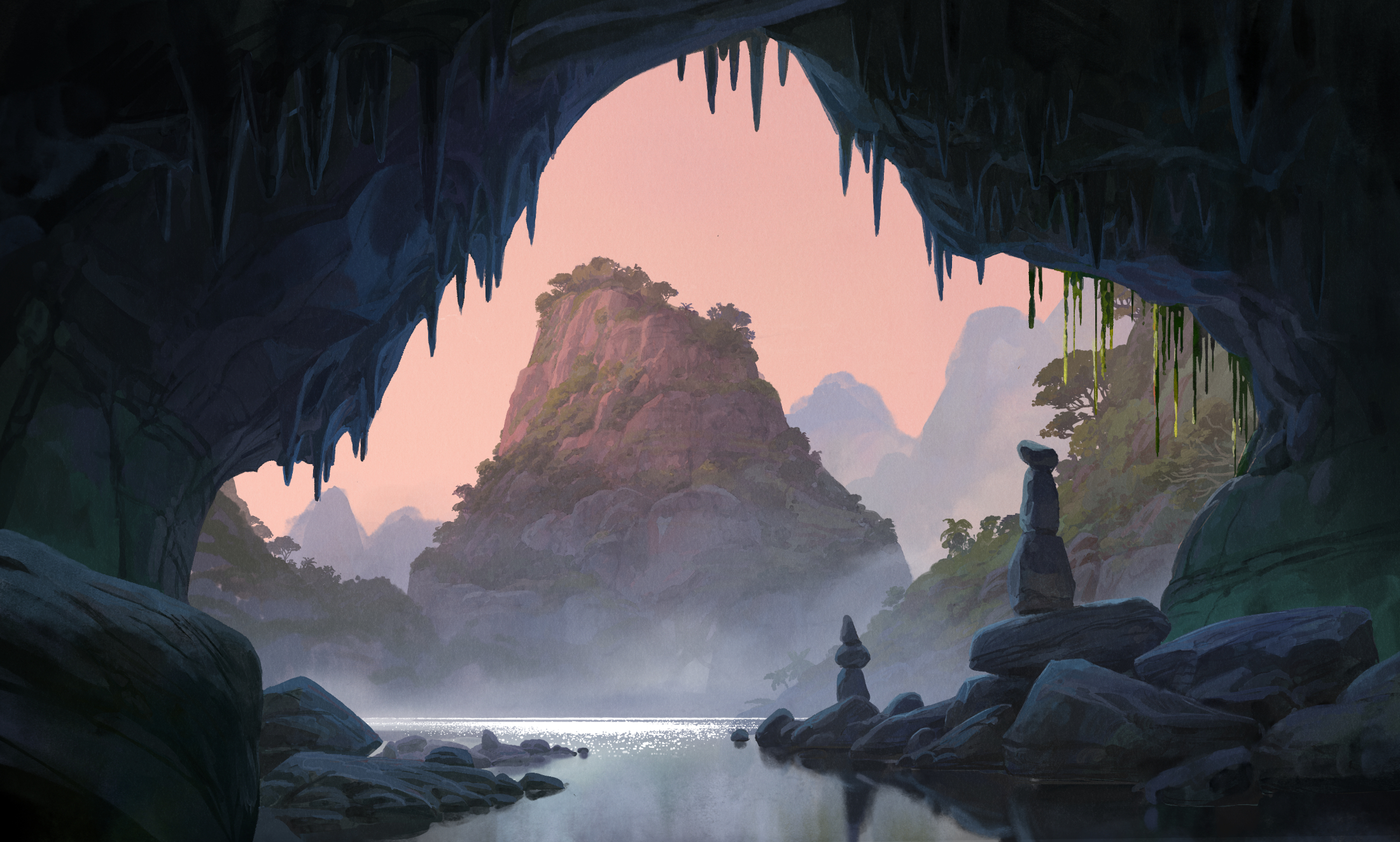
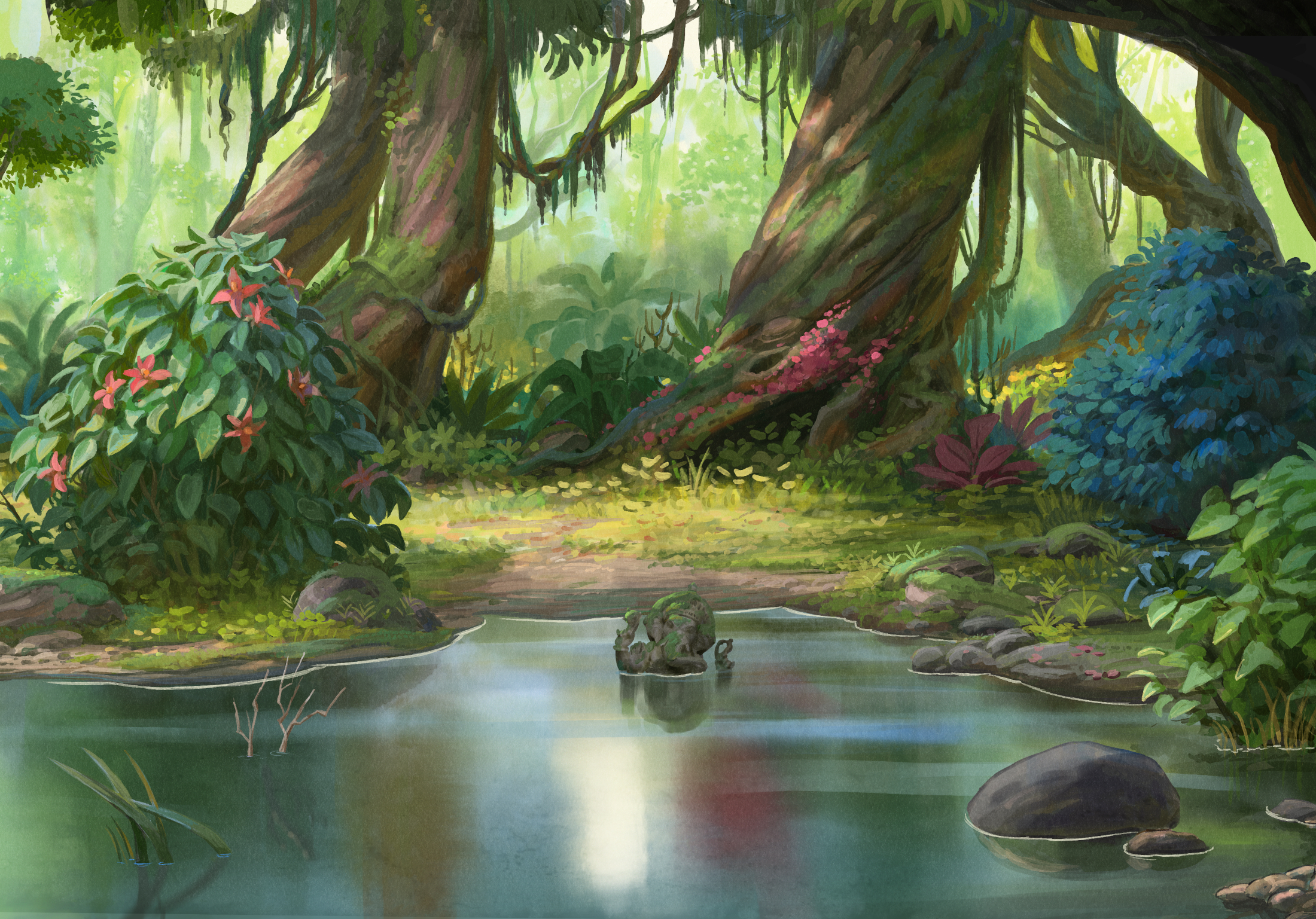
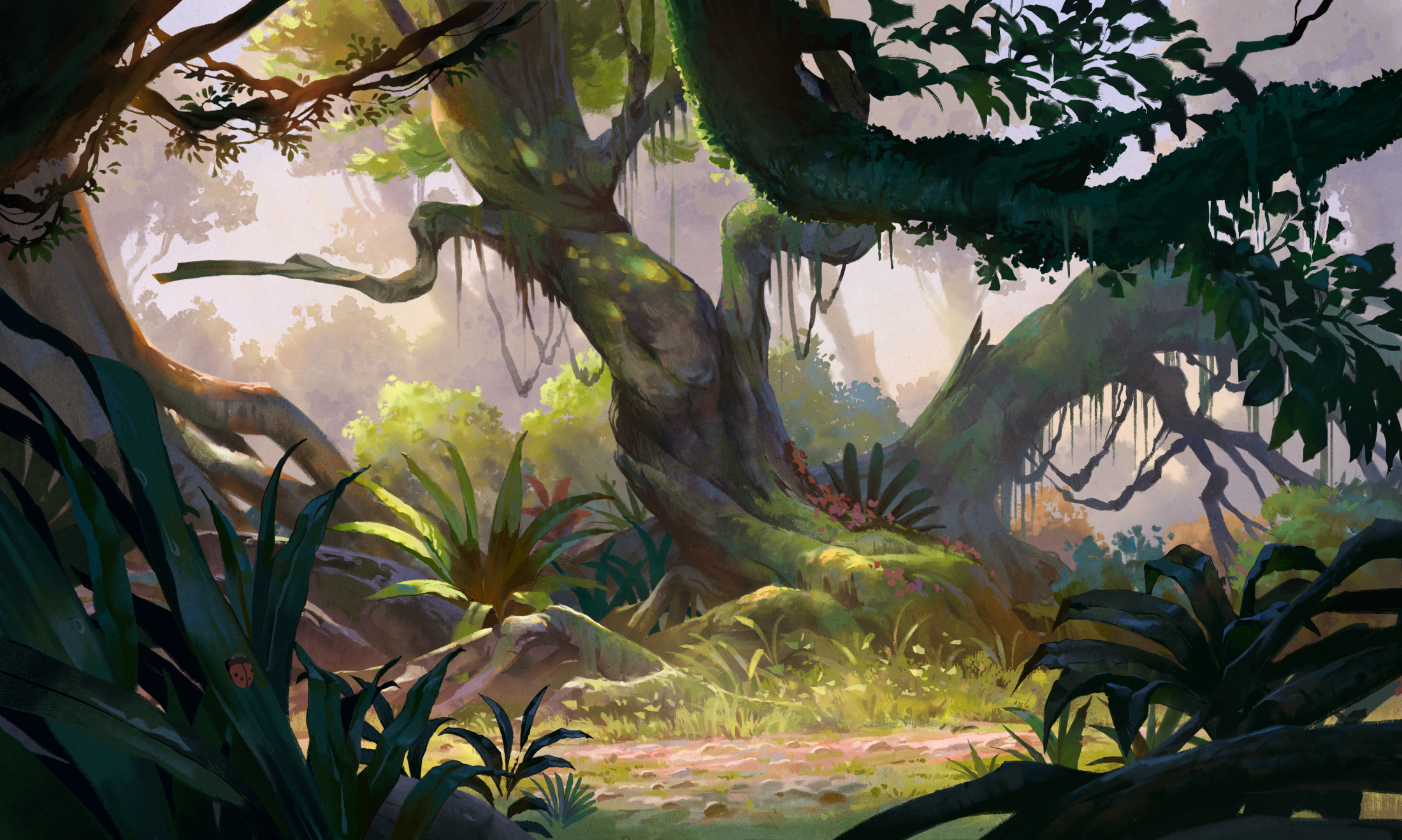
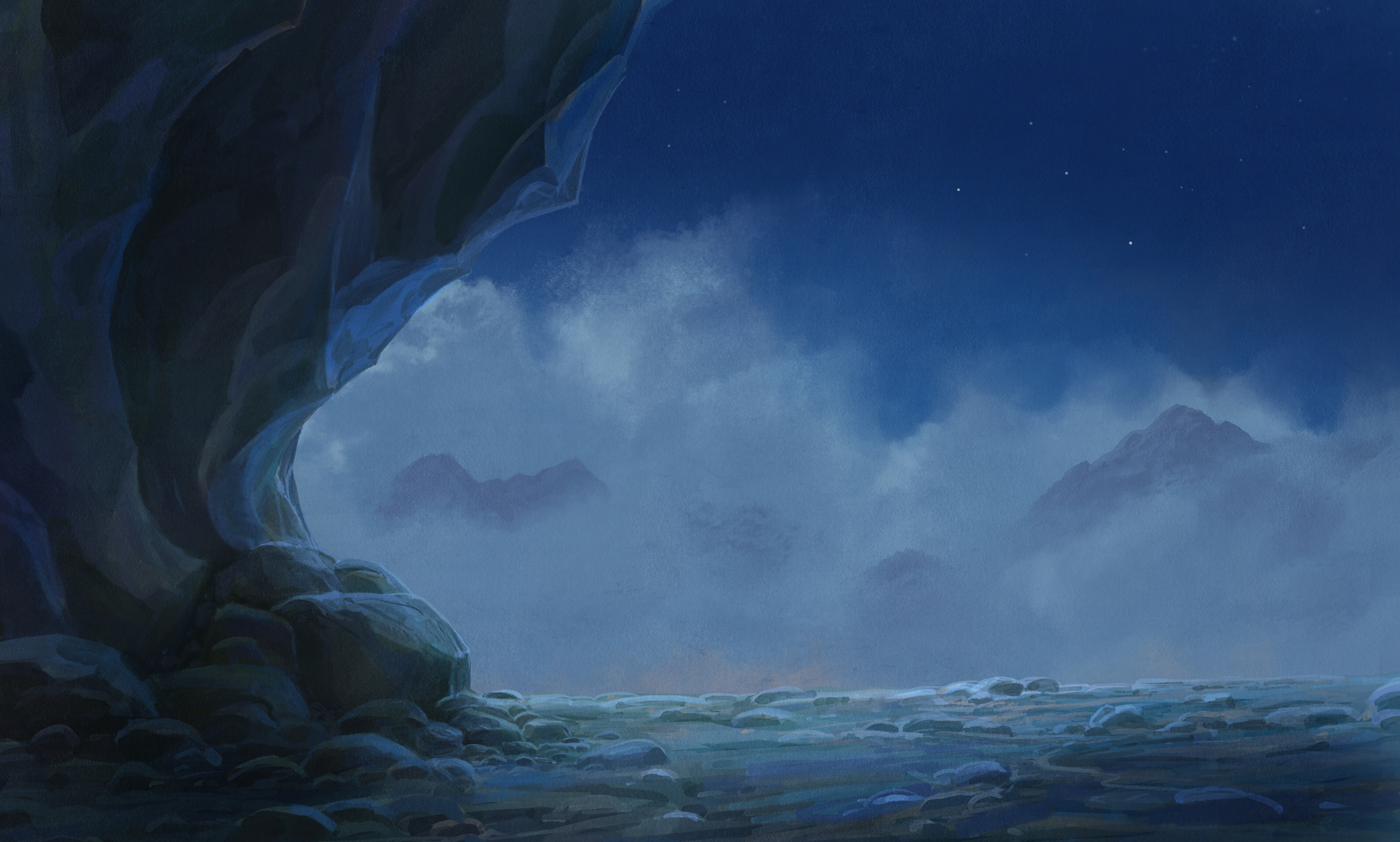
Interestingly, subtracting modern tools didn’t result in minimalism but in inventive complication. Painted backgrounds were another example. Taylor notes that the era balanced impressionism and detail to suggest depth of field, with foliage appearing as clusters of vague dots.
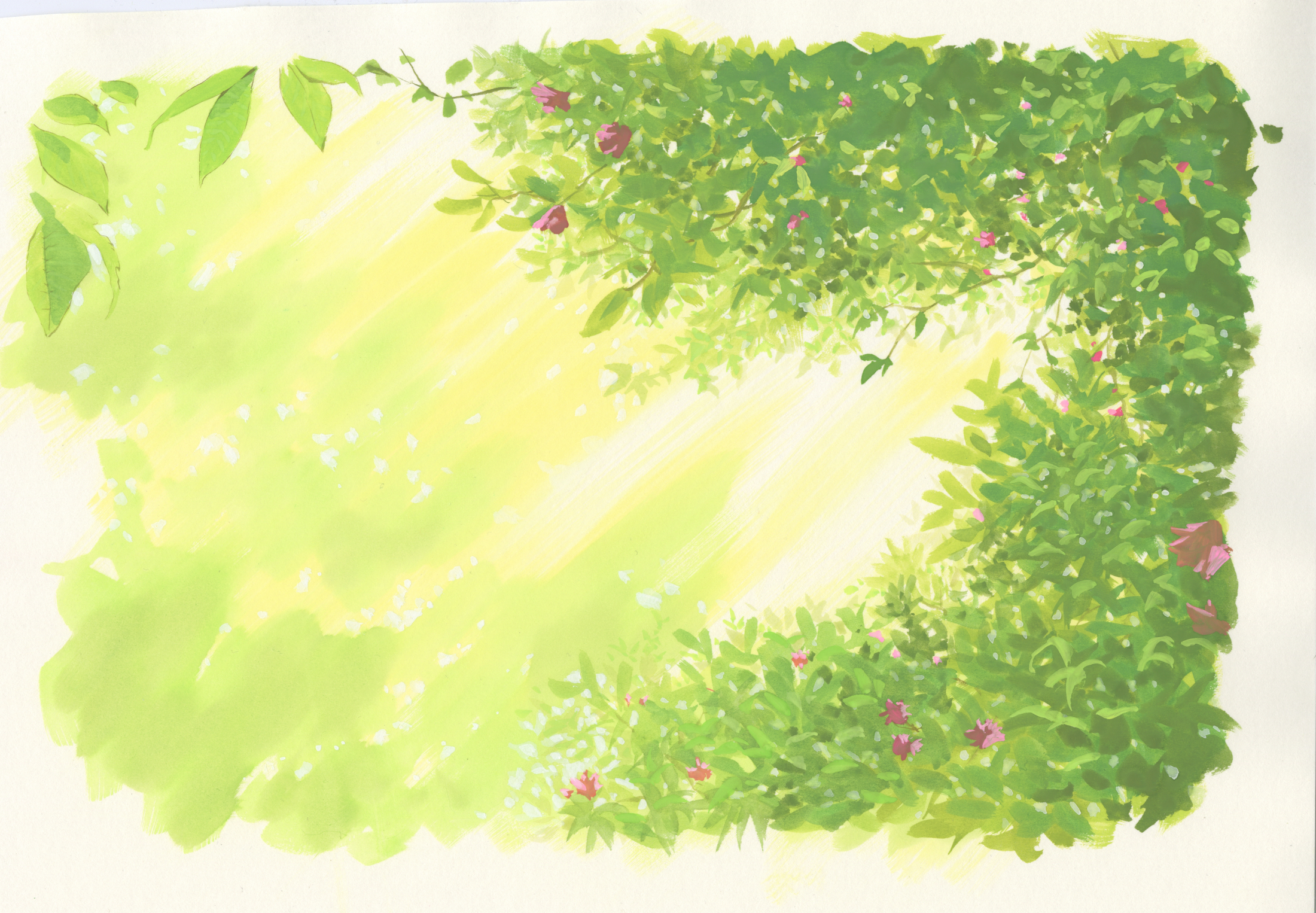
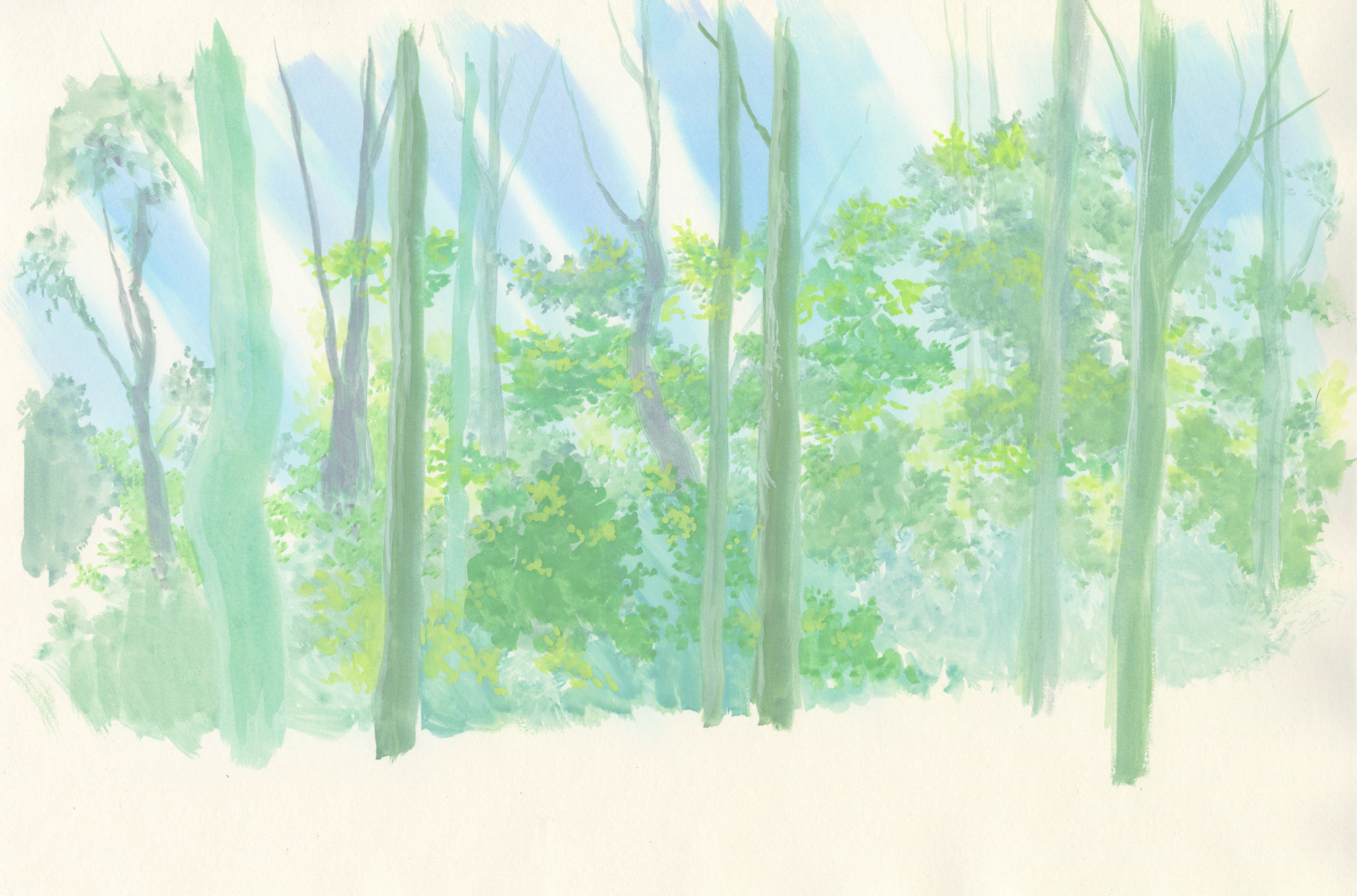
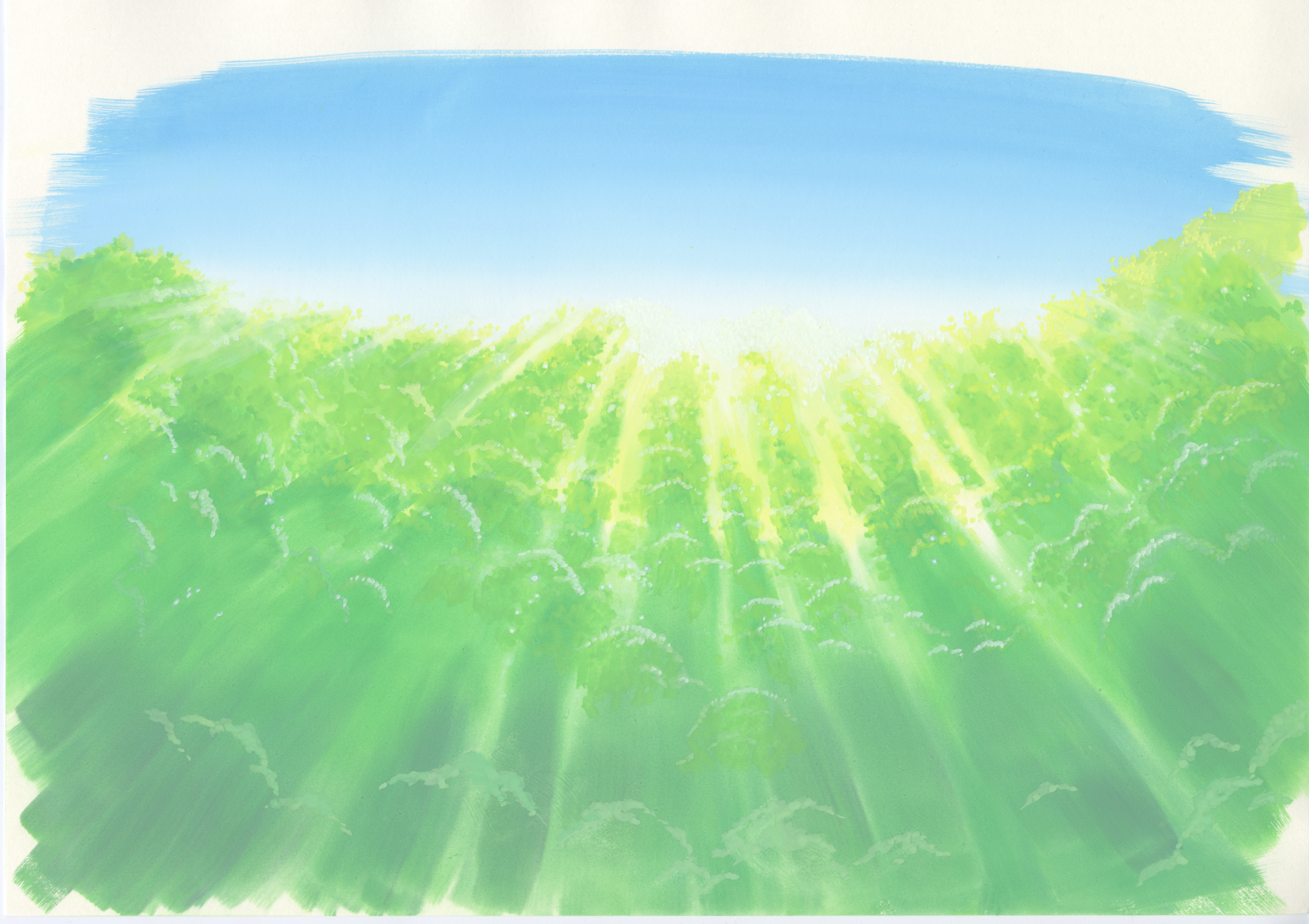
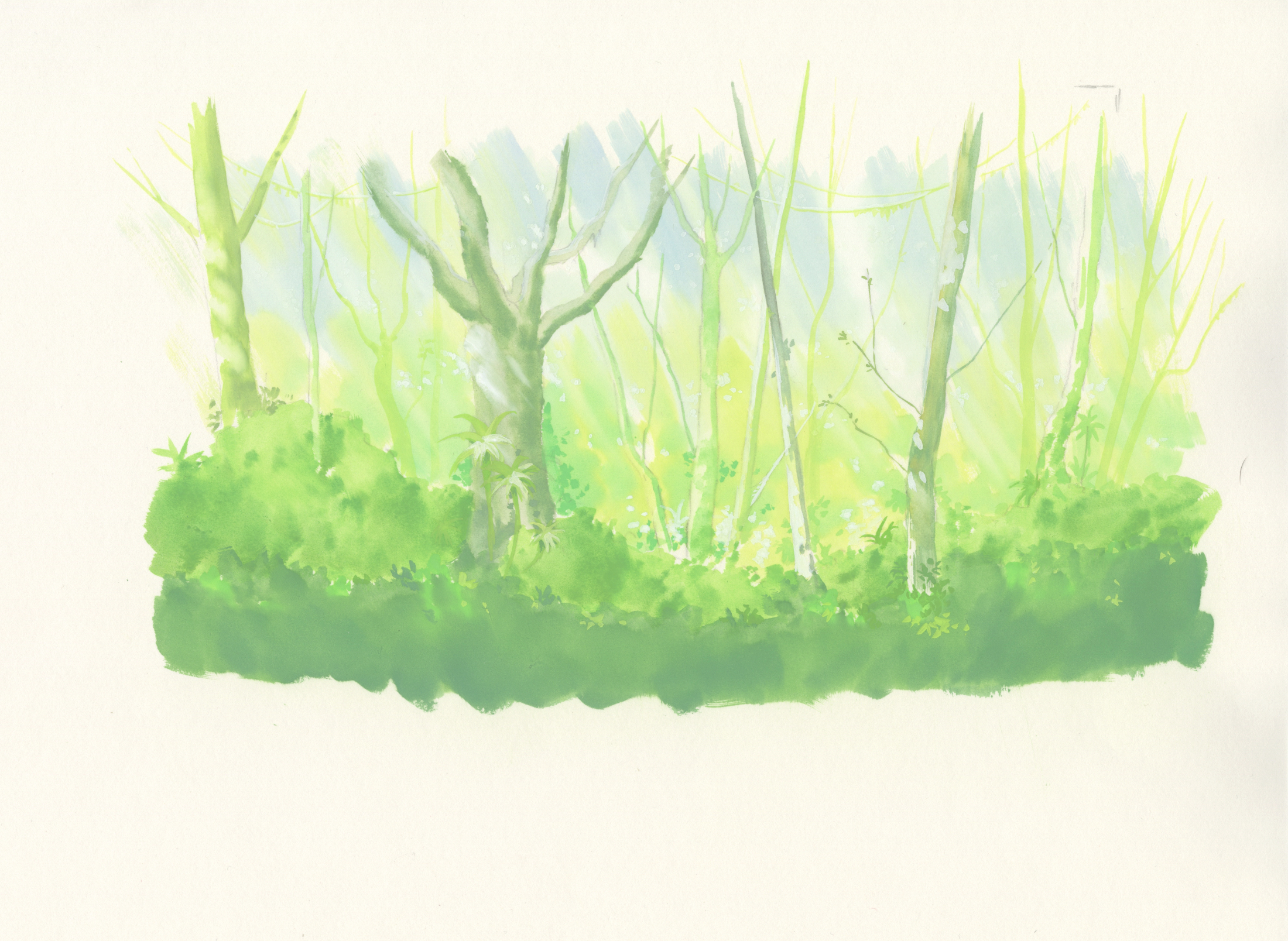
Working with art director Eido Hayashi, they found a compromise between authenticity and production practicality. “When you’re having lots of input, it’s very hard if you have to repaint a whole background,” Taylor says.
The solution: paint the base by hand, then add detail digitally in Photoshop. “What’s beautiful is you get something that’s really hard to emulate digitally — the way blue and green paints mix in water on the page,” Taylor says. Painter Arnaud Tribout handled many of the base paintings. “He’d create these impressionistic backdrops, then we’d scan them, split them into layers, and finesse the detail digitally,” Taylor explains.
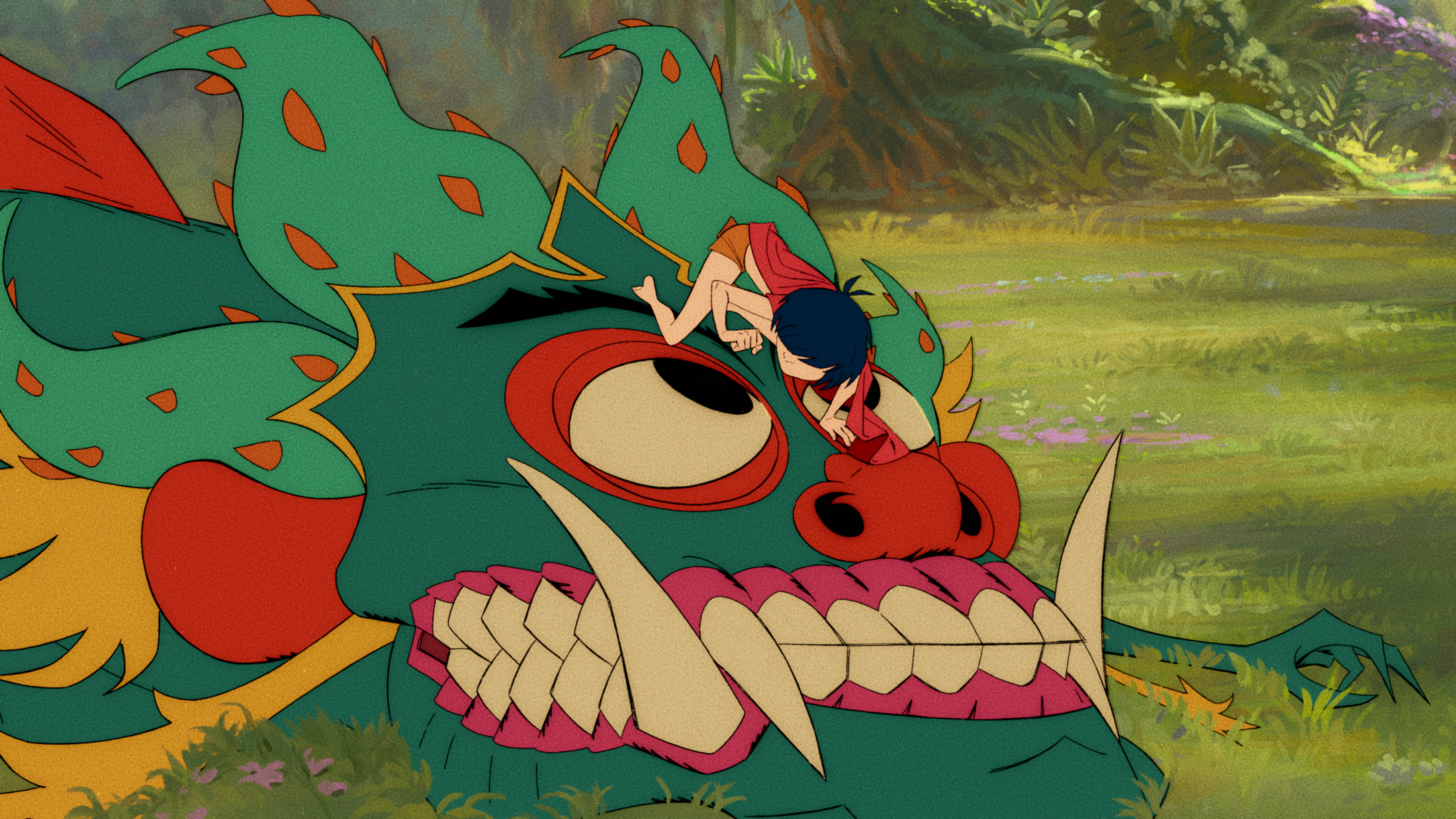
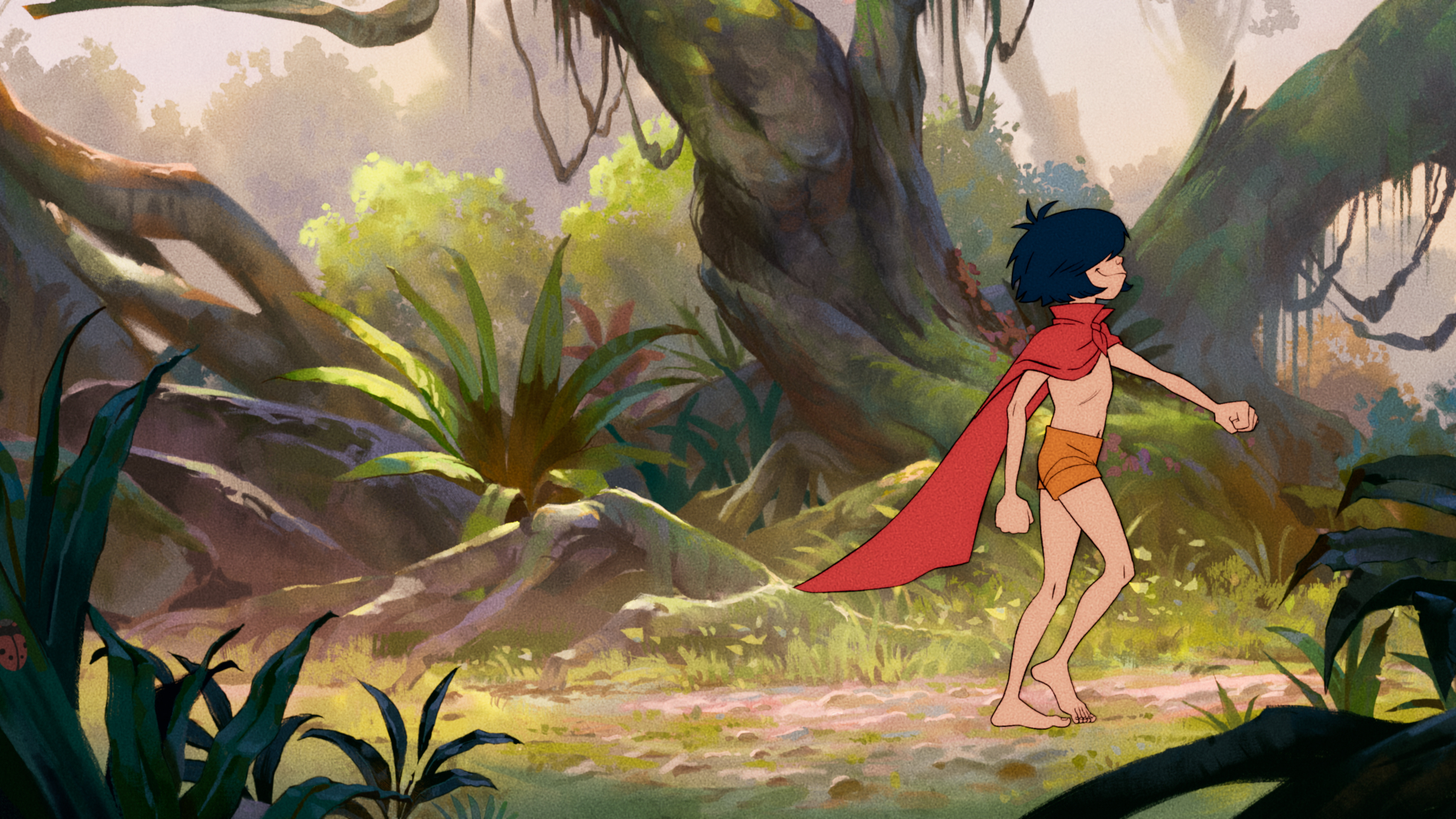
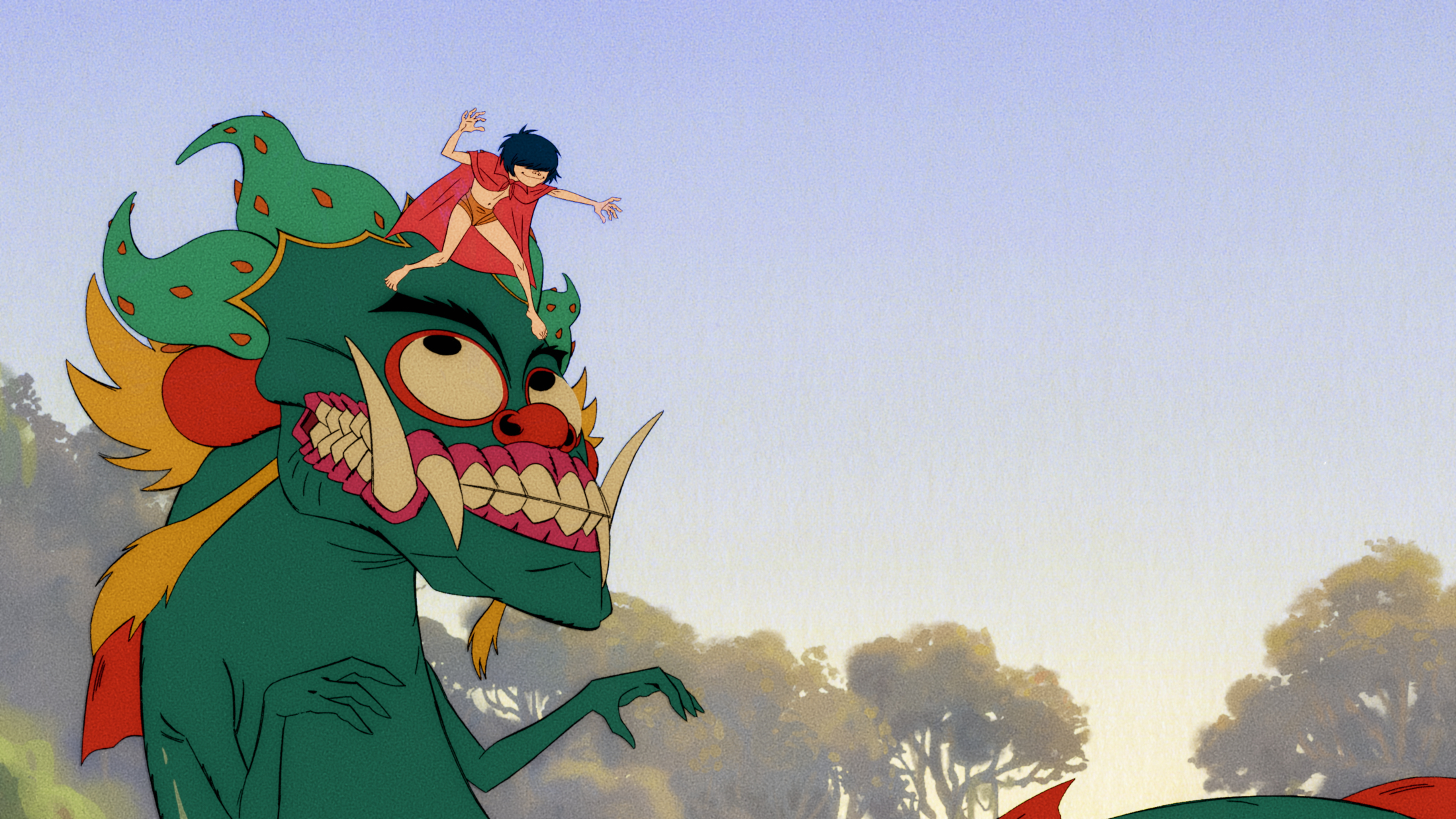
As for the characters, the team was already familiar with Gorillaz’s specificities. “We knew how particular Jamie is about the characters being on model. That means you have to be very direct with movement and performance,” McCourt says. “But we were going for something more classical Western 2D animation, which needs more performance and fluidity.”
Rather than rotoscoping, the directors relied on reference footage. Taylor’s children served as a partial reference for Noodle in a Jungle Book–esque flashback sequence.
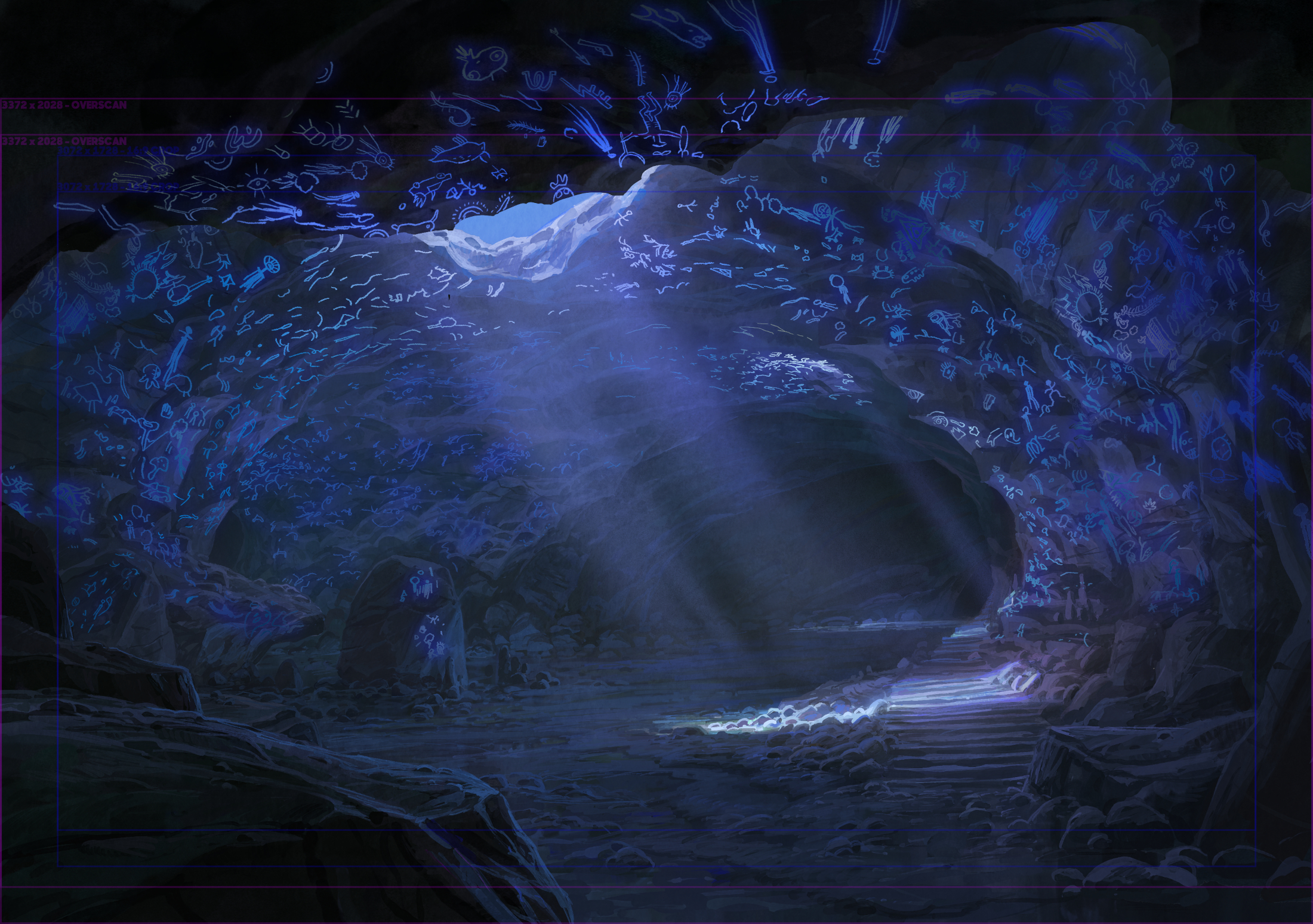
The video’s most stylistically divergent moment comes in the Moon Cave sequence, directed by animator Johnatan Djob Nkondo. As the characters enter a cavern, the lush backgrounds drop away, replaced by stark black and luminous blue figures in a hallucinatory abstraction.
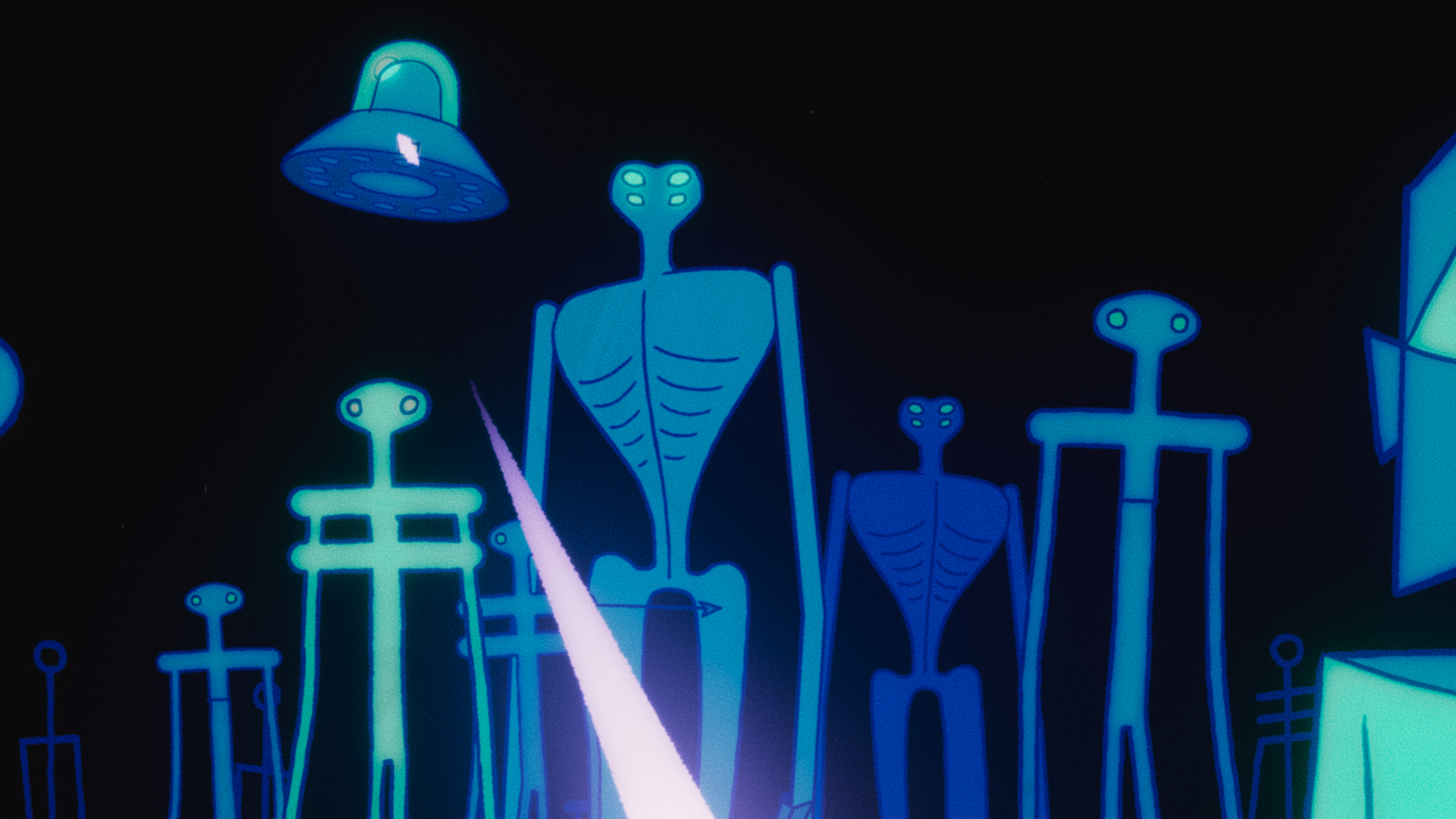
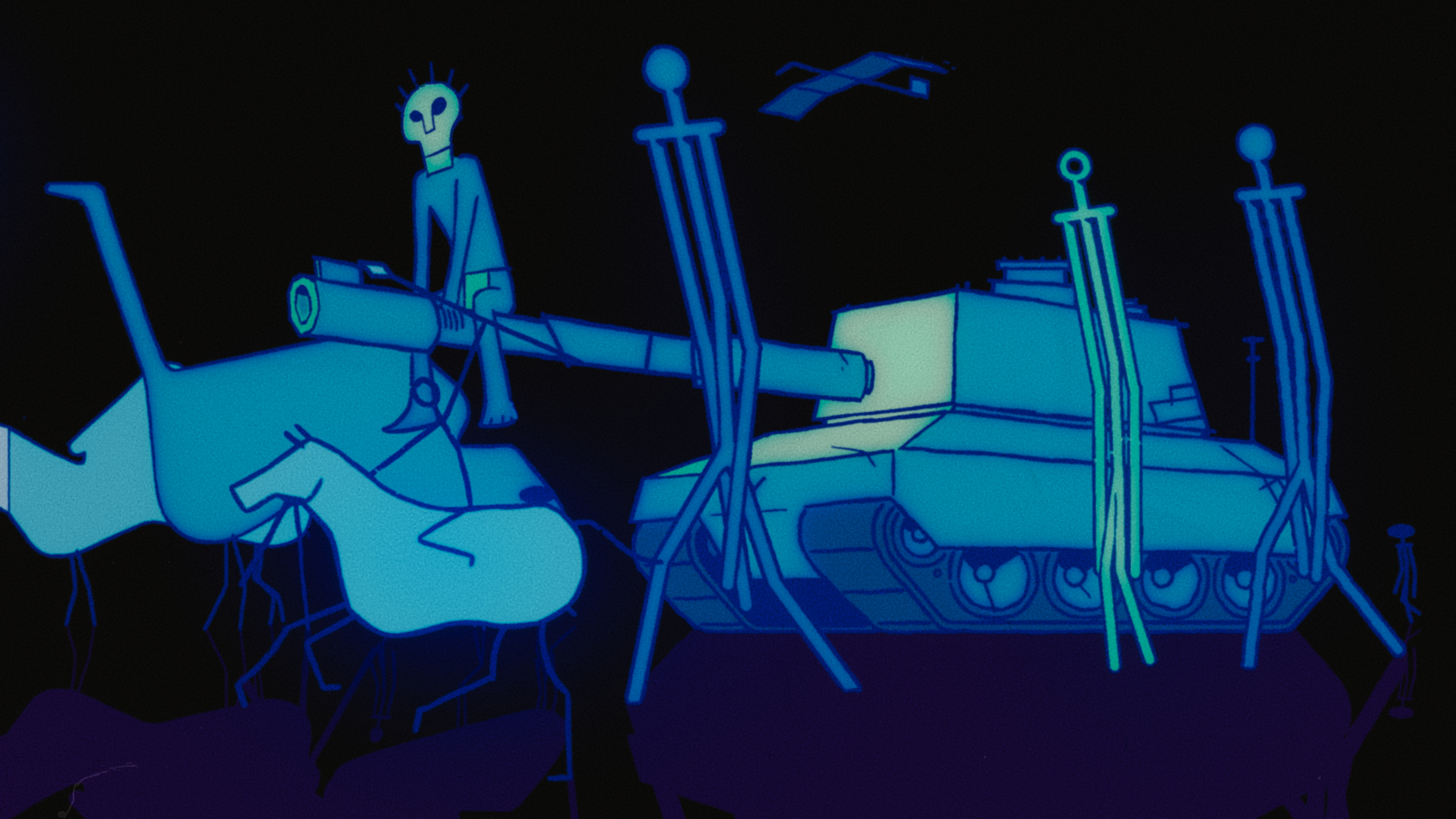
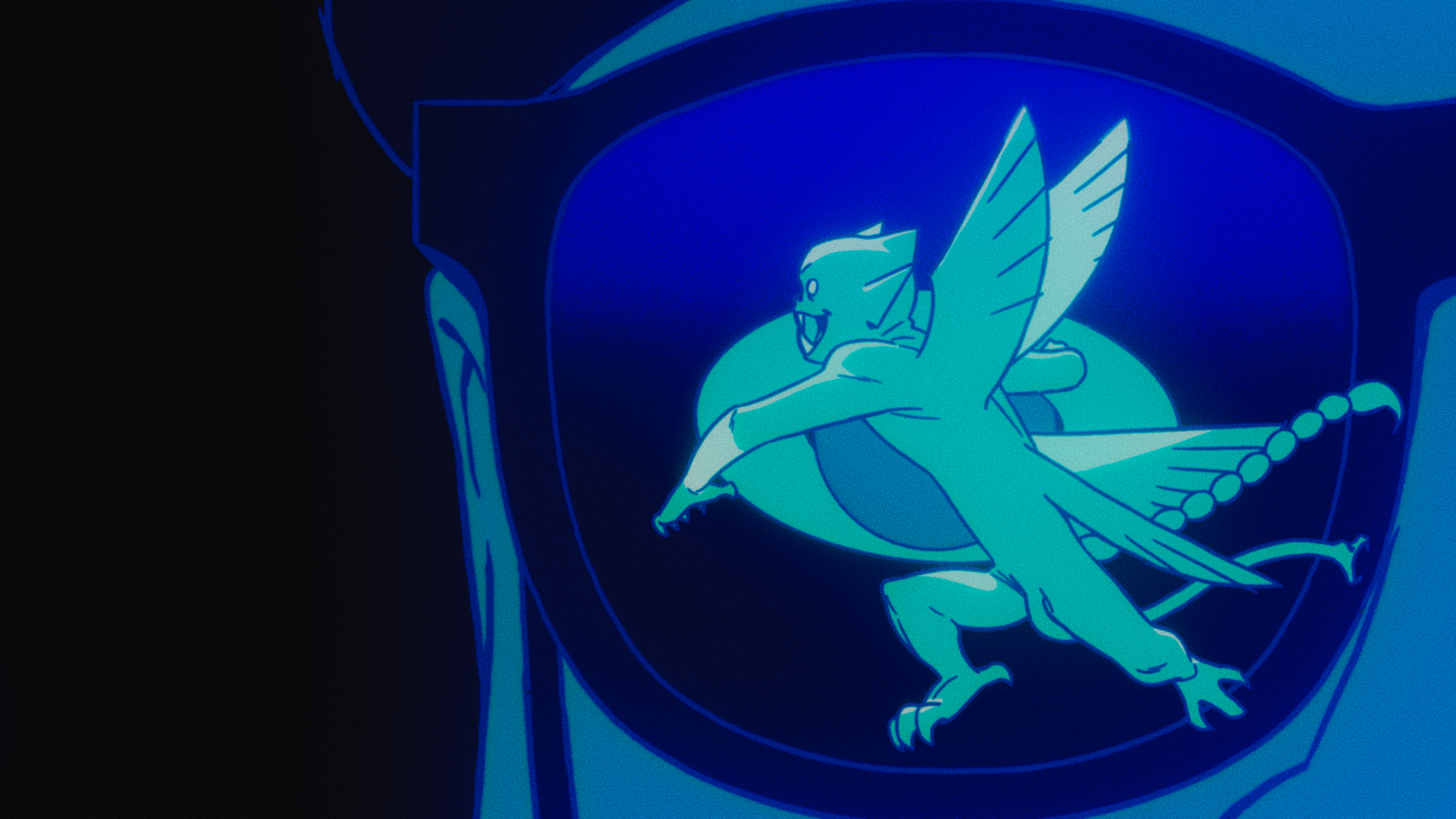
“We needed to find ways of doing interesting work more economically,” McCourt says. “So we pitched this abstract section as a homage to early feature films that would enter surrealist moments. It ticks a few boxes and let us allocate budget elsewhere since it didn’t require backgrounds.”
Nkondo was given considerable freedom. “With the exception of the Gorillaz character animation, he animated everything himself,” McCourt says. “He storyboarded it, animated every additional character, even cleaned it up. Every pass would come back with some new wild idea.”
Ultimately, all these components cohere into something greater than the sum of their parts. The video’s reception underscores a hunger for tactile, materially grounded animation — for the quirks of traditional processes and the intangible feeling that comes with them. It’s a reminder that sometimes the most forward-looking creative gesture is looking backward — and doing so with rigor.