.png)
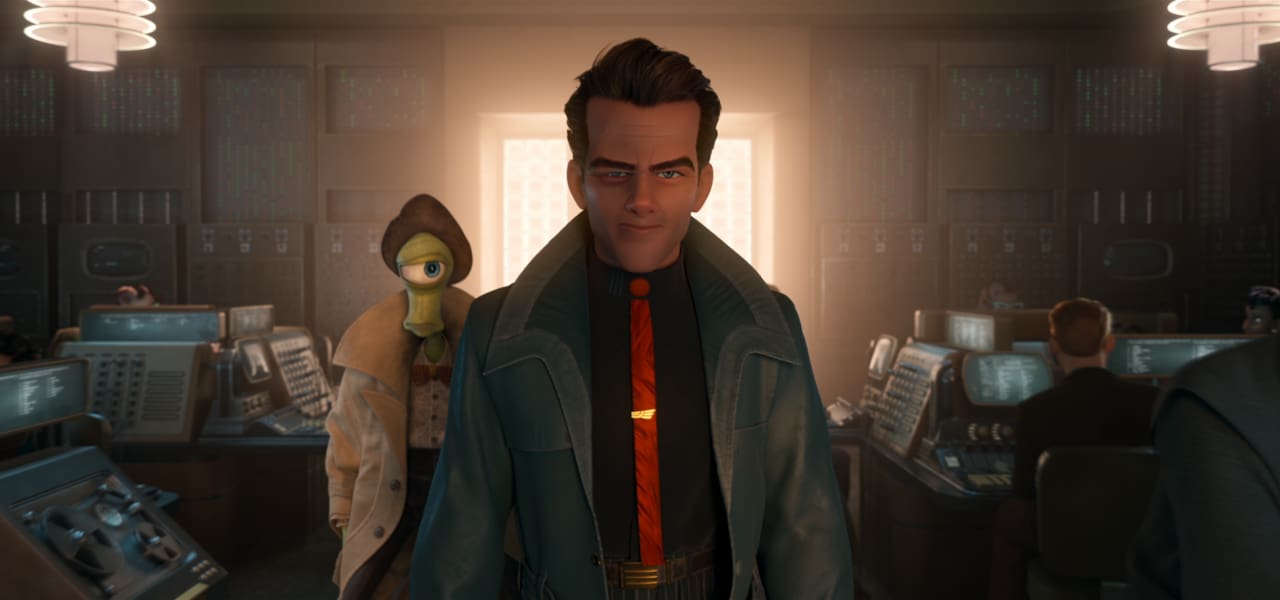
Brad Bird Wants To Push Animation ‘Less Towards The Kiddies Table’ With ‘Ray Gunn’
Stay informed with free updates
Sign up to get our news digest — delivered directly to your inbox twice a week.
Brad Bird has spent the better part of three decades trying to get Ray Gunn made. At the Ottawa International Animation Festival on Saturday, he and several of the artists who finally helped him do it offered one of the most detailed looks yet at how the long-gestating sci-fi noir was put together.
Now, the film is set to hit select theaters December 4, including limited 70mm screenings, before arriving on Netflix December 18.
Cartoon Brew moderated the OIAF presentation, which featured Bird alongside Cinesite vfx supervisor Adel Abada, Skydance Animation costume designer Neysa Bové, and Cinesite head of character animation Jason Ryan.
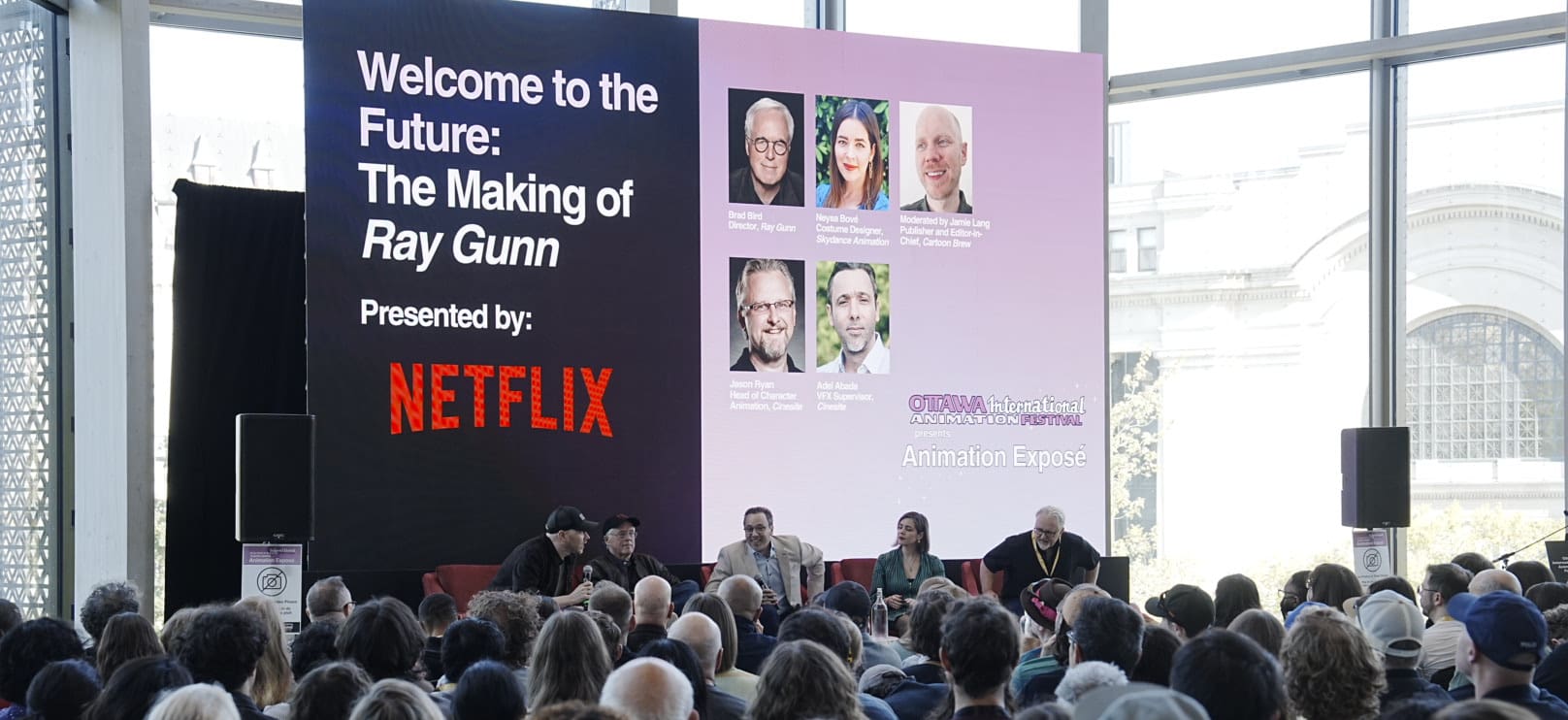
The group broke down the film’s cinematography, towering futuristic city, elaborate costumes, action-packed chase scenes, and character animation, using the opening seven minutes of the finished film alongside work-in-progress material to demonstrate how those elements evolved throughout production.
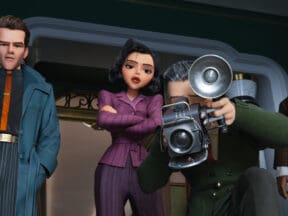
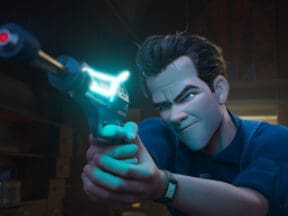
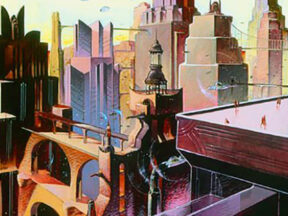
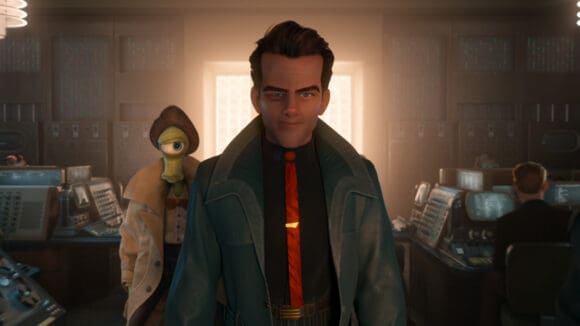
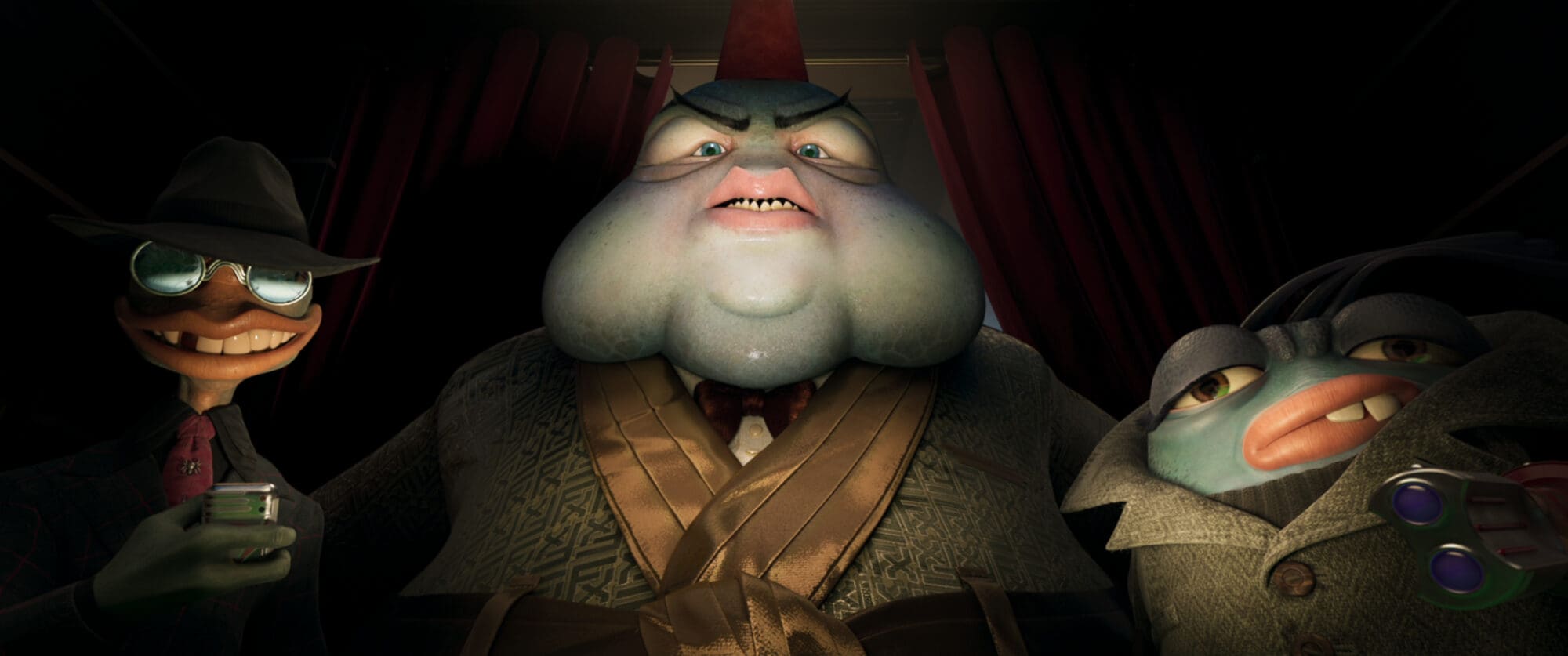
Animated at Skydance Animation and Cinesite, Ray Gunn takes place in Metropia, a gigantic city conceived as the future might have been imagined in 1939. Private detective Raymond Gunn (Sam Rockwell) becomes entangled with troubled celebrity Venus Nova (Scarlett Johansson) in a story mixing classic detective fiction with retro science fiction.
“The basic idea is it’s the future, but the future as seen from 1939,” Bird explained.
Shot Like Live-Action Noir
For Abada and the cinematography team, that meant resisting some of the conventions that have developed around CG animation.
One important change was bringing layout and lighting together much earlier than usual. Rather than positioning cameras before handing scenes down the pipeline to lighting, the departments worked simultaneously so Bird could make decisions more like a director standing on a physical set.
“Our approach was, we’re making a movie, we’re making a film,” Abada said. “Let’s use the language that cinematography has entirely given us.”
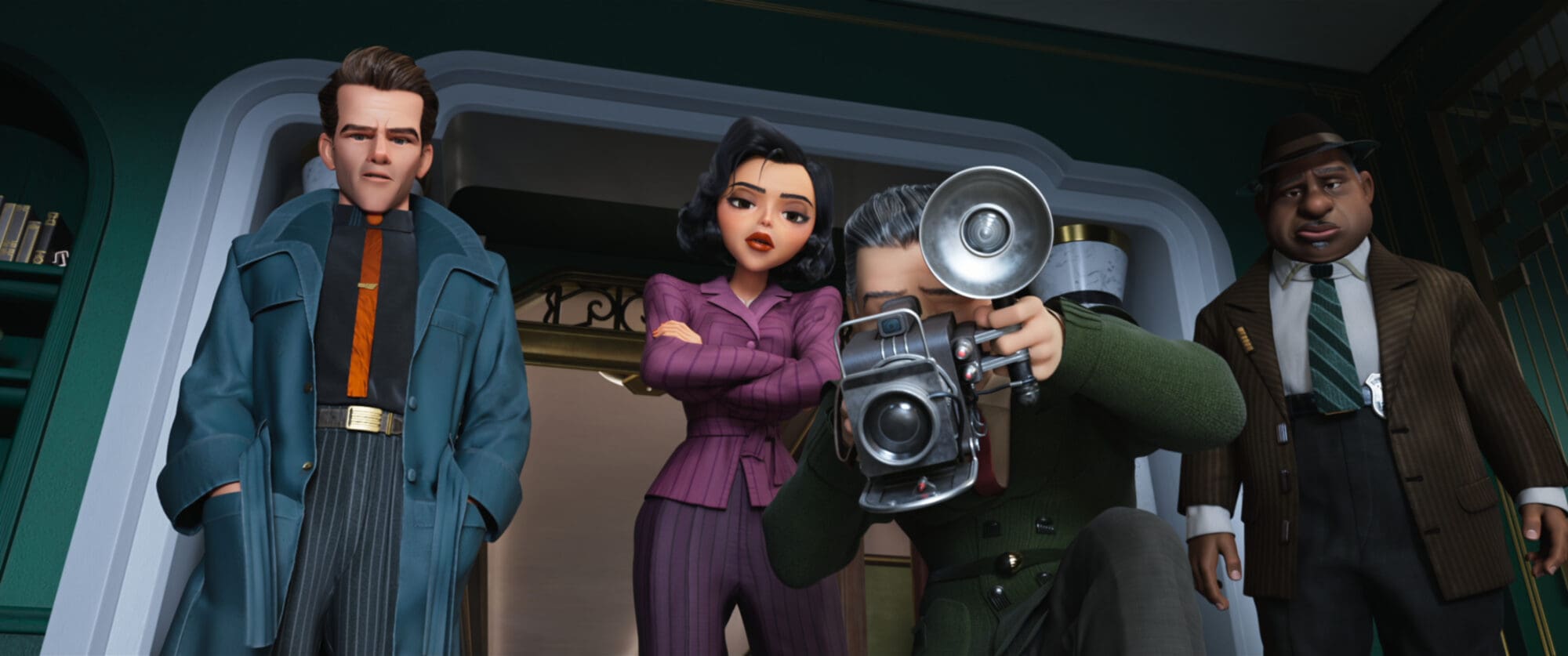
Roman Polanski’s Chinatown was the major touchstone, particularly in establishing a lens package for the film. Bird frequently pushed the crew toward a 28mm lens, Abada recalled, even though lenses that wide can distort animated characters.
Bird added another, somewhat unexpected influence: 70mm photography.
“Most detective movies are shot old 1.33 and spherical,” he said. “So my inspiration also was 70 millimeter, which is widescreen aspect ratio, but spherical lenses.”
The team studied the work of cinematographer Conrad Hall and other live-action references while embracing a simple rule: “Don’t be afraid of the shadow.”
“If a character goes in shadow, then he goes in shadow,” Abada said. “Lighting is not beauty; it’s a storytelling tool just like animation.”
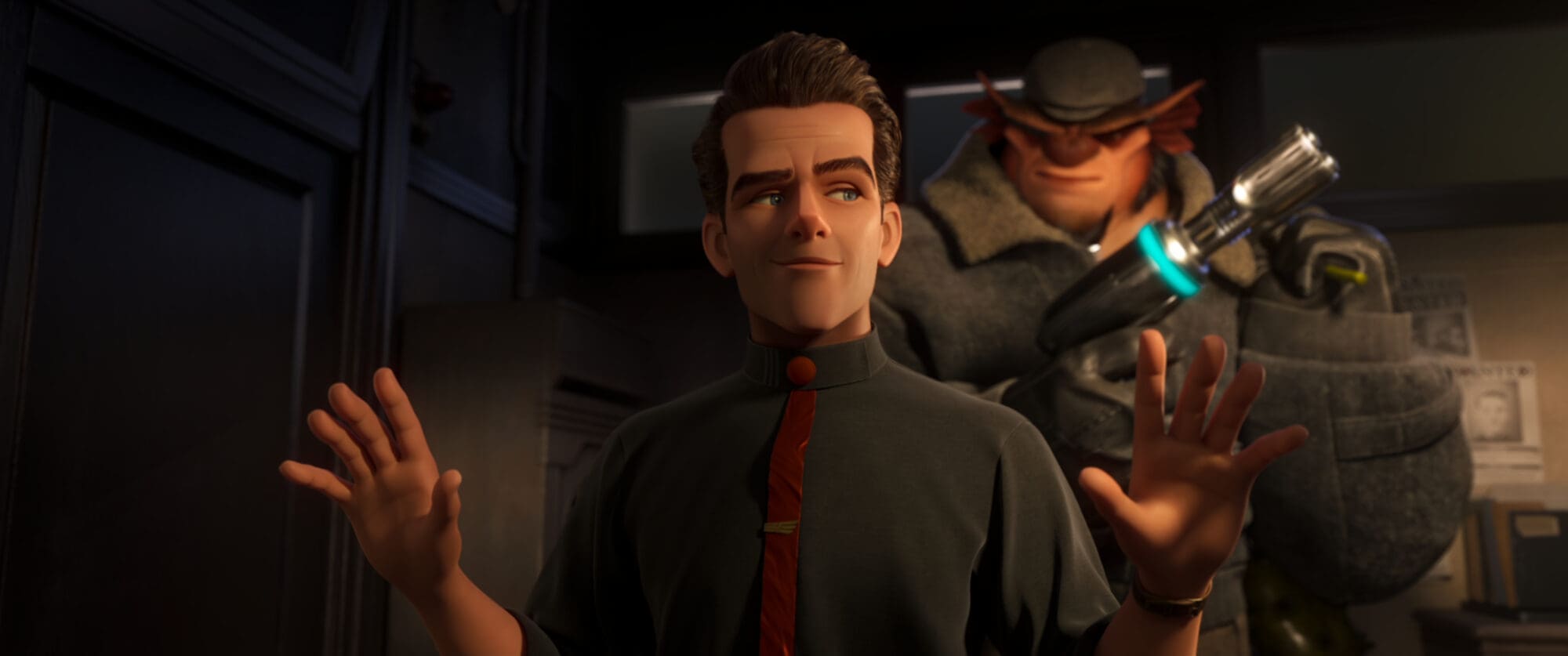
Bird also pointed to a less obvious technique associated with John Huston’s The Maltese Falcon: showing ceilings. They were often absent from Hollywood sets of the period; it was cheaper to just fabricate walls, but Huston used them to create dramatic low-angle compositions.
“We did that more in this film,” Bird said. “Kind of makes people look big too, which is cool.”
Mile-High Metropia
The scale of the film presented a different challenge.
According to Abada, Ray Gunn was produced in roughly 18 months and contains around 1,800 shots spread across 35 sequences. Eight sequences take place outside, and about half of those are chases through a city designed to rise a mile into the air.
The filmmakers deliberately tackled one of their hardest sequences almost immediately.
A roughly 65-second vertical chase contained 35 shots and involved nighttime lighting, recently fallen rain, building interiors visible through windows, character effects, hair, destruction, and other effects work.
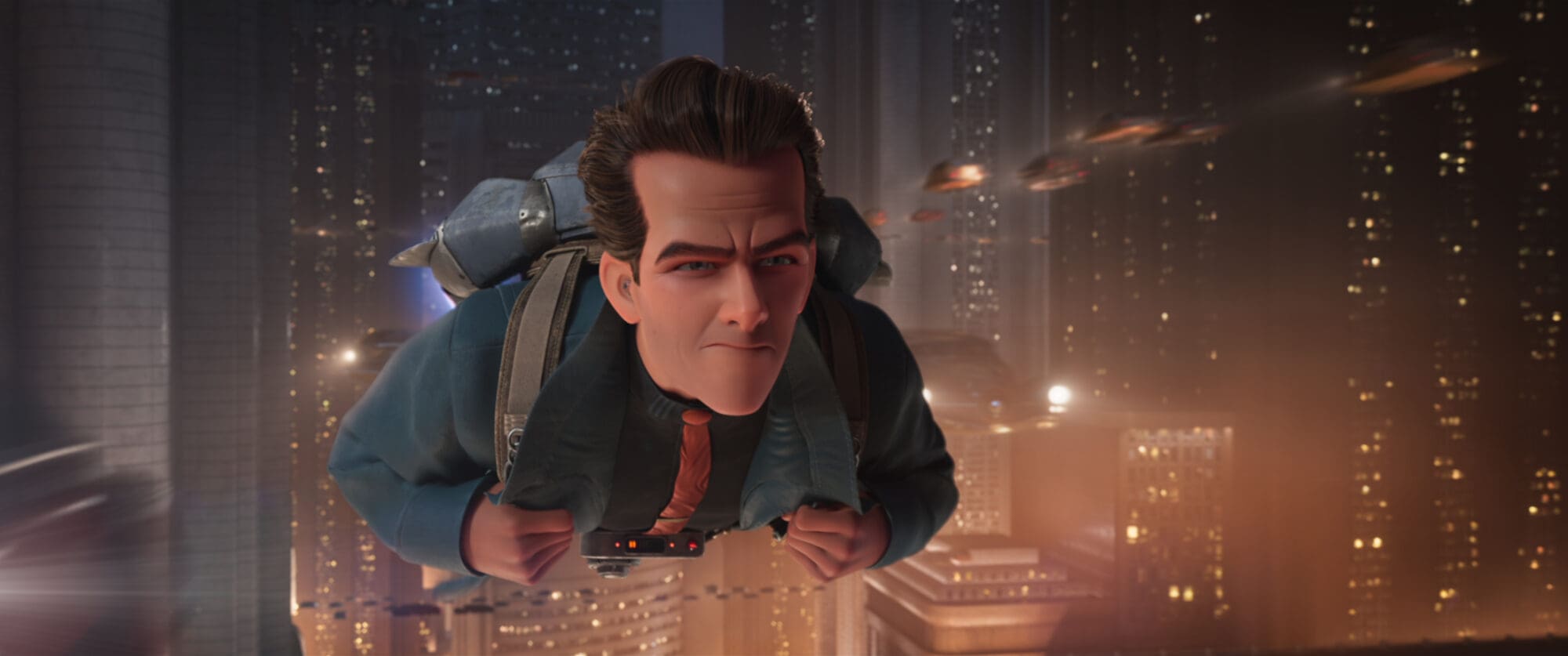
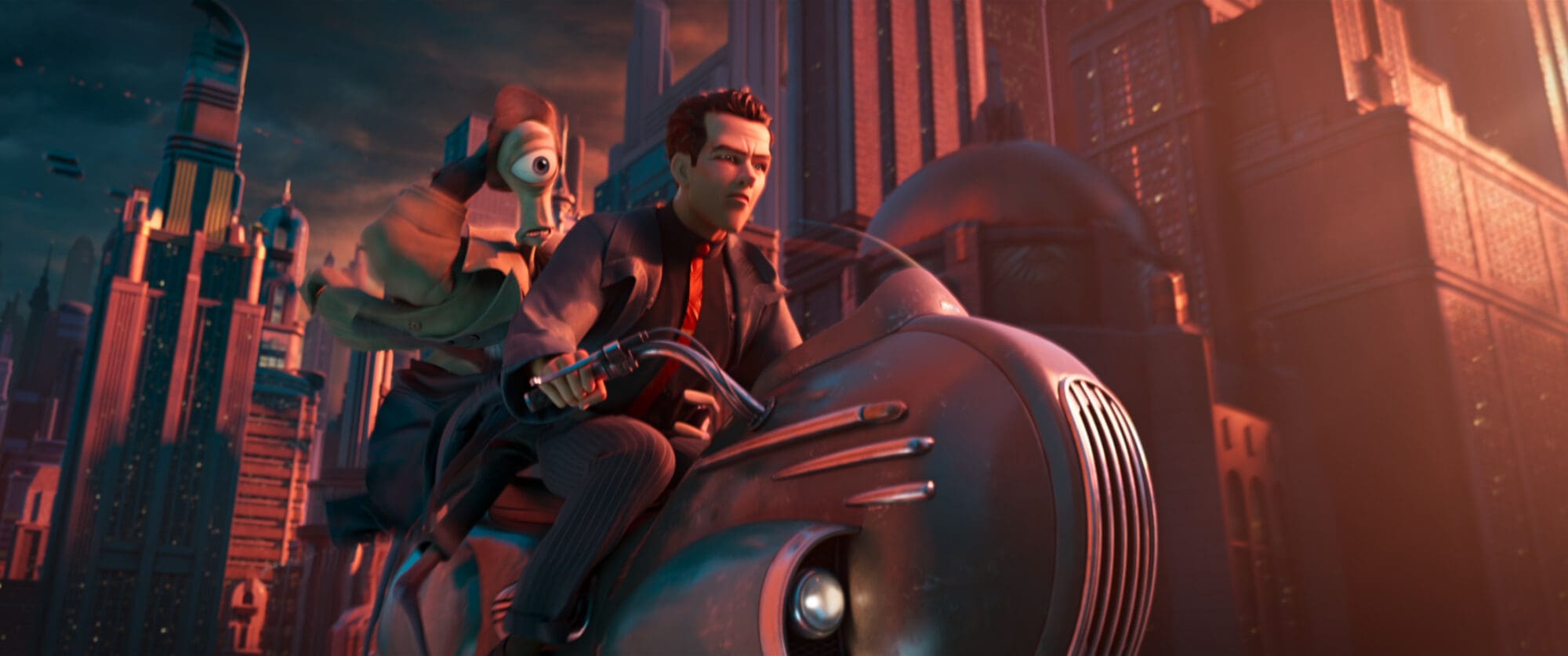
“We looked at it as like, okay, very challenging sequence to build the set and the environment, but it involves everybody throughout the pipeline, from assets all the way to lighting,” Abada explained.
Finishing it early gave the crew something more valuable than a completed scene: proof that its approach could work.
“That allowed us to build the confidence to show what Metropia would look like,” he said, particularly before tackling even larger sequences containing upwards of 110 shots in sunset or broad daylight, where the city would have nowhere to hide.
Dressing The Future Of 1939
Bové faced a similar problem in costume design. Ray Gunn couldn’t simply dress its characters in period clothing.
“This has been the most complex film I’ve worked on within my career,” she said. “We’re not making a documentary on the 1940s. So how can we make a futuristic take on 1940s costuming?”
Her solution was to mix early-1940s silhouettes with Streamline Moderne technology. Period radios became an especially useful reference, from their Bakelite surfaces to speaker-grille fabrics that could be reinterpreted as ties and suiting.
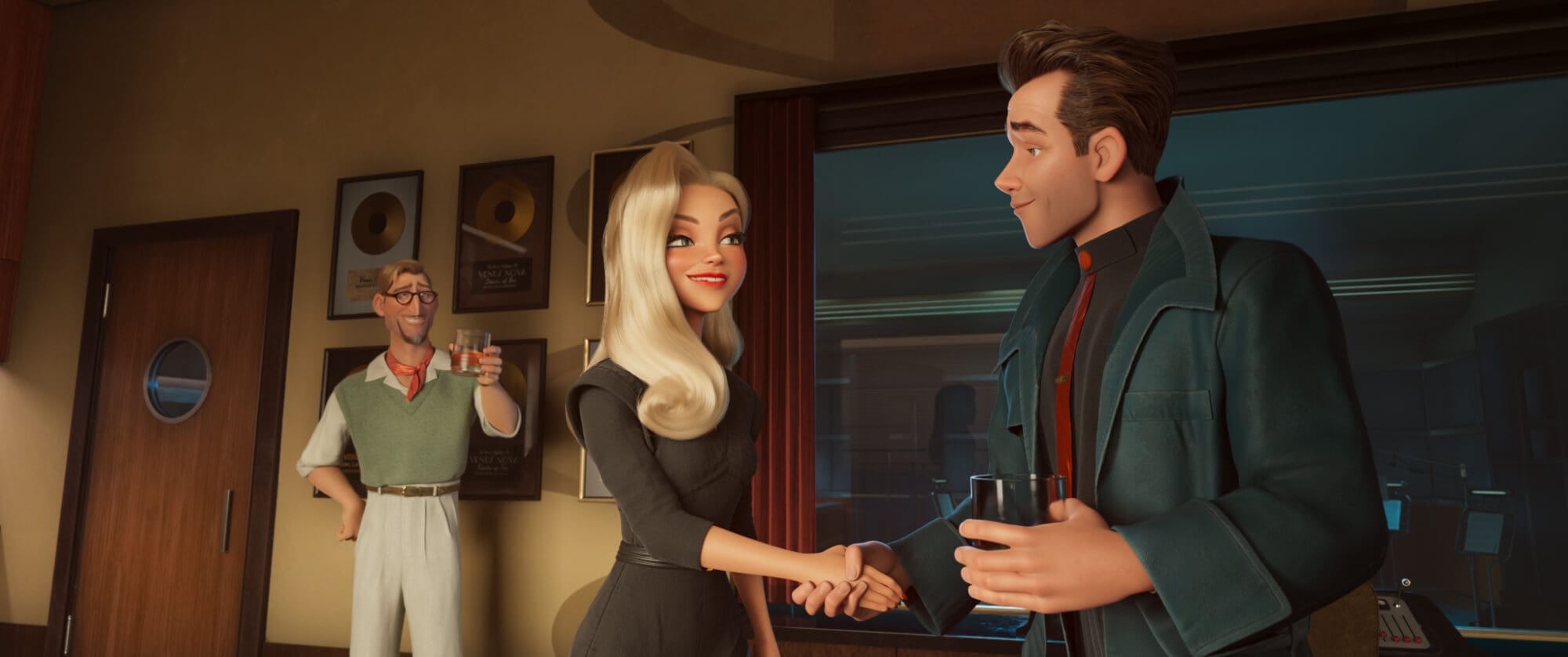
No character gave Bové more room to experiment than Venus Nova, who has more than 23 costumes in the film.
Bové studied stars including Lauren Bacall, Jane Russell, Rita Hayworth, and Marilyn Monroe, looking at their glamorous screen costumes and the difference between what they wore on screen and what they might wear offstage.
For one musical number, Venus transforms in an instant from an angel into a devil. But Bird insisted the transformation had to be achievable through technology and that it couldn’t feel like magic.
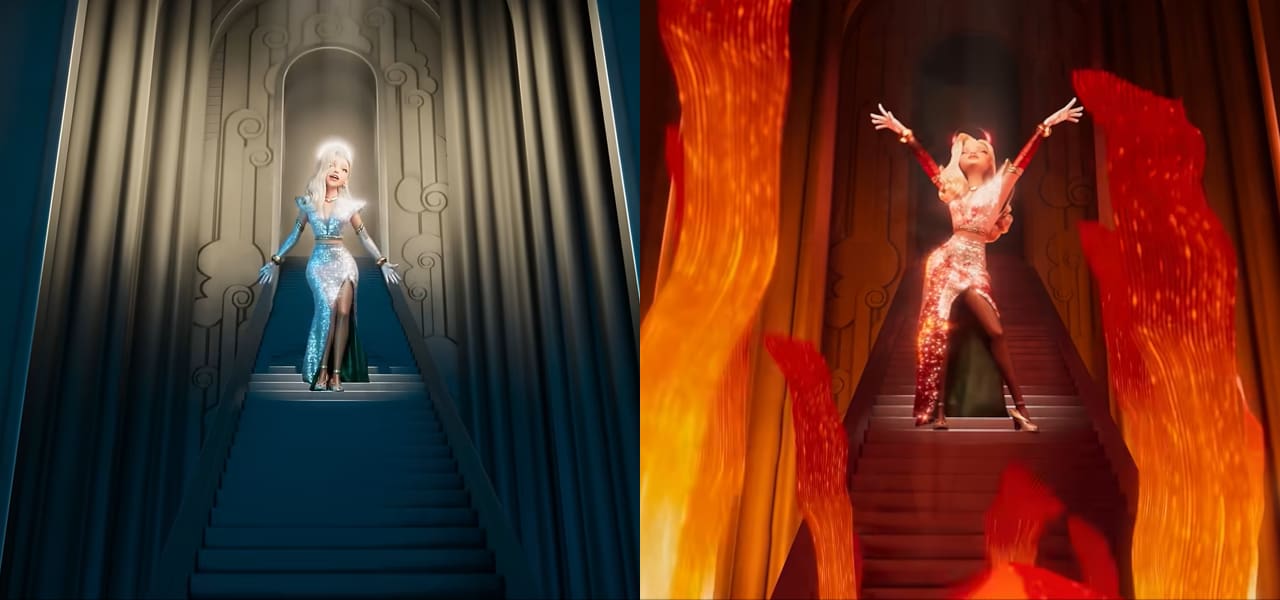
“We wanted to make sure that it didn’t look magic, that it looked like something that was technology,” he said.
Even Venus’ halo followed that rule. A circular apparatus on the back of her head can read as a halo in one configuration, then mechanically form devil horns in another. Bové said the team worked out how to construct the prop, down to its clear tubing, lights, and electronic components.
The same thinking went into all of Venus’ wardrobe, including the transforming gown. Bové found real display modules small enough to resemble sequins, providing a plausible technological explanation for the animated flames moving across the costume.
“Everything that comes to these costumes is reality, and they’re grounded in reality,” she said. The costume packets became so detailed, she added, that “you could easily pass this to a tailor and they could build this too.”
‘40s Acting In CG
Ryan, meanwhile, faced the challenge of translating the period influence into movement and performance.
The veteran animator said the team studied classic screen actors including Humphrey Bogart to understand how actors of the period carried and posed themselves.
“Sometimes it means very, very contained caricature and making it small to really see the expressions.”
Ryan showed the audience his progression on the seven-minute opening sequence from the film, which had been shared with the Ottawa audience, beginning with extremely crude blocking derived from the storyboards. Those boards were unusually specific; Abada estimated that roughly 90% of what appears in the film was already present in storyboards created two years earlier.
Rather than immediately polishing a performance, Ryan first used simple shapes and poses to establish what he called the “goal posts” of each shot. Only after the fundamental action worked did the team begin layering in clothing, effects, secondary movement, and other details.
But Bird was also willing to push the CG animation away from physical realism.
In one reaction shot, Ryan wanted Ray to perform a dramatically exaggerated take, which got one of the biggest laughs of the day from the OIAF crowd. The pose wasn’t universally popular at the studio, but Bird backed it. “Brad fought for it,” Ryan recalled as the director nodded and smiled in agreement.
The sequence also demonstrates how traditional animation techniques survived inside the film’s CG pipeline. Ryan discussed adding smear frames and exaggerated impacts, while a 2D animator was brought in to design the flames on Venus’ dress over the cg blocking.
“It gave it that really nice kind of handmade feel,” Ryan explained.
The Itch Bird Couldn’t Scratch
During an audience Q&A after the presentation, Bird also offered some additional context for why Ray Gunn stayed with him long after its original development in the 1990s.
Before Ray Gunn, he had tried to make an animated feature based on Will Eisner’s The Spirit. Bird said the team even had Star Wars and The Empire Strikes Back producer Gary Kurtz involved, but couldn’t convince anyone to finance that kind of animated film.
“Nobody was willing to see that kind of film in animation,” he recalled. “So it was an unscratched itch.”
Ray Gunn offered another route into similar territory.
“I just really liked the idea,” Bird said. “Every time I thought about it, [it] made me want to do it.”
When the original version failed to move forward, Bird said, it disappeared into storage “like the movie equivalent of the end of Raiders of the Lost Ark.”
Remarkably, despite 30 years in a lockbox, Bird said the basic story has changed relatively little since then.
“You figure out better ways to do things,” he explained. “You figure out how to take this idea here and have it support some other idea down there… but the story is the story, and that’s why I wanted to make it.”
The decades-long journey also connects Ray Gunn to a broader ambition that has run through Bird’s animated features.
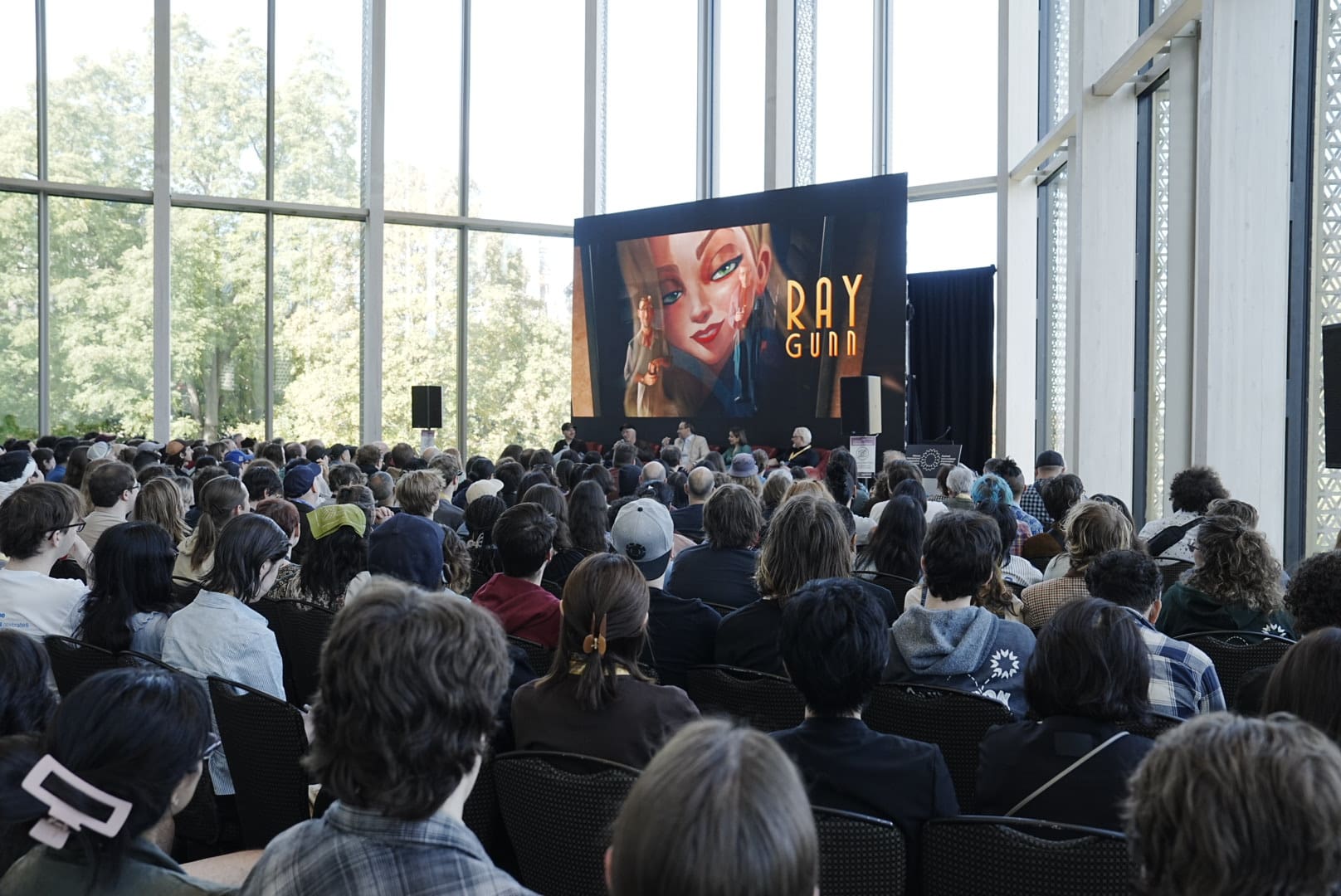
Bird said he deliberately never pitched the film at Pixar because he wanted to target a somewhat older audience. “If you’re a teenager, I think you’ll like it,” he said, “but it’s not for five-year-olds.”
And when an audience member asked whether Ray Gunn represented the culmination of his career, Bird quickly pushed back.
“I hope not,” he joked. “I’m hoping that I’ll culminate later.” Another big laugh.
Instead, he placed the film on a continuum stretching back through his earlier work.
“With each film, I’m trying to nudge the medium to be more mainstream and less towards kids,” Bird said. “I’m not against kids. I love kids. But when I was a kid, I hated being talked down [to].”
He recalled being taken to films such as Doctor Zhivago as a child and not entirely understanding what he was watching.
“I would have questions. You were reaching. And I liked that.”
That philosophy, Bird suggested, was already present in The Iron Giant, ostensibly the comfortably family-friendly story of a boy and a robot, but one that opens with Sputnik and embeds its story in Cold War anxieties.
With Ray Gunn, he is pushing further in the same direction.
“I’m trying to move a little more towards a mainstream movie audience,” Bird said, “and less towards the kiddies table.”