2027 Oscars Short Film Contenders: ‘Dog Alone’ Director Marta Reis Andrade
Stay informed with free updates
Sign up to get our news digest — delivered directly to your inbox twice a week.
Welcome to Cartoon Brew’s spotlight series on animated shorts that have qualified for the 2027 Oscars. Films in this series qualified through one of three routes: winning an Oscar-qualifying award at a film festival, screening theatrically, or winning a Student Academy Award.
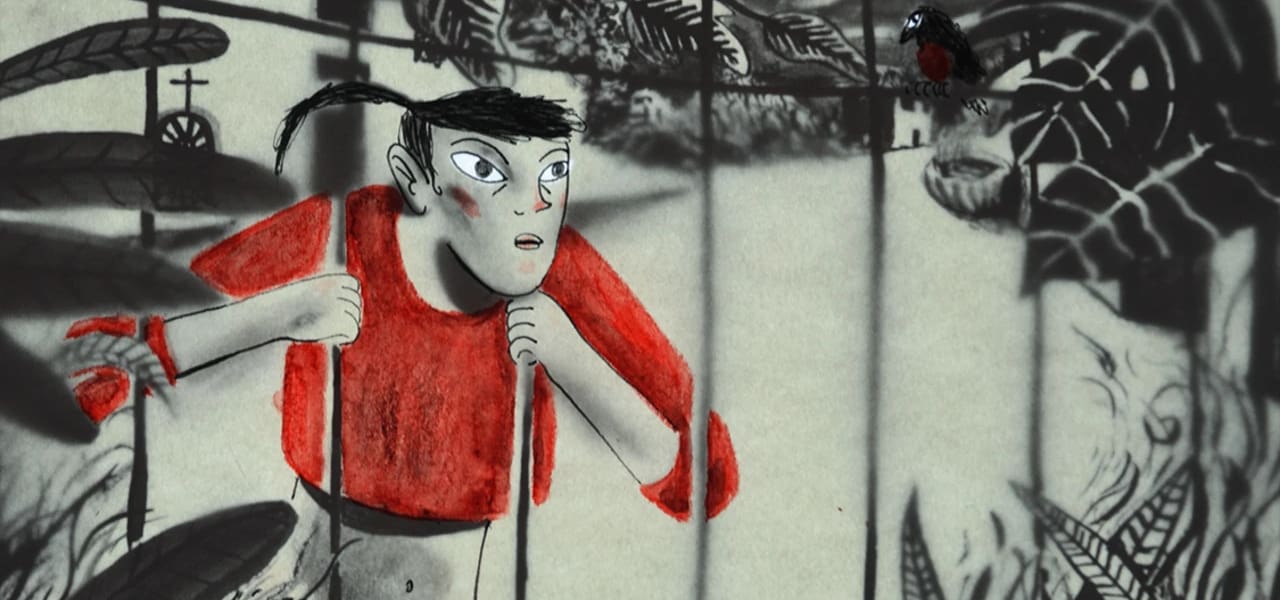
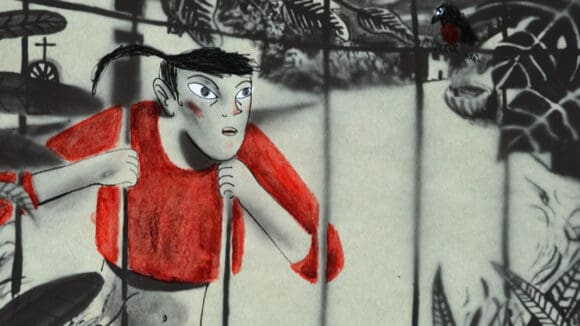
Today’s short is Marta Reis Andrade’s Dog Alone (Cão Sozinho), a Portuguese-French co-production from BAP Animation Studio and Ikki Films. Combining 2D animation and painting with the recorded voices of Andrade’s family, the film uses translucent layers and restrained touches of color to move between everyday life and dreamlike imagery. It qualified for Oscar consideration by winning the Grand Prize at Cinanima.
Returning from London, where she felt isolated despite being surrounded by people, a young woman encounters an abandoned dog living next door to her widowed grandfather. The animal’s howling draws together three experiences of loneliness: her own, her grandfather’s, and the dog’s. Rooted in Andrade’s family history, the film explores aging, the difficulty of expressing affection, and the effort it takes to reach those we love.
Cartoon Brew: What was it about this story or concept that connected with you and compelled you to direct the film?
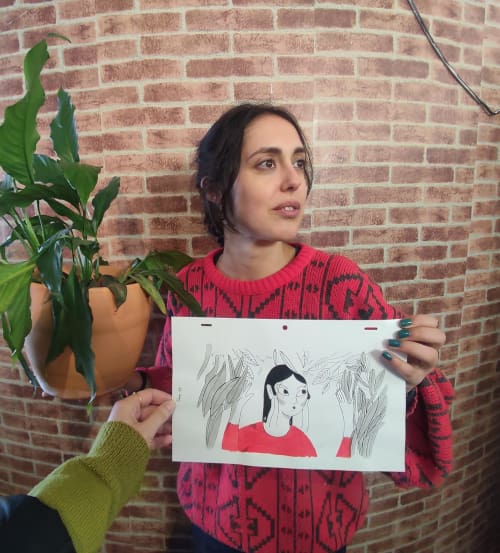
Marta Reis Andrade: The film began with a very specific event: I learned that a dog had been abandoned in the house next to my grandfather’s. I have always been interested in loneliness. I enjoy spending time alone, but I know how painful it can be to want company and feel unable to find it. When I lived in London, I was surrounded by people but often felt a great distance between us. I sometimes describe the difference by saying that I come from a small village with few people but a strong sense of humanity, while London felt like the opposite—not because people were unkind, but because we were living in very different circumstances.
When I returned to Portugal, I was back in a place where I remembered feeling less lonely, yet I still struggled to show my family how much I loved them. The dog, howling day and night, became impossible for me to ignore. I felt I had to help him. Making the film gave me a way to approach the loneliness I saw around me—and a way to move toward the people I loved, especially my grandfather. In that sense, the film is also a portrait of my own search for connection.
What did you learn through the experience of making this film, either production-wise, filmmaking-wise, creatively, or about the subject matter?
I learned how important it is to communicate clearly with the team: to share not only my intentions but also my doubts, so that we could understand the decisions we were making together. I also learned that I had to follow my own voice with complete honesty; otherwise, I knew I would regret it.
As a director, I needed to sustain my energy throughout the process. Making a film is a long journey, and I couldn’t use up all my stamina at the beginning. At the same time, I had to let go of my initial idea and allow the film to grow through the contributions of everyone who worked on it. In the end, it is a collective piece.
Can you describe how you developed your visual approach to the film? Why did you settle on this style and technique?
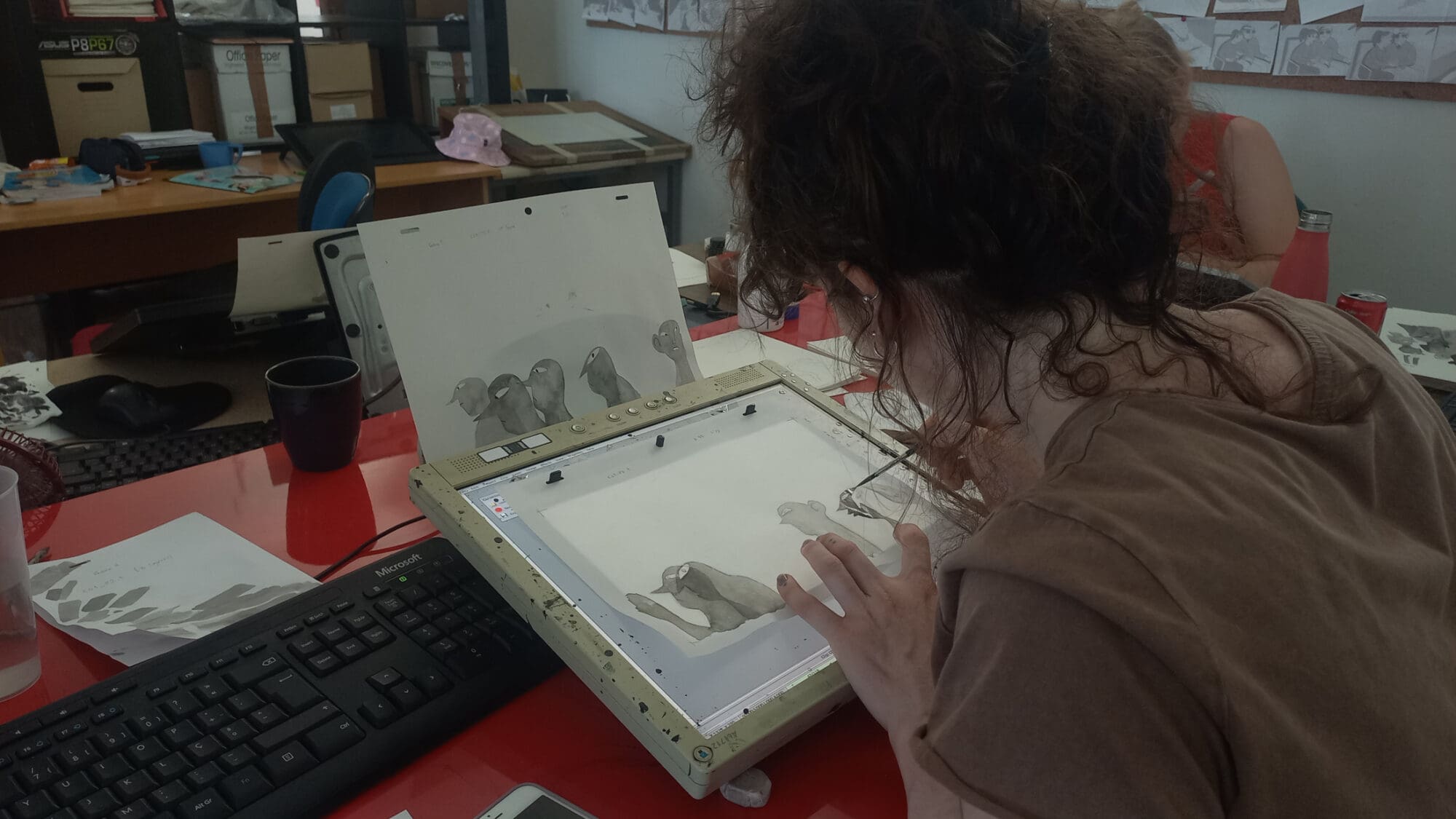
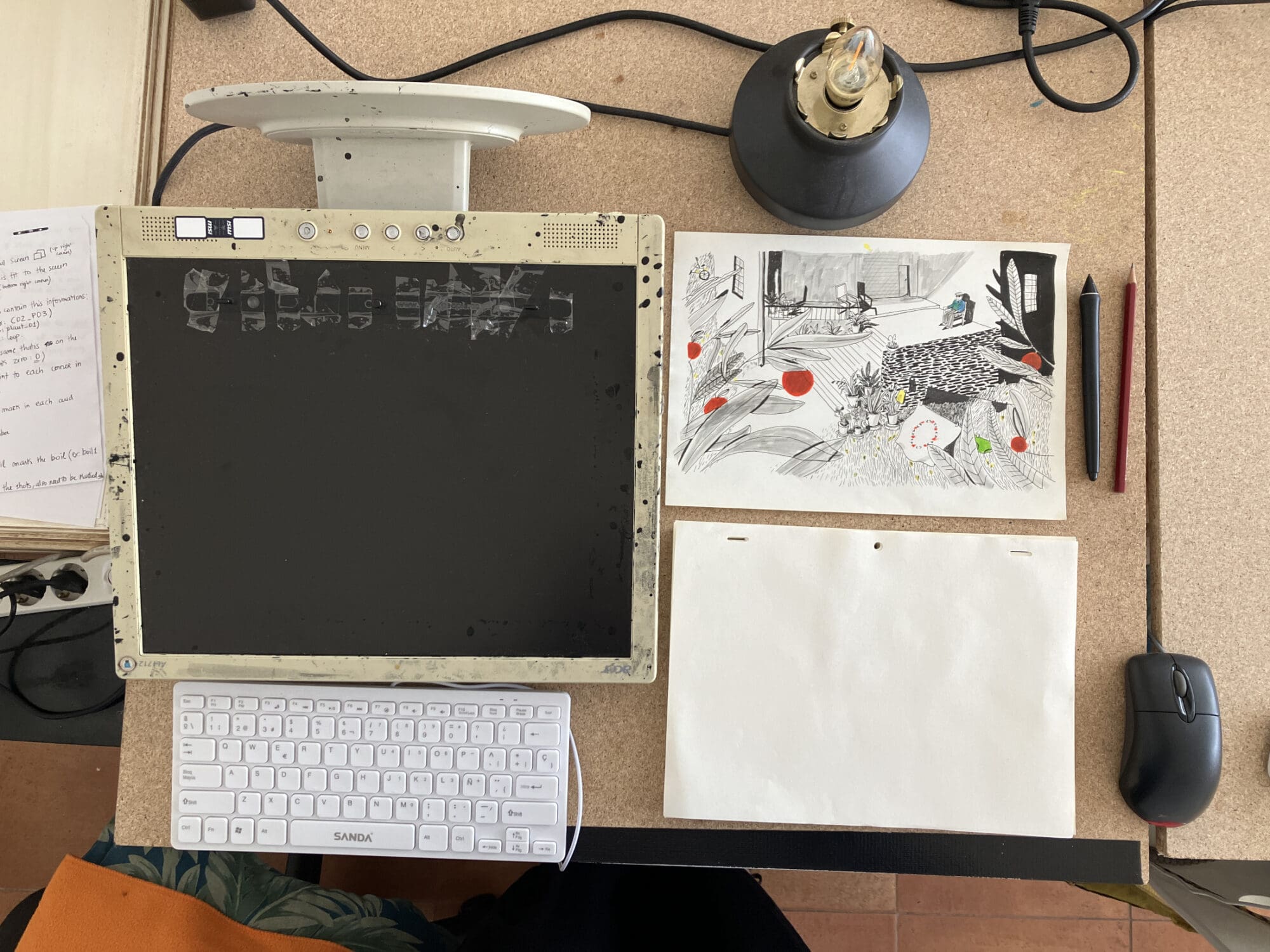
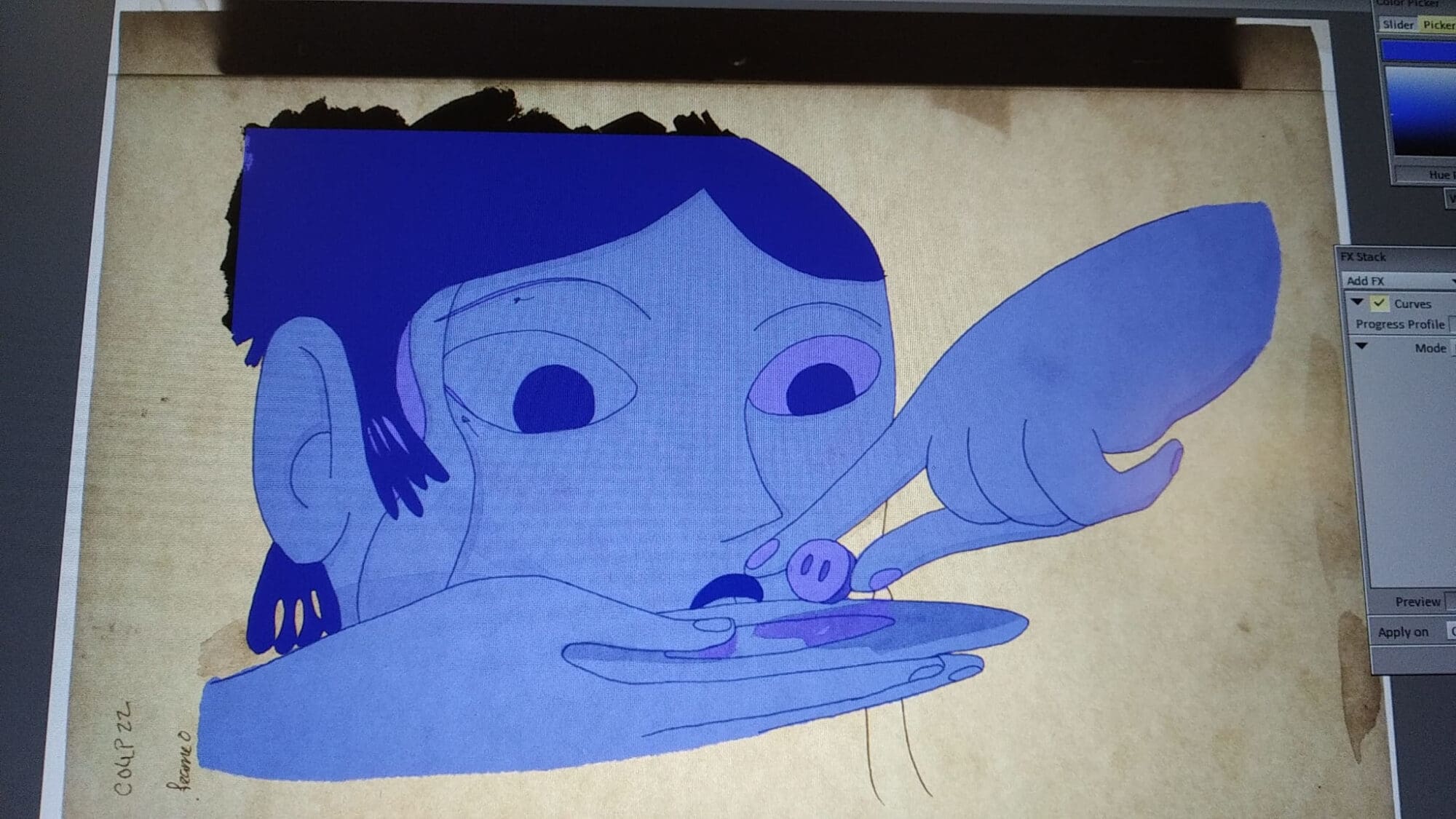
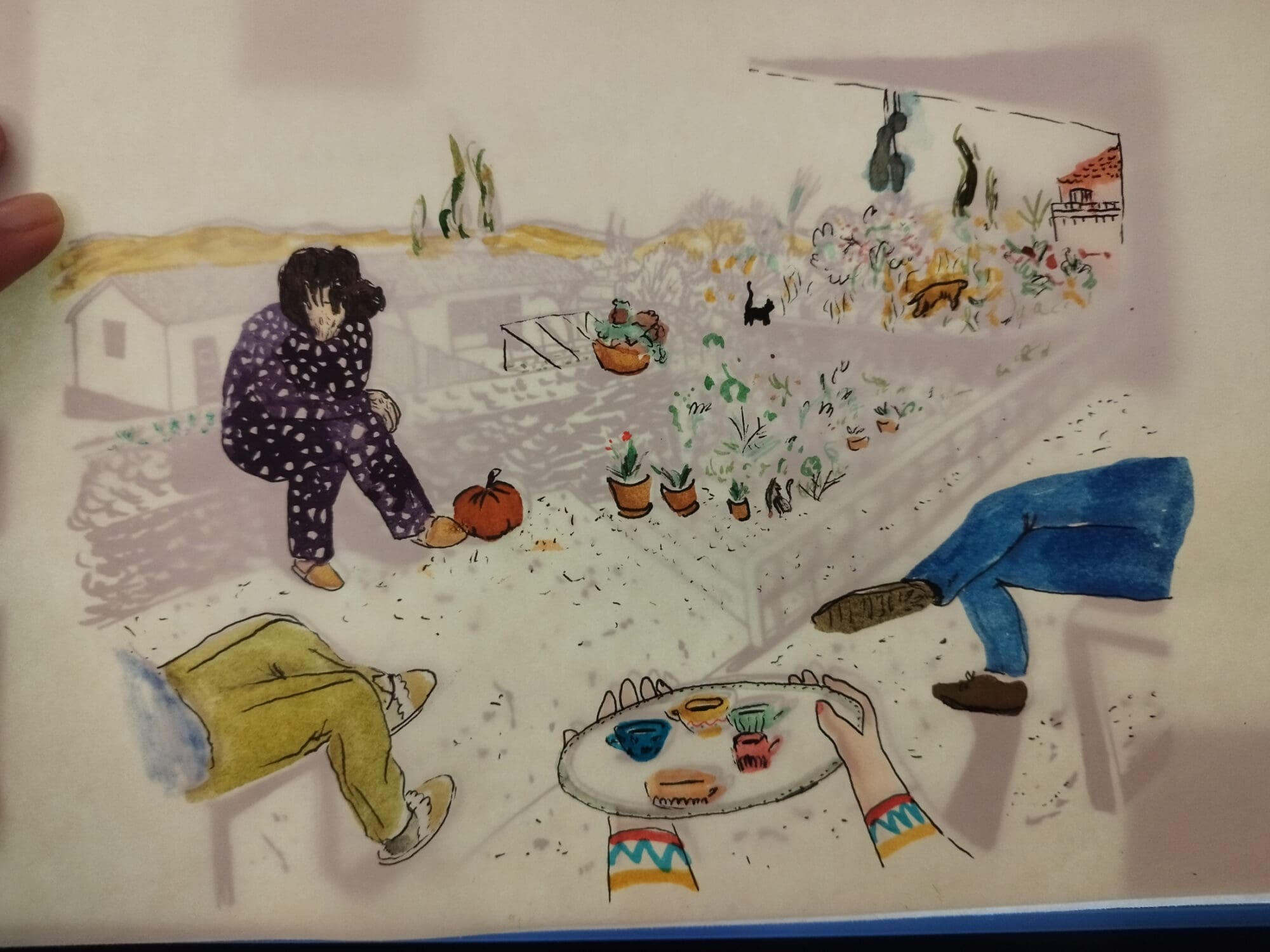
The visual approach came about somewhat by chance. I have always loved making very rough sketches, then using a lightbox to refine them on a new sheet of paper. This process can involve several layers of paper, with the final drawing on top containing all the elements I want.
I have always been drawn to the transparency created by the light shining through the paper. While sketching the dog in his field, I decided to try drawing parts of the background on a separate layer. The result gave me the dreamlike quality I felt was completely in tune with the story I wanted to tell. So I found the technique through an old drawing habit.
The colors guide the viewer’s attention within the image and help characterize the main figures. The character wearing red has enough vitality to help the character in blue, who needs that human warmth.
The film connects the loneliness of an abandoned dog, your widowed grandfather, and your own experience returning from London. When did you realize those three experiences belonged in the same story?
I realized it while listening to my grandfather talk about the dog. As I recorded my family and friends, I noticed that they often described the dog’s loneliness in human terms, projecting their own feelings onto him. But when my grandfather spoke about the dog, it felt especially personal—as though he recognized something of himself in him.
They were both growing old and losing some of their faculties: their sight, their hearing, and even their sense of touch. I began to see that their connection was about more than loneliness. They shared the experience of becoming more physically distant from the world around them while missing the people they loved. That was when I understood that the dog’s story, my grandfather’s experience, and my own feelings could belong in the same film.