.png)
2027 Oscars Short Film Contenders: ‘Living With A Visionary’ Director Stephen P. Neary
Stay informed with free updates
Sign up to get our news digest — delivered directly to your inbox twice a week.
Welcome to Cartoon Brew’s series of spotlights focusing on the animated shorts that have qualified for the 2027 Oscars. The films in this series have qualified through one of multiple routes: by winning an Oscar-qualifying award at a film festival, by exhibiting theatrically, or by winning a Student Academy Award.
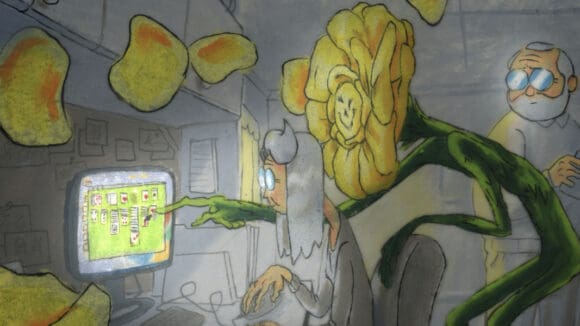
Today’s short is Stephen P. Neary’s Living With a Visionary, produced largely as a solo project over several years, with a handful of collaborators joining the production toward the end thanks to several small grants. The film features narration by James Cromwell and is adapted from a memoir by John Matthias. It qualified for the 2027 Academy Awards after winning the Short Film Jury Award for Animation at the 2026 Sundance Film Festival.
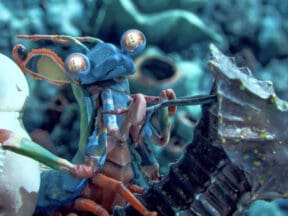
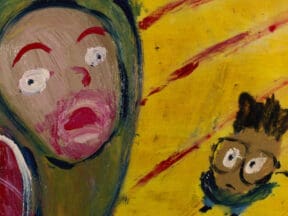
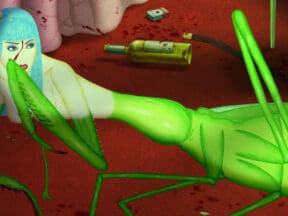
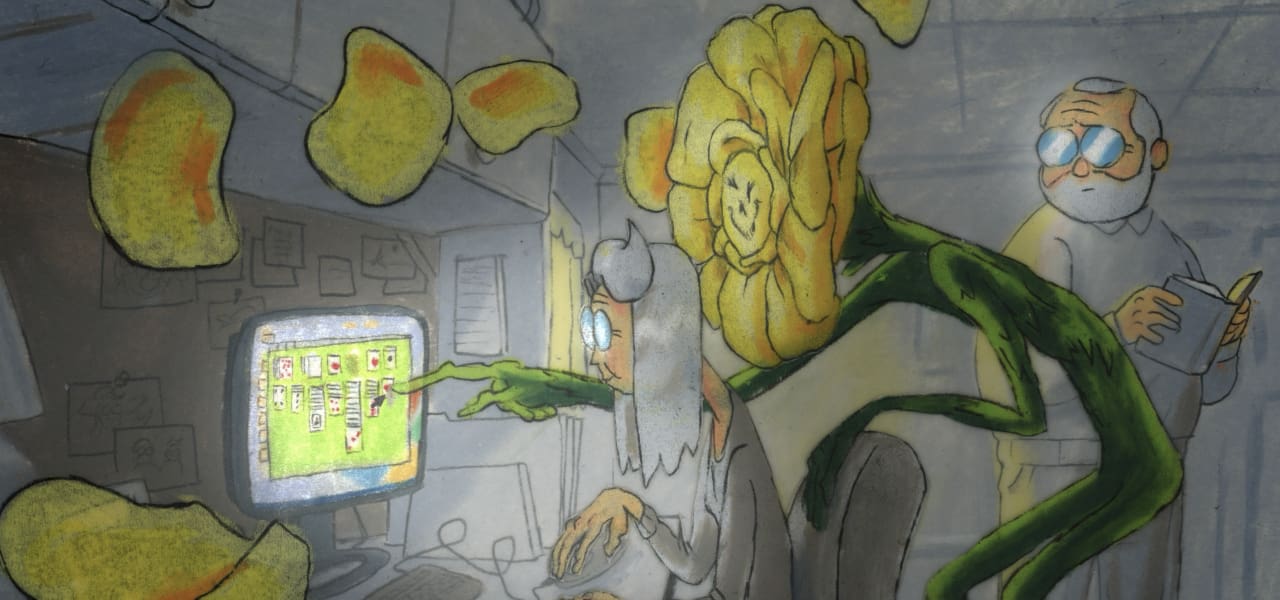
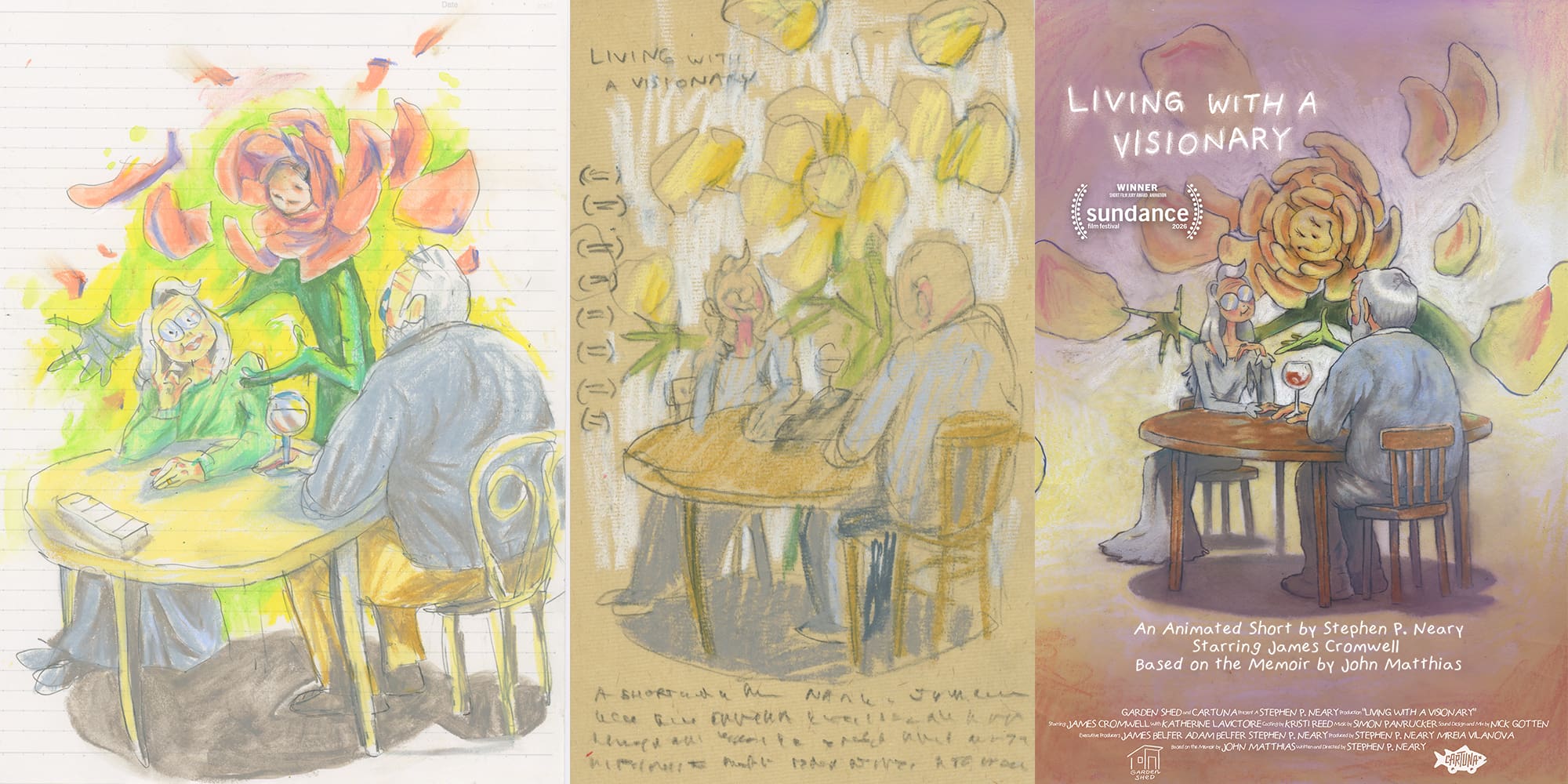
Set in Indiana, the short follows a husband caring for his wife, Diana, as she experiences vivid hallucinations, exploring love, aging, and loss through moments of tenderness and dark humor. The film’s handmade aesthetic combines soft pencils, watercolor crayons, and vellum, with layers of paper arranged directly on a flatbed scanner to create depth and texture. The director deliberately embraced the imperfections of the process, aiming to make a film that felt as human as possible in an increasingly AI-driven industry.
Cartoon Brew: What was it about this story or concept that connected with you and compelled you to direct the film?
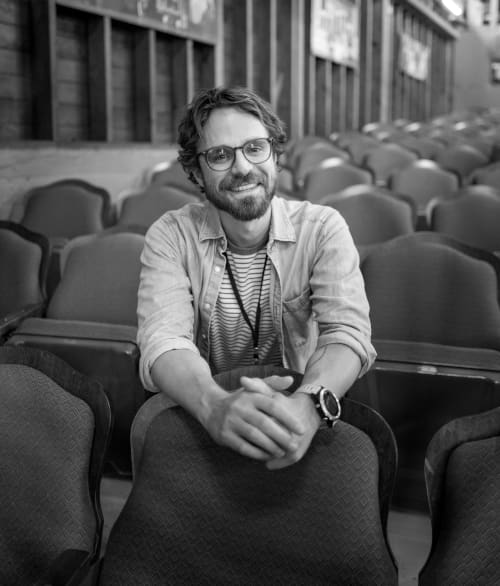
Stephen P. Neary: I read John Matthias’ memoir in 2021, in the middle of the pandemic, with a newborn sleeping on my chest. I was running a cartoon show from home (The Fungies!) through this giant corporate merger, and John’s story opened a floodgate of emotions. Moved to tears, I sobbed quietly to keep from waking our infant. The story made me feel both grateful to be alive and terrified of what I stood to lose over the course of a life well-lived. My show was canceled, development projects scrapped, and many TV jobs never returned. I was lucky to resume boarding on features (KPop Demon Hunters, The Super Mario Galaxy Movie), and no greenlights meant I could make whatever I wanted on nights and weekends.
What did you learn through the experience of making this film, either production-wise, filmmaking-wise, creatively, or about the subject matter?
I learned timing–the timing of actions, jokes, turns of phrase–but the time your craft takes too. This film started with a baby on my chest, and now he’s almost six, with a baby brother. In John’s original memoir, he describes his wife Diana’s visions: “In the house, nothing held still . . . our hanging scroll of Chinese calligraphy flew around like butterflies.” In art-directing this scene, I asked my father-in-law for a suitable poem. He suggested, “人生如朝露”. Translated, “Life is like morning dew.” I felt grateful to meditate on this story about what it means to be alive alongside all my favorite pencils and crayons.
Can you describe how you developed your visual approach to the film? Why did you settle on this style/technique?
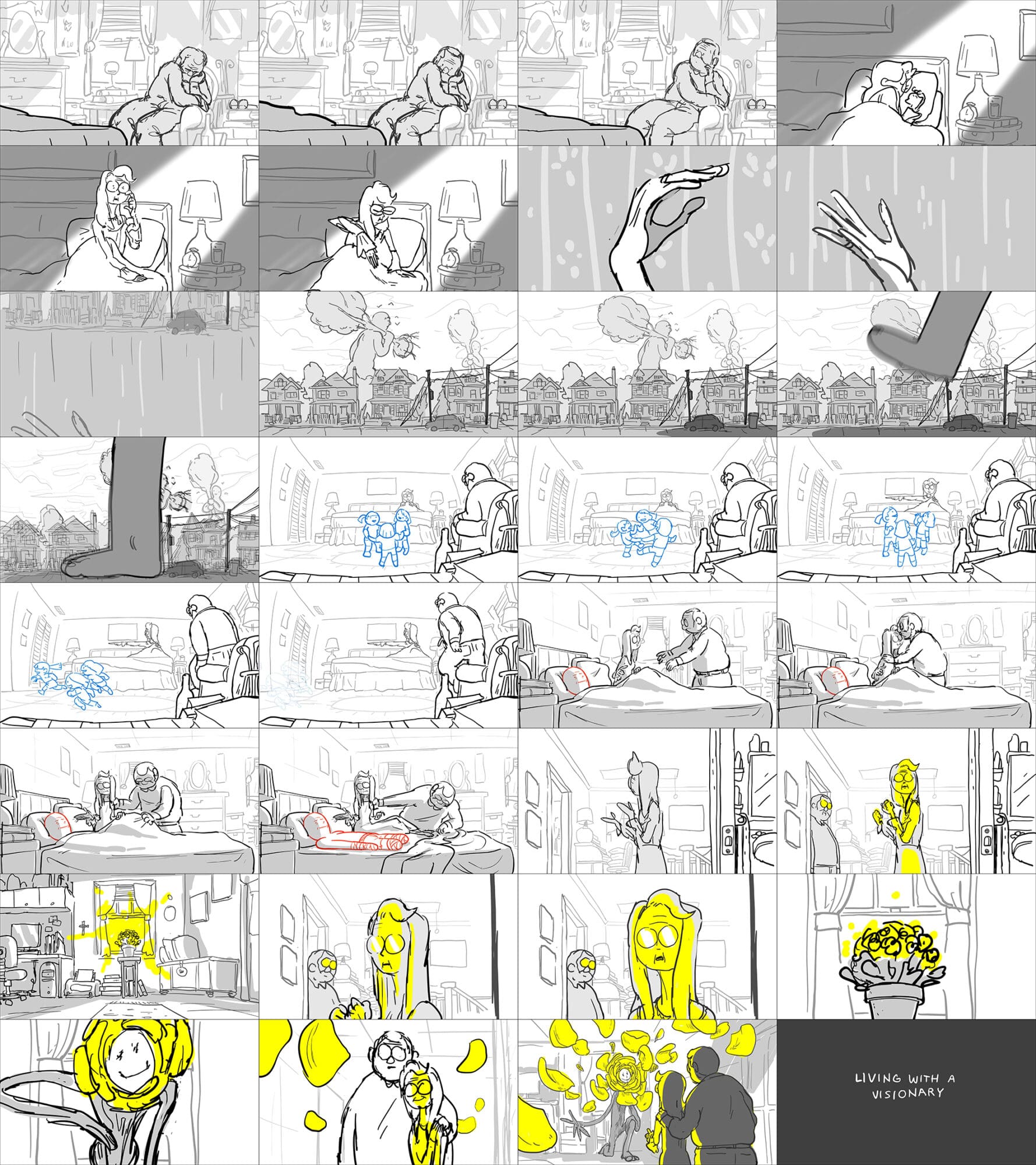
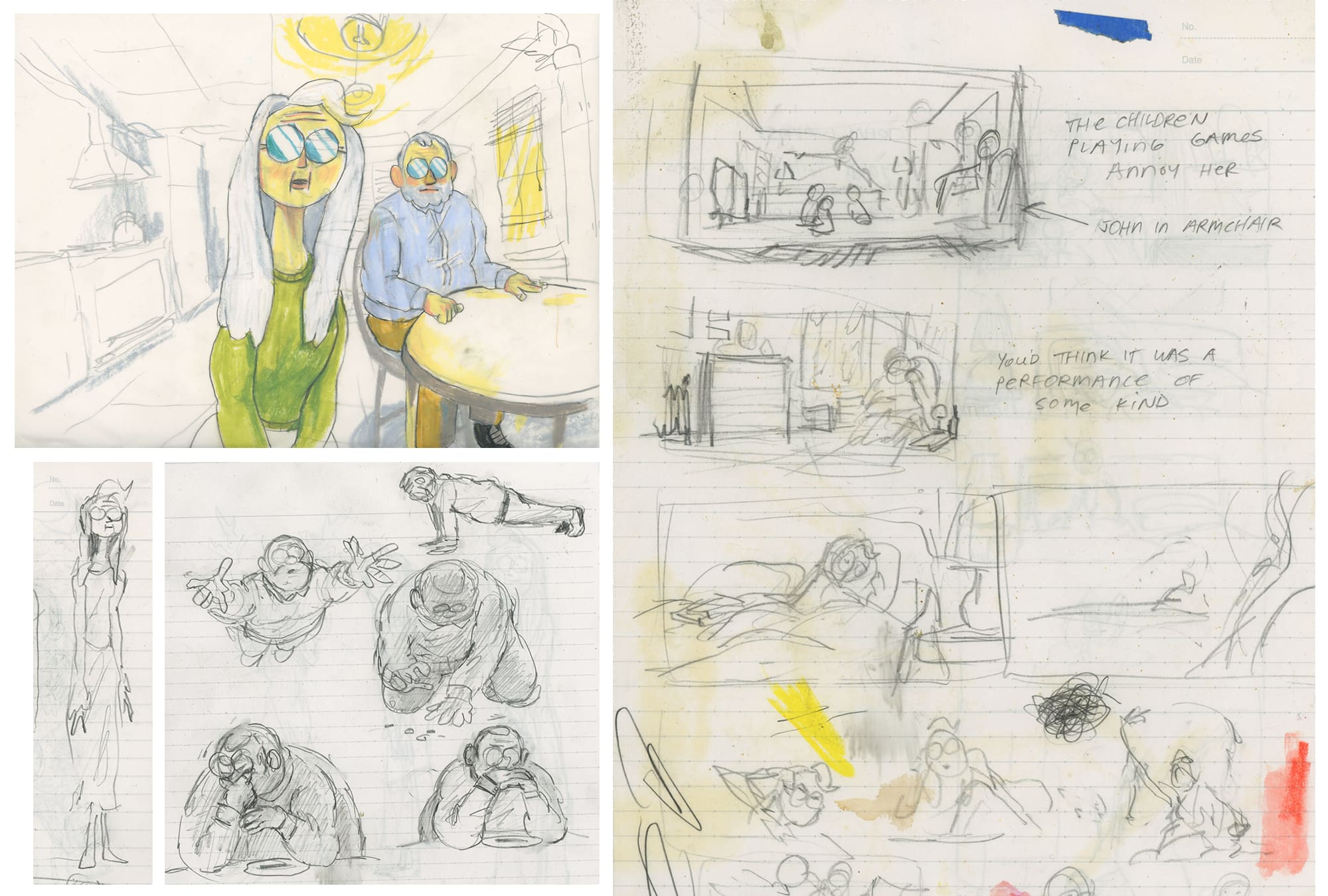
We received a few small grants to hire a handful of people towards the finish, but mostly I worked solo and prioritized my enjoyment. I thumbnailed storyboards on a 3DS, but I wanted to animate on the smoothest vellum, using soft pencils and watercolor crayons. I wanted to composite the animation “in camera”, sandwiching layers of intersecting paper onto a flatbed scanner, building up layers to mimic depth-of-field. There’s a DIY aesthetic–each shot was a puzzle. It feels crude compared to what the old Disney masters did, but in a time where AI threatens our industry, I wanted this film to feel as human as possible.
How did you approach turning such a personal true story about love, caregiving, and loss into an animated film?
I love films with rich narration like The Man Who Planted Trees and La Jetée. There’s a propulsive element to the voiceover in Goodfellas that relentlessly drives the story. So I wanted to use narration as a skeleton to a dramatized version of events, voiced by the incredible James Cromwell. I approached the storyboards like a restrained, live-action indie film, something with limited setups that could build to an earned emotional conclusion. I grew up in Indiana where the story’s set, so I drew from family–my grandmother’s long struggle with dementia, my parents getting older, and the often deadpan absurdity of those struggles. I felt this story in my guts. Mostly I cried a lot.