2027 Oscars Short Film Contenders: ‘What We Leave Behind’ Directors Alexandra Myotte And Jean-Sébastien Hamel
Stay informed with free updates
Sign up to get our news digest — delivered directly to your inbox twice a week.
Welcome to Cartoon Brew’s series of spotlights focusing on the animated shorts that have qualified for the 2027 Oscars. The films in this series have qualified through one of multiple routes: by winning an Oscar-qualifying award at a film festival, by exhibiting theatrically, or by winning a Student Academy Award.
Today’s short is Alexandra Myotte and Jean-Sébastien Hamel’s What We Leave Behind (Ce qu’on laisse derrière), produced by Sémaphore Films in Canada. The filmmakers behind the standout A Crab in the Pool (2023) use hand-drawn 2D animation to explore sexual violence against men and the difficult process of confronting childhood trauma. The film qualified for Oscar consideration by winning Best International Short at the 2026 Kaboom Animation Festival.
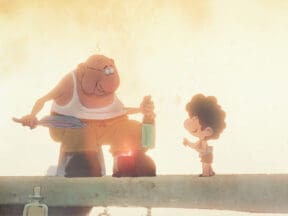
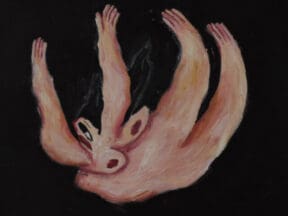
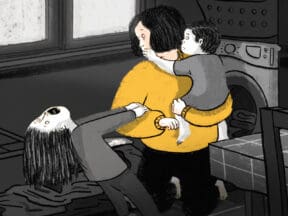
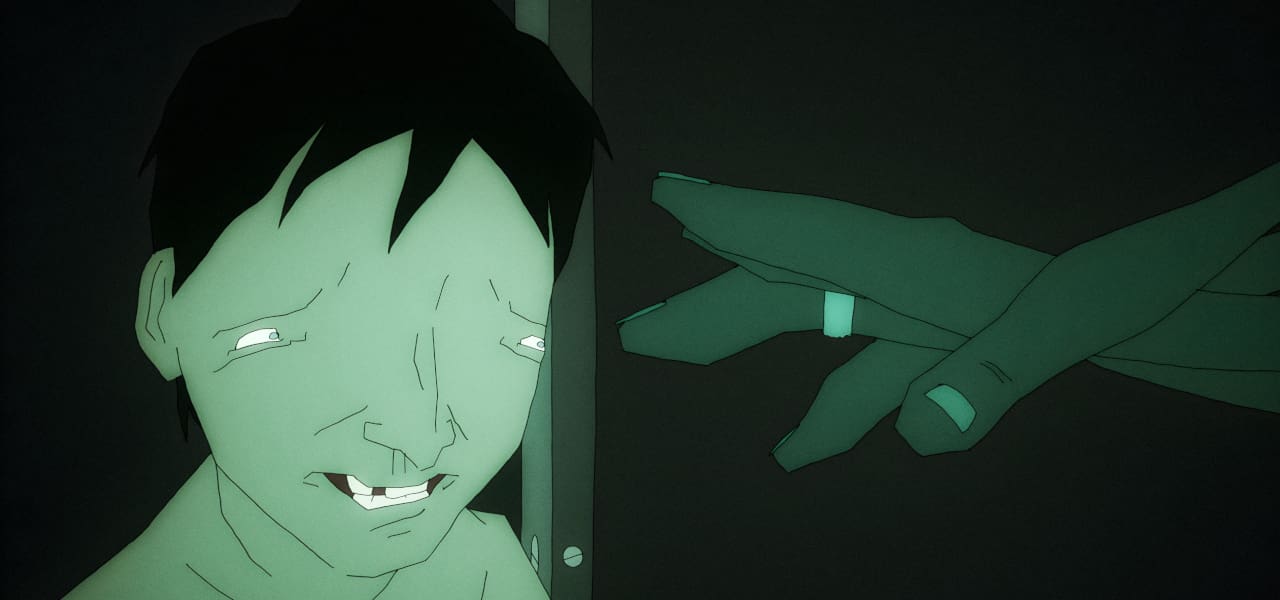
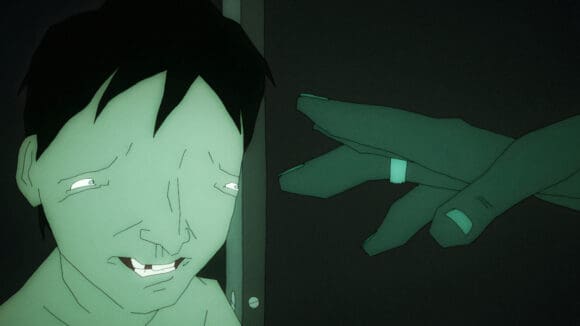
Dan has a gaping hole in his neck that will not heal, a wound he can neither explain nor discuss. Returning to the sinister hockey arena of his childhood, he must confront the part of himself he left there. Trembling lines, disorienting perspectives, and colors that shift from darkness to radioactive brightness turn the rink into an expression of his inner life, making the lasting effects of abuse physically visible.
Cartoon Brew: What was it about this story or concept that connected with you and compelled you to direct the film?
Alexandra Myotte: In Canada, hockey is almost a religion, and sexual scandals involving players and coaches have left a kind of hidden collective trauma. Like our previous film, A Crab in the Pool, What We Leave Behind explores how personal trauma shapes who we become and the paths toward healing; this time it’s about introspection. As one of too few animated shorts addressing sexual violence against men, we were driven by three intentions: that survivors feel heard and understood, that witnesses are moved to intervene, and that potential aggressors recognize the harm they cause and never act on it.
What did you learn through the experience of making this film, either production-wise, filmmaking-wise, creatively, or about the subject matter?
Jean-Sébastien Hamel: We conducted extensive research into the healing process of assault survivors and realized how complex it can be. Wanting authenticity, I used the Deep Voice screenwriting technique, which allows me to dig deep within myself to reach repressed traumas, like having been bullied. This was channeled onto the screen and proved very constructive in terms of self-knowledge. The audience response was just as powerful: many viewers told us, through tears, how deeply the film resonated with them, that we had told their story and that it helps them move forward. We were really moved by all of them.
Can you describe how you developed your visual approach to the film? Why did you settle on this style and technique?
Alexandra Myotte: What We Leave Behind is traditional 2D animation, drawn by hand, frame by frame. Given the visceral nature of the story, we chose a stripped-back, deliberately rough look: trembling lines, a heavy reliance on POV shots, and solid colors that shift between pitch-black darkness and radioactive glow, to vividly illustrate what is poisoning the protagonist’s life. The aesthetic is unpretentious by design to serve the film’s subject, bringing to the fore the way traumas are felt through time. Therefore, this deliberate rawness of the technique becomes an authentic mirror of a troubled inner life.
Hockey is such an important part of Canadian identity, but the rink becomes a place of trauma and silence in your film. How much did the sport’s culture and history of abuse influence the story?
Jean-Sébastien Hamel: We had a script for What We Leave Behind, and at first, the film wasn’t about hockey at all. But when Team Canada junior players were recently accused of a group sexual assault, our reaction was immediate. We had to do our part to help by telling this story that, unfortunately, so many people have lived through. Personally, as a kid, I played hockey and witnessed part of this reality without knowing what to do. So, making this film was our opportunity to do something more, hopefully contributing to making a better world.