.png)
Animated Witches Who Cast A Spell On Cartoons Through The Decades
Stay informed with free updates
Sign up to get our news digest — delivered directly to your inbox twice a week.
Wicked: For Good is dominating the live-action box office this holiday season, and with its historic run keeping witches in the spotlight, we’re celebrating some of the best animated witches in cartoon history.
We’ll begin with a favorite: Mad Madam Mim from Disney’s The Sword in the Stone (1963), voiced with screechy glee by Martha Wentworth. This scene, where Mim brags in song about her own treachery, was animated by Frank Thomas in the first half and then taken over by Milt Kahl when she transforms herself into a pig. Both Thomas and Kahl wished that Mim had a bigger part in the film because they enjoyed animating her so much.
— Cartoon Study (@CartoonStudy) November 28, 2025
Witches appear as one-off jokes in several of Max Fleischer’s silent-era Out of the Inkwell films, but the earliest cartoon I’ve seen to be centered around a witch is the Felix the Cat short Felix Switches Witches (1927). The witch’s black magic makes a good springboard for Otto Messmer’s always inventive sight gags.
— Cartoon Study (@CartoonStudy) November 28, 2025
Cheerfully macabre gags involving dancing skeletons and singing ghosts were the order of the day in the surreal world of early 1930s animation, so it should come as no surprise that witches made frequent appearances in films from the Fleischer, Lantz, and Terrytoons studios during this period. There’s a charming witching hour sequence in the Toby the Pup short Hallowe’en (1931) from the Charles Mintz studio, which appears to be the work of future Warner Bros. animator/director Art Davis.
— Cartoon Study (@CartoonStudy) November 28, 2025
The first of Disney’s many fairy tale witches is the child-hating harridan in the Silly Symphonies short Babes in the Woods (1932). The animator behind the witch in this scene is Norm Ferguson, who was known at the studio for his messy roughs that brought out the inner thoughts and feelings of his characters.
— Cartoon Study (@CartoonStudy) November 28, 2025
Norm Ferguson would go on to animate a more well-known witch for the Disney studio: the wicked hag in the seminal feature Snow White and the Seven Dwarfs (1937), a character originally designed by concept artist Joe Grant. Although not explicitly identified as a witch in the film itself, the Evil Queen’s decrepit alter-ego set the archetype for onscreen witches as well as future witch-adjacent Disney villains like Maleficent in Sleeping Beauty and Mother Gothel in Tangled. Actress Lucille La Verne supplied the voice of both the stately queen and the witch, switching to the latter by taking out her false teeth. Sequence director Bill Cottrell later recalled that hearing her maniacal laugh ringing across the soundstage was “blood curdling.”
— Cartoon Study (@CartoonStudy) November 28, 2025
You may have noticed that the witches we’ve covered thus far haven’t been green. The popular image of witches having green skin actually originated in the 1939 movie version of The Wizard of Oz. The witch wasn’t green in the original L. Frank Baum book, but the filmmakers were looking for opportunities to show off the then-novel Technicolor process (much in the same way that the black & white Grinch from the Dr. Seuss book was changed to green for the TV special). The first cartoon witch to “go green” was the cackling crone in the George Pal Puppetoon The Sky Princess (1942), but she wouldn’t be the last. You can watch this great little short fully restored on Arnold Leibovit’s Puppetoons Blu-Ray.
— Cartoon Study (@CartoonStudy) November 28, 2025
Witches are typically portrayed as villains, but we’re meant to be fully on the side of Witch Hazel from the Disney short Trick or Treat (1952), who curses Donald Duck after he cheats his nephews out of their rightful Halloween goodies. Hazel was the first of many witches to be played by the queen of cartoon voices: June Foray.
— Cartoon Study (@CartoonStudy) November 28, 2025
My personal favorite witch is the one from the Bugs Bunny cartoons, also named Witch Hazel, and also voiced by June Foray. This particular Hazel made her debut in Chuck Jones’ Bewitched Bunny (1954), where she was voiced by Bea Benaderet, but Foray took over the role starting with Broom-Stick Bunny (1956). She’s such a funny character, constantly cracking herself up and obsessing over her own ugliness. You’ve gotta love those wonderful, weirdly-shaped Jones eyeballs and all Hazel’s fiddly little hand motions. Plus, Hazel’s habit of zipping off and leaving her hairpins spinning in mid-air is always amusing.
— Cartoon Study (@CartoonStudy) November 28, 2025
In addition to sporting pointy black hats and riding on broomsticks, cartoon witches are often accompanied by feline sidekicks. This tendency figures into the plot of the Tom & Jerry short The Flying Sorceress (1956), in which Tom foolishly applies for a newspaper ad and winds up working as a traveling companion for a witch… voiced by June Foray, naturally.
— Cartoon Study (@CartoonStudy) November 28, 2025
Witches are usually repulsive (and proud of it) in cartoons, but the tricky sorceress from UPA’s animated segments of the live-action musical The Girl Next Door (1953) broke the mold with her more shapely and attractive appearance. The look of this stylish sequence seems like it may have served as an inspiration for Hanna-Barbera’s famous intro for Bewitched.
— Cartoon Study (@CartoonStudy) November 28, 2025
Theatrical cartoon stars Mighty Mouse, Woody Woodpecker, and the Pink Panther all dealt with witches at least once, but the only witch to score her own series of theatrical shorts is Honey Halfwitch, a half-human, half-witch created by Howard Post at Famous Studios in 1965. Unfortunately, these films were made in the waning days of theatrical shorts, so they’re indistinguishable from the low-budget stuff that was being made for TV at the time. The artists didn’t seem to have a strong handle on the series: for the last few installments, the characters were given completely different voices and designs. I think I prefer the more stylized look of the later entries, but it was a shame to lose the excellent voicework by ventriloquist supreme Shari Lewis (creator of Lamb Chop). I’ll let you compare the two.
— Cartoon Study (@CartoonStudy) November 28, 2025
Moving into the TV era, many of the early Hanna-Barbera shows had an episode with a witch (usually played by Jean Vander Pyl, voice of Wilma Flintstone), and Scooby-Doo and the Smurfs encountered several (both real and fake). Winsome Witch even had her own segment on The Atom Ant/Secret Squirrel Show. Outside of H-B, Gumby had the Witty Witch, Underdog had the Witch of Pickyoon, and Arthur! and the Square Knights of the Round Table had Morgana Le Fay. Some of cartoondom’s funniest witches appeared in the Fractured Fairy Tales segments of Rocky & Bullwinkle. June Foray generally handled the witch voices, although in a few segments, Bill Scott – story artist and voice of Bullwinkle – did the honors. I love how not one of these goofy-looking Fractured witches is drawn exactly the same way.
— Cartoon Study (@CartoonStudy) November 28, 2025
Returning to our friend, the Wicked Witch of the West… she has been brought to life through animation many times. Hard as it is to believe, the movie version of The Wizard of Oz wasn’t a huge hit when it was first released in 1939 (it wasn’t even Judy Garland’s biggest hit that year – Babes in Arms bested it at the box-office), but its legend grew when it started airing annually on CBS in the late 1950s, creating demand for new Oz-related films. Chuck Jones produced some interstitials and commercials featuring the Oz characters in the 1960s, Walt Disney purchased the rights to several of the Oz books for a planned feature that never materialized, and Rankin-Bass produced a 1961 TV series called Tales of the Wizard of Oz and a 1964 TV special titled Return to Oz. Here she is in Return, designed in a graphically flat fashion by storyboard artist Howard Beckerman and voiced by Larry D. Mann, who played Yukon Cornelius in the same year’s Rudolph the Red-Nosed Reindeer. They should’ve used this song in Wicked.
— Cartoon Study (@CartoonStudy) November 28, 2025
Some of the weirdest witch designs ever committed to celluloid appear in the psychedelic Hungarian film Johnny Corncob (1973) by Marcell Jankovics, where a coven of bottom-heavy witches traps doomed souls within the devil’s cauldron. The eye-melting use of color adds to the film’s trippy otherworldliness.
— Cartoon Study (@CartoonStudy) November 28, 2025
Many animated Halloween specials of the late ‘70s and ‘80s center around witches, including The Witch Who Was Afraid of Witches, The Trouble with Miss Switch, and The Witch Who Turned Pink. The special that seems to have kicked off the trend is 1978’s Witch’s Night Out by Canadian animator John Leach, who also animated the Christmas special The Gift of Winter in a similarly scribbly style. The special’s disco theme song could only have come from 1978.
— Cartoon Study (@CartoonStudy) November 28, 2025
The 1980s produced many memorable cartoon witches, including Mommy Fortuna in The Last Unicorn, the Witches of Morva in The Black Cauldron, and Magica De Spell in DuckTales, although the most iconic enchantress of the decade might be Ursula the Sea Witch from The Little Mermaid (1989). Ruben Q. Aquino’s deliciously hammy animation of the character was inspired by drag queen Divine, who often starred in the transgressive comedies of John Waters. Co-director Ron Clements remembered, “We had reservations about Aquino doing Ursula because if you’ve ever met the guy, he’s so quiet and kind of timid and a little bit, say, very low-key, very inhibited. This other side of him came out in the animation.” Voice actress Pat Carroll envisioned Ursula as “part Shakespearean actress, with all the flair, flamboyance and theatricality, and part used-car salesman with a touch of con artist.”
— Cartoon Study (@CartoonStudy) November 28, 2025
One witch cartoon that deserves more attention is the Czech film A Little Witch (1984) by Zdeněk Smetana, about a kindly young witch and her raven companion. Much like Casper the Friendly Ghost, her goodness makes her a dangerous subversive in the witch community. The paper cutout style here is just so darn appealing.
— Cartoon Study (@CartoonStudy) November 28, 2025
Baba Yaga is a famous witch in Slavic folklore who travels around in a forest hut that walks on chicken legs. She can either be a vindictive harpy who eats children or a helpful sorceress, depending on the story. Soviet animators have made use of her many times over the years, although one of my favorite depictions is in Aida Zyablikova’s Little Brownie Zuzya shorts, mostly because she looks like a Muppet.
— Cartoon Study (@CartoonStudy) November 28, 2025
Baba Yaga has even appeared in American cartoons, most notably the Don Bluth/Gary Goldman feature Bartok the Magnificent (1999), voiced by Tony winner Andrea Martin. Like all villains in ‘90s animated movies, she gets her own showstopping musical number.
— Cartoon Study (@CartoonStudy) November 28, 2025
There are a million things that could be said about The Thief and the Cobbler, the magnum opus that Richard Williams worked on for 30 years before it was taken away from him and released in bowdlerized fashion in 1993. But for our current discussion, the film features one of the all-time great cartoon witches, animated by the legendary Grim Natwick, who created Betty Boop all the way back in 1930. The Mad and Holy Witch was designed as a caricature of Natwick himself, and she’s drawn with a bounciness that recalls Natwick’s early rubber hose animation for Max Fleischer. This clip comes from Garrett Gilchrist’s must-see Recobbled Cut of the movie.
— Cartoon Study (@CartoonStudy) November 28, 2025
And if we dip our toes into the 21st century, witchcraft has been a major element of many animated features from the last few decades, including Coraline, Brave, ParaNorman, and the TV movie Scary Godmother. Witches serve as the housekeeping staff in the Hotel Transylvania movies, and one of those witches got her own 2D spin-off cartoon called Goodnight Mr. Foot (2012), which was written, directed, and animated entirely by Genndy Tartakovsky. As Genndy summarized, “After we finished Hotel Transylvania, I got an itch to animate! Taking inspiration from my favorite directors, Bob Clampett, Tex Avery, and Chuck Jones, I animated a short cartoon in the traditional 2D style. It was difficult and exhilarating all at once.”
— Cartoon Study (@CartoonStudy) November 28, 2025
And witches haven’t stopped showing up in fantasy-themed TV series like Over the Garden Wall, The Owl House, and W.I.T.C.H. I’m especially fond of the hunchbacked donut witch from Adventure Time, voiced by comedian Maria Bamford.
— Cartoon Study (@CartoonStudy) November 28, 2025
All that, and we haven’t even covered anime witches yet! Witches have been popping up in anime as early as the 1966 series Sally the Witch, although a standout is the conjurer in the Toshio Hirata movie The Golden Bird (1987). She boasts a unique character design by Manabu Ōhashi, and she’s great fun in her self-satisfied fiendishness. Kōji Nanke was given free rein in animating her big musical sequence, and he fills it to the brim with colorfully whimsical imagination.
— Cartoon Study (@CartoonStudy) November 28, 2025
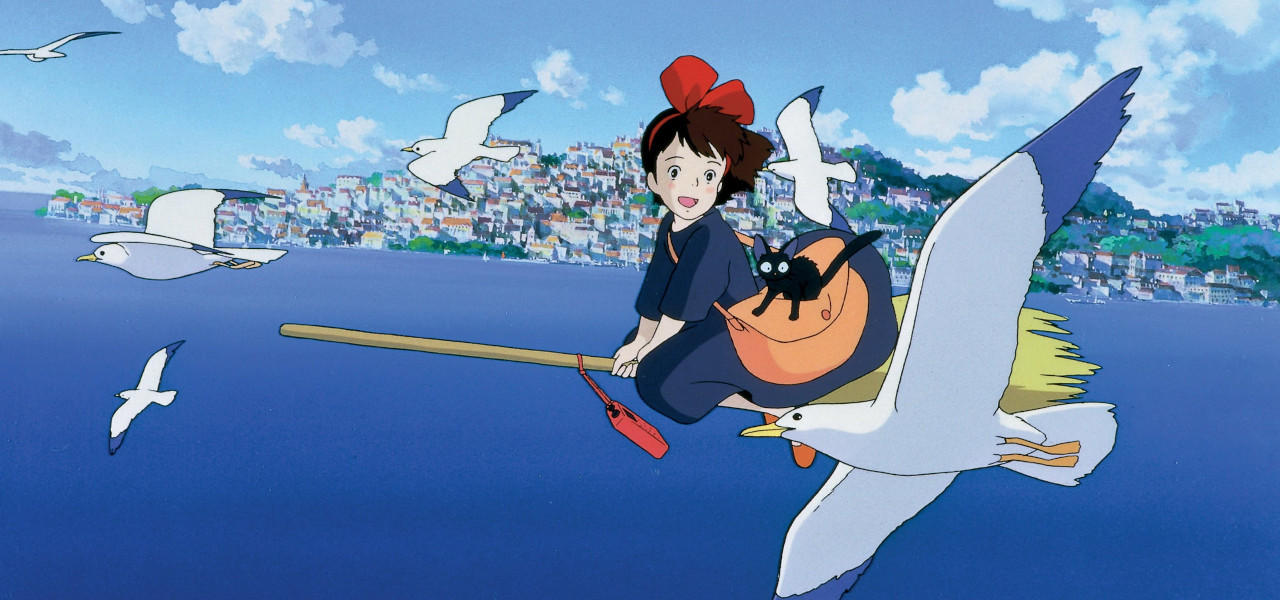
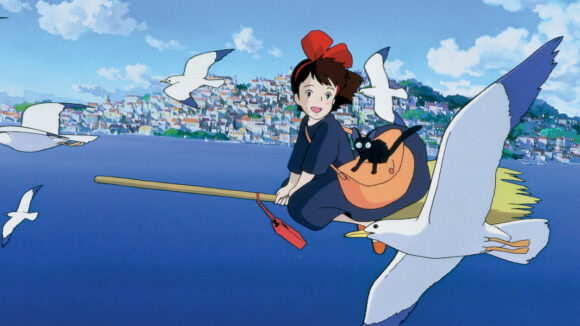
Anime witches aren’t usually scary or malicious, but are instead plucky young heroines trying to get a handle on their powers. One such witch is Kiki from the Hayao Miyazaki classic Kiki’s Delivery Service (1989), who delivers letters and packages for people on her broomstick.
— Cartoon Study (@CartoonStudy) November 28, 2025
But if you’re craving a more threatening anime witch, look no further than Yubaba from a different Miyazaki masterpiece, Spirited Away (2001). I’ve always loved Yubaba’s design, which seems to be crammed with as many wrinkles as could possibly fit on her gigantic head. Pity the poor animator who had to keep track of all of those floating strands of hair.
— Cartoon Study (@CartoonStudy) November 28, 2025
Another nice witch-themed anime is Mary and the Witch’s Flower (2017), the first movie from Studio Ponoc, in which a magical broomstick whisks a girl named Mary Smith off to a school for witchcraft in the clouds. Director Hiromasa Yonebayashi is a veteran of Studio Ghibli, and Mary feels like a Ghibli film in its sense of wonder and the high-caliber creativity of its many fantastical transformations.
— Cartoon Study (@CartoonStudy) November 28, 2025
There have been all sorts of anime TV series involving witches (Soul Eater, Wandering Witch, Witch Craft Works, etc.), with one of the most popular being Little Witch Academia, created by Yoh Yoshinari. The hyperkinetic action choreography in this scene from the series finale is stunningly good.
— Cartoon Study (@CartoonStudy) November 28, 2025
And that’s only a drop in the cauldron; I didn’t even cover witches from comics that have been adapted to animation, like Sabrina the Teenage Witch, Wendy the Good Little Witch, and Broom-Hilda. But let’s turn it over to you. Who are your favorite cartoon witches? Let us know in the comments below. We’ll finish off with a Smiling Friends clip.
— Cartoon Study (@CartoonStudy) November 28, 2025