.png)

‘Pocoyó’ Creator’s IP Case Study Sidesteps AI Debate At Spain’s Weird Market
Stay informed with free updates
Sign up to get our news digest — delivered directly to your inbox twice a week.
When French media company Animaj acquired the global IP rights to Pocoyo in 2023, the deal stood out as a major milestone in the European animation landscape; a classic preschool property would be reborn at a tech-forward studio best known for championing AI-powered production.
The question on everyone’s mind was whether this gentle, minimalist world of curious toddlers and toy-like friends could survive a data-driven reinvention.
Last weekend, at Spain’s Weird Market — the country’s premier showcase for animation, games, and digital media — that question might have taken center stage when Pocoyo’s original creator and creative director, Guillermo García Carsi, returned to the Spanish spotlight. In front of an audience of industry peers, García unveiled the first details of the show’s long-awaited fifth season and shared how he’s reimagining his 20-year-old creation for a new generation of viewers. He was conspicuously quiet on AI, however.
What emerged was not a tech demo or production pipeline talk, but something more personal: a reflection on the artistic DNA that made Pocoyo timeless, and how to evolve it without losing its soul. With humor, candor, lots of clips, and a touch of self-deprecation, García walked through what he called the “three keys” to Pocoyo’s enduring appeal — minimalism, authenticity, and directness — while offering a first look at a series that promises to be both bolder and more emotionally nuanced than ever before.
Whether or not his AI omission was justified, given the overwhelming disruption the tech is currently causing across the industry, is a topic that was debated by many in attendance at this year’s Weird Market after the talk had concluded. Love it or hate it, many felt that ignoring the tech was a mistake.
DNA of a Classic
García opened by breaking down what made Pocoyo resonate worldwide in the first place. He used three keywords to describe his philosophy for the show:
- Minimalism — the now-iconic white backgrounds and ultra-clean shapes created a universal, uncluttered visual language that toddlers could instantly decode. It looks and feels like a storybook come to life.
- Authenticity — Pocoyo avoided the “saccharine” version of childhood, presenting kids’ curiosity, mistakes, and small dramas with honesty and humor.
- Directness — simple, elegant staging made the gags land sharply.
These elements, García argued, gave the show a timeless, almost classic quality from the beginning that persists today, even though it launched two decades ago.
Season Five: Brighter, Wilder, Narratively Richer
Now, with Animaj’s backing, Pocoyo’s fifth season pushes the IP into fresh creative territory:
- Visual evolution: While the show retains its crisp design, the once-blank world now expands into richer environments. “There are things we couldn’t do before in that white background,” García explained. “Now we can play with shadows, forests, giants… even a little Alice-in-Wonderland kind of magic.”
- More ambitious storytelling: Each episode experiments boldly with tone and format. One plays like a nature documentary about wild ducks; another riffs on Oasis-style rock band drama; others dive into giant-robot showdowns and identity crises. The writing balances playful visual gags with emotional arcs, often giving characters deeper motivations.
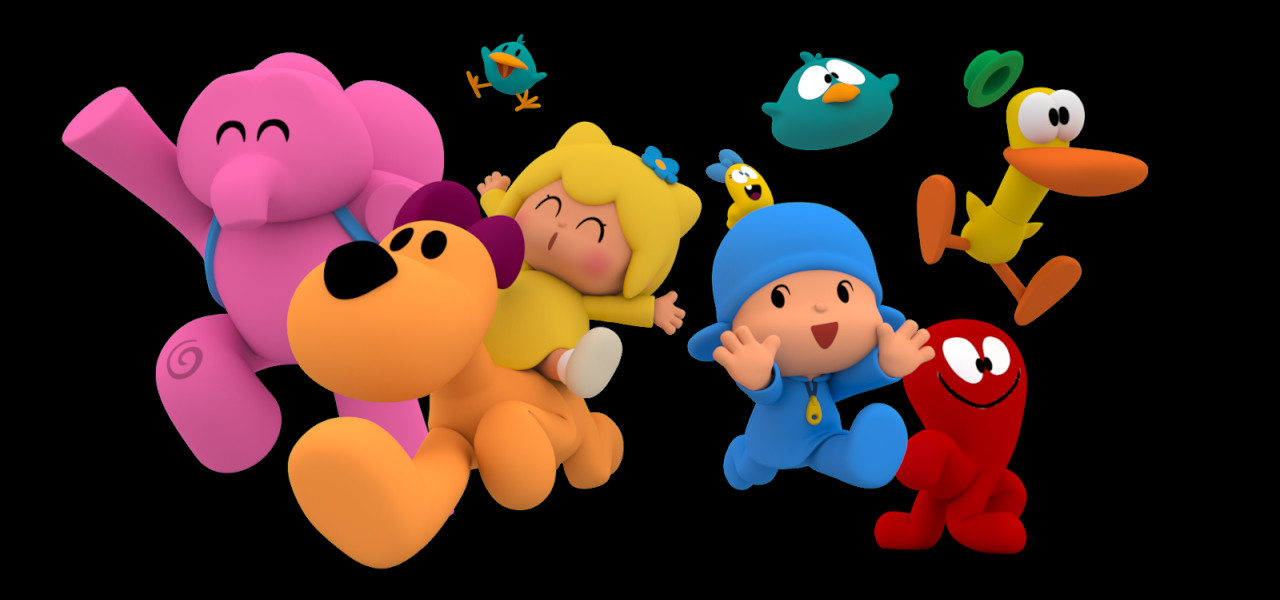
- New characters & dynamics: A highlight is Bea, Pocoyo’s little sister, a character García had designed years ago, based on his own sibling, but was initially sidelined. “This design I made years ago with my sister Bea,” García recalled. “She saw it and said, ‘She’s blonde, she should be called Bea like me.’ It just stuck.”
The overall feel is brighter, funnier, and more narratively daring while preserving the heart of the original. It’s still preschool-friendly but “aged up” just enough to catch kids who’ve grown alongside the brand.
Unexpected Silence on AI
One striking aspect of García’s talk was what he didn’t mention: artificial intelligence. That omission is surprising given that Animaj has publicly positioned itself as an AI-forward studio, announcing that the tech is being used to speed up production on Pocoyo specifically:
As part of its innovative approach, Animaj leverages cutting-edge AI tools to accelerate the production of new Pocoyo content. These tools allow Animaj to release a new season every 18 months, ensuring a steady flow of fresh content for traditional media platforms and premium streaming services, while maintaining high production values.
García’s talk positioned the show as deeply artist-led and craft-focused, emphasizing story, visual experimentation, and character authenticity, with no reference to machine learning or automation. Perhaps he was just reading the room, although several other AI-friendly companies were far more forthcoming in discussing the tech at this year’s Weird Market. In any case, it felt disingenuous to frame the show without discussing the use of AI when presenting to a room full of artists, given the current turmoil surrounding the controversial tech.
IP Landscape
The Pocoyo case demonstrates several key trends that can be seen across today’s kids’ media landscape:
- Legacy IP revival with original talent: Animaj didn’t just buy a brand; it brought back the creator. This has been a hugely popular trend recently, with examples including Genndy Tartakovsky’s Samurai Jack reboot; Craig McCracken’s Powerpuff Girls return; and Rebecca Sugar’s upcoming Steven Universe spinoff, Lars of the Stars, among others.
- Global-local collaboration: With French investment, Spanish creative leadership, and worldwide distribution, make this a case study in cross-border IP strategy.
- Balancing craft and technology: The big question going forward, for any studio that uses AI in any way, will be how they balance artistry and tech. Although he didn’t address it, the audience could only assume that García was pleased with the recipe used by Animaj, given his enthusiasm about the series’ current state.
Our Take
The new Pocoyo feels visually richer and narratively sharper while keeping the minimalist charm that made it an international preschool icon. The clips screened at Weird were genuinely funny, made all the more charming by sharp narration from British icon Stephen Fry. García’s playful, experimental approach also shows a willingness to break the formula without losing brand clarity, a tricky balance for legacy children’s IP.
Yet the complete lack of AI discussion was striking. For a company loudly touting AI as a driving force for its future, the presentation doubled down on human creativity and artisanal storytelling. It’s entirely possible that the decisions about AI integration into the Pocoyo pipeline happen above García’s head, and he’s an unwilling participant. Even still, it feels odd to omit any talk of the tech when discussing the show’s future, because the audience was certainly discussing it afterwards. Animaj proudly owns its AI pipeline in all of its public outreach. What responsibility do the artists and creators working with them hold in sharing that ownership?