Aliens, Battle Royales, And Vampire Romance: Atsushi Nishigori Poured His All Into ‘Grotesqqque,’ A Three-Course Anime Omnibus
Stay informed with free updates
Sign up to get our news digest — delivered directly to your inbox twice a week.
TOKYO, Japan – Grotesqqque is a fun film title to type. An enigmatic anime feature playing at the Tokyo International Film Festival this week, Grotesqqque has a q in its name for each of the three installments that make up its omnibus structure. The film’s overarching title nods to the weird and wonderful sights in store.
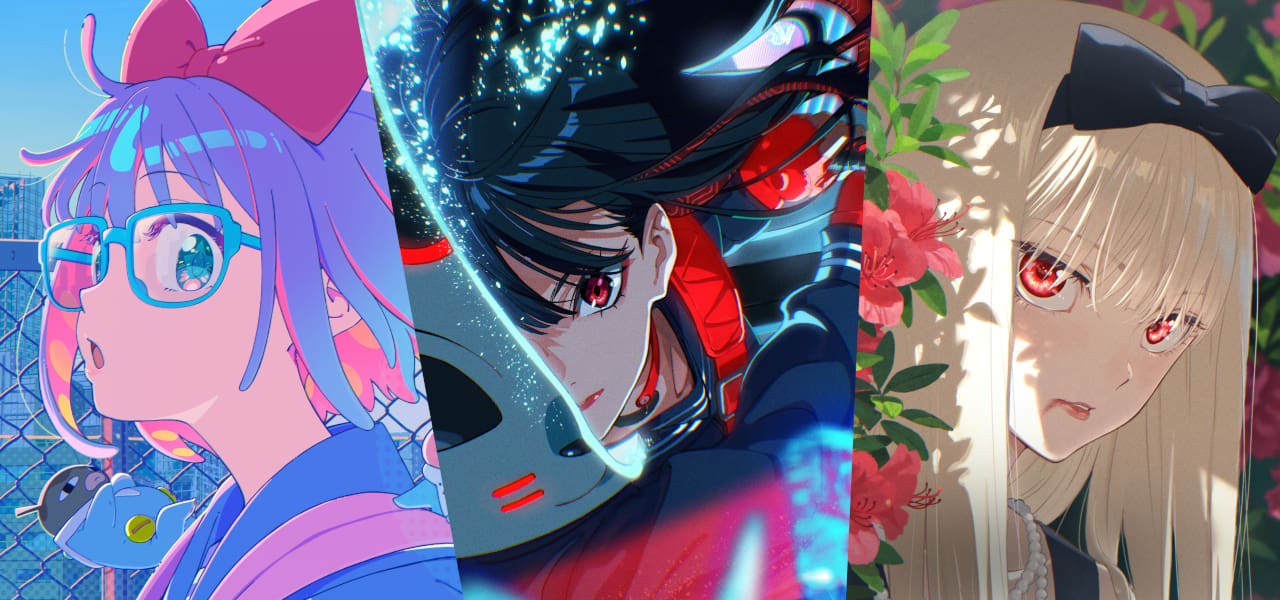
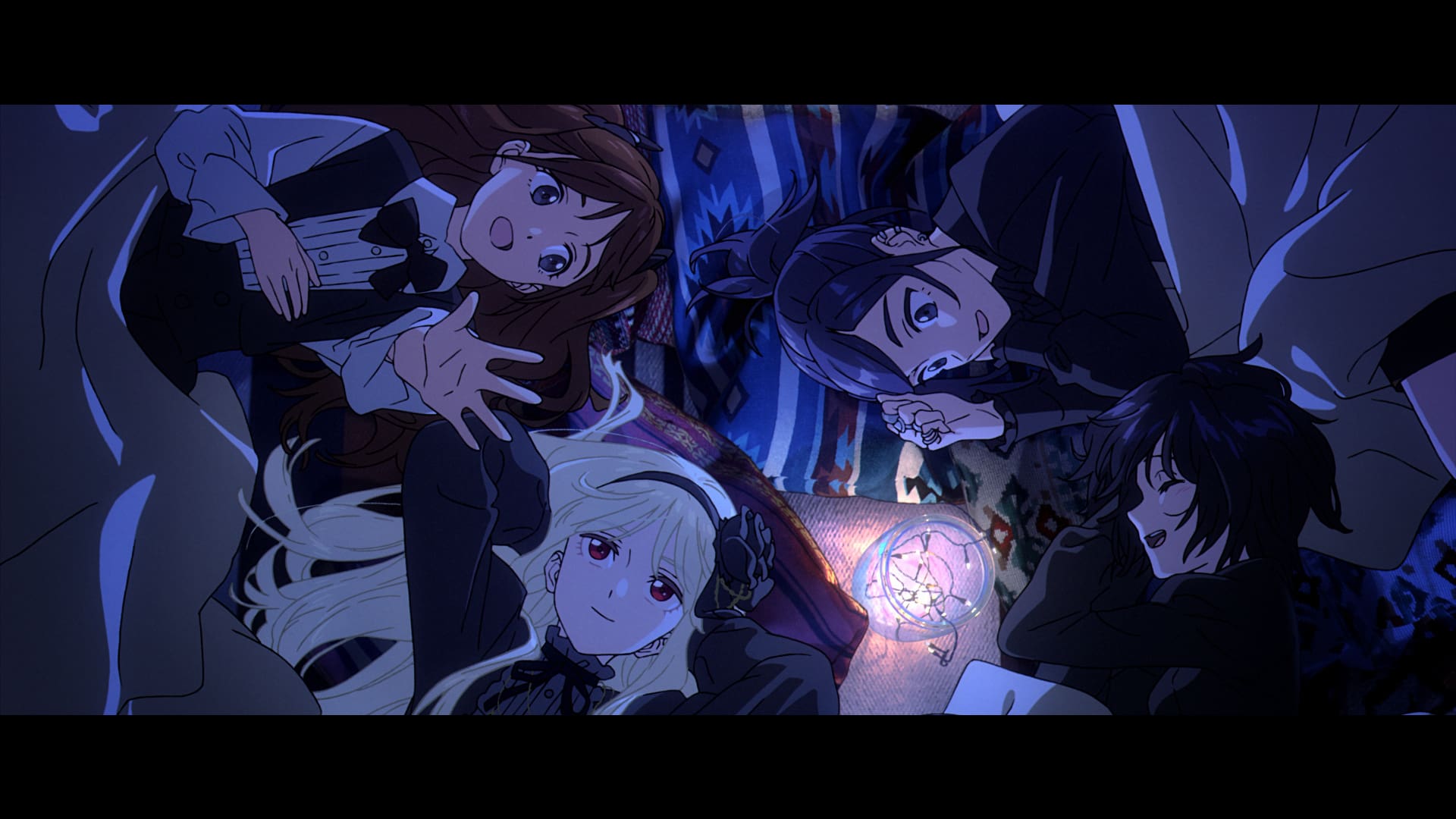
The first episode in this triptych, “A(e)liens,” follows a young alien woman who crash-lands on the streets of Shibuya, where she develops a passion for Earth culture. The second, “Yoroshiku Girl,” shifts gears to an action-heavy battle royale scenario. The third, “Nocturne: Nuit Grotesque,” is the most unexpected—a slower, sapphic vampire story in a gothic apocalypse.
The project’s director, Atsushi Nishigori, is an industry veteran, celebrated for his work as character designer on the enigmatically titled cult classic series Panty & Stocking with Garterbelt and as director of the international breakout Darling in the Franxx—but he’d much rather focus on his present achievement. He directed Grotesqqque’s first and third segments himself, wrote its second, and created the original character concepts.
Animated by CloverWorks, with planning and production by JOEN and Aniplex, Grotesqqque opens in Japanese theaters on November 6. Cartoon Brew sat down with Nishigori during the Tokyo International Film Festival.
Cartoon Brew: Why Grotesqqque? It’s a word that perhaps speaks to the wild visual surrealism and “out-there” nature of this project.
Atsushi Nishigori: The film is made up of three stories—that in itself is a bit strange. It’s kind of a patchwork film, and there’s an eeriness to that.
If you make an original animation, it needs to make an impact. So, for a title that might startle or surprise an audience, Grotesqqque works very well.
Your works are defined by their anarchic visual sensibility—how did you funnel that career DNA into this project? Did you feel a simultaneous urge to push that sensibility further in the first segment and perhaps lean in a different direction in the third?
I feel that all three of the film’s segments are equally reflective of my style. They’re all things that I’ve always wanted to do but never had the chance to before. I’m an animator, a director, and a producer. Those who know me well will understand. Those who don’t might view these disparate elements as separate from each other.
Do you view Grotesqqque as being an “ultimate,” highly complete expression of your artistic identity? Does it come from your heart and feel like it belongs to you personally?
Yes, it does come from my heart. It’s a very visceral thing—that’s why I named it Grotesqqque.
How did this project first come about, and how did you pull it all together?
After I directed Darling in the Franxx, I was asked to direct a feature—but I was just too tired; I couldn’t consider it. However, I had so many visuals that I wanted to draw. If I could make a film—maybe in the mid-length region—then maybe I could do it.
Visually, there were so many styles that I wanted to pursue. I couldn’t put them together into one story. So, in the end, I decided to divide it into three and connect those pieces into one long feature—that’s how it came about.
Do you find the omnibus format to be creatively freeing? It gives you the opportunity to involve all these different styles and elements. Would you recommend that other animators pursue projects of this nature?
It’s a bit experimental; it’s a different challenge. It’s intriguing. But, at the same time, I have to be in control of the three stories at once by myself, and so I sometimes become the bottleneck of the project. It’s really difficult, so I wouldn’t recommend it to others! I understand now why the average feature is based around a single story.
Tell me about the animation process. Did it differ between the three segments?
If I made all three segments in the same style, it might have caused stress to the audience—they might get tired; they might get bored. I kept that in mind, and it was the main reason for changing up the style between the segments. I focused on action in some of them; I took longer spaces between dialogue in others.
It took fine-tuning between the different stories. I created what I wanted to create, and I created something the audience would enjoy. But to balance that all out was the biggest challenge for me.
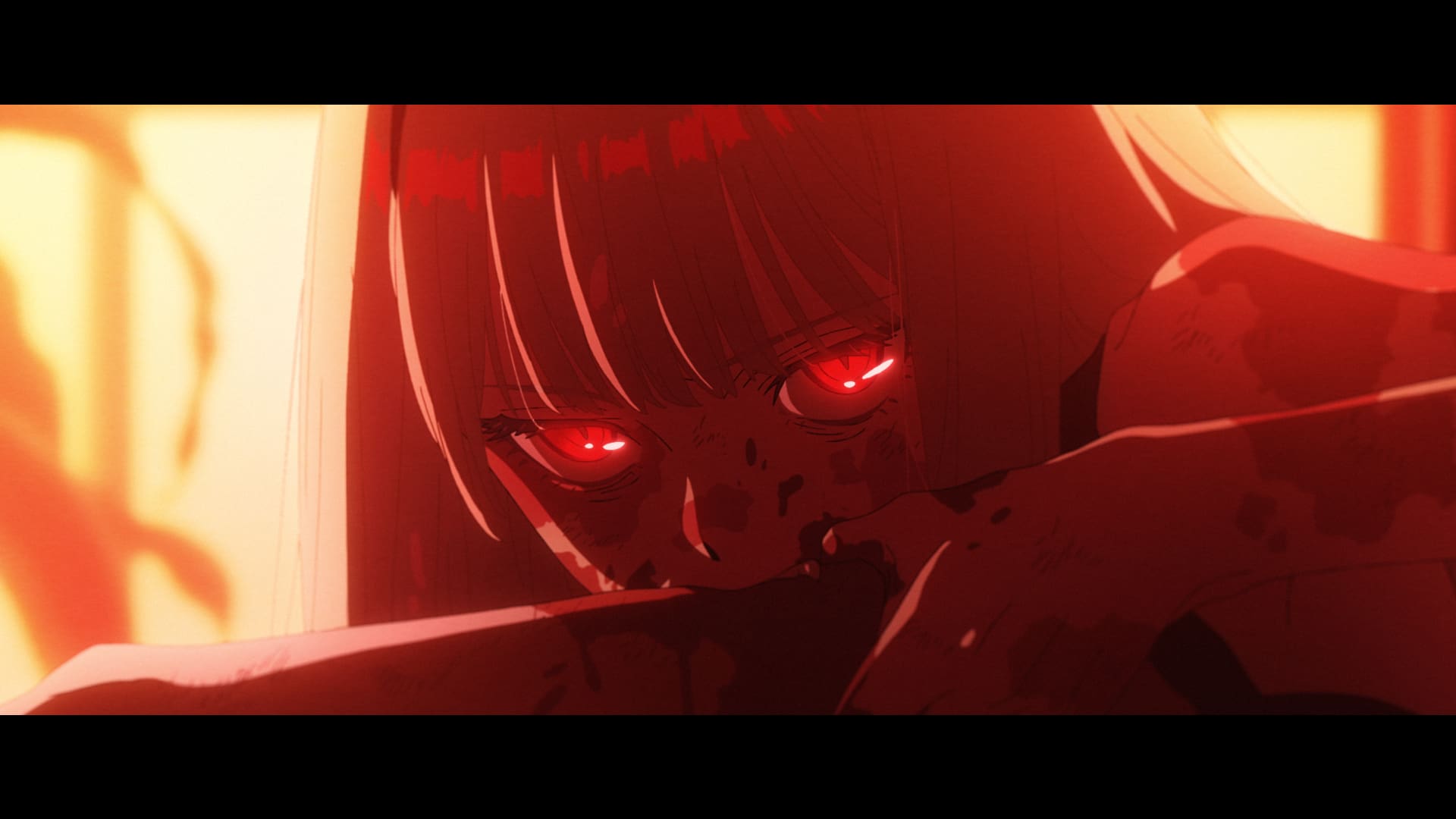
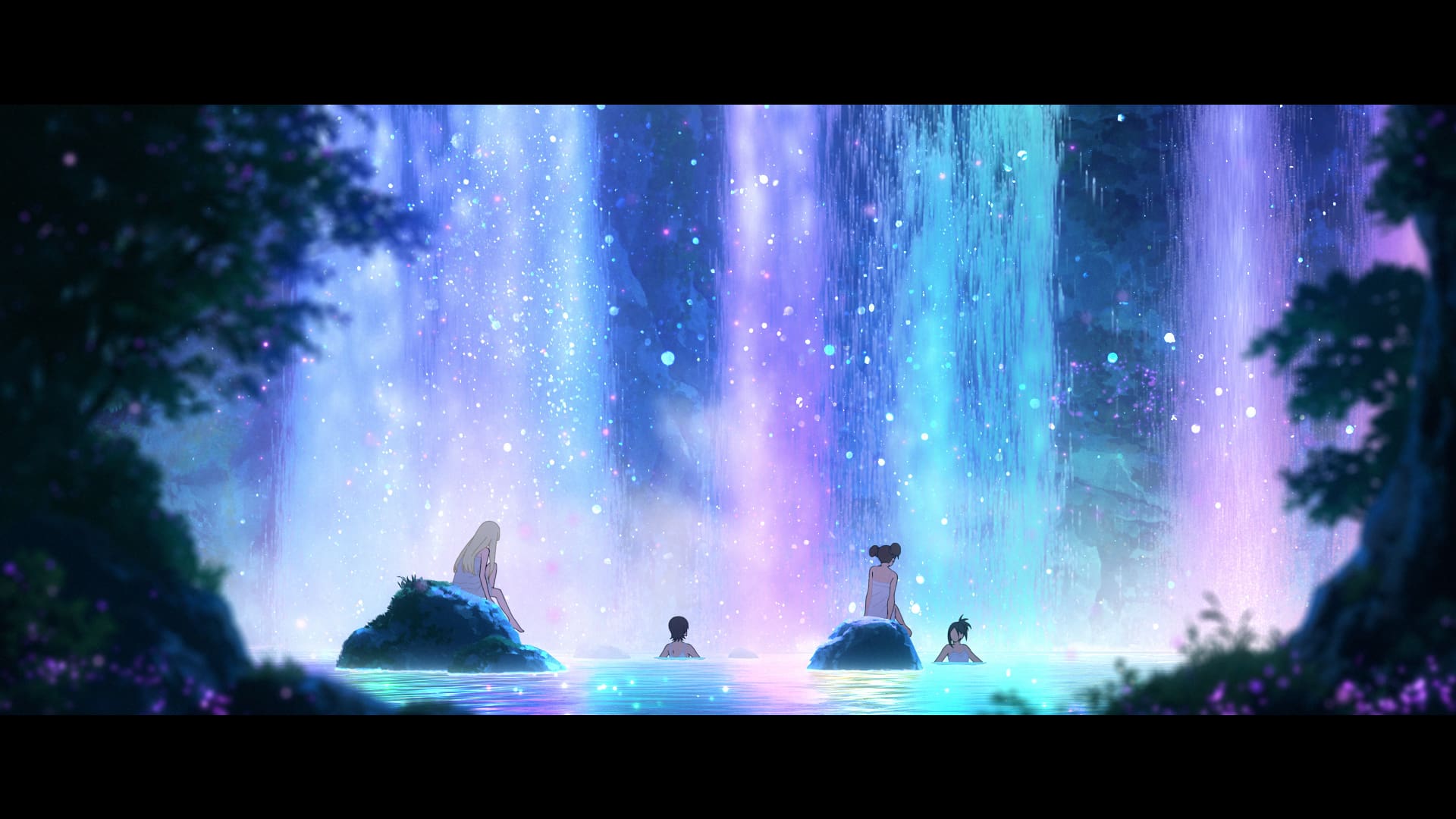
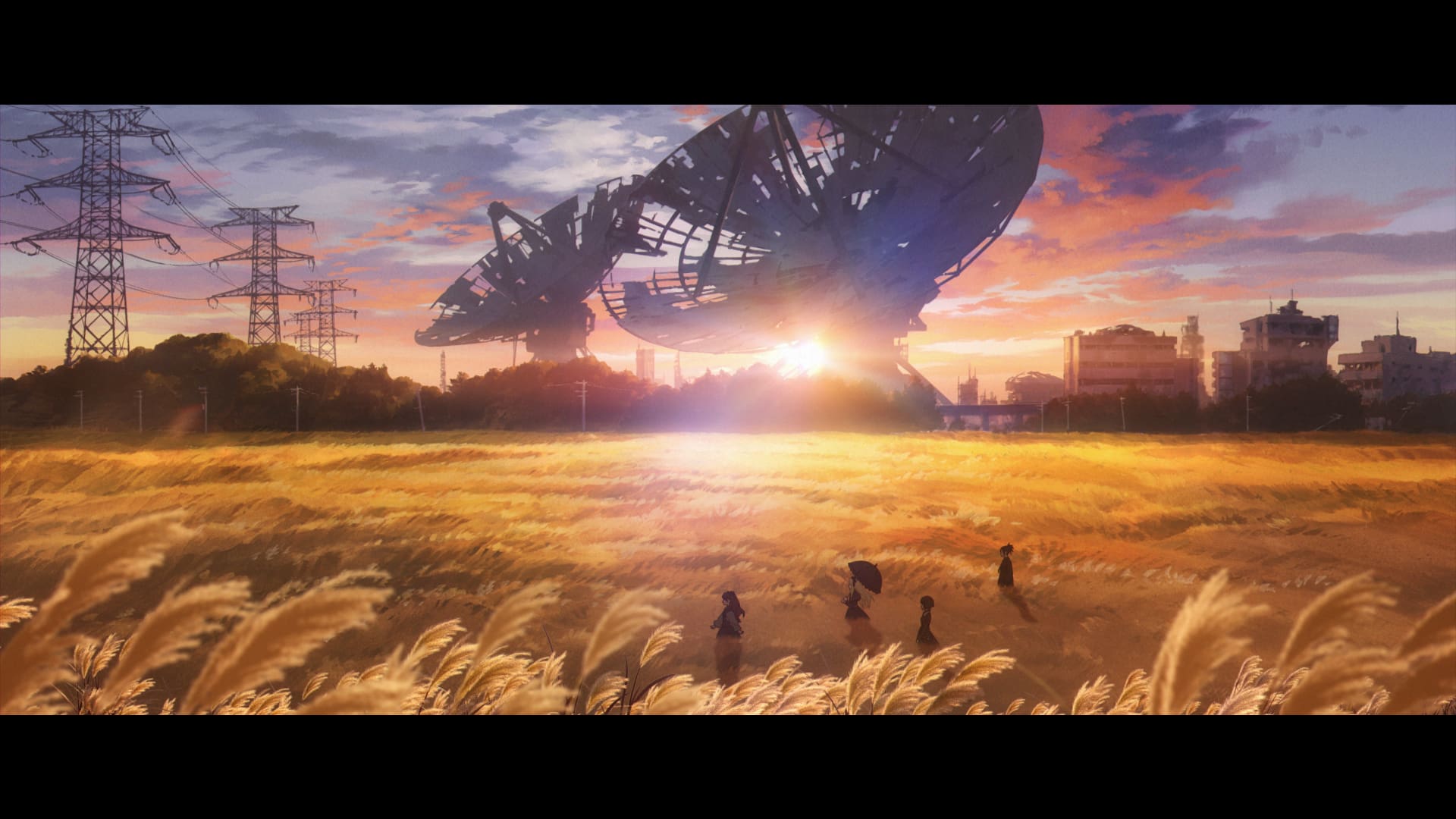
How much of the film was drawn on paper, and how much was drawn digitally? What software did you use?
95% was drawn digitally. We mainly use Clip Studio. Some staff use the software that they themselves are used to, but it’s mostly Clip Studio.
I myself practiced hand-drawn animation up until the Rebuild of Evangelion films. After that, I switched to digital. I’m trying to keep up with the young people.
Taking a closer look at the first segment, “A(e)liens”: How do you go about designing characters? There’s an immense—and highly endearing—variety in the creatures that occupy the Shibuya that we see in this first episode.
It all draws on my past experience. I never had the intention of making something new that starts from zero. So I used the techniques and designs of my first works as a foundation—that was my aim for this project. I just drew what I wanted to draw. There was no difficulty in that.
Regarding the aliens and UFOs and little gadgets, that was some of the most fun I’ve had designing things.
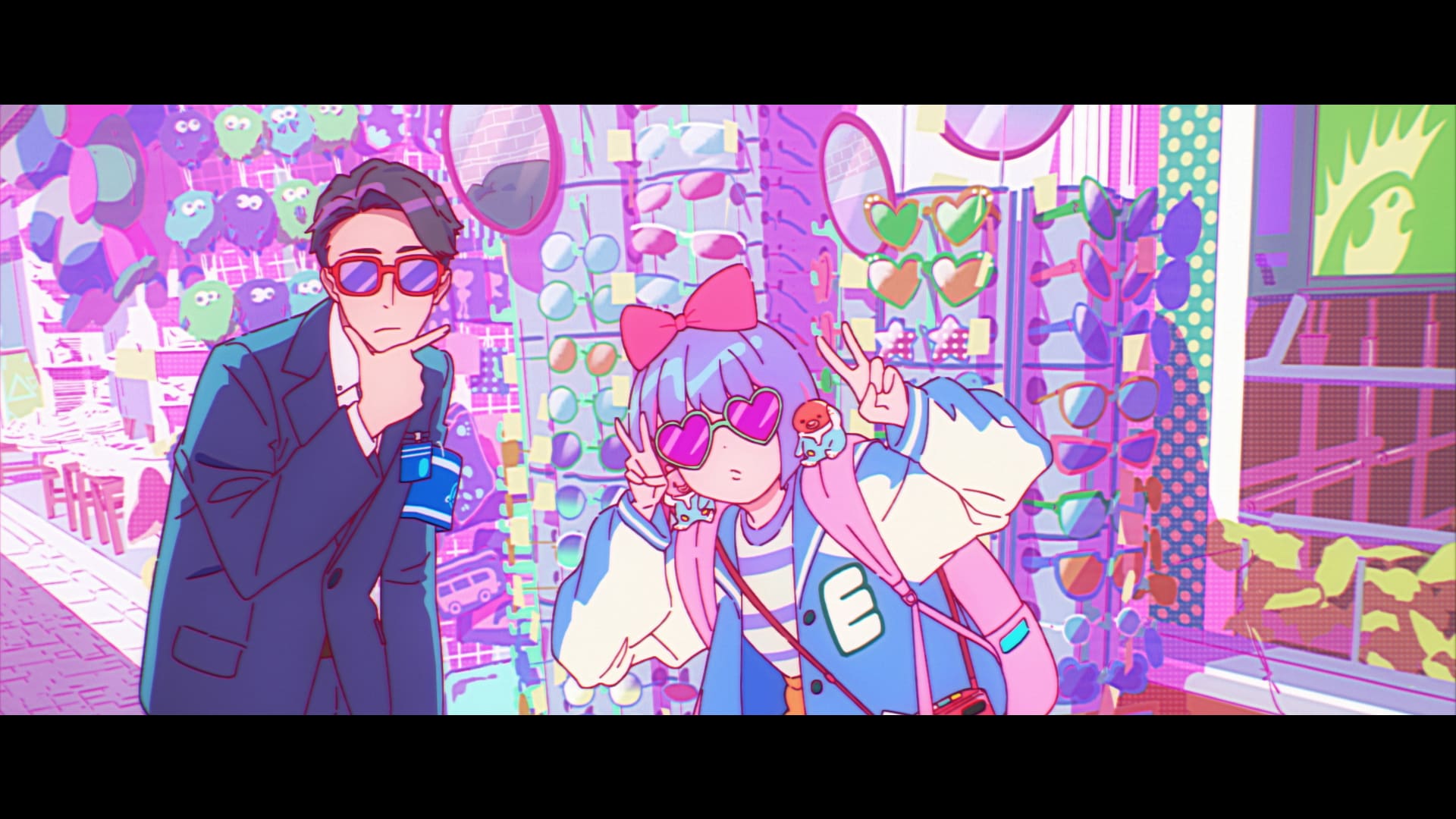
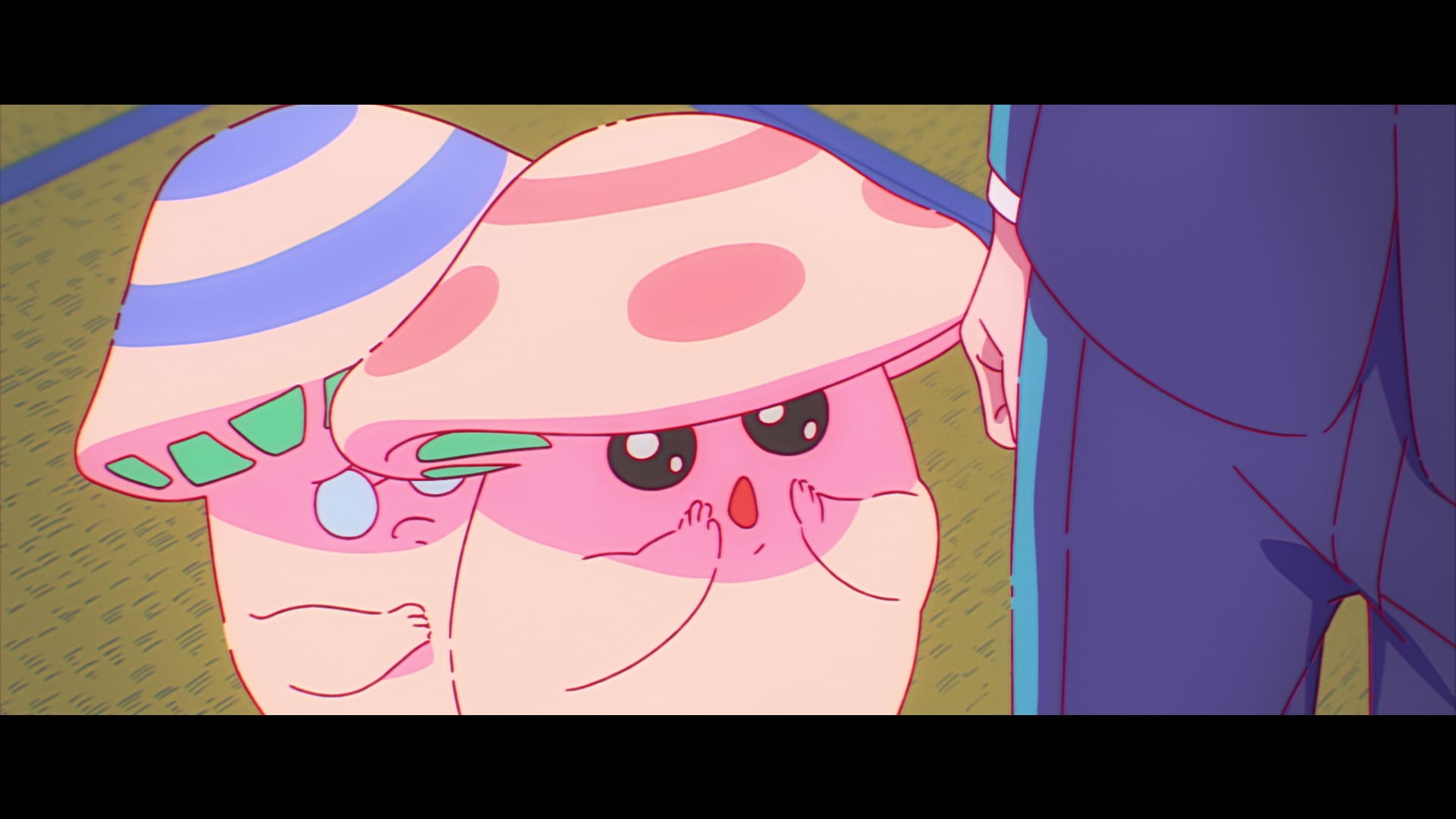
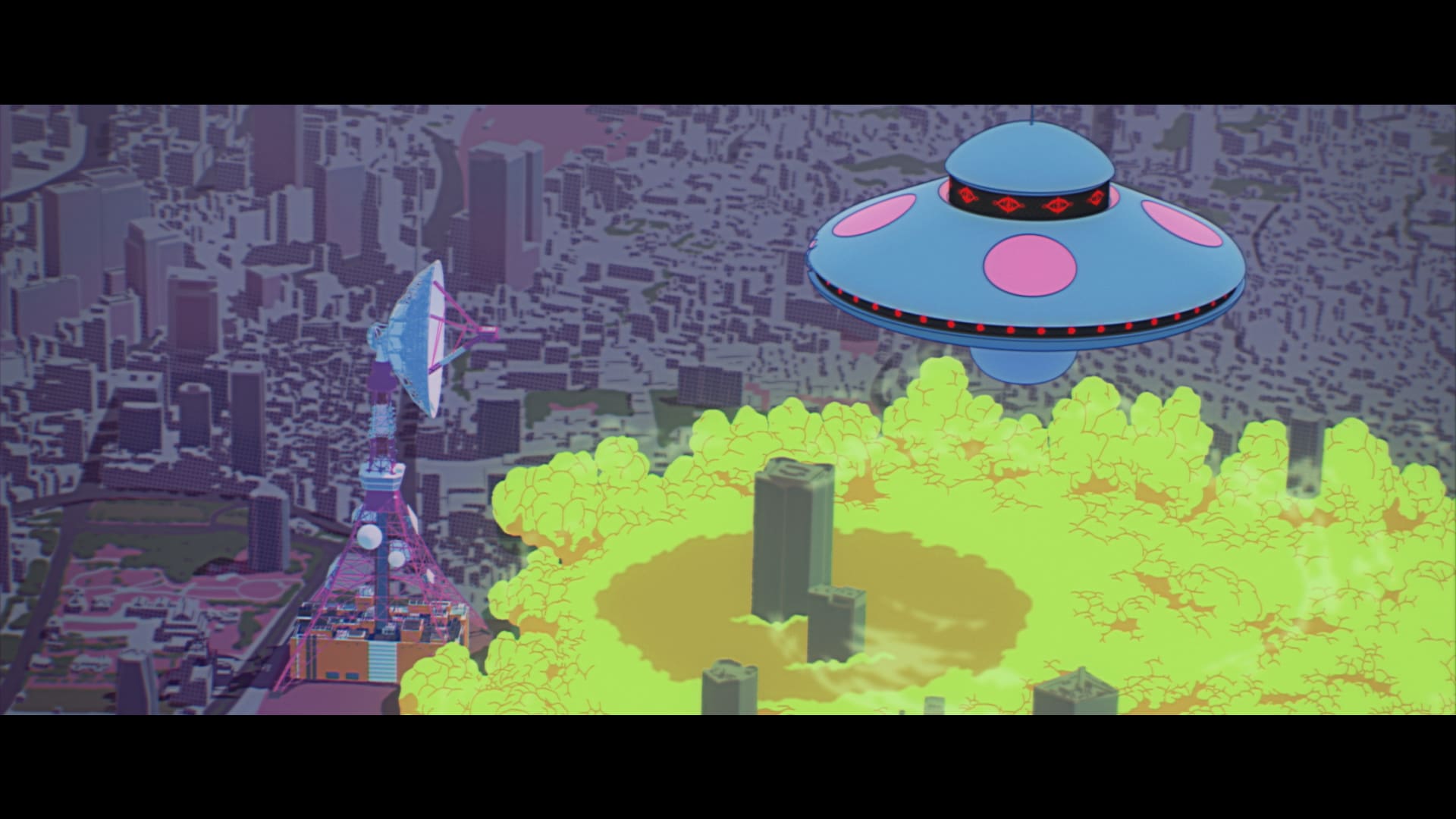
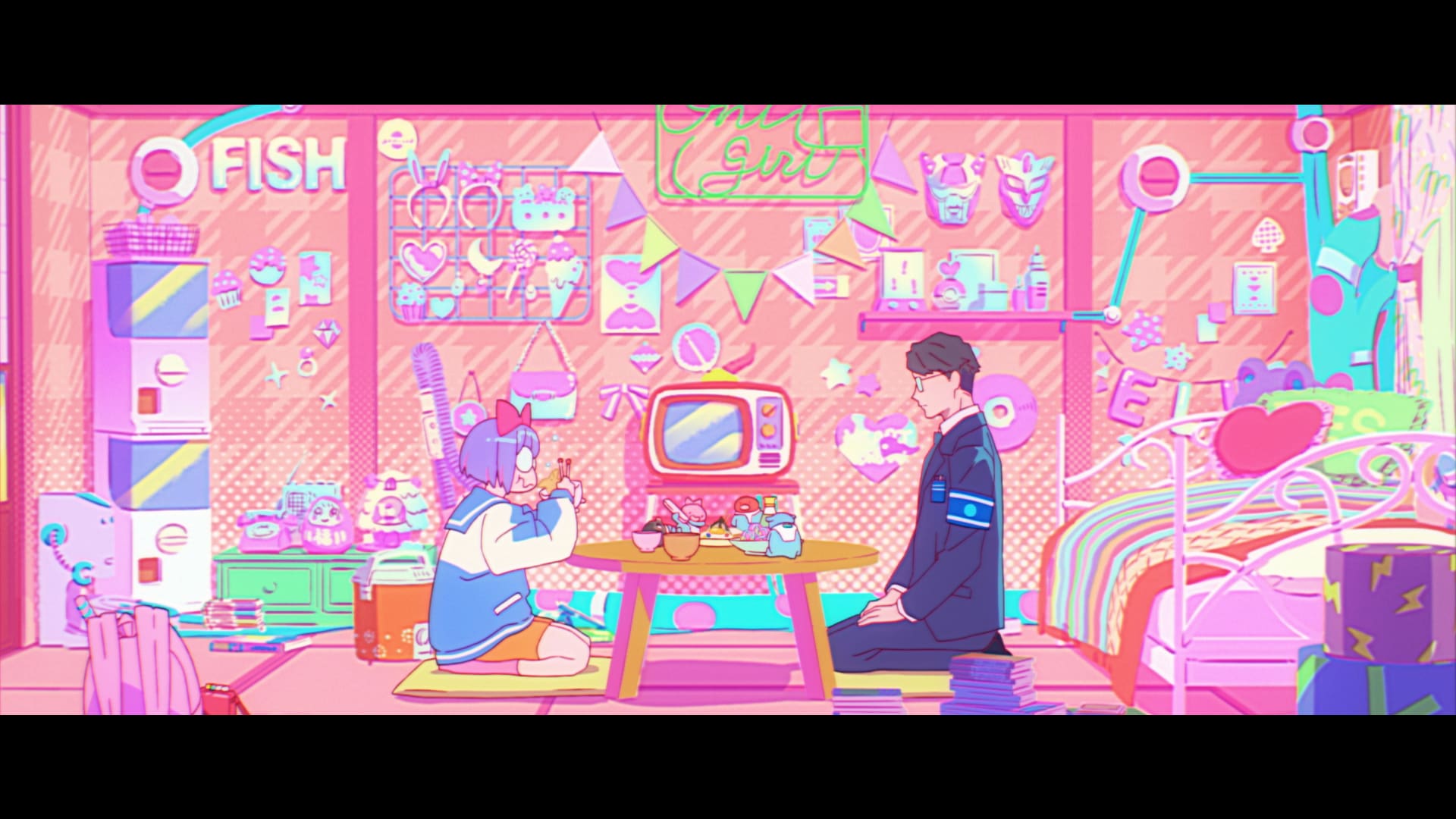
It’s fascinating that this first episode tells the story of a young alien woman enjoying engaging with Japanese culture in Shibuya. It strikes me that this is very much what many foreigners do when they come to Japan and explore Tokyo—it’s that kind of interaction. And it strikes me also, of course, that this film will be enjoyed by both domestic and international audiences—which leaves me curious as to which audience you were thinking of as you created and animated this sequence.
Yes, it’s as you say. I wouldn’t know how an actual alien being would feel if she landed in Shibuya. It was much easier for me to imagine how a foreigner would feel if they came to Tokyo and interacted with Japanese culture. I wanted to depict that with comedy—with a lightness to it—so that foreigners could enjoy it.
That said, I am Japanese. If I think too much about the foreign audience from the get-go, it would end up in a different style. So I was conscious of it, yes, but my aim was to depict Japanese culture from a domestic perspective, but also for foreigners.
I love your aesthetic choices in this first segment. You go for a pastel-colored look, and that’s interesting when it’s such a recognizable Shibuya. It’s very much what we see on the street in real life, but heavily stylized in a different palette.
Well, if I depicted Tokyo as it is—too realistic—it wouldn’t be fun at all. I wanted to add a manga, comedy feel to it. But the structure and layout of Shibuya are 1:1. With the color, I wanted to add a fantasy feel. The aim was to marry the realistic with the fantasy within that frame.
Critics have noted the third segment of this film as a departure from your usual work. It’s slower, more romantic in nature—quite arthouse, almost. I’m curious about the influences that fed this segment and what led you toward this different style.
The animation that I created in the past as work—if you compare it to that, yes, it might feel different. But those who really know me might feel that it is, in fact, my style, this third section. It’s something that I’ve always wanted to do, but I hadn’t had the chance to do it. I’ve always been interested in the idea of a created family. I always had Little Women in mind. And compared to the first two, yes, it does have a calmness to it. There’s a film noir sensibility there.
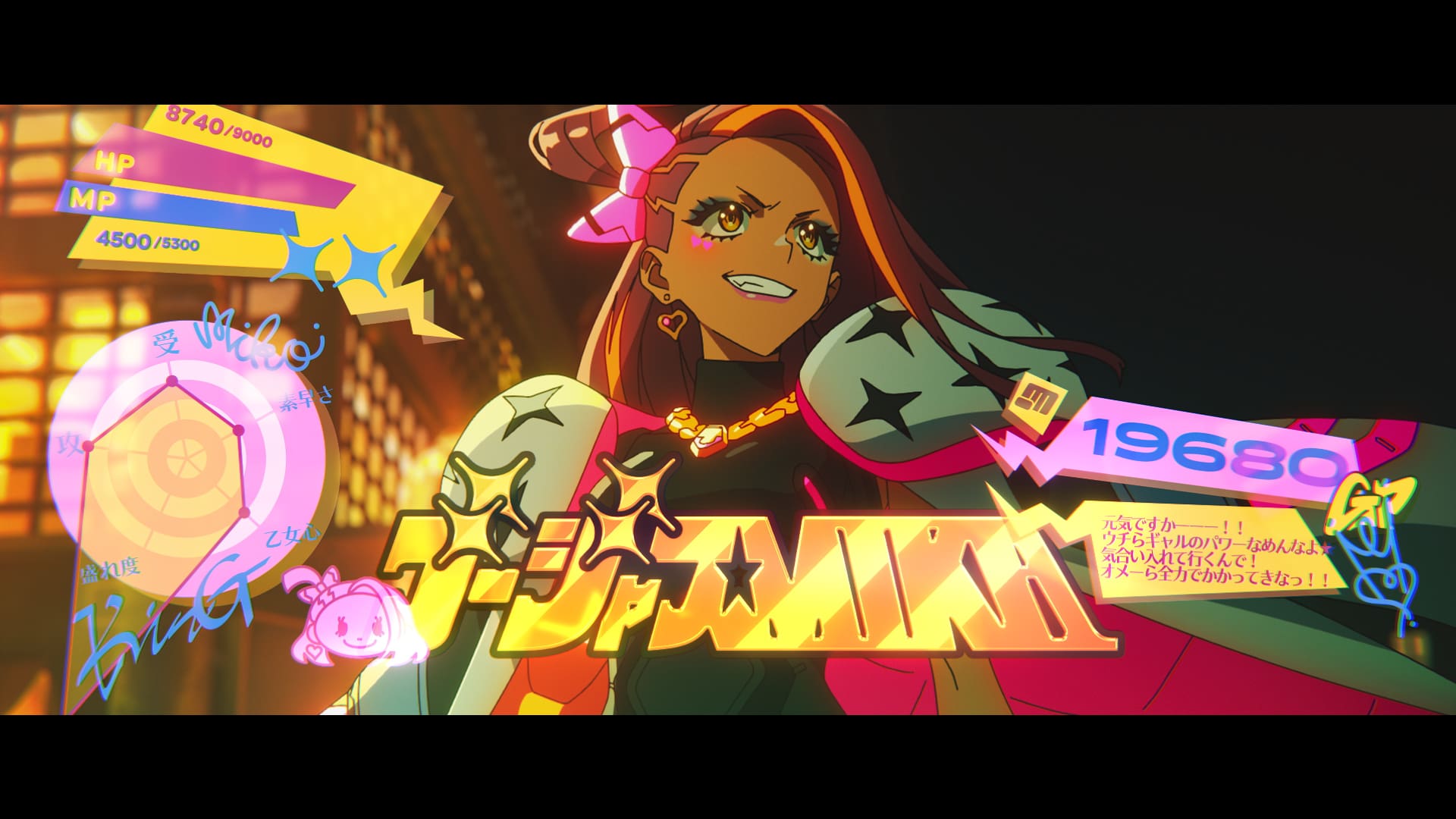
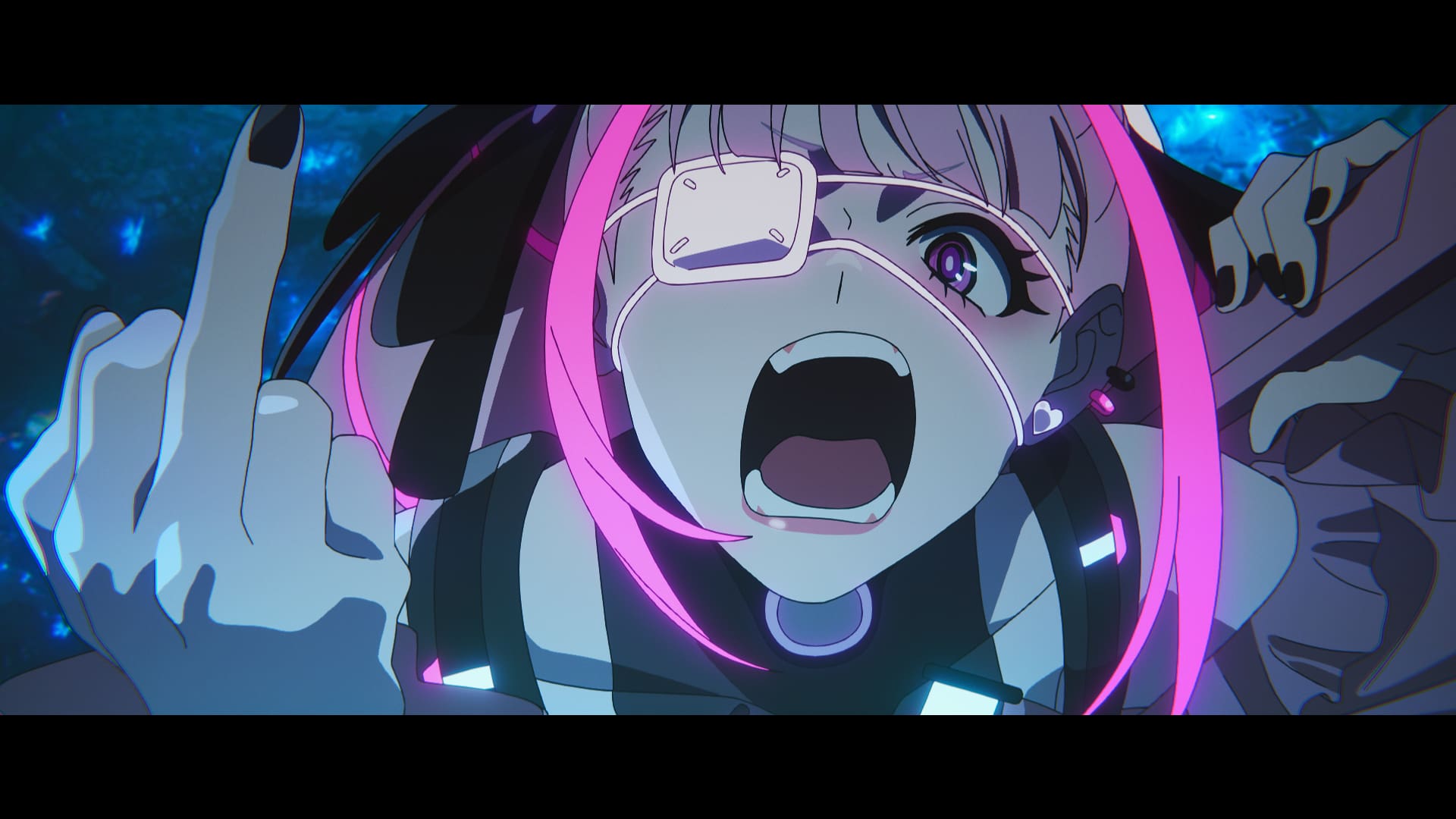
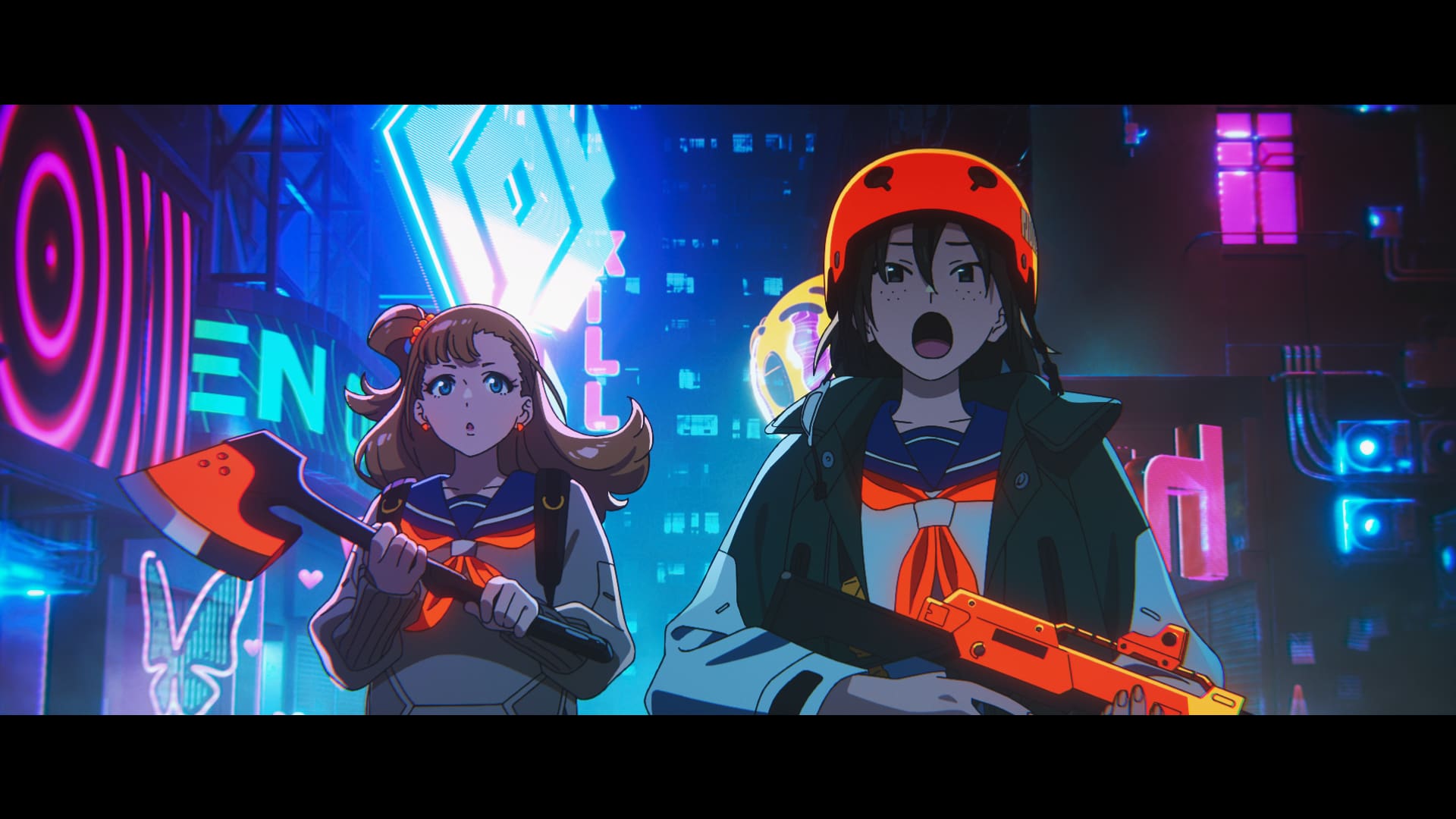
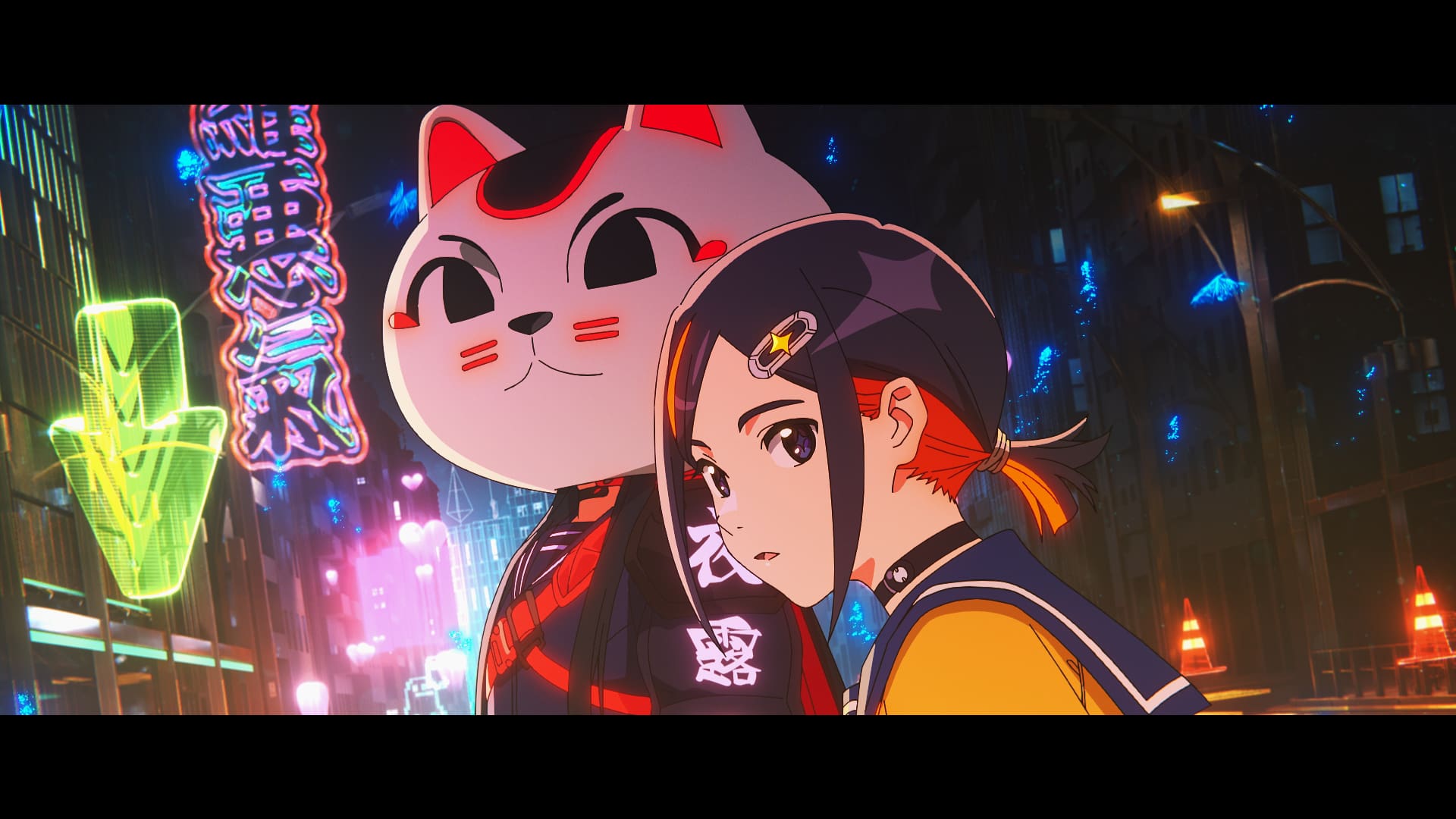
Could you tell me about the film’s music? It’s an extraordinary and extensive lineup of artists that you’ve assembled—almost as kaleidoscopic and varied as the film’s visuals.
I’m no expert on music, so I enlisted the help of Sony Music—because I was able to realize this film through Aniplex. Hasegawa-san, the producer, is a music expert. I gave him my ideas of what kind of music I was aiming for, and they brought back what would match my visuals. I was hoping for chemistry to happen there, and they came back with genres that I would never have thought of myself—music that feels very current.
You’ve taken on many different roles within this project. Do you find it easy to balance them, and do some come more naturally than others? Is it useful for you to maintain overarching creative control on a project like this one?
Generally speaking, people might say that it’s not too good to have one person take on every role. But for me, it balanced out—I had the career, the experience of taking on so many roles. And I think you need that kind of experience in order to succeed when you do so. I view that as one of my strong points, and I took on this project with that in mind.
All that said, mangaka handle everything themselves. Some animators today are also doing everything by themselves. I don’t think you have to divide the work across many people. I wanted to propose that in this era, in this generation, it’s possible to take on every role by oneself.