.png)
Pixar Previews Painterly ‘Gatto,’ Surprises Annecy With ‘Loving Dory’ Short
Stay informed with free updates
Sign up to get our news digest — delivered directly to your inbox twice a week.
Mirroring the big news out of Walt Disney Animation Studios’ Annecy studio focus presentation earlier on Friday, Pixar announced a new short film of its own and offered a deep dive into an already announced feature, Gatto, announced during last year’s Annecy.
Twelve months on, the studio’s upcoming feature got the full Work in Progress treatment, with director Enrico Casarosa offering insight into the techniques behind Pixar’s most visually ambitious feature in years. Later, producer Mary Alice Drumm and director Lou Hamou-Lhadj took the stage to present Loving Dory, a short set in the Finding Nemo universe.
Casarosa brought the crowd from the picturesque canals of Annecy to the street-like canals of Venice, taking them on a journey through his second Italian adventure following 2021’s Luca. “We have a new, very immersive, painterly look,” said Casarosa as gorgeous, tactile stills illuminated the Bonlieu screen behind him. “We’re very excited to have this expressive style and love the idea that the audience is walking into a Van Gogh painting.”
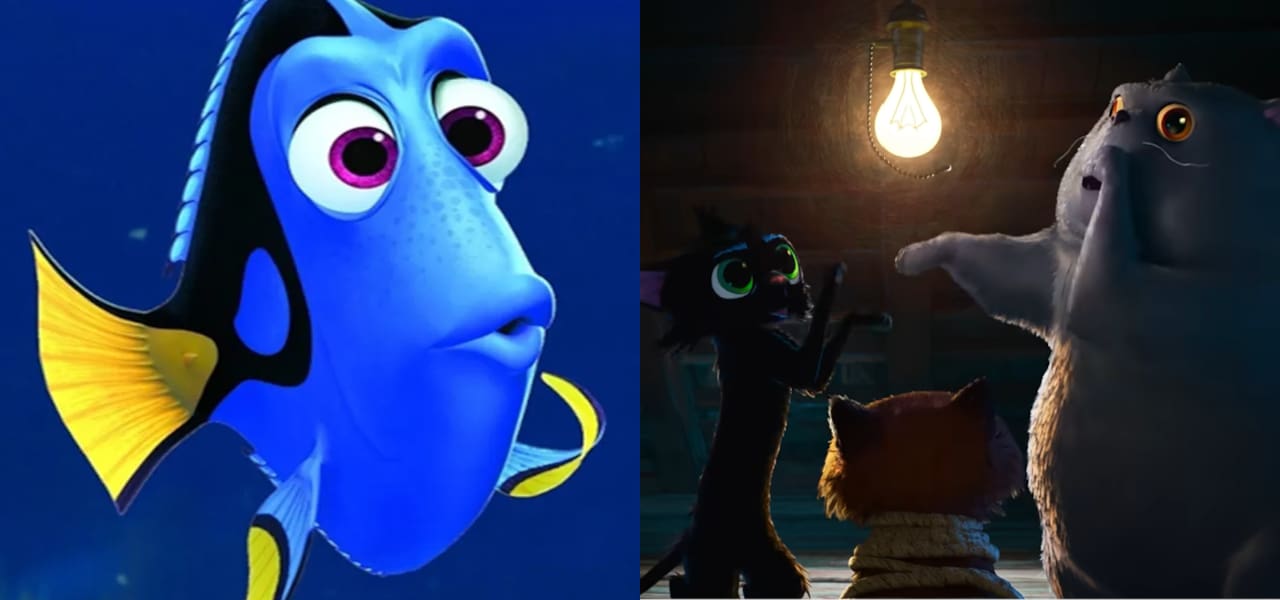
Gatto follows Nero, a street cat living a luxurious life of crime under the protection and wrath of Rocco, a mob boss who controls all the animals in town. Nero is an expert at using the color of his fur to his advantage, thanks to the deep superstitions held by Venice’s human and animal residents alike. When he’s sent on a mission to steal a cat-themed violin from a human street performer named Maya, Nero has to decide where his loyalties lie.
Along with a Liotta/Scorsese-style voiceover about the life of a gangster, the footage Casarosa presented put stars in the audience’s eyes. The painterly style gives the buildings a sense of dampness and age. Chicken scratches line the tops of buildings, character models stretch to the point of almost breaking, and occasional frame rate drops heighten the hand-crafted aesthetic.
“We have a lot of control over the line work, and we love creating multiples, going back to 2D animation techniques,” explained Casarosa. “We create extra arms when the characters’ arms are waving and extra feet when they’re running.”
Another fascinating technique was developed for the reflections in the water, a crucial element in a story set in Venice. “We wanted to make sure the reflections felt like a beautiful watercolor version of the original image. So instead of mirroring the actual background, we draw a simpler, brushstroke version of the image and mirror that.”
Gatto is halfway through production and is scheduled for release in March 2027. In closing his turn on stage, Casarosa said, “It’s an original story with a lot of heart, a lot of humor, and a lot of cats.”
In a surprise move that wasn’t listed on the official schedule, Drumm and Hamou-Lhadj took the stage to tease Loving Dory, a short in which Dory finally finds love with a plastic bag that drifts into the ocean and that she mistakes for a jellyfish. While the short offers commentary on how human waste disrupts marine life, it does so with a highly comedic tone. We saw rom-com tropes recreated accidentally when Dory’s fin became wrapped in the bag’s handles, allowing it to “pick” a bouquet of coral for her as they drifted through the ocean together.
Though the short looks very similar to the Finding Nemo films, the biggest innovation comes in the previs stage. Hamou-Lhadj showcased a real-time puppetry technique in which characters move through procedurally generated animation while following the animator’s cursor. Similar technology has been used at studios like Blue Zoo and Spain’s Lightbox Animation, but this marks a first for Pixar.
“The most important part of this whole thing is that the system is designed to consider the performance as the camera sees it,” explained Hamou-Lhadj. “We’re always operating with the final shot in mind, solving backward from that. It feels like you’re directing a live performer, telling them where their mark is and embracing improvisation to explore performance possibilities. Restaging is also immediate. There are no translate handles, no rotation widgets, just where the character should be on screen.”
Though it won’t be used for final animation, Hamou-Lhadj pointed out that the system integrates with Pixar’s existing animation pipeline. “This allows us to use as much or as little of the performance as we want. At the end of the day, the benchmark is still a Pixar theatrical film. We all know what that is. The quality needs to be there, and we need the flexibility to dial in the specificity and nuance we all expect.”
The new system proved especially useful on Loving Dory, helping animate scenes with more than 10 characters while also capturing the flowing movement of the plastic bag. Hamou-Lhadj explained why the bag felt quintessentially Pixar.
“Ascribing personality to the inanimate is the sort of challenge that feels classic Pixar to me. Our animation team has been mining lots of opportunities to ride the line between how Dory and the rest of the world see it, finding ways to authentically convey all of its precarious advances through the surge and swell of the ocean.”
Like Gatto, Loving Dory is about halfway through production. Hamou-Lhadj hinted that it will need to be finished well ahead of the feature, suggesting it may not screen in front of Gatto next year, the way that Disney’s Lilo & Scratch will ahead of Hexed. He also expressed his excitement about returning to the world of Finding Nemo.
“We are working super hard to bring back the reef and all of our favorite characters in their full splendor. It is an understatement to say it has been a delight to return to this world.”
Pictured at top: Finding Dory, Gatto