‘Steps’ Directors On Biker Trolls, Clockwork Mechs, Rococo Design, And Rewriting ‘Cinderella’
Stay informed with free updates
Sign up to get our news digest — delivered directly to your inbox twice a week.
In Netflix’s Steps, out tomorrow, Cinderella’s stepsisters get to tell their side of the story. The change in perspective is familiar by now; we’ve seen it in other animated films, but directors Alyce Tzue and John Ripa make it their own with a few clever turns and a willingness to let both Cinderella and her stepsisters make mistakes. It’s a new version of the classic fairy tale where nobody is without their faults.
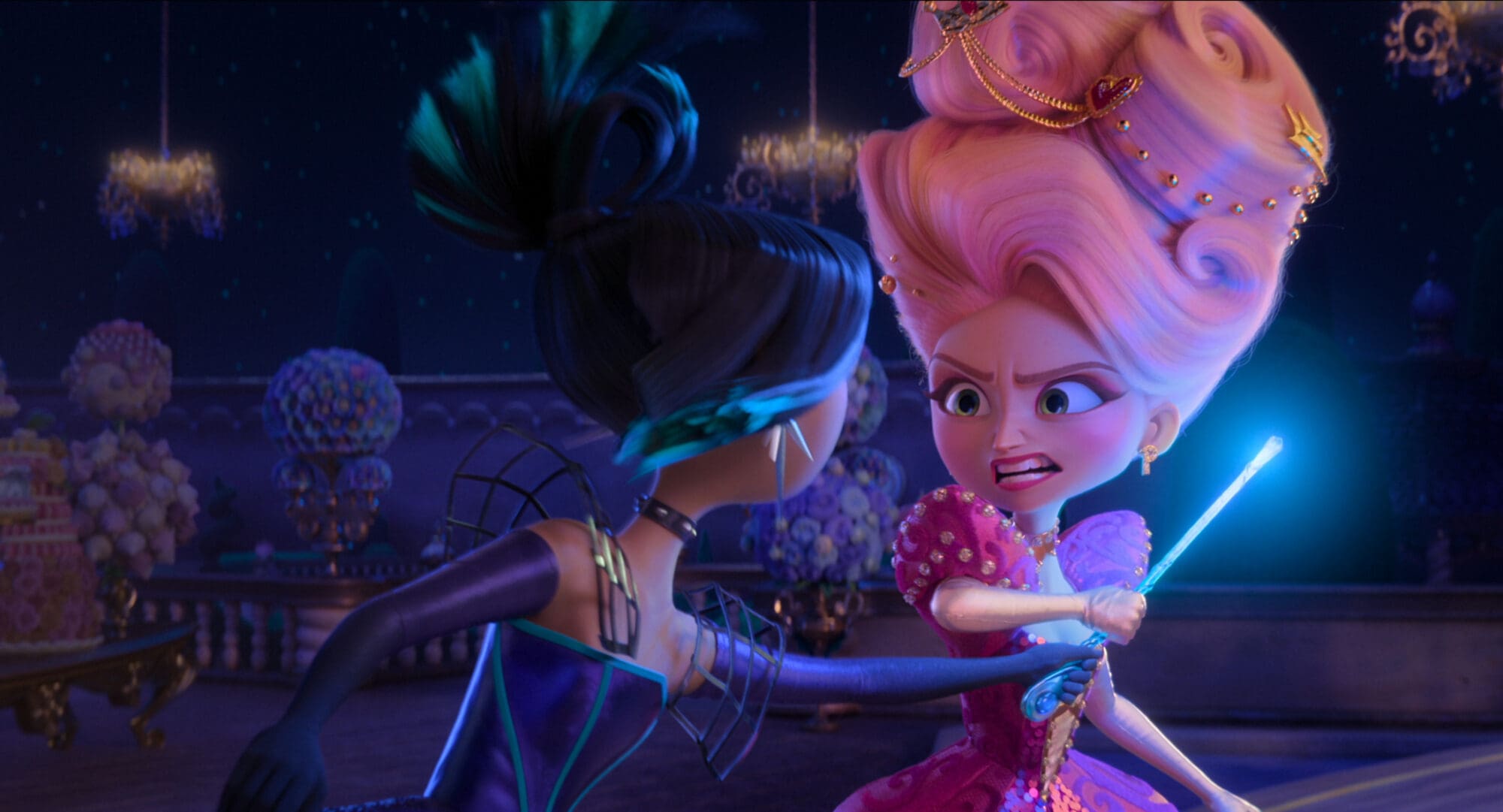
Lilith (Ali Wong) and Margot (Stephanie Hsu) are tired of living in Cinderella’s shadow, so Lilith steals the Fairy Godmother’s wand and upends the royal ball. That gives the ruthlessly poised Priscilla (Nikki Glaser) an opening to seize power, leaving Lilith forced to team up with Cinderella (Amanda Seyfried) to put things right.
Directed by Alyce Tzue and John Ripa, the CG feature is produced by Amy Poehler, Jane Hartwell, and Kim Lessing. The filmmakers looked to late-18th-century France for the kingdom of Alouette, building a Rococo world with the tactile detail of a miniature. Even the stucco had an unlikely reference in espresso foam.
Tzue and Ripa spoke with Cartoon Brew ahead of the film’s release about how its palette follows the power shift between Lilith and Cinderella, how a clockwork mech chase depends on what happens inside the machine, and what each director picked up from the other while working with a crew spread across time zones.
Cartoon Brew: Giving the stepsisters the lead could have been as simple as making them the heroes and Cinderella the villain. But we’ve seen that before. Instead, your stepsisters are complicated, three-dimensional characters, and you don’t let them off the hook for some of their more problematic behaviors. How did you work out where to take those characters?
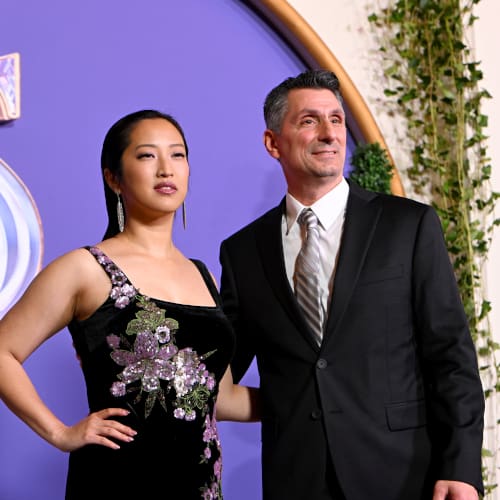
Alyce Tzue: I do think you go in thinking that the stepsisters are just going to be misunderstood and good. But what we’re also trying to say is that while the stepsisters were rejected by the kingdom, they put up these emotional walls that end up being harmful to Cinderella. It’s a process of humanizing the fairy-tale archetypes, both for Lilith and Cinderella. Lilith isn’t good or evil. She’s just human. Similarly, Cinderella isn’t perfect. Neither is she evil. They’re all just very flawed.
John Ripa: Every character in our film is flawed in that way and has something to learn from the others. They have that opportunity to be themselves and be accepted for themselves, but they have to earn their way and earn the relationships.
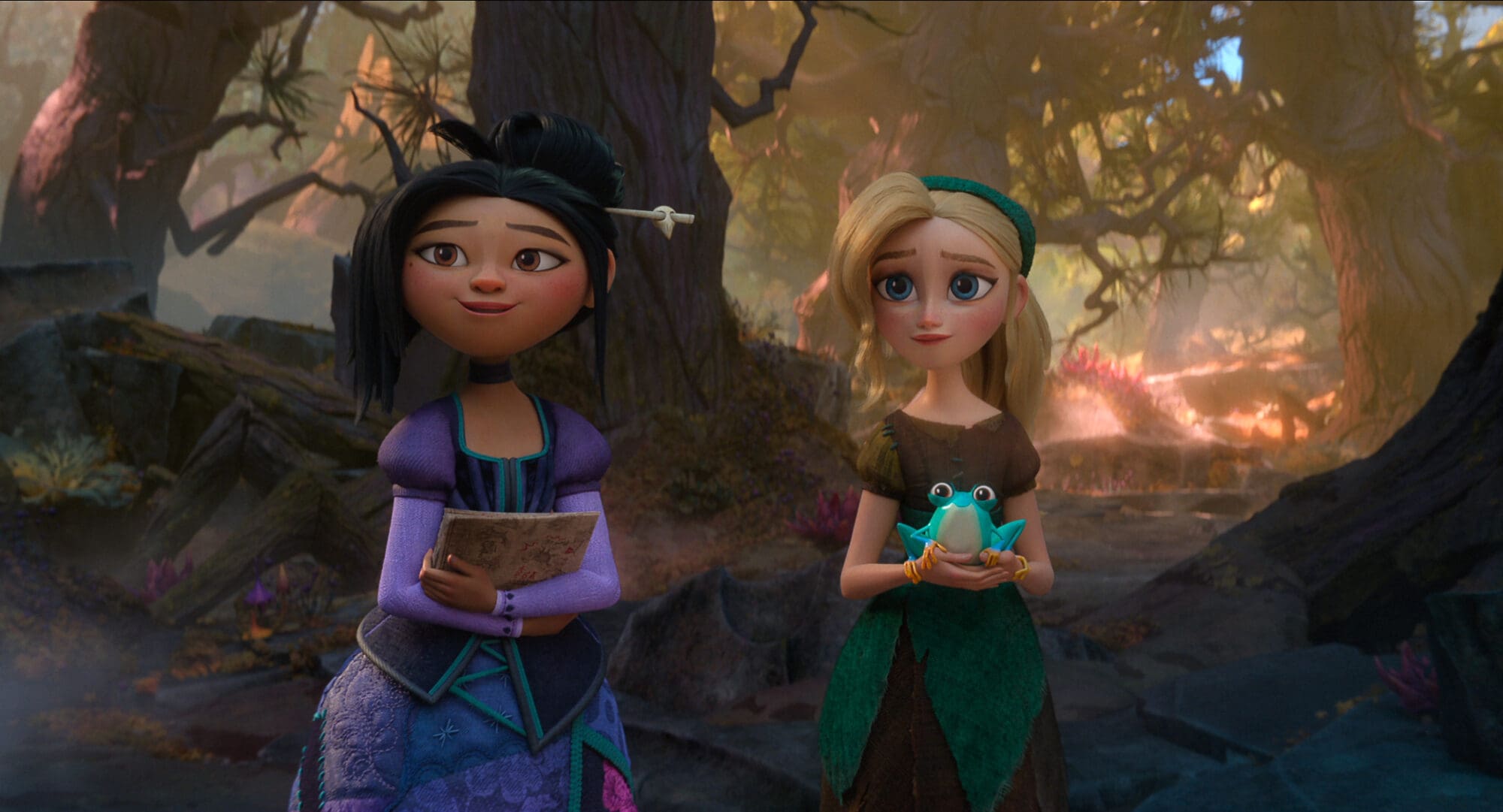
The very distinct three acts of this film have equally singular looks, from the pinks and purples of the royal ball to the earthier palette once the characters leave the kingdom. How did you use color to follow the story?
Tzue: You start with the fairy tale that you might be more familiar with in Act One. In Act Two, you break the fairy tale. And then Act Three is, what is our version of it? When you reconstruct it, what is the modern message we want to get across? The color palettes definitely follow that pattern.
Ripa: It reflects the characters’ journey and their relationship as well. Lilith is trying to fit into Cinderella’s world in Act One, so there’s a lot that’s familiar. Then once the story breaks, Cinderella’s trying to fit into what Lilith is more comfortable with. At the end, it’s this meshing of everything. Everything in animation has to be planned. Our production designers and art directors and the layout and previs teams put a lot of thought into what all those things mean.
There is a lot of world building going on in this film. What gave your version of Cinderella its own look, from the surfaces in the kingdom to the shapes of the characters?
Tzue: Late-1700s France is the era of Marie Antoinette and “let them eat cake.” The Rococo era has always been aspirational for animation, I think. It’s very detailed and intricate. Jumping off of that, we wanted a 3D medium to look even more 3D. We miniaturized the textures and used references that weren’t literal. Espresso foam was the inspiration for our stucco, and sugar crystals were the inspiration for the colorful siding of a carriage. We used chocolate foil to make this world feel more decadent. Hopefully people will want to taste the movie with their eyes.
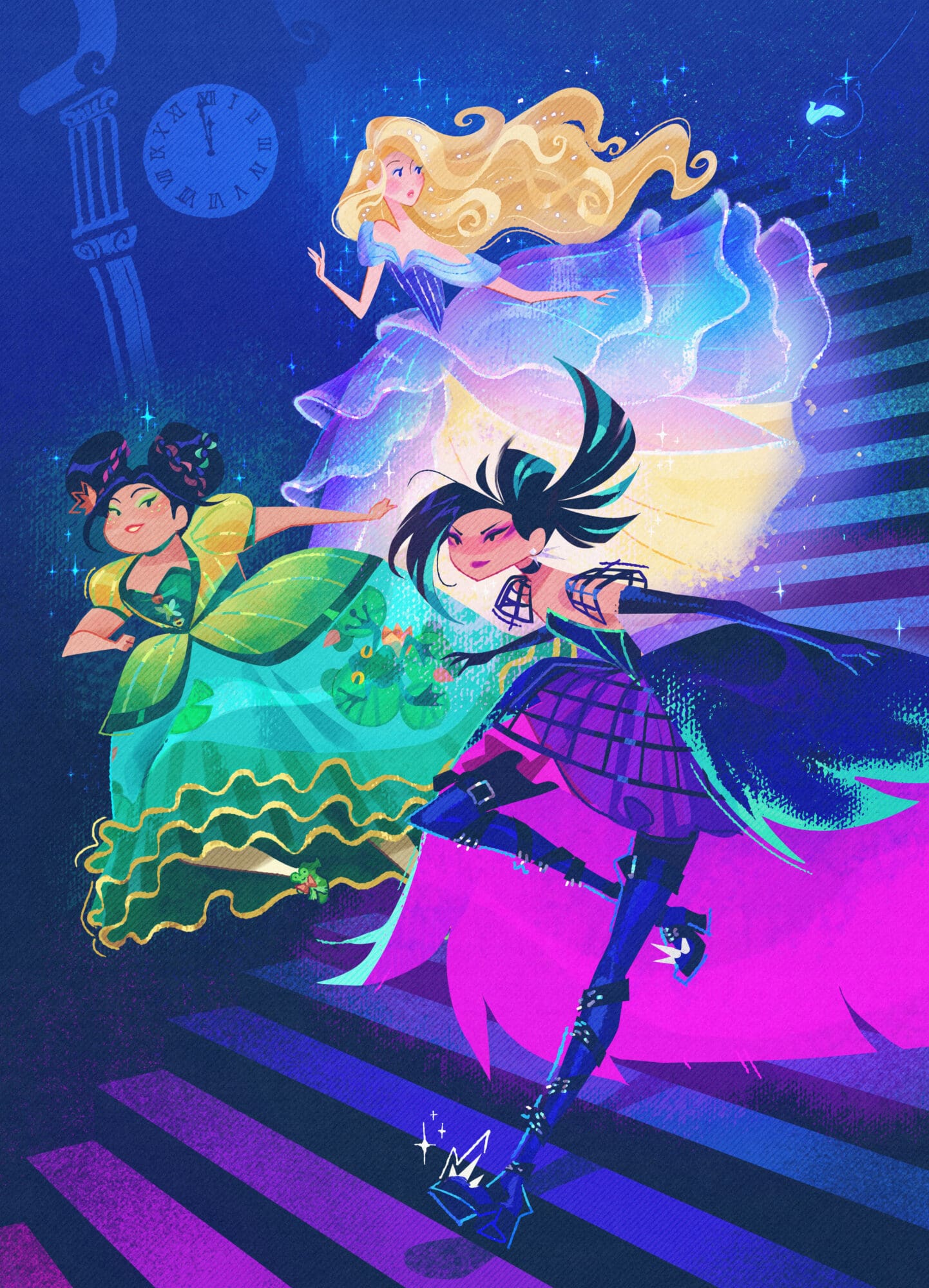
Ripa: Alyce was very intentional about pushing the shapes of the female characters. A lot of times you see that more with male characters. The shapes were very specific, and it allowed the female characters to have a range you don’t normally get.
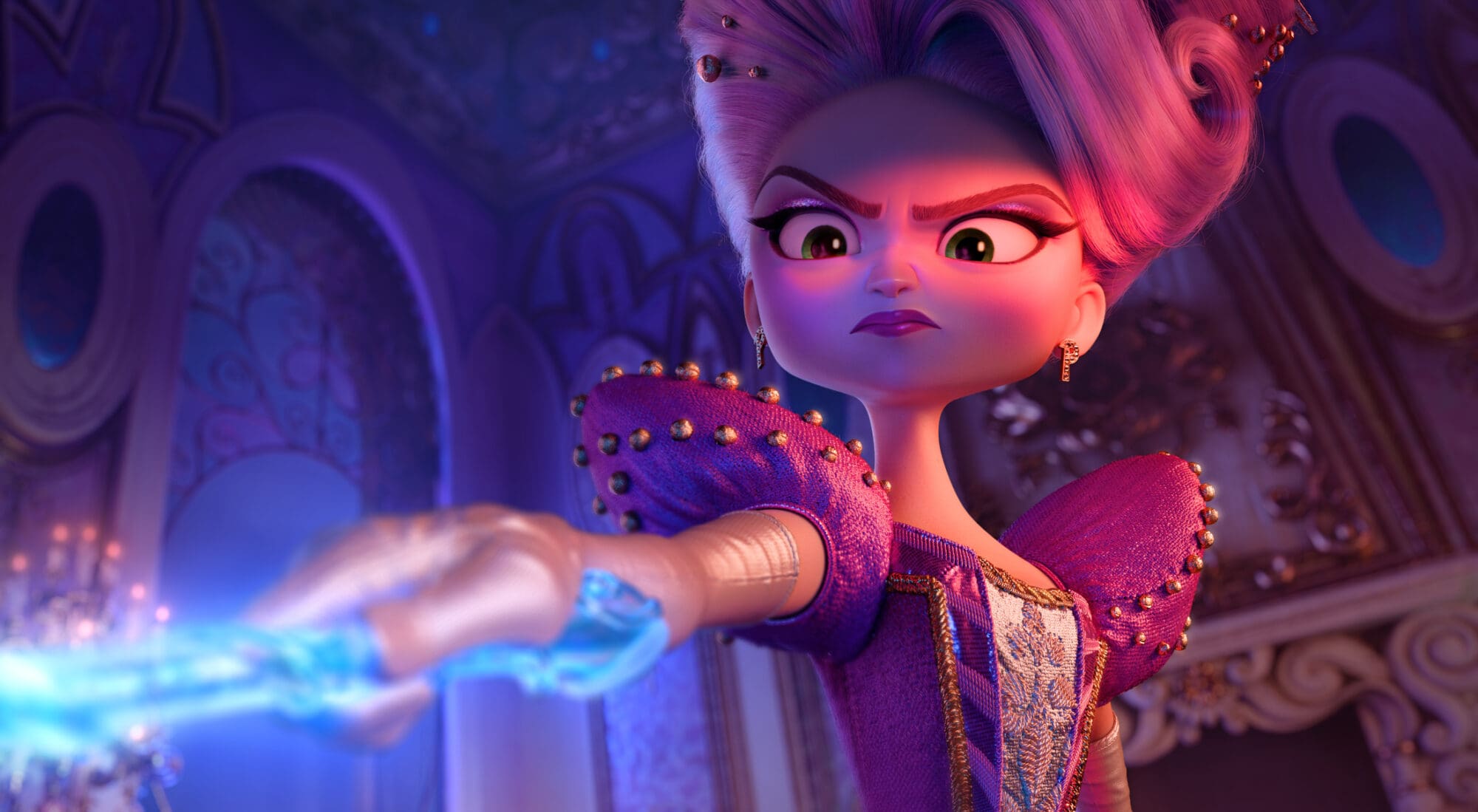
Tzue: We had some fun guides for their head shapes. Lilith doesn’t have much of a chin. She’s a martini glass. Margot is kind of a lima bean. Her mom is a bit of a kite.
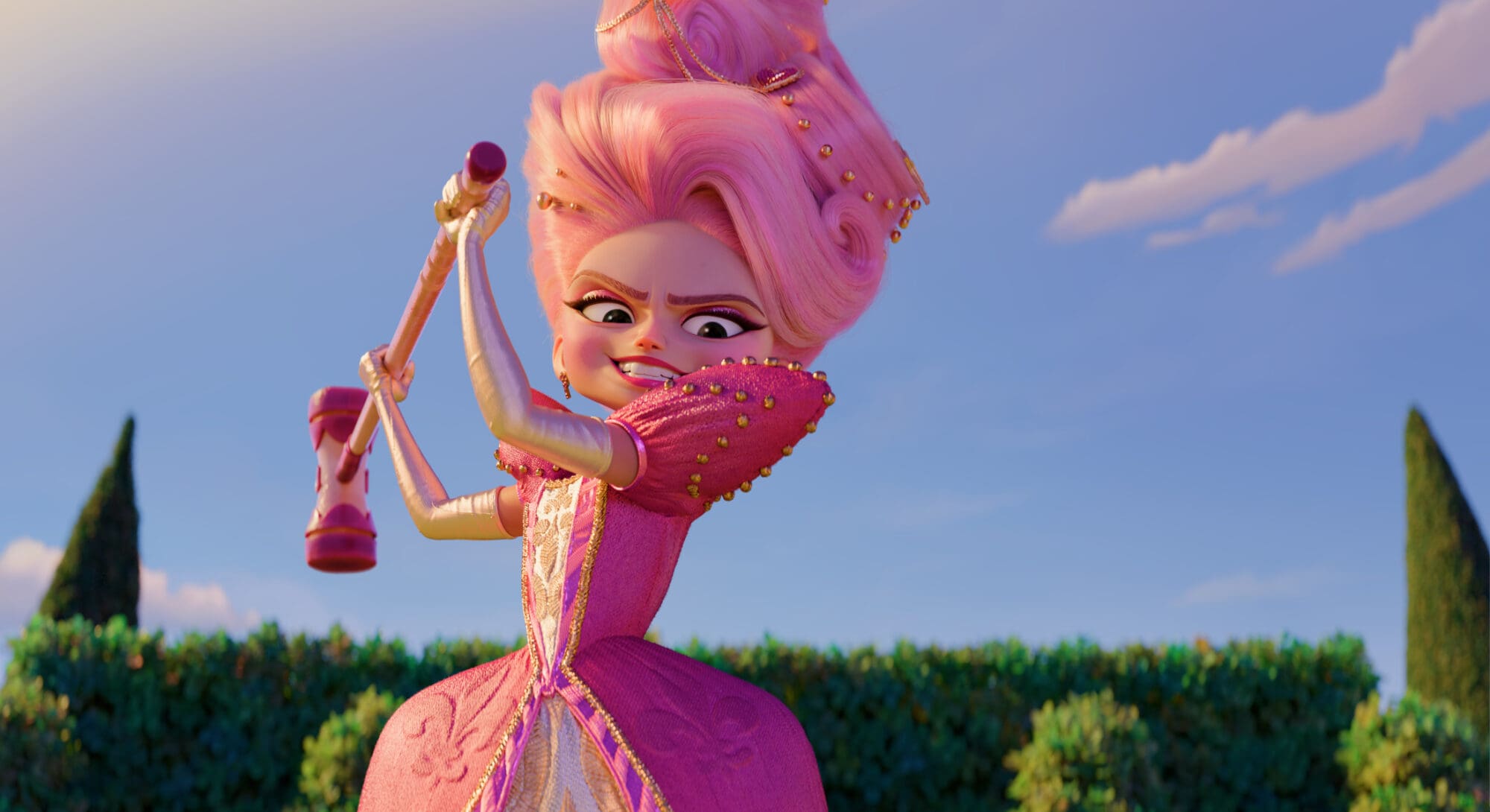
Priscilla is my favorite character in the film. She looks like the picture of a fairy-tale princess, despite her conflicting personality. How did that look feed into the way you wrote her?
Tzue: The design inspiration was definitely Paris Hilton meets Marie Antoinette. We wanted to create this kingdom of Alouette that had these sky-high standards for women in particular. You have to be poised and graceful and dance and walk with books on your head. Lilith rebels against that, but Priscilla is that on hyperdrive. She wants to be queen. She takes classes on every single thing. She thinks her face looks great on money. When you’re forced to fulfill these impossible expectations, that can turn you into a villain. It’s all you care about.
Ripa: We had incredible writers who really brought out her character and humor, and Nikki Glaser can deliver any line. She’s sarcastic and biting and witty. Priscilla is fun to watch and visually interesting. It was a collaboration with everybody.
Once the story leaves the ball, you bring in beasts, trolls, and a whole community outside the kingdom. What did that open up for you?
Ripa: Something really cool we learned on the film is that Cinderella’s story has this incredible history, and every version adds something. Charles Perrault’s version introduced the fairy godmother, the pumpkin, the glass slipper. It’s like that game of telephone where everybody adds something to the story. It’s almost like the longest story in development ever. We could give you something familiar and then break the story open to explore things the other versions hadn’t had the opportunity to.
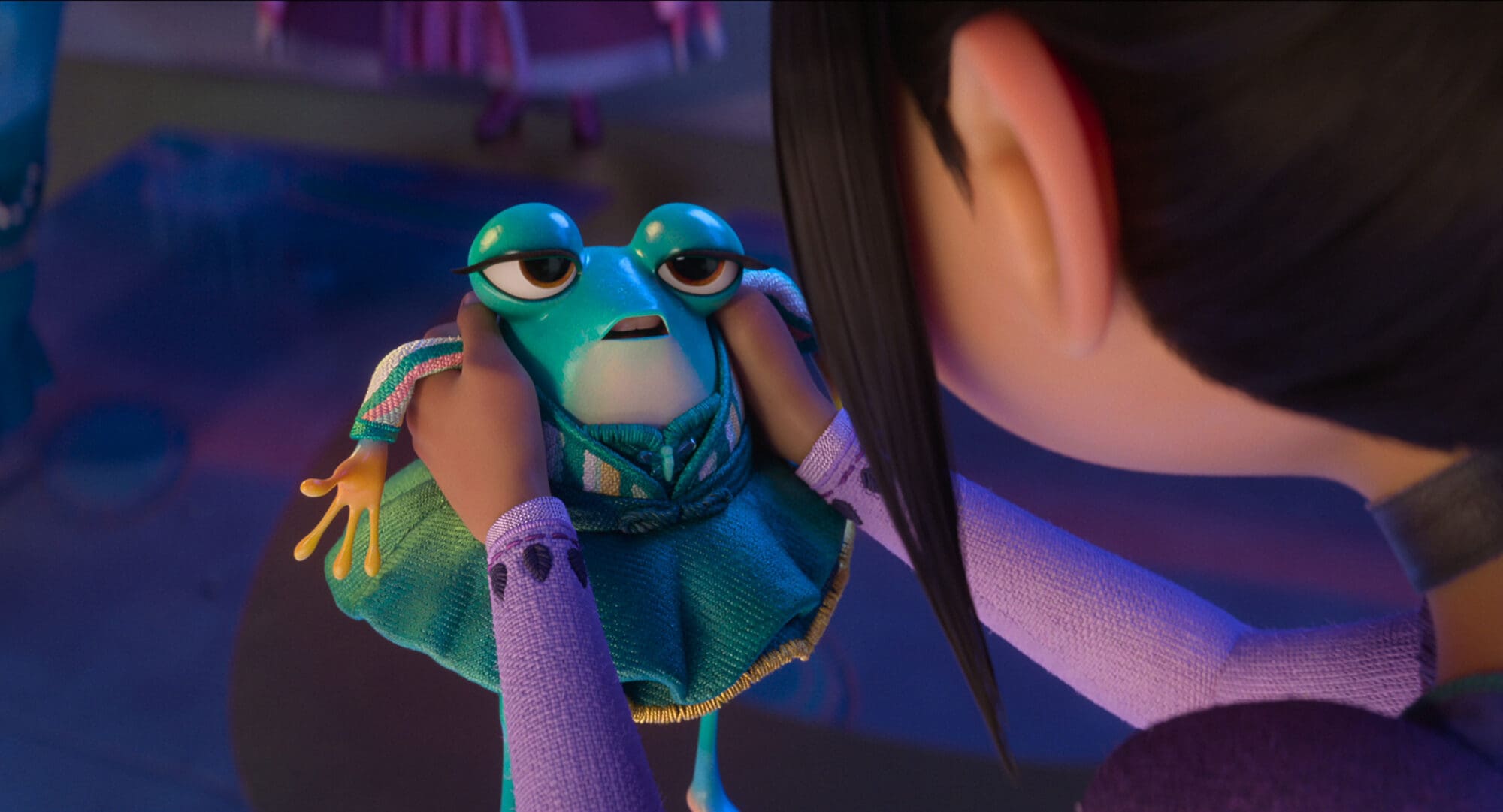
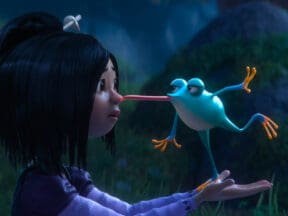
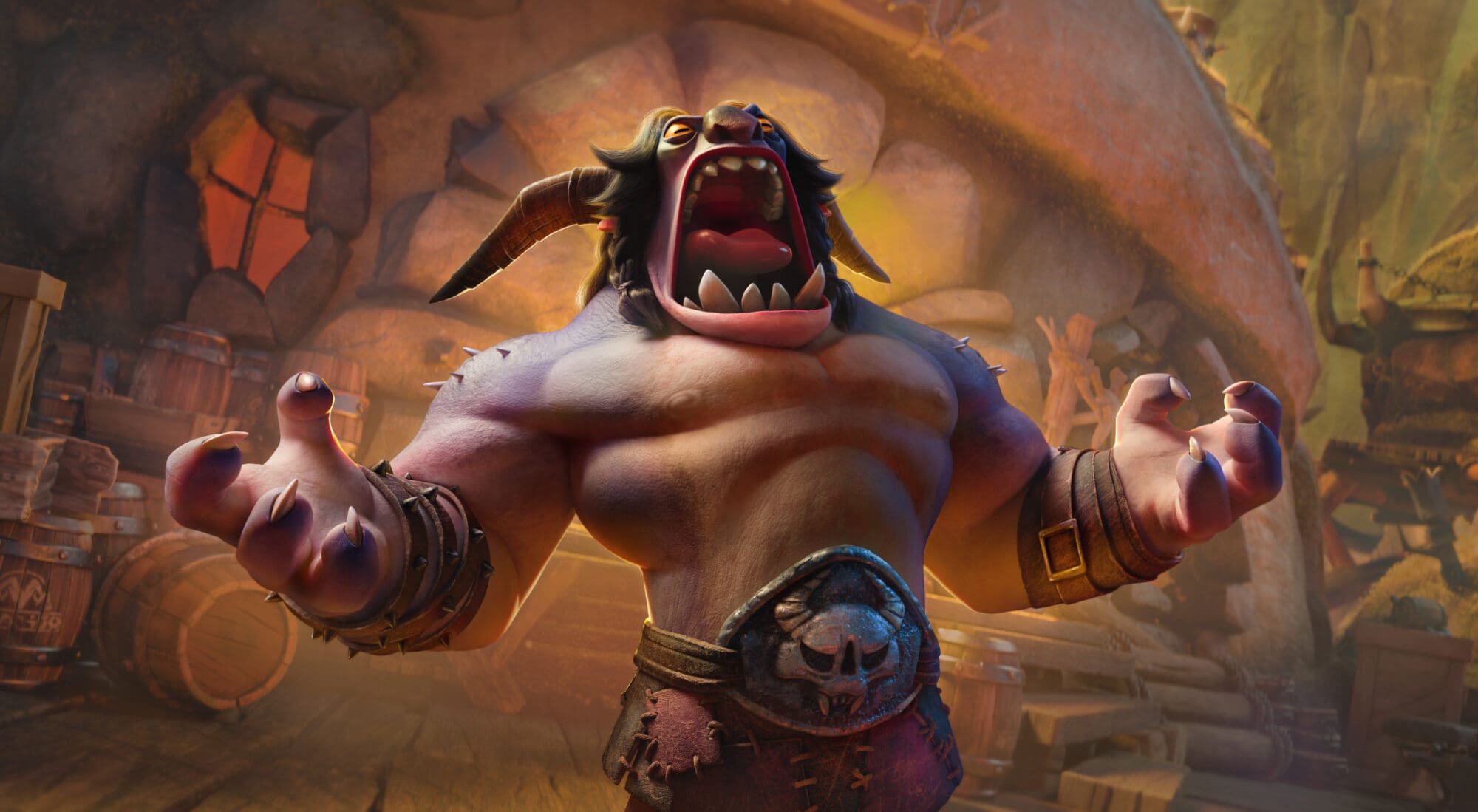
Tzue: Margot turns into a frog. There are trolls that live under bridges and wolves that live in the forest. It’s iconography you associate with fairy tales, and yet it’s pretty chaotic because we broke the fairy tale and anything goes. Sometimes you have to break something apart and put it back together to see what you can modernize or make better. Traditional fairy tales elevate a certain sort of protagonist. By the end, it comes together as a love letter to fairy tales, and at the same time it’s saying, “Let’s include more people in the fairy tales.”
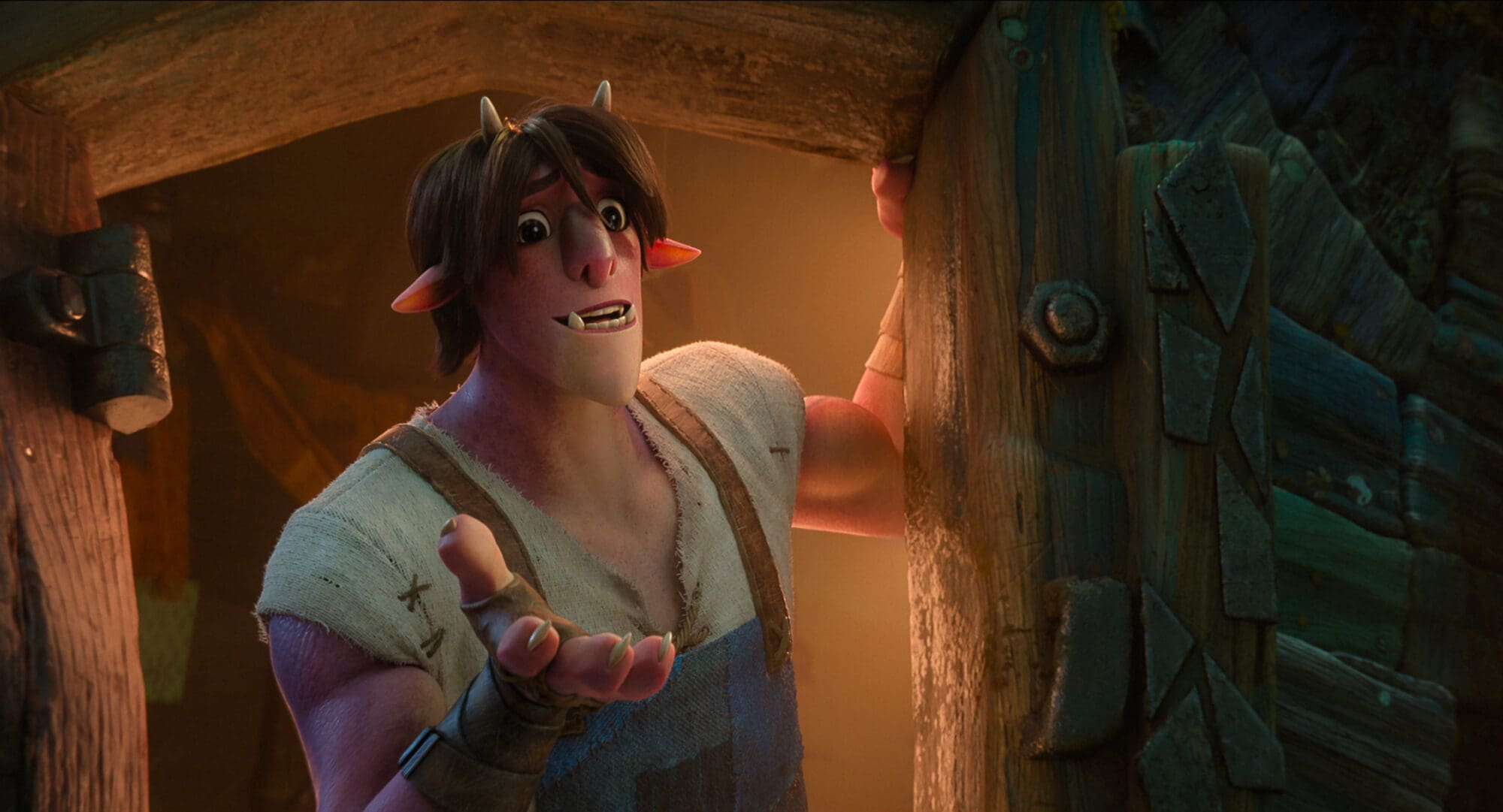
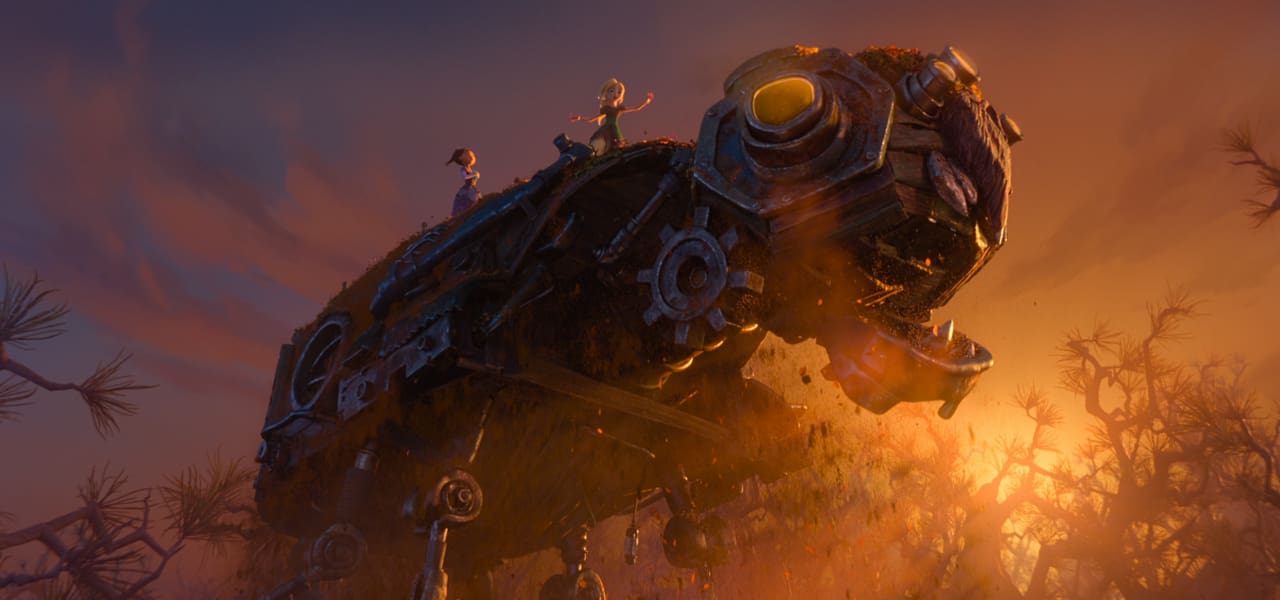
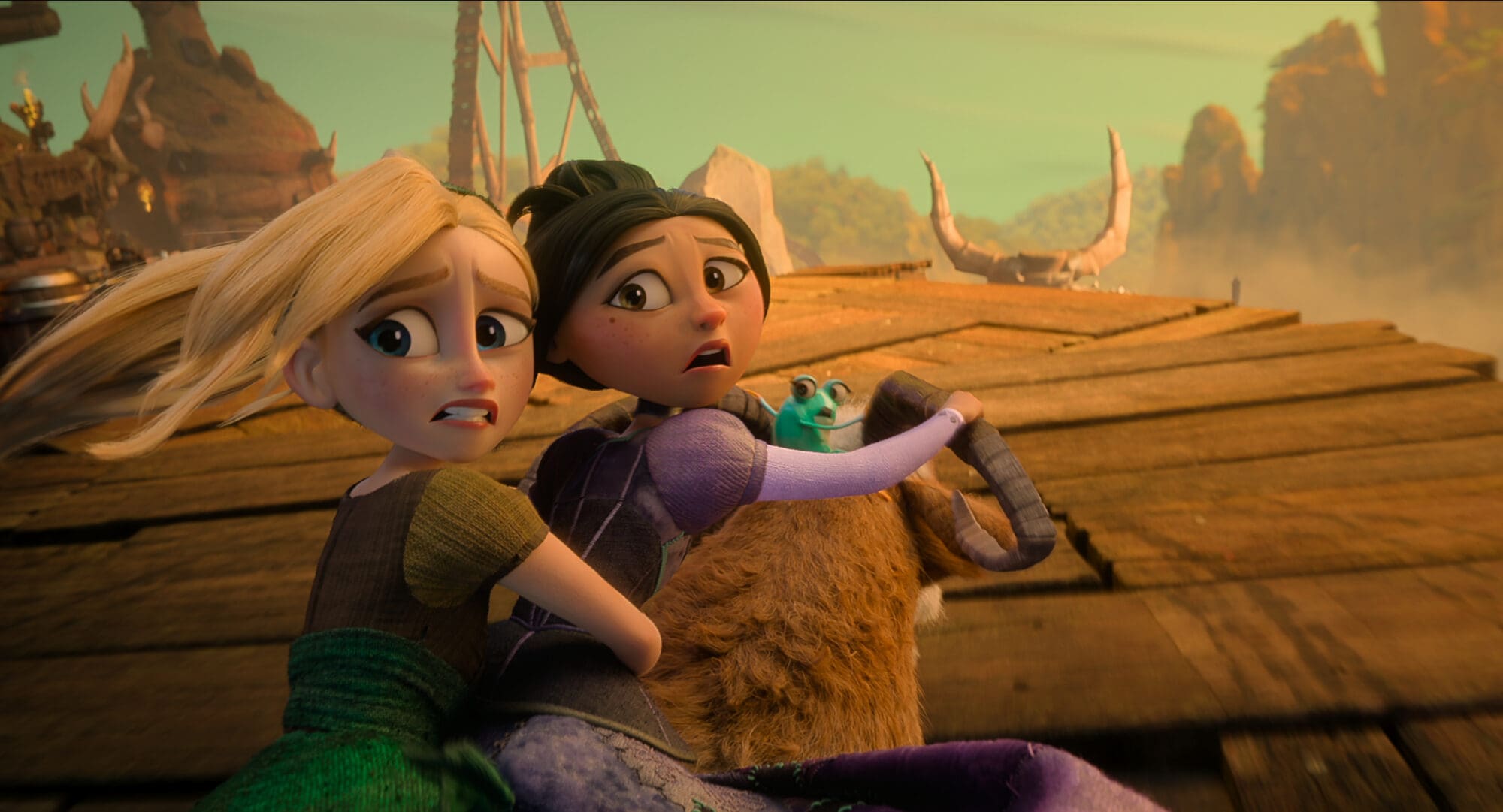
On that journey, the characters get around by goat and eventually by clockwork mech. How did you make machinery feel at home in a world built around magic?
Ripa: There was a lot of research into the time period and what they had. You look at some of the automatons that were built, especially in France, and the clockwork. We were really inspired by that. In Jeff’s world, you see a lot of those influences. We wanted you to feel like you were always in these characters’ world. It’s got some modern elements, but it’s also very French Rococo. We wanted to keep it grounded and believable.
Tzue: We wanted to contrast what it feels like to have magic and what it feels like to lose it. Magic is a symbol of privilege. Magic has helped Cinderella, and the moment she doesn’t have it, she has to walk on her bare feet. Now they have to have a goat. Now they have to have a mech. You can’t just have magic flying you across time and space. When you do have it, what do you choose to do with it? What’s your responsibility once you recognize what a privilege it is? That’s very much the message at the end.
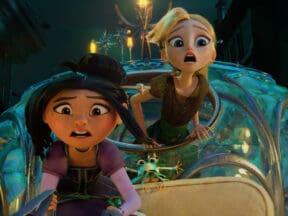
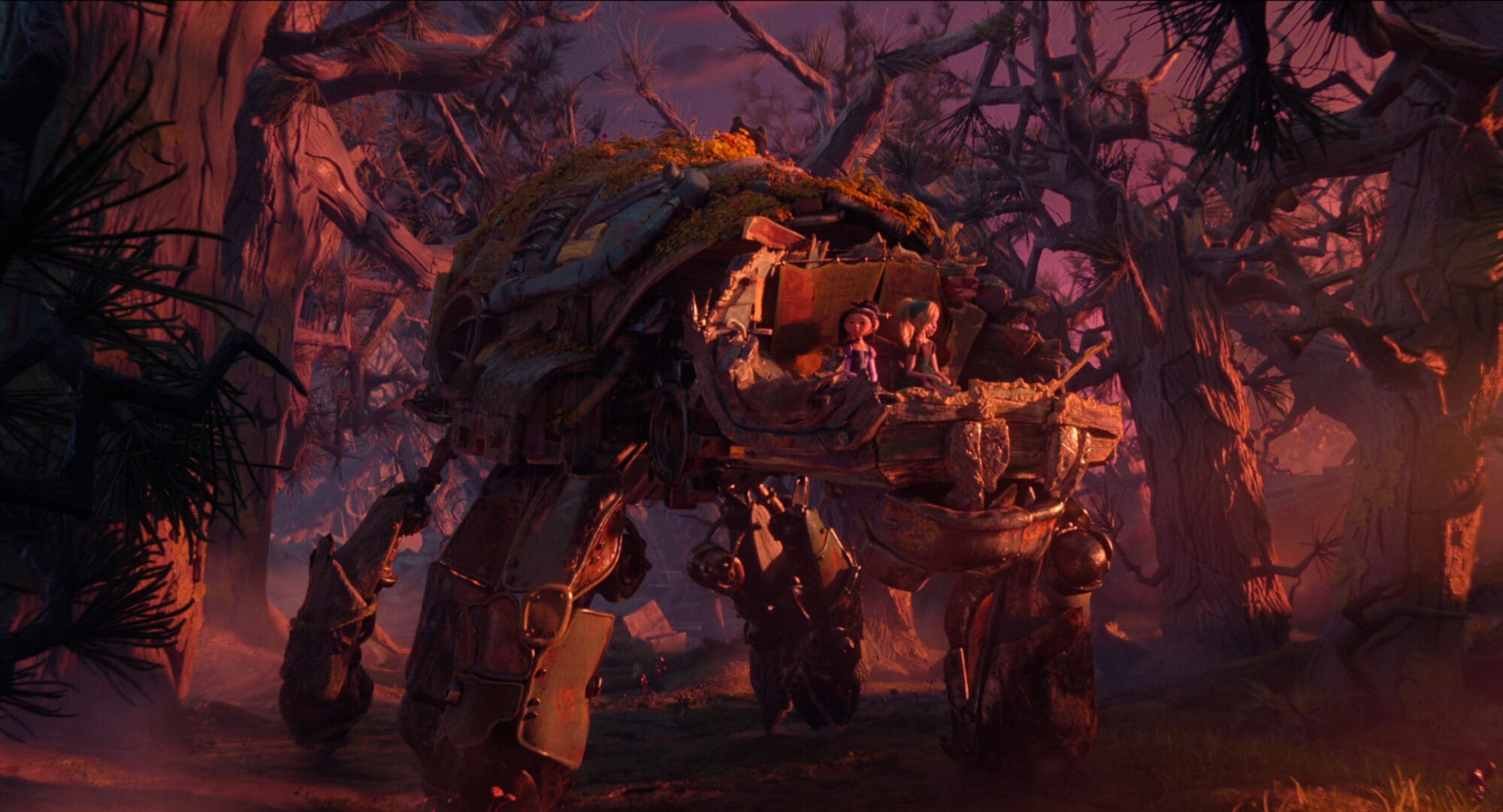
The mech chase has a lot going on outside the machine, but there’s also an emotional scene happening inside it. How did you balance the two?
Tzue: That’s one of my favorite sequences. It was a lesson in prioritizing the character journey. Every time we paid too much attention to the action, you lost track of the emotions and didn’t get that catharsis at the end. That pattern kept repeating. We got feedback that Act One was too long, but when we took out setups, it just wasn’t as emotional. It was a long process of balancing those elements.
Ripa: Interesting characters make choices, and they have to deal with the consequences. Sometimes those choices are mistakes. Sometimes they hurt somebody. Then how do they resolve that? It can’t just be through words. They have to do things that help those relationships evolve. When you humanize the characters that way, you recognize a lot of your own relationships in them.
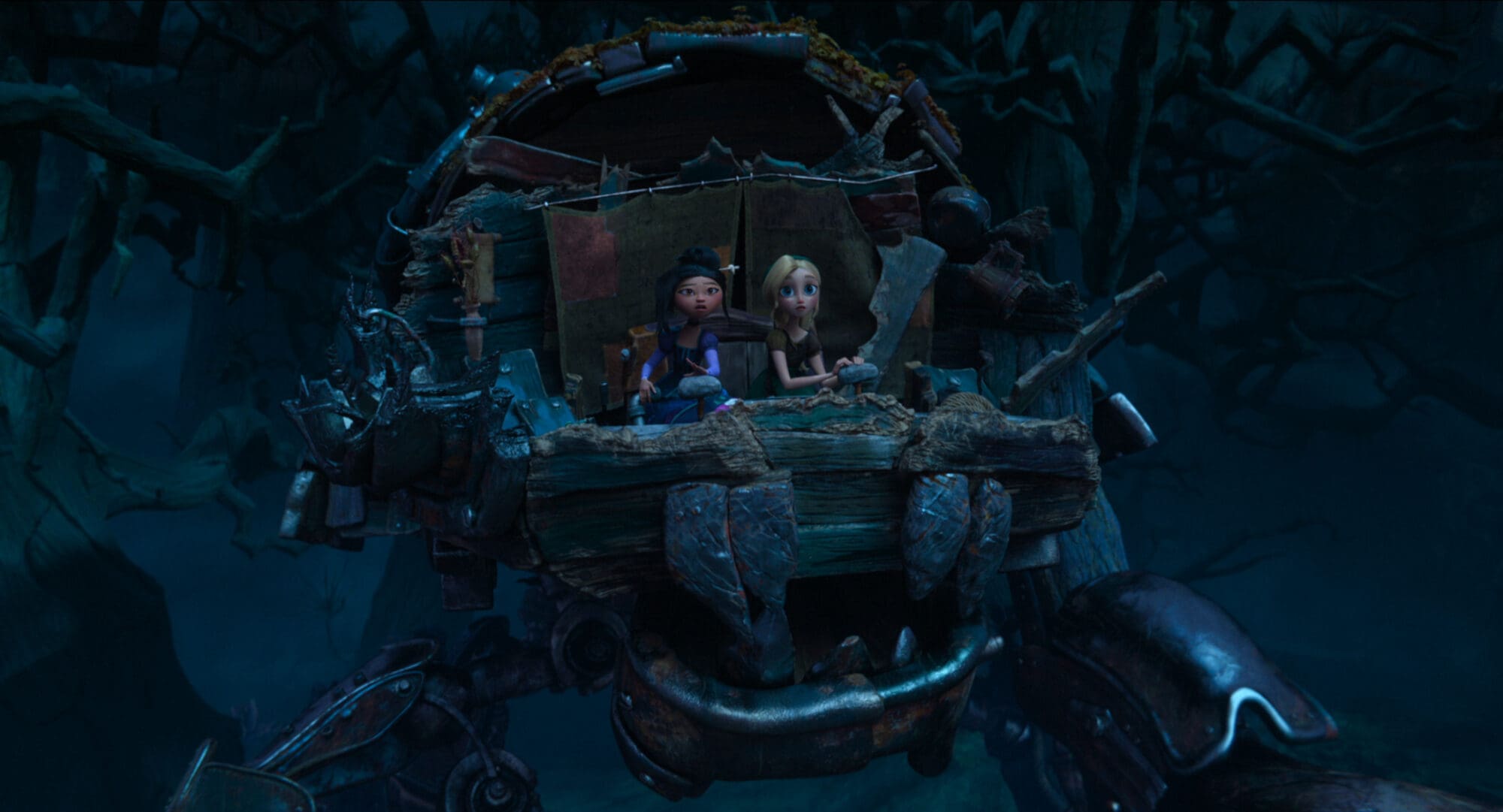
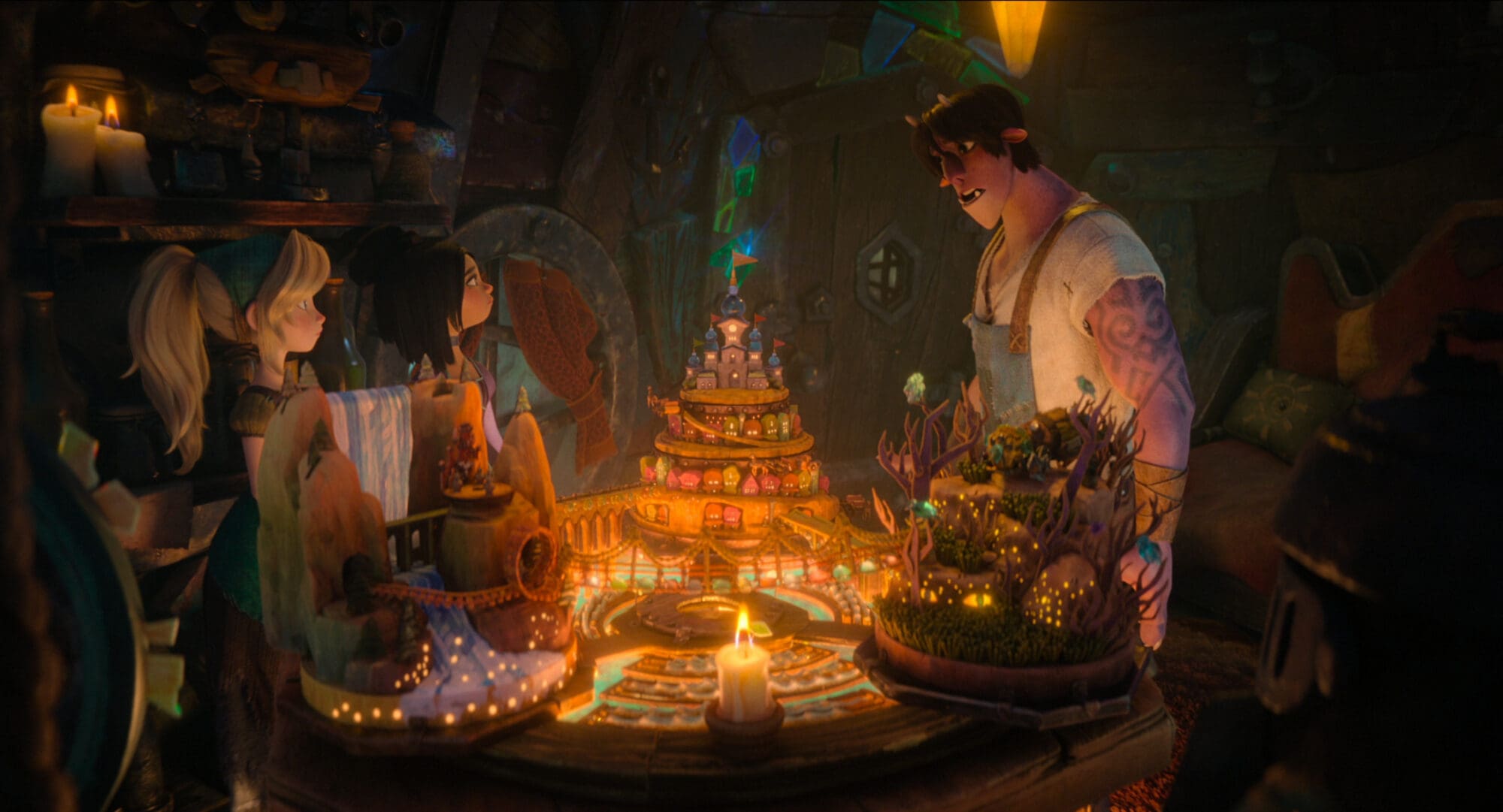
The palace and the forest feel like places you could set entire films in. How did you get that sense of scale with the resources you had?
Tzue: We had budget constraints, and we reused sets. We didn’t have much to work with in the palace, so we’d have to say, “Okay, we have to reuse this room.” We had a forest build, but we had to be smart about reusing parts of it and dressing them differently so you couldn’t tell. There were a lot of tricks you probably wouldn’t notice.
Ripa: We had digital matte painters who could fill out the background behind the trees with more trees or hills. We could add depth and layers and richness to the world that way. One of the challenges was finding that slight miniature feel in this incredibly ornate world. How do you get it in the textures, in the scale, when the characters are in a shot? That was a process of discovery.
Steps is the first film to come out of Netflix Animation’s end-to-end pipeline. What did that setup mean for you as directors working with teams across time zones?
Tzue: The challenges are what you might expect in terms of practicality. There are the time-zone differences and the transition from working with a vendor to bringing them in and fully unifying the teams. We feel very much like a community. What I’m most proud of visually are the textures, the decadence of the world, and the detail the artists put into bringing it to life.
Ripa: We definitely traveled a lot. You felt like you were living out of a suitcase sometimes. But to sit at somebody’s desk and point to the screen and talk to them, or sit in a room with the animators so they can see your expressions as you act something out, is some of the most rewarding stuff. It’s the best way to build trust, which you need when you’re dealing with different time zones and long distances.
What did you pick up from each other as directing partners?
Ripa: I’ve been doing this for over 30 years, and it was great to learn from Alyce’s strengths in working with actors, in editorial, and with music. She’s a great writer, too. She did a lot of the scratch for Ali Wong. You record scratch before you get the voices, and she was really able to lock into the character and the emotions and help create Lilith.
Tzue: I feel like a good partnership is when you have complementary skills and shared values. John taught me a lot about storytelling and what’s most important in a story. Landing the ending, working backward from there, always focusing on the emotional arcs. And then there’s his experience in animation, storyboarding, and cinematography. I do feel like it was a process of mutual osmosis. I feel very lucky to have been able to learn on the job with someone like John.