.png)
First Look At Disney’s ASL Re-Animated Songs From ‘Encanto,’ ‘Frozen 2,’ ‘Moana 2’
Stay informed with free updates
Sign up to get our news digest — delivered directly to your inbox twice a week.
In the short-form development ecosystem at Walt Disney Animation Studios (WDAS), it’s heartening to see an abundance of fresh ideas and experimentation. Aside from its ongoing Short Circuit program, the studio’s most interesting recent short project announcement is Disney Animation’s Songs in Sign Language, which debuts April 27 on Disney+.
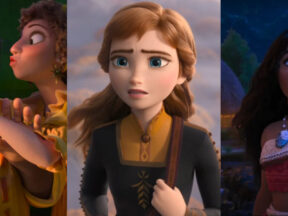
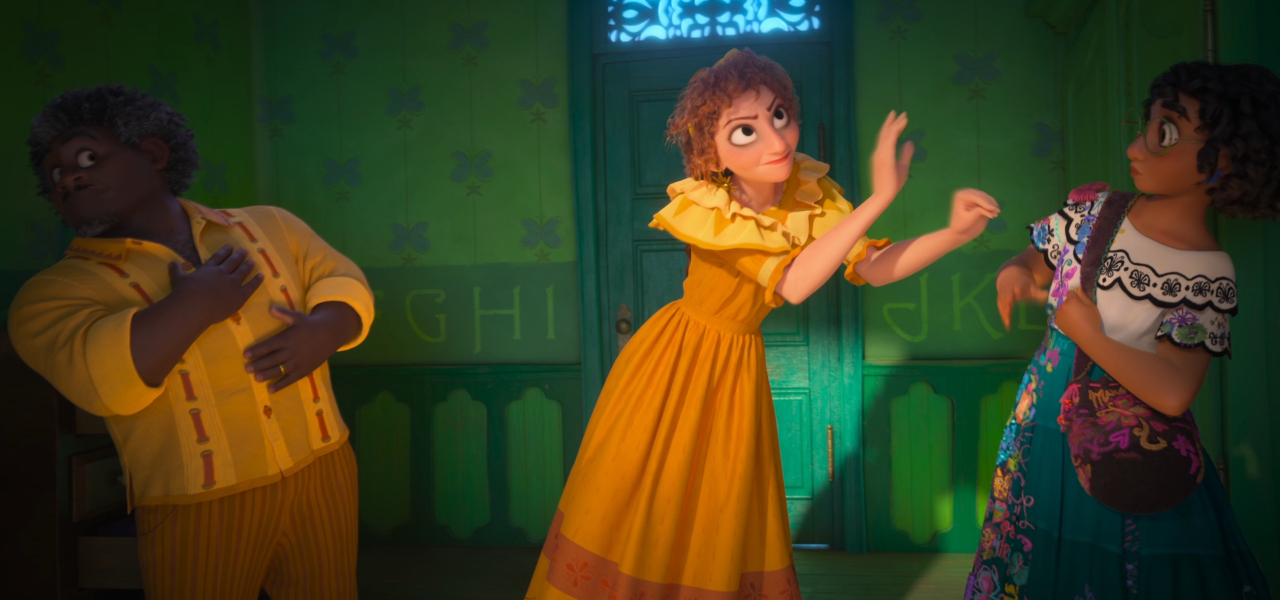
Spearheaded and directed by Disney animator/director Hyrum Osmond (Olaf Presents), Songs in Sign Language reimagines three song sequences from recent Disney animated films, retold in American Sign Language (ASL). “The Next Right Thing” from Frozen 2, “We Don’t Talk About Bruno” from Encanto, and “Beyond” from Moana 2 have all been reanimated from their source files, with the lyrics choreographed in ASL with guidance and choreography from Deaf West Theatre artistic director DJ Kurs and sign language reference choreographer Catalene Sacchetti.
At a recent press day, Cartoon Brew sat down with the trio to discuss the origins of the idea and the landmark initiative to reimagine the songs for Deaf audiences.
Osmond shared that creating animation tailored to Deaf and hard-of-hearing communities came from his own experiences with his father.
“Growing up, I never learned sign language,” he explained. “I felt a lot of regret because I could not connect with my dad. With this project, I just wanted to do something that could take down barriers.”
Osmond said he spent years developing ideas for a project like this before finally pitching it to then Walt Disney Animation Studios CCO Jennifer Lee and current president Clark Spencer. “They saw the vision of it, but it became something where it had to start small, and then it progressed.
“Conceptually, we took a long time to think about it,” he continued. “This had to be correct. We couldn’t just put sign language on top of something. We knew it had to be genuine, so we did our homework.”
He also assembled a team of more than 20 animators who volunteered to bring the project to life. “When we announced this project, we asked, ‘Hey, this is what we’re doing. Who wants in?’” Osmond recalled. “There were a lot of people who reached out and were super excited. Maybe they had some sign language background in college, or they have a deaf friend, so there was a general excitement among the crew to work on this.”
A key stipulation was choosing recent films so the team could easily reload the animation assets, which led them to songs from Frozen 2, Moana 2, and Encanto. Osmond said considerable thought went into both the artistic results and ensuring variety among the songs. “We wanted something with a lot of high energy and something a little more subtle. But also, we tell stories from all over the world, so let’s incorporate that.”
Once the assets were updated, Osmond turned to collaborators and consultants DJ Kurs, his dancers/signers, and choreographer Catalene Sacchetti to record bespoke, choreographed ASL performances of the songs for animators to use as reference.
What the experts brought to the table was an understanding that ASL is not a monolith, so there were creative choices to be made for each song. Sacchetti explained, “The basic understanding is, in English, you might look up a word, and there might be multiple definitions, but not that many. In sign language, there might be one word and many, many ways of signing it, with different handshapes to convey meaning. So how do you convey this in the best possible way? Because of that, we really needed a team approach, multiple opinions and voices in the room, and that was critical to the process.”
That approach also included consistency and personalization, both key elements of ASL.
“We made sure that the signing choices for one particular character would be repeated for that character, but not necessarily for another,” Sacchetti continued. “In the real world, not all Deaf people sign the same way. Some are fast signers. Some are slow. Some are high-energy. Some are more low-key. We wanted to apply that concept.”
In the case of Frozen 2 and Moana 2, animators focused on just Anna or Moana and her grandmother. But in Encanto, there were as many as eight performers signing in a single frame.
“It was a lot of adjustments and improvisation, and a lot of learning in the moment about what was going to happen,” Kurs said of the complexity of “We Don’t Talk About Bruno.” “For example, going down the hallway, you see three different characters signing ‘no’ in three different ways—different voices saying the same thing. We’re very grateful to Hyrum for giving us the license to work within those parameters and fill those moments with authenticity.”
The final result is not only a moving example of inclusion but also a proof of concept for how animation can serve as a communication bridge for Deaf audiences.
“We had the chance, when this was all done, to composite the original film with the sign language version on top, just to see, and it’s very different,” Osmond said. “When we’re talking about the face, so much of sign language is in the face. If the face isn’t right, it can mean something totally different. So there was a lot of attention on facial expressions—the eyes, the brows. We worked very hard on that. Most of the faces you’re going to see are new.
“A lot of times when you’re animating to dialogue, the face reflects the inflections of what’s happening. We redid that because it’s very important. I learned it’s crucial to match the facial expression with what’s happening in the hand gestures.”
Now the team awaits the broader reaction to Songs in Sign Language, and they hope it’s consequential.
“This was an easy sell for Disney. They loved it and were always behind it,” Osmond said. “What this opens up to, I don’t know. I’m really enjoying living in this moment and recognizing that this is significant.”
Kurs added, “As a Deaf artist, I’ve learned early on not to take things for granted. I’m just celebrating this moment—celebrating the connection we’ve made with each other and with a larger audience.”
Sacchetti agreed, adding that the project means Deaf and hard-of-hearing children will now have Disney animated characters communicating directly with them in ASL.
“The Deaf community has never had the opportunity to experience this in entertainment,” she emphasized. “So this project, this moment, is so exciting. I believe the Deaf community will feel this is a historic first. They will see themselves on screen in an animated representation that’s never been done before.”